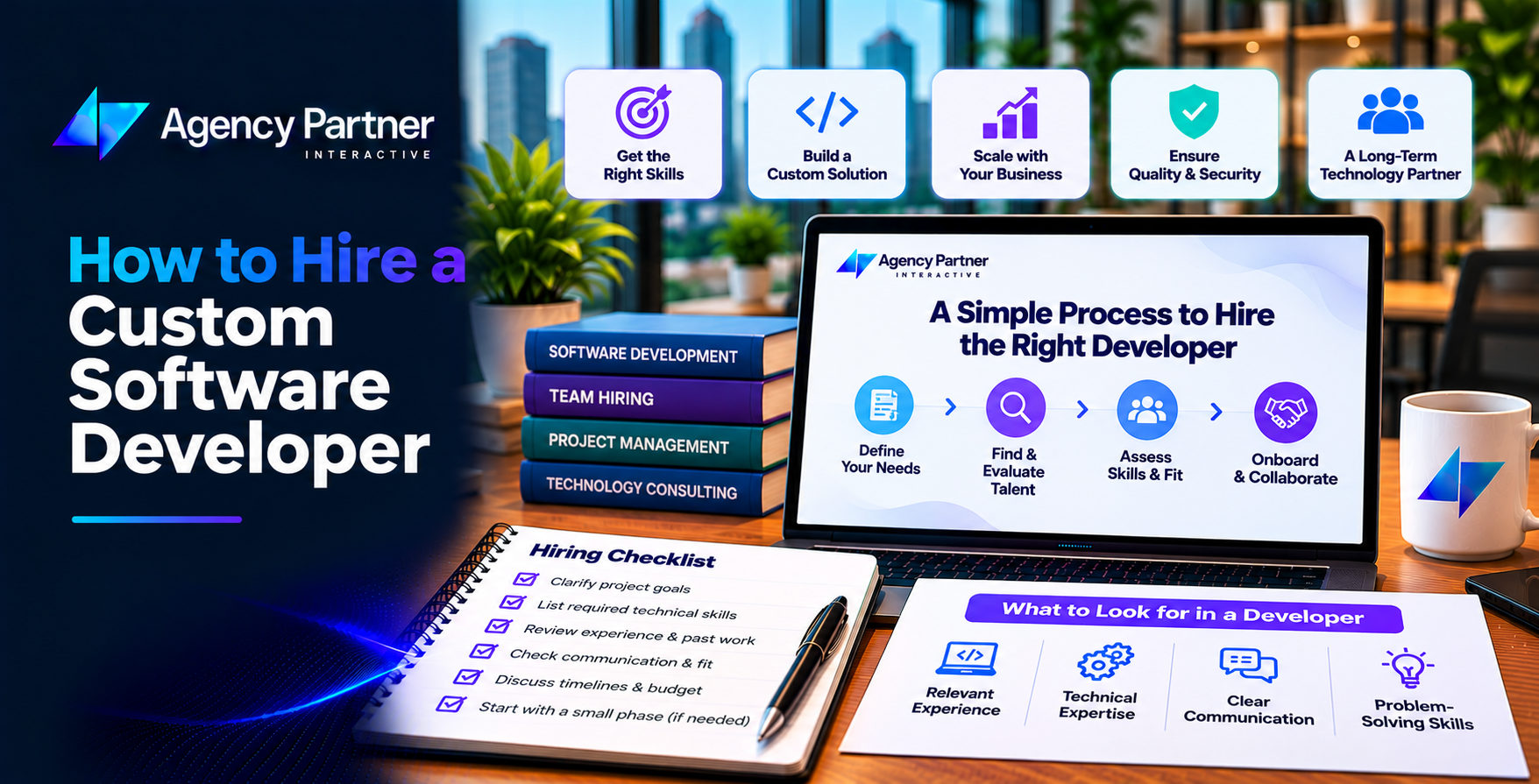
When you hire a custom software developer, confirm who owns the finished code and how the software will be transferred. Clear agreements help protect your investment and reduce future risks. A strong development partner should explain project costs, communication methods, testing, and handover before work begins.
Your business needs custom software. You’ve found developers with strong portfolios, reasonable prices, and promising timelines. But what happens when the project ends?
Will you own the source code? Can another developer update the application? Will you receive the documents and access needed to manage it? These questions matter as much as the software itself.
When you hire a custom software developer, you are investing in a system your business may use for years. A poor hiring decision can leave you dependent on one developer, even after paying for the entire project.
This guide explains how to evaluate developers, protect your ownership rights, and prepare for a smooth handover.
What Should You Look for When Hiring a Custom Software Developer?
Start with the developer’s ability to understand your business problem. Technical skills matter, but they are only part of the decision. A developer may know several programming languages yet struggle to build software that supports your daily operations.
For example, a logistics company may need a platform that connects dispatch, inventory, and customer records. The developer should understand how those processes work before recommending technology. Ask about similar projects, technical challenges, and results.
Review the developer’s communication style as well. You need someone who can explain complex topics without making every conversation technical. Strong software development partner selection focuses on business understanding, relevant experience, and reliable delivery.
What Questions Should You Ask Before Hiring a Developer?
Before signing a contract, ask questions that reveal how the developer manages projects.
Essential Developer Hiring Questions
- Have you built software with similar features or integrations?
- Who will manage the project and provide updates?
- How will you handle changes to the agreed scope?
- Who will own the source code and related intellectual property?
- Will our business control the code repository and hosting accounts?
- What testing will you complete before launch?
- What documents and training will we receive?
- How will the software project handover work?
- What happens if we change development partners?
- What support is available after launch?
These questions help you compare developers beyond their hourly rates. A reliable partner should provide clear answers before asking you to commit to a large project.
Who Owns the Source Code After Development?
Source code ownership is one of the most important contract issues in custom software development. Many business owners assume that paying a developer means they automatically own everything created.
That is not always true. According to the U.S. Copyright Office, an independent contractor may retain copyright unless a valid ownership transfer or applicable work-made-for-hire arrangement exists.
For commissioned software, relying only on a work-made-for-hire statement may not provide the protection you expect. A written copyright assignment is often an important part of the agreement.
Your contract should explain which rights transfer to your business, when they transfer, and whether payment conditions apply. It should also address pre-existing code, third-party tools, and open-source components.
These elements may have separate licenses. Before signing, have a qualified legal professional review the ownership terms.
What Should a Software Development Contract Include?
A clear contract protects both your business and the development team. It should explain what will be built, how the work will be approved, and what happens if plans change.
Key Contract Terms to Review
| Contract area | What to confirm |
| Project scope | Features, integrations, & deliverables |
| Payment terms | Milestones, fees, & payment schedule |
| Source code ownership | Rights transferred & timing |
| Third-party software | Licenses & usage restrictions |
| Project access | Repository, hosting, & account permissions |
| Testing | Quality standards & approval process |
| Handover | Documents, training, & final deliverables |
| Support | Warranty terms, maintenance, & response times |
The agreement should also explain how disputes and delays will be handled. Avoid vague promises such as “complete ownership” without details about the actual rights and files included.
Good software development partner selection requires reviewing the contract as carefully as the portfolio.
Why Does Source Code Ownership Matter for Your Business?
Owning the appropriate rights to your software can give your business more freedom. You may want to add features, change developers, or move the application to another hosting provider.
Without clear rights, these decisions can become difficult. Imagine a company that pays for a custom customer portal. Two years later, the company wants to connect it with a new CRM.
If the original agreement limits modifications or does not provide access to the code, the business may face delays and added costs. Clear source code ownership terms help prevent these problems.
However, ownership and access are different. Even if your business owns the copyright, you still need the files, credentials, documentation, and tools required to maintain the application.
What Should Be Included in a Software Project Handover?
A software project handover is the process of transferring the finished application and the information needed to operate it. It should be planned before development begins, not arranged at the last minute.
The handover should include access to the agreed source code repository, technical documentation, and deployment instructions. Your team should also receive details about hosting, databases, integrations, and third-party services.
For example, if your application connects to a payment gateway, you need to know how that connection is configured and maintained. Security matters during this process.
Passwords and API credentials should be transferred through secure methods. Sensitive credentials should be rotated when appropriate. The development team should also explain known issues, unfinished work, and maintenance needs.
A complete handover allows your business or another qualified team to continue supporting the software.
How Can You Avoid Vendor Lock-In?
Vendor lock-in happens when changing providers becomes difficult or expensive. It can occur when one developer controls essential accounts, uses undocumented systems, or builds features that depend on restricted tools.
Not all vendor dependence is harmful. Some specialized platforms offer useful features and support. The problem begins when your business cannot make reasonable changes without the original provider.
To reduce this risk, arrange access to important systems early. Where practical, your business should control its hosting account, domain, cloud services, and source code repository.
Ask the developer to document the application and explain any proprietary technology. You should also confirm whether another team could deploy and maintain the software. These steps make future transitions easier.
How Do You Evaluate a Developer’s Technical Skills?
A portfolio shows what a developer has worked on, but it may not reveal how well the software was built. Ask candidates to explain their technical decisions.
Why did they choose a particular framework? How did they manage security? What happened when project requirements changed?
You can also request a technical review from an independent expert. For larger projects, consider starting with a paid discovery phase or a small proof of concept. This allows you to assess communication, code quality, and problem-solving before committing to full development.
When you hire a custom software developer, focus on proven skills rather than the number of technologies listed on a website.
How Much Does It Cost to Hire a Custom Software Developer?
Development costs depend on project scope, complexity, team experience, and location.
A small internal application may need one or two developers. A larger business platform may require designers, developers, testers, and a project manager. Freelancers may offer lower initial costs for focused work.
Agencies can provide several specialists under one project structure, although their total fees may be higher. Compare proposals based on the work included, not just hourly rates. Ask whether discovery, testing, deployment, documentation, and handover are covered. A cheaper proposal may become more expensive if these services are billed separately.
How Do You Plan a Smooth Software Project Handover?
The best time to plan the handover is before development starts. Agree on the documents, access rights, and training your business will receive. During development, request regular updates and access to agreed project records.
Before final approval, have your team review the application against the agreed requirements. Testing should cover important workflows, security, and performance. Next, confirm that the software can be deployed using the provided instructions.
For complex applications, ask another qualified developer to review the documentation. A successful software project handover should leave your business able to operate the system without depending on undocumented knowledge.
What Red Flags Should You Watch for When Hiring Developers?
Some warning signs appear before a project begins. A developer may refuse to discuss ownership terms or provide unclear answers about who controls the code.
Others may promise unrealistic timelines without reviewing your requirements. Be cautious when proposals exclude testing, documentation, or post-launch support without explaining why.
Poor communication during the sales process can also signal future problems. A trustworthy developer should be willing to explain limitations and risks. Strong software development partner selection means choosing a team that offers transparency, not just attractive promises.
How Agency Partner Interactive Supports Custom Software Development
Choosing the right developer starts with understanding your business goals. Agency Partner Interactive provides custom software development services for businesses that need tailored applications, workflow automation, and connected systems.
The team supports software planning, design, development, integrations, and ongoing improvements. Agency Partner Interactive also emphasizes clear project milestones, communication, and technical planning.
When discussing a project, ask the team to explain the proposed ownership terms, access arrangements, and handover deliverables in writing. Planning a custom software project? Contact Agency Partner Interactive to discuss your requirements and development options.
Final Thoughts: Hire for Long-Term Control, Not Just Launch
When you hire a custom software developer, think beyond the launch date. Your software may need updates, new integrations, and additional features as your business grows. Clear contracts, proper documentation, and defined ownership rights help protect that investment.
Before choosing a partner, confirm who controls the code, what you will receive, and how the system can be maintained. Agency Partner Interactive helps businesses plan and build custom software around their goals.
Ready to discuss your software project? Connect with Agency Partner Interactive.
Frequently Asked Questions
1. How do I hire a custom software developer for my business?
Start by defining your goals, essential features, budget, and timeline. Review developers with relevant experience and ask about project management, security, testing, and ownership. Compare written proposals before choosing a partner.
2. Who owns the source code when I hire a software developer?
Source code ownership depends on the contract and applicable law. Paying a developer does not always transfer copyright. A written agreement should define ownership, licensing, third-party components, and when any rights transfer to your business.
3. What documents should I receive after software development?
A complete handover should include agreed source code access, setup instructions, technical documentation, deployment guidance, and integration details. Your team should also receive information about known issues, maintenance needs, and relevant account access.
4. Can I change developers after my software is built?
Yes, but the transition depends on your contract, access rights, and documentation. A new developer will need the code, deployment details, and system information. Clear ownership terms and a proper handover make switching easier.
5. What is the difference between hiring a freelancer and a software development agency?
A freelancer may be suitable for a small project or specialized task. An agency can provide developers, designers, testers, and project managers. The right choice depends on project complexity, budget, communication needs, and long-term support.
6. How long should a software project handover take?
A simple application may need a few days for documentation and access transfer. Complex systems can require several weeks of testing, training, and knowledge transfer. The timeline should be agreed upon before development begins.
Not big on reading? That’s okay. Watch “How to Hire a Custom Software Developer” instead.
Using the power of Artificial Intelligence, we turned this blog into a video for you. Check it out below!