Category: Software Development

  • Top U.S. FinTech App Developers for 2026

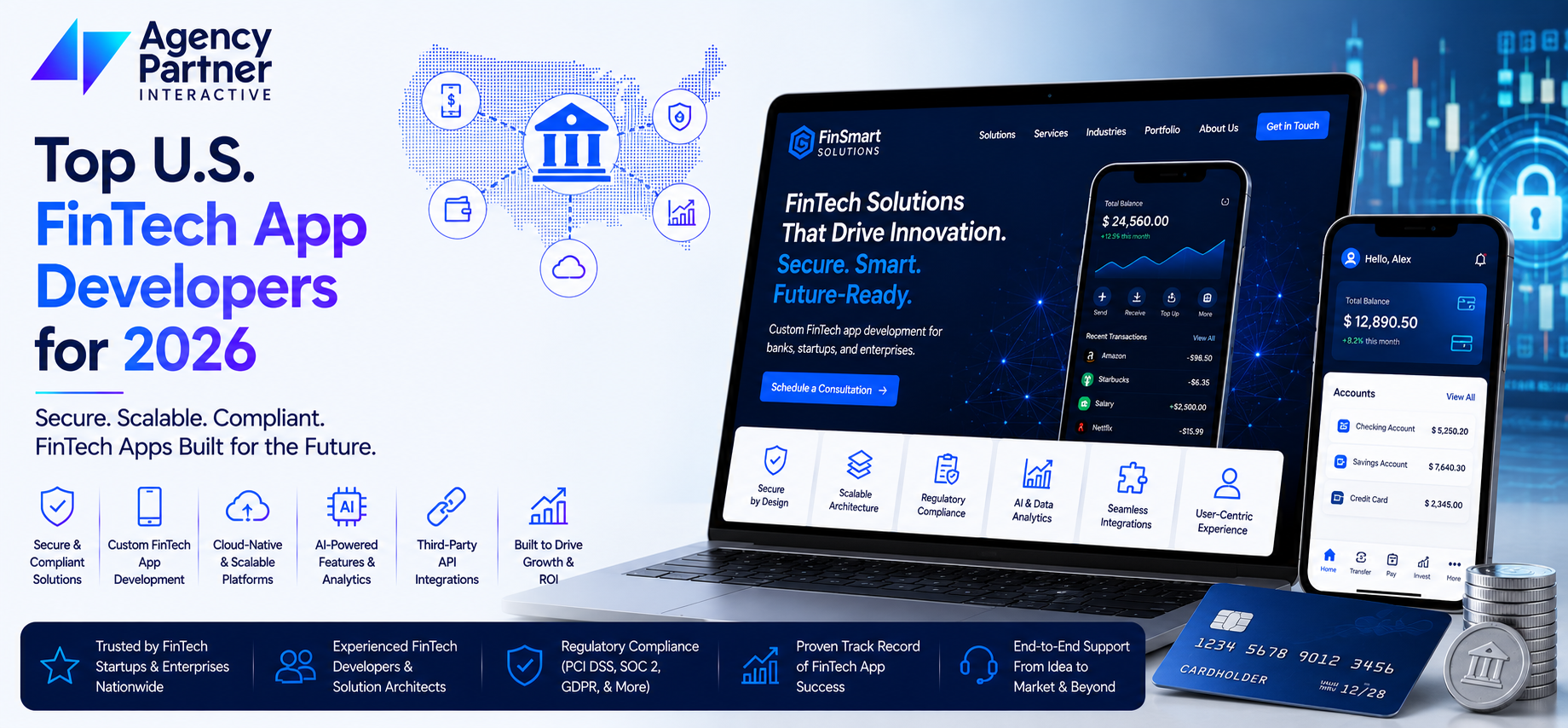
    Top U.S. FinTech App Developers for 2026

    The U.S. fintech market is on pace to hit roughly $66.82 billion in 2026 and climb toward $135 billion by 2031 — a 15%+ CAGR that’s pulling banks, credit unions, lenders, wealth platforms, and venture-backed startups into a race to modernize. None of that growth happens without a development partner who can actually ship a compliant, secure, and user-friendly product.

    That’s the catch with financial services mobile app development: it isn’t like building a retail or media app. You’re dealing with PCI DSS, SOC 2, KYC/AML workflows, legacy core-banking integrations, and users who will abandon your app the moment they don’t trust it with their money. Choosing the wrong banking software vendor costs more than a blown timeline — it can cost you a compliance audit.

    This guide ranks the U.S.-based (or U.S.-serving) development firms worth shortlisting in 2026 for custom fintech applications, based on delivery track record, fintech-specific expertise, security posture, and service depth.

    What We Looked For

    Before ranking anyone, we evaluated vendors against the same criteria a financial services buyer should use:

    • Verified fintech delivery experience — real shipped products in banking, lending, payments, insurance, or wealth management, not just a services page that mentions “finance.”
    • Compliance and security posture — SOC 2, ISO 27001, documented secure SDLC practices, and experience with regulated data.
    • Full-stack service depth — strategy, UX research, engineering, and post-launch growth, not just code delivery. A fintech app’s biggest risk after launch is user adoption, not architecture.
    • U.S. presence or U.S.-based delivery — time zone overlap and regulatory familiarity matter more in financial services than almost any other vertical.
    • Independently verified reviews — Clutch, G2, or similar platforms with a meaningful review count, not three testimonials from anonymous accounts.

    The Top FinTech App Development Companies for 2026

    1. Agency Partner Interactive

    Agency Partner Interactive (API) is a Plano, Texas-based digital agency built around what it calls the Digital Growth Engine — a framework that combines strategy, UX, engineering, AI, and marketing under one roof rather than treating app development as a standalone deliverable. That matters for financial services clients in particular, because a fintech app’s success is rarely just a code problem: it’s a positioning, trust, and acquisition problem too.

    API’s mobile app development services cover native iOS and Android, hybrid builds, and MVP development for startups that need to get a lending, payments, or wealth-management product in front of users fast. The team pairs that with dedicated UI/UX research — critical in fintech, where a confusing onboarding flow or an unclear KYC step is often the actual reason apps get abandoned, not a missing feature.

    • Best for: Financial services companies that want a single partner covering strategy, design, engineering, and growth marketing — rather than stitching together a dev shop and a separate marketing agency.
    • Notable strength: 850+ companies served across regulated industries (healthcare, in particular, gives them direct experience with HIPAA-grade compliance work that maps well to financial data handling), a 4.9 Clutch rating across 68 client reviews, and a track record documented across their case studies.
    • Engagement model: Book a consultation to scope a fintech-specific roadmap before committing to a build.

    2. Praxent

    Austin, Texas-based Praxent is one of the more narrowly focused firms on this list — the company works almost exclusively with credit unions, lenders, and wealth platforms. Its emphasis on regulated-industry UX research and onshore, single-time-zone communication makes it a fit for financial institutions that prioritize compliance familiarity over the lowest hourly rate.

    • Best for: Credit unions and regional lenders that need a partner who already speaks the regulatory language.

    3. Cleveroad

    Founded in 2011 and headquartered in Claymont, Delaware, Cleveroad builds digital banking platforms, payment apps, lending systems, mobile wallets, and financial dashboards. Its technical range spans native and cross-platform mobile development, backend engineering, cloud services, and applied AI/ML — with an $50–$80/hr rate band that positions it as a cost-conscious option for startups and mid-size fintechs.

    • Best for: Startups that need broad technical coverage (mobile, backend, AI) without enterprise pricing.

    4. ITechArt

    ITechArt has spent more than two decades building software for U.S.-headquartered tech companies, with a concentration in venture-backed SaaS and fintech. Its large engineering bench lets clients spin up dedicated teams quickly, making it a fit for growth-stage fintech startups that need to add iOS, Android, or backend capacity within a quarter.

    • Best for: Growth-stage startups that need to scale engineering headcount fast.

    5. Itransition

    Itransition runs a dedicated fintech practice covering everything from blockchain-based finance apps to RegTech. The firm is particularly strong on compliance and audit-trail work — KYC automation, transaction monitoring, and financial reporting systems — which matters given how much scrutiny the U.S. regulatory environment currently places on those workflows. Teams are distributed, so time zone coordination is worth planning for upfront.

    • Best for: Companies whose core challenge is compliance tooling (KYC, AML, audit trails) rather than pure app UX.

    6. Chop Dawg

    Chop Dawg has launched 500+ apps since 2009 and holds 300+ five-star reviews across Clutch, GoodFirms, G2, and Google. The firm brings compliance experience across HIPAA, GDPR, and SOC 2, and treats security and regulatory readiness as a day-one requirement rather than a late-stage add-on.

    • Best for: Founders who want a high-volume, review-heavy track record as social proof before committing budget.

    7. Dogtown Media

    A Santa Monica-based mobile development shop with fintech experience alongside health tech and consumer apps. Frequently shortlisted for polished consumer-facing financial products where UX and app-store performance are as important as backend security.

    • Best for: Consumer fintech apps where design polish drives adoption.

    8. ScienceSoft

    A U.S.-based IT consulting and software development company with deep fintech expertise, offering end-to-end delivery from ideation through deployment and maintenance. Its focus on security, regulatory compliance, and performance makes it a common shortlist pick for enterprise financial institutions rather than early-stage startups.

    • Best for: Enterprises that need long-term maintenance and support contracts, not just a launch.

    9. 3Pillar Global

    A Virginia-based product development company building software for financial services, insurance, and data-driven businesses. 3Pillar leans into product strategy, cloud architecture, and scalable engineering, and is an Inc. 5000 honoree — a fit for enterprises building complex, multi-year financial products rather than a single app.

    • Best for: Established financial institutions with complex, multi-product engineering roadmaps.

    10. Octal IT Solution

    With 18+ years of experience, Octal has delivered fintech solutions for startups, banks, NBFCs, payment providers, and investment firms across North America, Europe, the Middle East, and APAC. Its global delivery footprint makes it a reasonable option for financial brands scaling internationally.

    • Best for: Financial brands that need a partner with delivery experience outside the U.S. market as they expand globally.

    How to Actually Choose

    A ranked list narrows the field, but the decision still comes down to three questions worth asking every vendor on a discovery call:

    1. Have you shipped a product in my specific fintech niche (lending, payments, wealth management, banking-as-a-service) — not just “financial services” broadly?
    2. What does your secure SDLC actually look like, and can you show SOC 2 or ISO 27001 documentation rather than just claiming compliance?
    3. Who owns the product after launch? Fintech apps live or die on iteration — fraud patterns change, regulations shift, and user trust has to be earned continuously, not just at launch.

    If you’re evaluating financial technology solutions partners and want a team that treats compliance, UX, and growth marketing as one connected system rather than three separate vendors, get in touch with Agency Partner Interactive to scope your project.

  • Best Texas Logistics App Developers for 2026

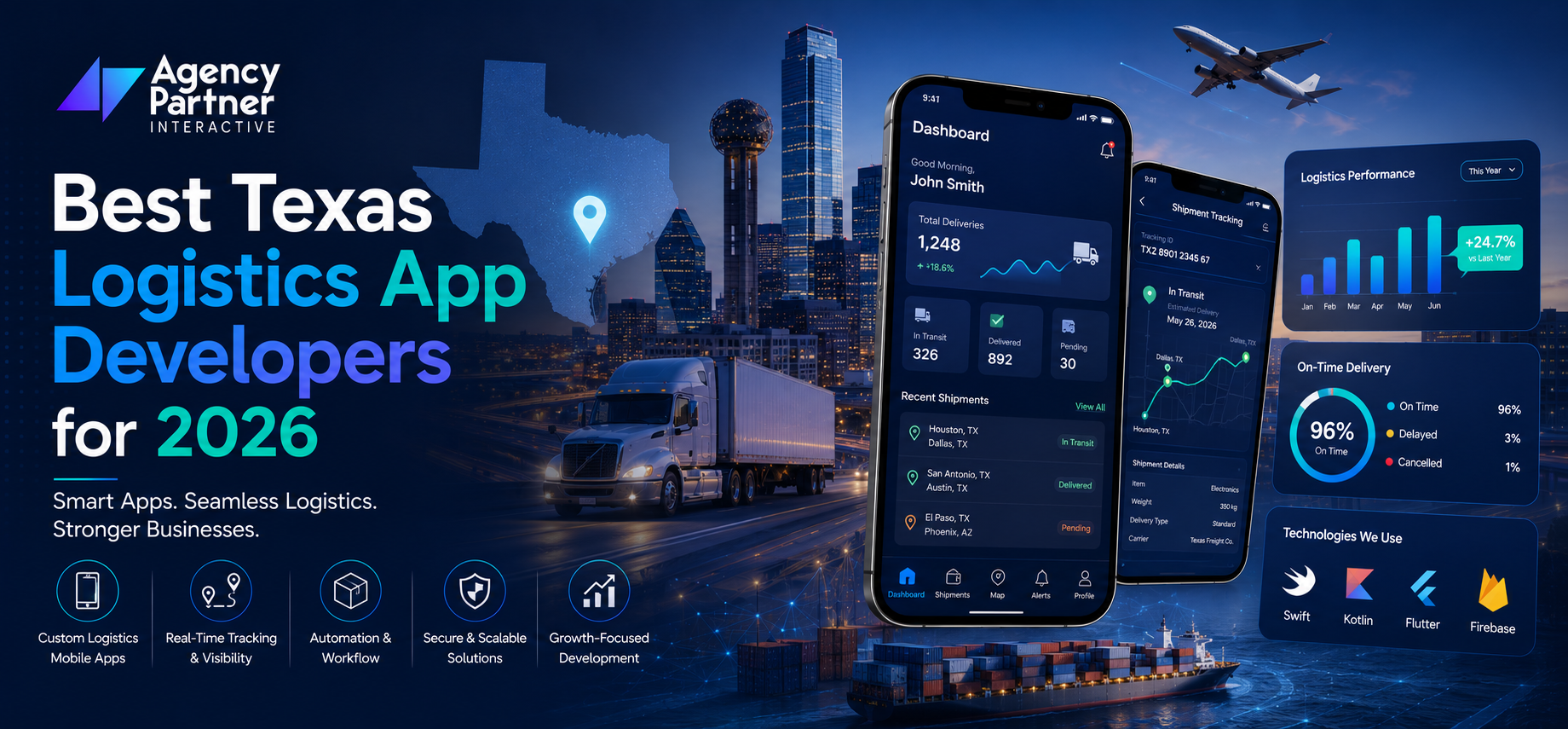
    Best Texas Logistics App Developers for 2026

    Texas runs on freight. The Dallas–Fort Worth intermodal hub, Houston’s ports and energy corridor, San Antonio’s distribution growth, and the I-35 cross-border lanes into Mexico make this one of the most logistics-dependent economies in the country. For operators here, the right driver app, dispatch tool, or tracking platform isn’t a nice-to-have — it’s the difference between protecting margins and losing freight to a faster competitor.

    But finding the right partner is harder than it should be. Most “Texas logistics app developer” lists online are padded with firms that aren’t in Texas at all — or that build generic apps with zero freight experience. This guide fixes that. Below is a vetted, ranked list of mobile app development companies with genuine Texas roots and real logistics, fleet, and supply chain work, plus the selection criteria to shortlist vendors fast.

    Quick answer: who should you shortlist?

    If you want a Texas-headquartered, full-service partner that designs, builds, integrates, and supports logistics apps end to end, Agency Partner Interactive is the strongest starting point. For freight-specific platform work — TMS, dispatch, and fleet systems — DirectX MGT and Developer Bazaar Technologies bring deep domain focus. For fleet and on-demand logistics apps with a Dallas presence, iQlance and BitsWits are worth a call. Your best pick depends on whether you need a single accountable partner or a niche freight-software specialist.

    How to evaluate a logistics app development partner

    Logistics apps fail for reasons consumer apps never face — patchy rural connectivity, hours-of-service rules, telematics that won’t sync. Score every vendor on the criteria that actually matter for transportation:

    1. Genuine logistics domain experience. Have they built TMS, dispatch, fleet, or driver apps before — or just retail and lifestyle apps? Ask for freight-specific examples, not a generic portfolio.
    2. Real Texas presence. A local team understands DFW freight density, port workflows, and cross-border compliance. Watch out for directory listings that tag overseas firms as “Texas.”
    3. Integration depth. Your app has to talk to ELD/telematics, TMS, WMS, ERP, and GPS systems. Integration is where most logistics builds live or die.
    4. Offline reliability. Drivers lose signal. The app must capture data offline and sync cleanly when connectivity returns.
    5. Security and compliance. Look for SOC 2 or ISO practices, DOT/FMCSA awareness, and secure handling of location and customer data.
    6. Ongoing support. Fleets can’t tolerate downtime; confirm a real post-launch maintenance and DevOps plan, not just a handoff.

    At-a-glance comparison

    Company Texas Presence Best For Logistics Strengths Full-Service + Support
    Agency Partner Interactive HQ in Plano (DFW) End-to-end logistics & transportation apps Driver apps, tracking, integrations, web + mobile Yes (in-house DevOps)
    DirectX MGT Texas Freight-software specialists TMS, fleet, dispatch automation, WMS Partial
    Developer Bazaar Technologies Serves Texas (DFW/Houston) Custom freight platforms TMS/WMS, route optimization, driver apps Yes
    iQlance Dallas office Fleet & on-demand logistics apps Fleet tracking, on-demand delivery apps Yes
    BitsWits Dallas Logistics software + IoT Route optimization, WMS, IoT/mobile scanners Yes

    The best Texas logistics app developers in 2026

    1. Agency Partner Interactive — best end-to-end Texas logistics app partner

    Agency Partner Interactive (API) is headquartered in Plano, in the heart of the DFW logistics corridor, and offers exactly what most transportation leaders actually need: one accountable Texas team that handles strategy, design, development, integrations, and ongoing support. Rather than coordinating a separate designer, developer, and maintenance vendor, you get the full lifecycle under one roof.

    API’s relevance to this sector isn’t theoretical — its client work spans logistics and transportation businesses, including freight and logistics brands, which is the kind of domain proof generic app shops can’t show. Its mobile app development services cover native iOS and Android and cross-platform builds, and its engineering team handles the connective tissue logistics apps depend on — tying driver and dispatch apps into telematics, TMS, and back-office systems through custom software development.

    Just as important for fleets that can’t afford a stalled app, API provides ongoing support and DevOps after launch, with a track record of more than 1,800 delivered projects and recognition including Clutch, Inc. 5000, and Google Partner status. You can review the range of delivered work in its project case studies.

    Best for: Texas logistics and transportation companies wanting design, build, integration, and support from one local partner. Worth knowing: the full-service model fits operators who want a long-term partner, not a one-off contractor.

    2. DirectX MGT — best freight-software specialists

    DirectX MGT focuses specifically on custom software for Texas logistics companies, including transportation management systems (TMS), fleet management platforms, dispatch workflow automation, and warehouse management systems. Their pitch is domain depth: freight infrastructure requires operational understanding that generic development firms lack, and they build around a logistics company’s actual workflow rather than forcing a template.

    Best for: freight operators that need deep TMS, dispatch, or compliance-tracking systems built around their exact operating model.

    3. Developer Bazaar Technologies — best for custom freight platforms

    Developer Bazaar Technologies builds custom logistics platforms aimed at the scale and complexity of the Texas freight market — DFW’s intermodal hub, Houston port logistics, and beyond. Their services span custom TMS and WMS, AI-powered route optimization, real-time fleet tracking, last-mile dispatch, mobile driver apps, freight broker platforms, and supply chain visibility.

    Best for: logistics companies wanting a broad freight platform with route optimization and driver-app components.

    4. iQlance — best for fleet and on-demand logistics apps

    iQlance is a mobile and software development firm with a Dallas office that markets logistics and fleet capabilities, including optimized fleet management, real-time driver tracking, and on-demand delivery apps. It’s a reasonable option for transportation brands building consumer- or operations-facing apps that prioritize live tracking and notifications.

    Best for: fleet management mobile apps and on-demand delivery products with strong tracking features.

    5. BitsWits — best for logistics software with IoT

    BitsWits positions itself as a Dallas logistics software development company, building route optimization apps, cloud-based warehouse management systems with IoT sensors and mobile scanners, and last-mile delivery tools. Its emphasis on collaborative development and integrating real-time data makes it a fit for operators modernizing warehouse and delivery workflows.

    Best for: warehouse and last-mile operations adding IoT, scanning, and route optimization.

    What a strong logistics app actually includes

    Before scoping a build, know the feature set that separates a real logistics and transportation app from a generic one:

    • Real-time GPS tracking and geofencing for shipments and vehicles.
    • Driver apps with route guidance, proof of delivery, e-signatures, and photo capture.
    • Dispatch and load management dashboards that assign, monitor, and reroute in real time.
    • Telematics and ELD integration for hours-of-service and vehicle diagnostics.
    • Offline-first data capture that syncs when signal returns.
    • TMS/WMS/ERP integration so the app reflects real inventory, orders, and billing.
    • Analytics on miles, fuel, on-time performance, and driver behavior.

    Getting these right depends as much on workflow design as on code, which is why strong UI/UX design — built for a driver glancing at a phone in a moving cab, not a desk user — matters more in logistics than in almost any other category.

    Fleet management vs. supply chain visibility: which build do you need?

    These overlap, but they solve different problems, and naming yours up front speeds up vendor selection.

    Fleet management mobile apps focus on vehicles and drivers: live location, route optimization, maintenance scheduling, fuel tracking, and driver safety. The payoff is fewer wasted miles, lower fuel spend, and tighter compliance. If your pain is operational efficiency on the road, this is your starting point.

    Supply chain software development widens the lens to the whole goods journey: inventory across warehouses, supplier coordination, order and shipment visibility, and exception alerts when something slips. The payoff is fewer stockouts, better forecasting, and end-to-end transparency for customers. If your pain is visibility across partners and locations, prioritize this.

    Many Texas operators ultimately need both, connected — which is where a partner comfortable across web and mobile app development and the industries it serves has an edge. API’s industries overview breaks down how transportation requirements differ from other sectors.

    What does logistics app development cost in Texas in 2026?

    Pricing varies with complexity and integration scope, but useful benchmarks look like this:

    • Single-purpose app (e.g., a driver or proof-of-delivery app): roughly $40,000–$90,000.
    • Fleet or dispatch platform with telematics and TMS integration: $90,000–$250,000+.
    • Full logistics ecosystem (driver app + dispatch + supply chain visibility + integrations): $250,000 and up.
    • Ongoing support and maintenance: typically a monthly retainer scaled to fleet size, uptime needs, and release cadence.

    Texas-based hourly rates generally run higher than offshore directory listings advertise — but local domain experience, integration reliability, and responsive support usually cost far less than rebuilding a failed offshore project. Clarify exactly what’s included before comparing quotes.

    How to shortlist fast

    1. Name your build. Fleet app, dispatch platform, or supply chain visibility — clarity narrows the field instantly.
    2. List your integrations. ELD/telematics, TMS, WMS, ERP. This single list eliminates unqualified vendors.
    3. Demand freight proof. Ask for logistics case studies with outcomes, not a generic app portfolio.
    4. Verify Texas presence. Confirm a real local team rather than a directory listing.
    5. Run a paid discovery phase. A short scoping engagement reveals how a vendor thinks before you commit to a full build.

    Reviewing a partner’s values and approach is also a fast way to gauge whether they’ll operate as a true partner or just a code shop.

    Frequently asked questions

    Q. What should I look for in a logistics app development company in Texas?

    Prioritize genuine logistics domain experience (TMS, fleet, dispatch, or driver apps), a real Texas-based team, proven integration with telematics and back-office systems, offline reliability, and a clear post-launch support plan. Be cautious of directory lists that label overseas firms as “Texas.”

    Q. How much does a logistics or fleet management app cost?

    A single-purpose app typically runs $40,000–$90,000, while a fleet or dispatch platform with telematics and TMS integration ranges from about $90,000 to $250,000 or more, depending on complexity and integrations.

    Q. How long does it take to build a logistics app?

    A focused driver or tracking app can take a few months; a full fleet or supply chain platform with multiple integrations often takes six months or more. Integration scope and decision speed drive the timeline.

    Q. What’s the difference between fleet management apps and supply chain software?

    Fleet management apps focus on vehicles and drivers — tracking, routing, maintenance, and compliance. Supply chain software focuses on the broader goods journey — inventory, suppliers, and shipment visibility. Many operators eventually connect both.

    Q. Why choose a Texas-based developer over an offshore firm?

    A local team understands Texas freight density, port and cross-border workflows, and U.S. compliance, and offers responsive support across compatible time zones — which typically reduces risk and rework on complex logistics builds.

    Ready to build a logistics app that performs in the field?

    The right partner combines genuine freight experience, a local Texas team, and the ability to design, build, integrate, and support your app long after launch. If you’d like that handled end to end, talk to an expert at Agency Partner Interactive to scope your logistics app and integrations.

  • Top 10 Mobile App Development Trends in 2026

    Top 10 Mobile App Development Trends in 2026

    Key Takeaways: The global top mobile app development market is projected to hit $305.18 billion by 2026, with 181 billion downloads expected globally. Users will spend 4.5 trillion hours in apps this year. App market trends show AI, 5G, and cross-platform frameworks now dominating every category of mobile app development trends. Companies combining AI, 5G, and IoT report 3–5x better results than those using a single mobile development technologies approach. 

    Mobile apps are no longer just digital features, they are the primary interface between businesses and their customers. In 2026, apps are smarter, faster, more immersive, and more integrated into daily life than at any point in history. For businesses, keeping up with mobile app development trends isn’t optional, falling behind means ceding ground to competitors who are already shipping what users now expect. 

    This guide breaks down the 10 most important latest mobile app development trends shaping the industry, with real data, practical examples, and the application development technologies driving each one. 

    Why Do Mobile App Development Trends Matter for Your Business in 2026? 

    Mobile app industry trends are moving faster than ever. Generative AI became standard in most apps within 12 months. 5G reached critical mass in developed markets. PWAs overtook native apps in several industries (Progriso, 2026). Understanding mobile development trends before building or updating your app determines whether your product launches ahead of user expectations, or behind them. 

    The future of mobile app development is defined by five forces: AI integration, 5G and edge computing, immersive experiences through AR/VR, cross-platform frameworks, and privacy-first architecture. Every app development trend below connects to at least one of these forces. 

    1. Is AI Integration the Most Important of All Mobile App Trends in 2026? 

    Yes, and by a significant margin. AI is no longer a differentiating feature in apps, it’s a baseline expectation. Mobile app trends data shows AI powering personalization, predictive UX, chatbots, on-device processing, and real-time recommendations across every app industry trends category: e-commerce, healthcare, fintech, education, and entertainment. 

    The numbers are clear. AI-driven content suggestions in streaming apps deliver 35% higher retention. AI-powered travel recommendations increase in-app bookings by 32% (CMARIX, 2026). On-device AI, processing data locally rather than server-side, is one of the latest mobile app development technologies gaining fastest adoption, offering faster performance and stronger privacy. 

    For businesses evaluating top mobile app development priorities, AI personalization is the highest-ROI capability to build in 2026. It’s the defining characteristic of mobile app development trends separating category-leading apps from everything else. 

    2. How Is 5G Reshaping Mobile Development Trends and App Capabilities? 

    16% of global mobile connections were 5G-powered by end of 2025, and in developed markets, that number approaches 60–80% coverage (Progriso, 2026). For mobile application development trends, 5G isn’t just faster speeds, it unlocks entire categories of application development technologies that were impractical under 4G: cloud gaming, real-time AR shopping, HD telemedicine, and ultra-low-latency IoT control. 

    Among mobile development technologies, 5G changes the architecture equation entirely. Processing that previously had to happen on-device can move to the edge, reducing app size and hardware dependency while enabling richer experiences. This is one of the app development trends with the broadest downstream impact, every industry from logistics to retail to healthcare benefits. 

    3. Are AR and VR Still Relevant Mobile App Industry Trends in 2026? 

    More relevant than ever. AR/VR integration is now a core feature in mainstream apps across retail, education, and entertainment, not just a showcase technology (Alea IT, 2026). Retail apps with AR try-on features see measurably higher conversion. Education platforms using VR simulations outperform text-based equivalents on knowledge retention. Healthcare apps using AR for surgical guidance and patient education are among the fastest-growing mobile development trends in the industry. 

    By 2026, AR/VR is one of the latest mobile app development trends where consumer expectation has caught up with capability, making it a legitimate competitive advantage for brands building immersive application development technologies experiences into their products. 

    4. Why Is Cross-Platform Development One of the Top Mobile App Development Trends? 

    Building separate native apps for iOS and Android doubles development cost, extends timelines, and creates version-parity maintenance problems indefinitely. Cross-platform frameworks, Flutter and React Native specificall, have become the dominant mobile development technologies for most business app categories in 2026. 

    PWAs now win for 70–80% of business apps (Progriso, 2026). Flutter and React Native enable single-codebase development that delivers near-native performance while cutting app development trends timelines by 30–40%. For businesses prioritizing speed-to-market, which is most businesses, cross-platform is now the default choice among latest mobile app development technologies, not a compromise. 

    5. What Role Does the Internet of Things Play in App Market Trends? 

    IoT and mobile apps are becoming inseparable. Wearables and smart TV apps grew 15% year-over-year in downloads in 2025 (Alea IT). Smart home devices, industrial sensors, fleet management systems, and health monitors all require mobile application development trends that support real-time data sync, device control, and cross-platform interoperability. 

    Healthcare is the clearest example of app industry trends driven by IoT: telemedicine consultations are up 600% since 2020, and 80% of health app users now use wearable device integration. For top mobile app development in healthcare, logistics, and manufacturing, IoT connectivity has moved from optional to essential. 

    6. Are Super Apps a Significant Application Development Trend in 2026? 

    Super apps, single platforms that combine payments, messaging, shopping, ride-hailing, and financial services, are one of the most consequential mobile app industry trends expanding beyond Asia in 2026. WeChat and Grab pioneered the model; by 2026, Western markets are building equivalent ecosystems. 

    For businesses, the app market trends signal is clear: users want fewer apps that do more, not more apps that do less. Any mobile app development trends strategy that doesn’t account for super app ecosystem, either by building one or by integrating into them, risks building for a shrinking user attention window. 

    7. How Is Low-Code/No-Code Changing App Development Trends? 

    Low-code and no-code platforms are one of the latest mobile app development trends with the most direct impact on development economics. They enable rapid prototyping, reduce time-to-market, and allow non-technical teams to build and test application development technologies without full engineering cycles. 

    For businesses, this mobile development trend means MVPs can be shipped in weeks instead of months, testing market fit before committing to full-scale mobile app development trends investment. For top mobile app development teams, low-code handles the 80% of standard functionality, freeing engineers for the 20% of custom logic that actually differentiates the product. 

    8. Why Is Mobile Security One of the Most Critical App Industry Trends? 

    With global in-app advertising spend projected at $390 billion in 2025 and 1.31 billion mobile payment users expected worldwide (LambdaTest, 2026), mobile apps have become the most valuable attack surface in digital commerce. Mobile app industry trends toward biometric authentication, zero-trust architecture, on-device data processing, and end-to-end encryption are accelerating in direct response. 

    Privacy regulations, GDPR, CCPA, the EU AI Act, are reshaping application development technologies decisions at the architecture level. Behavior-based ads are replacing user-targeted tracking. Privacy-first design is now a mobile development technologies requirement, not a nice-to-have. Any future of mobile app development roadmap that doesn’t prioritize security and privacy compliance is building technical and legal debt from day one. 

    9. How Are Foldable Devices Influencing Mobile Application Development Trends? 

    Foldable smartphones are no longer niche hardware. IDC projects 48.1 million foldable device shipments globally by 2027, with a market value of $42 billion (LambdaTest, 2026). For mobile application development trends, this means adaptive layouts, multi-window support, and seamless screen-transition UX are now production requirements for apps targeting premium audiences. 

    Among latest mobile app development trends, foldable optimization is where early movers gain disproportionate visibility, because the App Store and Google Play actively feature apps that demonstrate quality foldable support. For top mobile app development teams targeting high-value demographics, foldable-ready architecture should be in the spec today. 

    10. What Is the Future of Mobile App Development in the Age of Wearables? 

    Wearables are one of the mobile development trends with the clearest long-term trajectory. The wearable tech market is projected to hit $265.4 billion by 2026 (Info Stans). Smartwatches, fitness trackers, AR glasses, and medical-grade biosensors are all driving demand for latest mobile app development technologies that synchronize data across devices in real time. 

    The future of mobile app development in wearables centers on three capabilities: always-on ambient data collection, health and fitness API integration (Apple HealthKit, Google Fit, Samsung Health), and ultra-minimal UI design optimized for 1–2 inch screens. For mobile app development trends in healthcare, fitness, and enterprise field operations, wearable app development is one of the highest-ROI application development trends to invest in before the market reaches saturation. 

    How Should Your Business Respond to These App Development Trends? 

    The future of mobile app development is clear: AI-native, 5G-optimized, cross-platform, privacy-first, and designed for a multi-device world that includes wearables, foldables, and IoT endpoints. 

    For businesses building or upgrading apps, the mobile app trends priority list is: 

    1. AI personalization: Most impactful, highest ROI across every app market trends category 
    2. Cross-platform frameworks: Best cost-to-performance ratio among mobile development technologies 
    3. 5G-ready architecture: Future-proofs the app as coverage expands 
    4. Security and privacy-first design: Non-negotiable for user trust and regulatory compliance 
    5. Wearable and IoT readiness: Highest growth rate among all application development trends 

    Companies combining multiple latest mobile app development technologies see 3–5x better results than single-technology implementations. The top mobile app development investments in 2026 are not individual features, they’re interconnected capabilities that compound when built together. 

    FAQs 

    1. What are the top mobile app development trends in 2026?  

    AI integration, 5G optimization, cross-platform frameworks, AR/VR, super apps, wearable support, and privacy-first architecture lead. 

    2. What is the future of mobile app development?  

    AI-native, multi-device, privacy-first apps built on cross-platform frameworks for wearables, foldables, and IoT ecosystems. 

    3. What mobile development technologies dominate in 2026?  

    Flutter, React Native, on-device AI, 5G edge computing, and AR/VR SDKs are the leading mobile development technologies. 

    4. How big is the mobile app market in 2026?  

    Projected at $305.18 billion with 181 billion downloads and 4.5 trillion hours of user time globally. 

    5. What are the best application development technologies for cross-platform apps?  

    Flutter and React Native lead. PWAs win for 70–80% of business use cases where native performance isn’t critical. 

    References 

    1. CMARIX — Mobile App Development Statistics 2026 — cmarix.com/blog/mobile-app-development-statistics (AI 35% retention lift; 32% booking increase; cross-platform key technologies) 
    2. Alea IT — Mobile App Statistics & Trends 2026 — aleaitsolutions.com/mobile-app-statistics (4.5T hours; $170B IAP revenue; 15% wearable YoY growth; AR/VR mainstream) 
    3. XtendedView — Mobile App Industry Statistics 2026 — xtendedview.com/mobile-app-industry-statistics ($243.55B platform market; 181B downloads by 2026; Android 72% OS share) 
    4. Progriso — Mobile App Trends 2026: Top 12 Technologies — progriso.com/mobile-app-trends-2026 (PWAs 70–80% business apps; 5G 60–80% developed market coverage) 
    5. AppVerticals — Mobile App Development Market Growth 2026 — appverticals.com/blog/global-mobile-app-development-market-statistics ($305.18B market; 3–5x AI+5G+IoT results; 15% IT budget to mobile) 
    6. LambdaTest — Top 29 Mobile App Development Trends 2026 — testmuai.com/blog/mobile-app-development-trends (1.31B payment users; 48.1M foldable shipments; wearable integration trends) 

    Building your next mobile app? Agency Partner Interactive develops AI-powered, cross-platform mobile applications for businesses ready to lead in 2026. Let’s talk. 

  • Mobile learning applications Development: types, features & our expertise

    Mobile learning applications Development: types, features & our expertise

    Key Takeaways: The mobile learning market is valued at $155.81 billion in 2026, growing at a 30.12% CAGR. Over 455,000 mobile learning apps exist across iOS and Android combined. 70% of learners feel more motivated when training is on a mobile device vs. desktop. 94% of Gen Z use mobile phones for mobile education, making custom mobile learning solutions one of the highest-ROI investments in EdTech today. 

    The classroom is wherever your learner is. That’s not an aspiration in 2026, it’s the expectation. With smartphones as the primary device for a generation of learners, organizations that still deliver training through desktop-only platforms are losing engagement, completion rates, and competitive talent before the course even loads. 

    What is mobile learning? Simply put, mobile learning, or mLearning, is the delivery of educational content and training through mobile devices: smartphones, tablets, and laptops. Unlike desktop-bound systems, mobile learning platforms deliver learning anytime, anywhere, in formats optimized for smaller screens and on-the-go consumption.  

    What is mobile learning in an enterprise context? It’s mobile training software that replaces classroom-based and desktop-only programs with accessible, device-agnostic training experiences.  

    What is mobile learning at its most impactful? It’s the difference between training that gets done and training that gets skipped. Mobile learning companies building these platforms have turned workforce training from a scheduled event into a continuous, embedded practice. 

    Whether you’re an enterprise building custom mobile learning solutions for workforce training, a university launching a mobile education app, or an e learning software development company serving multiple clients, this guide covers everything you need to know about e-learning app development: types, features, implementation, and what to look for in a development partner. 

    What Is Mobile Learning and Why Does It Matter in 2026? 

    What is mobile learning beyond the definition? It’s a fundamental shift in how knowledge gets transferred. Industry leaders using mobile learning solutions report business improvement of 55% following adoption. 67% of U.S. companies have integrated mobile training software into their programs. And LinkedIn Learning registered 78% corporate usage on mobile in 2024, a figure that’s only grown since. 

    The numbers behind mobile learning platforms are extraordinary: the market hit $155.81 billion in 2026 and is projected to reach $334.19 billion by 2029. That growth is powered by 5G expansion, workplace BYOD mandates, and the proven fact that mobile learning lms completion rates consistently outperform desktop-only equivalents. There are now over 455,000 mobile learning apps across iOS and Android, making this the most competitive category in mobile learning software development. 

    For any e-learning software development company evaluating where to focus in EdTech, or any organization evaluating mobile learning companies to partner with, the strategic case is unambiguous. The mobile learning companies building the strongest platforms in 2026 share one trait: they treat mobile learning software as a behavior change tool, not just a content delivery mechanism. 

    What Are the Main Types of Mobile Learning Applications? 

    Mobile learning platforms aren’t a single category. Here are the six primary types, each with distinct development requirements: 

    1. Corporate Training Apps  

    The largest segment of mobile training software globally, covering onboarding, compliance, skills development, and performance support. Built on mobile learning lms infrastructure, corporate mobile learning solution apps deliver role-specific content, completion tracking, and certification management to distributed workforces. Mobile learning tools for this category typically integrate with existing HRIS and mobile learning lms systems, and are the primary driver of mobile training software investment in Fortune 500 organizations. 

    2. Academic and K–12 Mobile Education Apps  

    Mobile education apps for schools and universities deliver curriculum content, assignments, assessments, and communication tools on student devices. 94% of Gen Z use their phones for mobile education, and institutions delivering native e learning mobile app experiences see measurably higher engagement. Strong mobile education platforms also support parental visibility and teacher administration from the same interface. 

    3. Microlearning Apps  

    Short-burst learning delivered through an e-learning mobile app in 3–7 minute modules. Microlearning on mobile learning platforms increases knowledge retention by 80% compared to traditional long-form formats. It’s the format most aligned with mobile consumption habits, and the fastest-growing category in custom mobile learning solutions development. The best mobile learning tools for microlearning include spaced repetition, adaptive sequencing, and progress streak tracking. 

    4. mLearning Training Portals  

    An mlearning training portal serves as a centralized hub where learners access all training content, track progress, earn certifications, and engage with instructors. A well-designed mlearning training portal functions as the mobile front-end to a full mobile learning lms, giving learners a unified experience across every device. Mlearning training portal architecture must handle concurrent access, offline content sync, and push notifications at scale. For enterprises with thousands of learners, a robust mlearning training portal is the most visible ROI driver in the entire mobile learning solution stack. 

    5. Language Learning Apps  

    Consumer-facing mobile learning software like Duolingo, gamified, spaced-repetition-based, and designed for daily engagement habits. The techniques pioneered by consumer mobile learning software are now being applied to enterprise custom mobile learning solutions for technical skills, compliance, and product training. 

    6. Skills and Professional Development Apps  

    Custom mobile learning solutions built for specific professional domains, coding bootcamps, sales enablement, medical continuing education, legal compliance. These mobile learning solution apps often integrate with credentialing bodies and require the most rigorous assessment and anti-fraud architecture of any e learning software development category. 

    What Features Must Every Mobile Learning App Include? 

    Any credible e learning software development company builds these core features into every e-learning mobile app: 

    Offline Access  

    The most frequently requested feature in mobile learning solutions, and the most technically complex. Learners in field environments, on planes, or in low-connectivity areas must access and complete content offline, with progress syncing automatically when connectivity resumes. Any mobile learning platforms build that skips offline access loses its primary value proposition for field-based workforces. This is one feature where mobile learning software quality separates quickly. 

    Push Notifications and Learning Nudges  

    Behavioral science-backed reminders that increase daily active usage and completion rates. Mobile learning platforms with intelligent notification cadencing, based on learner behavior, not arbitrary schedules, consistently outperform those with static reminders. This feature is standard in mature mobile training software products and should be a baseline expectation in any e learning app development engagement. 

    AI-Powered Personalization  

    Generative AI in 2026 tailors micro-modules to individual learners, adjusting difficulty, format, and content sequencing based on performance data. Mobile learning companies building with AI personalization report completion rate improvements of 20–50%. For custom mobile learning solutions targeting enterprise learners, AI personalization is what transforms mobile learning software from a content library into a genuine performance support tool. 

    Gamification  

    Points, badges, leaderboards, and progress streaks are non-negotiable in competitive mobile learning software. 83% of learners report higher motivation in gamified environments. For mobile training software targeting Gen Z or frontline workforces, gamification is what separates platforms people use daily from ones they open once. The best mobile learning tools integrate gamification natively, not as a bolt-on module. 

    Assessment and Certification Engine  

    Quizzes, scenario-based assessments, and auto-generated certificates built directly into the e-learning mobile app, with fraud prevention, time limits, and retake policies configurable by the admin. A robust assessment engine is the core differentiator of quality e learning app development vs. off-the-shelf mobile learning software. 

    Analytics Dashboard  

    Role-specific dashboards for learners, managers, and admins, with real-time data from every interaction in the mlearning training portal. Actionable mobile learning tools analytics are what separate platforms that improve programs over time from those that just deliver content. Every e learning software development company should treat analytics architecture as a first-class deliverable, not an afterthought. 

    Multi-Device Sync and Responsive Design  

    Seamless continuation across devices, start on a phone, finish on a tablet or desktop. Every e learning mobile app must be built responsive-first, with native iOS and Android apps supplemented by browser-based access. Strong mobile education platforms also handle localization for multiple languages from the same codebase. 

    SCORM and xAPI Compliance  

    Standard content format support ensures content created in any authoring tool is compatible with the mobile learning lms, and learner data flows correctly into reporting systems. Any e learning software development services engagement that skips standards compliance creates costly content migration work later. E learning software development services that include SCORM/xAPI validation as a QA milestone protect clients from post-launch content incompatibility issues. 

    How Does E-Learning Mobile App Development Work? 

    E learning software development services for mobile follow a structured process. Here’s how a qualified e learning software development company approaches e-learning app development: 

    Phase 1 Discovery (2–4 weeks)  

    Learner persona research, content audit, integration requirements (HRIS, existing LMS, SSO), and platform decisions, native iOS/Android, cross-platform (React Native, Flutter), or PWA. The most important decision in e learning software development is made here: which architecture best serves your learner contexts. A strong e learning software development company brings instructional design expertise into this phase, not just engineering. 

    Phase 2 UX and Instructional Design (3–5 weeks)  

    Mobile learning UX is fundamentally different from desktop. Mobile learning tools must be thumb-navigable, glanceable, and designed for interrupted use sessions. Strong e learning software development services bring instructional designers alongside engineers, ensuring learning efficacy, not just technical function. This phase also defines the mobile learning software content formats: video, interactive, gamified, or assessment-led. 

    Phase 3 Development (10–20 weeks)  

    Backend, frontend, and mlearning training portal admin dashboard are built in parallel sprints. Experienced mobile learning companies use React Native or Flutter for cross-platform efficiency, reducing e learning software development cost by 30–40% vs. fully native builds. Quality e learning app development at this stage delivers clean API architecture that scales to 10x your initial learner count without re-engineering. 

    Phase 4 QA and Compliance Testing (3–4 weeks)  

    SCORM/xAPI validation, offline sync testing, load testing, and accessibility audit. Any e learning software development company that skips accessibility testing creates legal and reputational exposure. A thorough e learning software development services QA phase also covers app store submission requirements for both iOS and Android. 

    Phase 5 Launch and Ongoing Development  

    App store submission, learner onboarding, admin training, and a 90-day support SLA. The best mobile learning companies don’t treat launch as the finish line, they provide ongoing e learning software development services as learner needs evolve and new mobile learning tools capabilities emerge. 

    What Does Mobile Learning App Development Cost? 

    E learning software development costs depend on platform, feature depth, and integration complexity: 

    • Basic e learning mobile app (core content delivery, quizzes, progress tracking): $40,000–$80,000 
    • Mid-complexity mobile learning solution (offline access, gamification, analytics, SSO): $80,000–$200,000 
    • Enterprise custom mobile learning solutions (AI personalization, multi-tenant, full mlearning training portal): $200,000–$500,000+ 
    • Maintenance and ongoing e learning software development services: 15–20% of build cost annually

    The ROI case for mobile learning platforms investment is well established. Organizations using mobile training software consistently outperform desktop-only training programs on completion rates, knowledge retention, and time-to-proficiency. For any e learning software development company building in this space, or any enterprise evaluating mobile learning companies, the combination of a purpose-built e-learning mobile app, a robust mlearning training portal, and strong mobile learning lms integration is what delivers measurable outcomes vs. marginal engagement improvements. 

    The best mobile learning companies in 2026 don’t just build mobile learning software, they build learning systems. The difference between what is mobile learning done well and done poorly is whether the platform changes behavior or just delivers content. Strong e learning app development combined with instructional design expertise, mobile learning tools built for real learner contexts, and e learning software development services that include post-launch iteration, that combination is what separates platforms learners return to daily from ones they abandon after the first session. For organizations still asking what is mobile learning capable of delivering, the answer is clear: a well-built mobile learning lms backed by quality e learning software development returns more per training dollar than any other modality available. 

    FAQs 

    1. What is mobile learning?  

    Delivering educational content via smartphones and tablets, anytime, anywhere, in formats optimized for mobile consumption and short attention spans. 

    2. What are the main types of mobile learning platforms?  

    Corporate mobile training software, microlearning apps, academic apps, mlearning training portal systems, language learning, and professional skills platforms. 

    3. How much does e-learning app development cost?  

    From $40,000 for a basic app to $500,000+ for enterprise platforms with AI, multi-tenancy, and full mobile learning lms integration. 

    4. What mobile learning tools should every app include?  

    Offline access, push notifications, AI personalization, gamification, assessments, analytics, and SCORM/xAPI compliance are the non-negotiables. 

    5. What should I look for in an e-learning software development company?  

    EdTech domain knowledge, mobile-first UX expertise, SCORM compliance experience, and proven post-launch support commitments. 

    References 

    1. Mordor Intelligence — Mobile Learning Market 2026–2031 — mordorintelligence.com/industry-reports/mobile-learning-market ($95.77B in 2026; 15.89% CAGR; AI micro-modules; 78% LinkedIn corporate mobile usage) 
    2. eLearning Industry — Six Statistics That Highlight the Power of Mobile Learning — elearningindustry.com/six-statistics-that-highlight-the-power-of-mobile-learning ($155.81B 2026 market; 30.12% CAGR; 67% U.S. company adoption; 70% motivation lift) 
    3. Red Apple Tech — Mobile Learning Key Market Statistics — redappletech.com/blog/mobile-learning-key-market-statistics-and-facts-to-digitize-education (455,000+ apps; 55% business improvement; North America market leader) 
    4. Market Data Forecast — Mobile Learning Market 2026–2033 — marketdataforecast.com/market-reports/mobile-learning-market (94% Gen Z mobile education; 95% orgs using video training; corporate segment leads) 
    5. Onix Systems — Mobile App Development Trends 2026 — onix-systems.com/blog/mobile-app-development-trends ($2,580.37B eLearning by 2033; 70% learner motivation stat; mLearning as top EdTech trend) 

    Ready to build a mobile learning platform that learners actually use? Agency Partner Interactive delivers custom mobile learning solutions for enterprises, educational institutions, and EdTech companies. Talk to our team. 

  • ERP System Development: A Comprehensive Guide with Examples

    ERP System Development: A Comprehensive Guide with Examples

    Key Takeaways: The global ERP software market hits $106.22 billion in 2026, growing to $281.58 billion by 2034. 80%+ of SMEs rely on an enterprise resource planning tool to run core operations. Custom erp software development services reduce operational costs by up to 23% and improve reporting accuracy by 20–30%. Companies that hire a specialist erp software development company usa achieve an 85% implementation success rate. 

    Most businesses don’t outgrow their spreadsheets, their spreadsheets outgrow them. Disconnected tools, manual data entry, siloed departments, and zero real-time visibility are the operational symptoms of a business that needs a proper enterprise resource planning tool but hasn’t built one yet. 

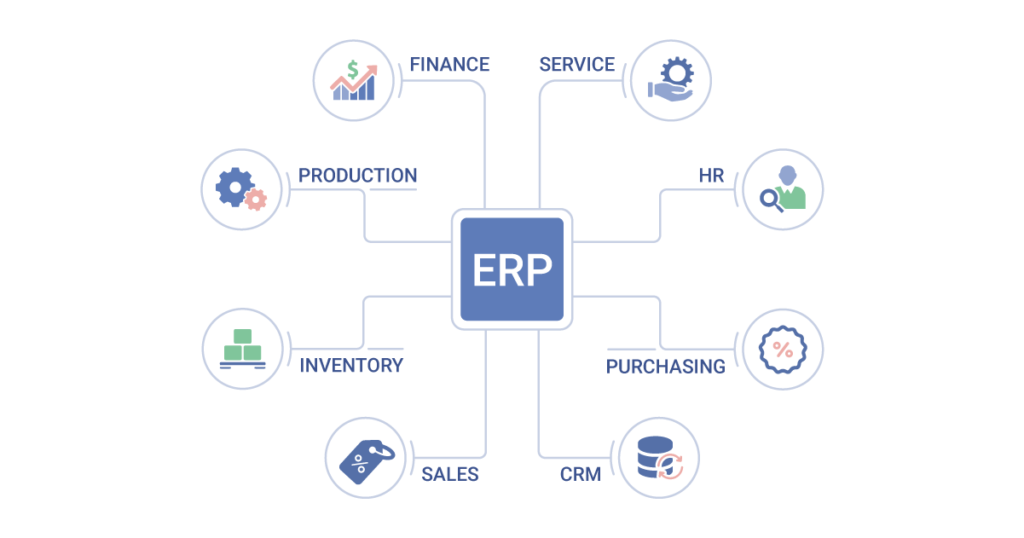
    Erp system development solves exactly this problem. A well-architected enterprise resource planning tool unifies finance, HR, supply chain, sales, inventory, and operations into a single platform, giving every department the same real-time data, eliminating duplication, and giving leadership the visibility to make decisions that actually reflect reality. 

    This guide covers everything: what erp software development involves, what features matter, real-world examples by industry, the full erp system development process, and what to look for in an erp software development company usa. Whether you’re developing an erp system from scratch or evaluating custom erp software development services for the first time, this guide gives you the framework to make the right call. 

    What Is ERP System Development, and Why Does It Matter in 2026? 

    Erp system development is the process of designing, building, and deploying software that integrates an organization’s core business functions into one unified platform. Developing an erp system from scratch, or customizing one for your specific industry, means the enterprise resource planning tool reflects your actual workflows, compliance requirements, and data architecture, not a vendor’s generic template. The development of erp system infrastructure has become a core digital transformation priority: companies investing in proper erp development consistently outperform those managing siloed tools across productivity, cost, and decision speed.  

    The scale of adoption tells the story. More than 80% of SMEs with annual revenue under $50M now rely on an enterprise resource planning tool. Manufacturing leads all industries in erp software development adoption at 21%, followed by distribution, healthcare, retail, and professional services. The ERP market is growing at a 9.5% CAGR, one of the fastest rates in enterprise software. 

    Development of erp system infrastructure in 2026 is increasingly cloud-native. Cloud ERP now commands 54.4% of total market share. Yet for many industries, custom erp software development services that combine cloud infrastructure with deep workflow customization deliver value that neither pure SaaS nor on-premise erp systems development can match. The right approach to erp development depends entirely on how complex your operations are, and how fast they’re growing. 

    Custom ERP vs. Off-the-Shelf: Which Does Your Business Need? 

    Before evaluating erp software development services, the first decision is build vs. buy. Here’s the honest comparison: 

    Custom ERP Development Off-the-Shelf ERP
    Workflow Fit Built to your exact processes You adapt to the platform
    Integration Depth Native, purpose-built Limited connector library
    Scalability No per-user licensing limits Costs scale with users
    Timeline 4–12 months to build Weeks to deploy
    Upfront Cost Higher Lower
    Long-Term TCO Lower (no escalating licenses) Higher at scale
    Competitive Advantage Proprietary operational IP Same tool as competitors

    Custom erp software development services make strategic sense when your workflows are complex, your industry has specific compliance requirements, your existing tools need deep integration, or off-the-shelf solutions have become operational bottlenecks. For most businesses above $10M in revenue, the long-term TCO of erp development typically justifies the upfront investment within 24–36 months.  

    And for industries like manufacturing, healthcare, or erp for software development company use cases, where generic platforms simply don’t fit the workflow, custom erp software development services aren’t optional, they’re the only viable path to a system that actually works. 

    Core Features Every ERP System Development Project Should Include 

    Whether you’re working with an erp software development company usa or managing development in-house, these modules define a production-ready enterprise resource planning tool: 

    1. Financial Management 

    The most universally required module in erp application development, accounting, AP/AR, budgeting, financial reporting, and tax compliance. 89% of ERP buyers cite accounting as their primary required feature. No erp systems development engagement is complete without a robust financial core. 

    2. Human Resources and Payroll 

    HR management, onboarding workflows, payroll processing, compliance tracking, and performance management built directly into the enterprise resource planning tool, eliminating the HR software silos most growing businesses manage manually. 

    3. Supply Chain and Inventory Management 

    Real-time inventory tracking, supplier management, purchase orders, and demand forecasting. For manufacturing and distribution businesses, this module is the primary driver of erp android app adoption, enabling warehouse staff and field teams to manage stock levels and orders from mobile devices in real time. 

    4. CRM and Sales Management 

    Pipeline tracking, customer history, quote generation, and order management integrated directly with inventory and finance. 75% of enterprises report that their enterprise resource planning tool enabled real-time customer engagement improvements. 

    5. Reporting and Business Intelligence 

    Custom dashboards, real-time KPIs, and automated reports across every business function. This is one of the most valuable outcomes of erp system development, replacing manually compiled spreadsheet reports with live data accessible to every decision-maker. 

    6. Project Management 

    Task tracking, resource allocation, time logging, and milestone management built into the enterprise resource planning tool, particularly critical for erp for software development company deployments, where project profitability visibility is the primary ROI driver. Any erp software development company usa building for agencies or tech firms should treat this module as a core deliverable, not an add-on. 

    7. Mobile ERP and ERP App Development 

    In 2026, erp app development for iOS and Android is a baseline expectation. Erp android app functionality now covers approvals, inventory updates, sales order creation, and real-time dashboard access, reducing response time from hours to minutes. Field teams, warehouse staff, and executives all need erp android app access to the same data as desktop users. Every serious erp application development engagement should include a fully responsive mobile interface and a native erp app development deliverable at minimum. 

    8. Integration Layer 

    APIs connecting the ERP to existing tools, accounting software, e-commerce platforms, logistics systems, and payroll providers. The integration layer is often the most technically complex part of erp software development and where erp application development experience matters most. Strong erp development teams build integrations with versioned APIs and documented rollback procedures, not brittle point-to-point connections that break with every system update. 

    ERP System Development Examples by Industry 

    Understanding what erp systems development looks like in practice helps frame the decision: 

    Manufacturing  

    A mid-size manufacturer used custom erp software development services to build a platform connecting shop floor production data, raw material inventory, supplier purchase orders, and customer delivery schedules in real time. The result: a 30% reduction in production delays and full elimination of the manual spreadsheet reconciliation that had required three full-time staff. 

    Healthcare  

    A regional hospital network undertook development of erp system infrastructure to unify HR, procurement, finance, and patient supply chain across 12 facilities. Prior to erp systems development, each facility managed separate systems, creating $2M+ in annual duplicate procurement costs. The unified enterprise resource planning tool recovered that cost in year one, demonstrating the financial case for structured erp systems development in multi-entity organizations. 

    Software Development Company  

    Erp for software development company deployments are one of the highest-ROI use cases. Project-based businesses, agencies, consulting firms, software studios, use erp application development to connect project management, resource utilization, time tracking, billing, and profitability reporting in one system. For any erp for software development company engagement, real-time project margin visibility alone typically justifies the erp development investment. When every billable hour is tracked and every project margin is visible live, the operational clarity is transformational. 

    Retail and E-Commerce  

    An e-commerce retailer managing 40,000 SKUs across four warehouses used erp software development services to build a unified inventory, order management, and finance system, replacing five separate tools. Stock accuracy improved from 87% to 99.2% and order fulfillment time dropped by 40%, a direct outcome of structured erp systems development replacing fragmented point solutions. 

    How Does ERP Software Development Work? The Implementation Strategy 

    Every credible erp software development company usa follows a structured process for developing an erp system: 

    Phase 1: Discovery and Requirements (3–5 weeks)  

    Workflow mapping across every department, integration landscape audit, compliance requirements analysis, and feature prioritization. This is the most underinvested phase in most failed erp system development projects. Every credible erp software development company usa makes discovery non-negotiable, because developing an erp system without thorough requirements is the single most common cause of budget overruns. Proper development of erp system discovery takes 3–5 weeks and pays back every hour invested during build. 

    Phase 2: Architecture and System Design (3–6 weeks)  

    Database architecture, module structure, API design, security model, and erp app development specifications are finalized before production code begins. The data model built here determines how well the enterprise resource planning tool scales five years from now. Strong erp systems development architecture separates systems that grow with the business from those that need replacing in three years. 

    Phase 3: Development (12–24 weeks)  

    Module-by-module erp software development in agile sprints. Finance, HR, inventory, CRM, and reporting modules are built and integrated progressively. Quality erp development teams deliver sprint reviews every two weeks, keeping business stakeholders aligned and scope creep controlled. 

    Phase 4: Integration and Testing (4–6 weeks)  

    Connecting the ERP to existing systems, migrating historical data, and validating every workflow. Erp systems development failures most commonly occur at the data migration stage, making experienced erp software development services critical here. A seasoned erp software development company usa has migration playbooks from dozens of prior developing an erp system engagements. 

    Phase 5: Training, Launch, and Support  

    Staff training by role, phased go-live, and a minimum 90-day hypercare support window. The best erp software development company usa partners provide ongoing custom erp software development services as your business evolves, turning the initial erp development investment into a long-term competitive asset. 

    What Does ERP System Development Cost? 

    Erp software development costs vary significantly based on complexity, module count, and integration requirements: 

    • Basic ERP (3–4 core modules, small business): $40,000–$100,000 
    • Mid-complexity ERP (full module suite, integrations, mobile erp app development): $100,000–$300,000 
    • Enterprise ERP (multi-entity, AI analytics, full erp android app + iOS): $300,000–$1M+ 
    • Off-the-shelf ERP (SAP, Oracle, Microsoft Dynamics): $150,000–$500,000+ implementation plus per-user licensing 

    FAQs 

    1. What is ERP system development?  

    Building software that unifies business functions, finance, HR, supply chain, and operations, into one integrated platform. 

    2. How long does developing an ERP system take?  

    Typically 4–12 months depending on module count, integrations, and team size. 

    3. What is the cost of custom ERP software development services?  

    From $40,000 for basic systems to $1M+ for enterprise-grade platforms with AI and multi-entity support. 

    4. What is an ERP android app?  

    A mobile ERP application for Android devices giving field teams real-time access to inventory, approvals, and dashboards. 

    5. What should I look for in an ERP software development company USA?  

    Industry-specific experience, proven integrations, agile methodology, transparent pricing, and post-launch support commitments. 

    References 

    1. Fortune Business Insights — ERP Software Market Size 2026–2034 — fortunebusinessinsights.com/enterprise-resource-planning-erp-software-market-102498 ($106.22B in 2026; $281.58B by 2034; North America 34.2% share) 
    2. Market.us — ERP Software Statistics 2026 — scoop.market.us/erp-software-statistics (80%+ SME adoption; 89% cite accounting; 75% real-time customer engagement; manufacturing leads at 21%) 
    3. Grand View Research — ERP Software Market Analysis — grandviewresearch.com/industry-analysis/erp-software-market (9.5% CAGR; 54.4% cloud share; $77.08B in 2025) 
    4. NetSuite — 60 Critical ERP Statistics 2026 — netsuite.com/portal/resource/articles/erp/erp-statistics.shtml (85% success rate with specialist implementation; $78.4B market 2026) 
    5. NetSuite — 8 ERP Trends and Predictions 2026 — netsuite.com/portal/resource/articles/erp/erp-trends.shtml (Composable ERP; cloud ERP $92.6B → $281.58B; AI and IoT integration trends) 

    Planning to build or upgrade your ERP system? Agency Partner Interactive delivers custom ERP software development services for manufacturing, healthcare, retail, and professional services companies across the U.S. Talk to our team. 

  • Developing a Custom LMS Platform: Features, Examples & Implementation Strategy

    Developing a Custom LMS Platform: Features, Examples & Implementation Strategy

    Key Takeaways: The global LMS market is valued at $31.6–$35.23 billion in 2026, projected to hit $88–$122 billion by 2032. 77% of U.S. organizations rely on eLearning for professional development. Custom lms development delivers workflows, integrations, and learner experiences that off-the-shelf platforms can’t match. 72% of businesses say LMS technology gives them a measurable competitive advantage in workforce efficiency. 

    Off-the-shelf LMS platforms serve a purpose until they don’t. Once your organization outgrows the default course structure, hits integration limits, or needs workflows that don’t fit the vendor’s template, the limitations become costly. Workarounds accumulate. Licenses scale with users while features don’t. The platform shapes your training strategy instead of the other way around. 

    That’s the inflection point where custom lms development becomes the smarter investment. A custom learning management system built around your specific workflows, user roles, content types, and compliance requirements delivers what no packaged tool can: a platform that fits your organization exactly, and scales as you grow. 

    This guide covers everything decision-makers need to know: why custom lms software development outperforms off-the-shelf in the right context, what features define a strong custom elearning platform, how custom learning management system development works end to end, and what to look for in an lms development company. With dozens of lms development companies competing for your budget in 2026, knowing how to evaluate lms development services before signing a contract is just as important as knowing what to build. 

    Why Is Custom LMS Development Growing So Fast in 2026? 

    The numbers explain the shift. The global eLearning market is projected to exceed $375 billion by 2026. Corporate eLearning alone is set to reach $462.6 billion by 2027. LMS platforms account for 89% of all learning technology in use globally, ahead of every other EdTech category. 

    But here’s what drives organizations toward custom learning management system development specifically: 42% of companies are currently upgrading or replacing their existing LMS. Most of those replacements are triggered by the same issues, rigid feature sets, poor integration with existing systems, inability to scale, and learner experiences that don’t match modern expectations. When organizations evaluate their options, custom learning management system development consistently wins on long-term TCO and workflow fit, even if the upfront cost of custom elearning software is higher than a SaaS subscription. 

    Custom lms software development addresses each of these gaps directly. Rather than fitting your training program into a vendor’s architecture, lms software development builds the architecture around your program, and qualified lms development services make that process far less daunting than most organizations expect. 

    Custom LMS vs. Off-the-Shelf: What’s the Real Difference? 

    Before committing to custom elearning software, it’s worth understanding where each option wins. 

    Custom LMS Off-the-Shelf LMS
    Fit Built to your exact workflows You adapt to the platform
    Integrations Native, deep, custom-built Limited to vendor connectors
    Scalability Scales without per-user cost jumps Licensing costs increase with users
    Branding Fully white-labeled Limited or template-based
    Compliance Built to your regulatory environment Generic compliance modules
    Timeline 3–9 months to build Days to deploy
    Cost Higher upfront, lower long-term TCO Lower upfront, higher long-term

    The break-even point for custom lms development typically arrives between 18 and 36 months, after which the TCO advantage over per-seat SaaS licenses compounds annually. 

    What Features Should a Custom Learning Management System Include? 

    The right custom elearning platform is defined by the features it’s built around. Here are the core modules every credible lms software development engagement should deliver: 

    1. Role-Based User Management 

    A custom learning management system must support granular user roles, administrators, instructors, learners, managers, and external partners, each with tailored dashboards, permissions, and content access. This is one of the most critical differentiators between custom lms software development and generic platforms, where role flexibility is often an afterthought. 

    2. Course Builder and Content Management 

    The heart of any custom elearning platform is its content authoring experience. Custom lms software solutions support SCORM, xAPI, AICC, and CMI5 content standards, ensuring compatibility with any third-party content library or internally produced training material. Drag-and-drop course builders, video hosting, assessment tools, and branching scenarios are standard in modern custom elearning software. 

    3. AI-Powered Personalization 

    In 2026, AI integration is a defining lms software development priority. AI-powered recommendation engines analyze learner behavior and performance data to surface the next most relevant course automatically. AI-powered LMS systems can improve recommendation relevance by up to 50%, one of the clearest ROI arguments for custom learning management system development over static off-the-shelf catalogs. 

    4. Advanced Analytics and Reporting 

    A purpose-built custom elearning platform captures every learner interaction, completion rates, assessment scores, time-on-task, drop-off points, and certification status, and surfaces it through dashboards tailored to each role. HR wants workforce-wide skill gap analysis. Compliance teams want certification audit trails. Managers want team progress views. Off-the-shelf lms software solutions rarely deliver all three simultaneously. 

    5. Mobile-First Design 

    54% of LMS users access learning content via mobile devices. Any custom learning management system that isn’t built mobile-first in 2026 is already behind. Responsive design, offline content access, push notifications, and native app deployment should be standard deliverables in every custom lms software development engagement. 

    6. Gamification 

    Gamified training yields 43% higher engagement and 15–20% better knowledge retention than traditional formats. Points, badges, leaderboards, and progress streaks built natively into a custom elearning software environment outperform bolt-on gamification tools added to rigid SaaS platforms. 83% of learners report feeling more motivated in gamified learning environments. 

    7. Compliance and Certification Management 

    For regulated industries, healthcare, finance, manufacturing, energy, compliance training is the primary driver of custom lms development investment. Regulated industries spend approximately 50% more on LMS than non-regulated sectors. A custom learning management system built for compliance includes automated certification tracking, renewal reminders, audit logs, and regulatory reporting, features that generic lms software solutions address only partially. This is exactly where custom elearning software built by experienced lms development companies consistently outperforms off-the-shelf lms software solutions. 

    8. Third-Party Integrations 

    The most valuable lms software solutions don’t operate in isolation. Custom lms development services should deliver native integrations with your HRIS (Workday, BambooHR), CRM (Salesforce, HubSpot), video conferencing (Zoom, Teams), SSO providers, and content libraries, through purpose-built APIs rather than generic middleware connections. 

    9. White-Label Branding 

    For organizations deploying training to external audiences, customers, partners, franchisees, full white-label capability is essential. A custom elearning platform with white-label support presents a seamless brand experience with no third-party vendor identity visible. 

    10. Multi-Tenancy 

    Enterprises managing training across multiple business units, regions, or client organizations need multi-tenant architecture. This allows one custom learning management system to serve multiple distinct audiences with separate content libraries, user bases, analytics, and branding, from a single backend instance. 

    Real-World Examples of Custom LMS Platforms in Action 

    Understanding what custom lms software development looks like in practice helps frame the investment decision: 

    Corporate Compliance Training (Financial Services)  

    A regional bank with 4,000 employees needed mandatory compliance certifications tracked, renewed, and audit-ready at any time. Off-the-shelf lms software solutions couldn’t integrate with their existing HR system or generate the specific audit reports required by regulators. A custom elearning platform built by an experienced lms development company delivered HRIS integration, automated renewal workflows, and real-time compliance dashboards, reducing audit preparation time by 60%. 

    Partner Enablement (SaaS Company)  

    A B2B SaaS company needed to train reseller partners across 12 countries in six languages. A custom learning management system with multi-tenancy, localization, and Salesforce CRM integration allowed the company to track partner certification alongside deal performance, directly linking training completion to revenue outcomes. 

    Customer Education (E-Commerce Platform)  

    An e-commerce platform used custom elearning software to build a customer academy, reducing support ticket volume by 35% by turning product documentation into structured, gamified learning paths available 24/7. 

    How Does Custom LMS Development Work? The Implementation Strategy 

    Every credible lms development company follows a structured process. Here’s how custom learning management system development works end to end: 

    Phase 1: Discovery (2–4 weeks)  

    The lms development company maps your training workflows, learner personas, content types, compliance requirements, and integration landscape. This phase defines the feature scope, technology stack, and architecture, and is where most failed lms software development projects went wrong by skipping it. Reputable lms development companies make discovery non-negotiable, regardless of project size. 

    Phase 2: Architecture and UX  

    Design (3–6 weeks) Custom lms software development requires learner-centric UX design from the start. Role-based interface wireframes, information architecture, and accessibility standards (WCAG 2.1 AA) are validated with real users before development begins. Good lms development services invest heavily here, because poor UX is the leading reason learners abandon courses. Any lms development company that skips structured UX validation at this phase is cutting a corner that will cost significantly more to fix post-launch. 

    Phase 3: Development (8–20 weeks)  

    The core lms software development phase. Backend infrastructure, frontend interfaces, content management tools, and integrations are built in parallel sprints. Strong lms development services use agile methodology with two-week sprint reviews, keeping stakeholders aligned without surprises at go-live. Custom elearning software built this way stays on scope and budget far more reliably than waterfall approaches. 

    Phase 4: QA, Compliance Testing, and UAT (3–4 weeks)  

    Every custom elearning software build must pass SCORM/xAPI compliance testing, security audits, load testing, and user acceptance testing with real learners. This phase separates credible lms development companies from those who push to go-live before the platform is ready. The best lms development companies treat UAT as a collaboration, not a formality. 

    Phase 5: Launch and Post-Launch Support  

    Deployment, data migration, staff training, and a defined support SLA. The best lms development company partners provide 90-day hypercare support post-launch, ensuring adoption issues are resolved before they become institutional resistance. Ongoing lms development services agreements also allow for feature iteration as learner needs evolve. 

    How Much Does Custom LMS Development Cost? 

    Custom lms development cost depends on complexity, feature scope, and integration requirements: 

    • MVP / Basic custom elearning platform: $40,000–$80,000 
    • Mid-complexity custom LMS (with integrations, mobile, analytics): $80,000–$200,000 
    • Enterprise custom learning management system (multi-tenant, AI, full compliance): $200,000–$500,000+ 

    Ongoing lms development services for maintenance, new feature development, and infrastructure management typically run 15–20% of initial build cost annually. 

    The ROI case is well-documented. IBM found that every $1 invested in online employee training returns $30 in productivity. Organizations using custom elearning software for compliance training reduce error-related costs, which average $62,000 per incident in high-risk industries. 

    What Should You Look for in an LMS Development Company? 

    Choosing the right lms development company is as important as the platform architecture itself. Evaluate lms development companies on: 

    • Demonstrated experience delivering custom lms software development in your industry vertical 
    • Portfolio of live custom elearning platform deployments with documented outcomes 
    • In-house UX, backend, and QA capability, not outsourced to unnamed subcontractors 
    • SCORM, xAPI, and accessibility standards expertise 
    • Clear post-launch lms development services support terms and SLA commitments 
    • Transparent pricing with no hidden custom learning management system development fees 

    The best lms development companies in 2026 bring both EdTech domain knowledge and enterprise software engineering depth. Those two capabilities together define whether a custom learning management system actually gets adopted after launch. Ask any lms development company shortlist candidates to show you live lms software solutions they’ve built, not mockups, not demos, and speak directly to the clients who use them.  

    Custom learning management system development is a long-term infrastructure decision. The right lms development companies treat it that way, and so should you. Strong lms software solutions built on a solid custom learning management system development foundation pay dividends for five to ten years. 

    FAQs 

    1. What is custom LMS development?  

    Building a learning management system tailored to your workflows, integrations, and learner needs, instead of adapting to off-the-shelf software. 

    2. How long does custom LMS software development take?  

    Typically 3–9 months depending on feature complexity, integration requirements, and team size. 

    3. What is the cost of custom learning management system development? 

    From $40,000 for an MVP to $500,000+ for enterprise platforms with AI, multi-tenancy, and compliance modules. 

    4. When should I choose custom LMS over off-the-shelf?  

    When off-the-shelf limits your workflows, integration needs are complex, or long-term per-seat licensing costs exceed custom build TCO. 

    5. What makes a good LMS development company?  

    Healthcare or industry-specific domain knowledge, proven platform portfolio, in-house QA, and clear post-launch support terms. 

    References 

    1. Research.com — 40 LMS & eLearning Statistics 2026 — research.com/education/lms-elearning-statistics ($375B eLearning market; 77% U.S. org adoption; IBM $30 ROI per $1 training investment) 
    2. Atrixware — 100+ LMS Statistics 2026 — atrixware.com/blog/wp/over-100-lms-statistics-for-2025 (72% competitive advantage; 42% upgrading LMS; 43% gamification engagement lift; 50% AI accuracy improvement) 
    3. ProProfs Training — 30+ eLearning Statistics 2026 — proprofstraining.com/blog/elearning-statistics (LMS market $31.6B–$35.23B in 2026; $88–$122B by 2032; 89% LMS tech adoption) 
    4. iSpring — eLearning Statistics 2026 — ispringsolutions.com/blog/elearning-statistics (54% mobile LMS usage; 75% cloud LMS deployments; corporate 58% of global eLearning) 
    5. Eskilled — 50 LMS Statistics 2026 — lms.eskilled.com.au/blog/lms-statistics-reveal-future-of-learning (70% cloud deployment share; 42% replacing LMS; Canvas 35% North America share) 
  • Electronic Health Records System Development and Their Benefits

    Electronic Health Records System Development and Their Benefits

    Key Takeaways: The global electronic health records market is valued at $29.84 billion in 2025, growing to $45.55 billion by 2035. 95% of U.S. office-based physicians now use an ehr system. U.S. hospitals still spend $10 billion annually managing paper records. The benefits of electronic health records include fewer errors, faster care, lower costs, and better outcomes, making ehr software development one of healthcare’s most critical technology investments. 

    Paper-based medical records are a patient safety problem. They get lost, misread, duplicated, and delayed. In a care environment where the right information at the right moment can be the difference between life and death, relying on filing cabinets is no longer defensible. 

    That’s why electronic health records have become the backbone of modern healthcare delivery, and why investment in ehr software development is accelerating globally. Whether you’re a hospital system evaluating platforms or a healthcare startup working with an ehr software development company, understanding what ehr system development involves and what it delivers is essential in 2026. The right ehr software development company brings not just technical skill but deep clinical domain knowledge, and that distinction defines whether an ehr software development project succeeds or stalls. 

    What Is EHR in Healthcare, and What Does the EHR Medical Abbreviation Mean? 

    What is ehr in healthcare? An ehr system, where ehr medical abbreviation stands for Electronic Health Record, is a real-time, digital version of a patient’s complete medical history. Unlike paper charts, electronic health records are accessible instantly by authorized providers across multiple care settings, updated in real time, and designed for interoperability between hospitals, labs, pharmacies, and specialists. 

    Electronic health record systems store a patient’s full clinical picture: diagnoses, medications, allergies, lab results, immunizations, radiology images, and treatment plans. The ehr medical abbreviation is sometimes used interchangeably with EMR, but they’re not identical. Medical emr software (Electronic Medical Records) is typically confined to a single practice, while electronic medical records software built to EHR standards is designed for cross-provider interoperability. Understanding the ehr medical abbreviation correctly shapes which platform your organization actually needs. 

    A common question, what is ehr in healthcare vs. what is medical emr software? Simply put: emr systems in healthcare stay within one facility. Electronic health record systems are designed for cross-provider data sharing, making them the superior infrastructure for coordinated care. For organizations still asking what is ehr in healthcare as they evaluate platforms, that interoperability distinction is the deciding factor. 

    What Is the Difference Between EHR and EMR Systems in Healthcare? 

    Understanding the distinction between electronic health records and medical emr software is critical before any ehr software development investment. 

    EHR System Medical EMR Software
    Scope Multi-provider, cross-system Single practice or facility
    Data Sharing Full interoperability Limited to one location
    Designed For Coordinated care networks Individual clinical documentation
    Compliance HIPAA, HL7, FHIR standards HIPAA compliant
    Best For Hospitals, health systems Small clinics, solo practices

    Most modern emr systems in healthcare are evolving toward full electronic health record systems functionality, as interoperability mandates from CMS and the 21st Century Cures Act push the industry toward seamless digital medical records exchange. 

    What Are the Core Features of Electronic Health Record Systems? 

    Any credible ehr software development company builds these foundational modules into every ehr system: 

    1. Digital Medical Records Management The core function 

    Storing and managing complete digital medical records for every patient. This includes medical history, medications, allergies, lab results, and clinical notes. Replacing paper-based medical charting systems with structured digital medical records eliminates transcription errors and records loss. 

    2. Medical Charting Systems and Clinical Documentation Modern  

    Electronic health record systems replace legacy medical charting systems with AI-assisted documentation. Voice recognition and NLP-powered tools transcribe physician notes in real time, reducing documentation time by up to 70%. The shift from paper-based medical charting systems to smart electronic medical records software is one of the most direct benefits of electronic health records for clinicians dealing with documentation overload. 

    3. Electronic Medical Records Programs and Interoperability  

    The defining feature of full electronic health records vs. standalone medical emr software: interoperability. Using HL7 and FHIR standards, electronic medical records programs enable seamless data exchange between hospitals, labs, pharmacies, and insurers. Among the core benefits of electronic health records, this connectivity is what transforms fragmented medical charting systems into a coordinated care infrastructure. The best electronic medical records programs in 2026 support both HL7 v2 and FHIR R4 standards simultaneously. 

    4. Patient Portal  

    A self-service layer built into electronic health record systems where patients access their digital medical records, test results, prescriptions, and appointment history. Direct messaging with providers and medication reminders are standard in modern electronic medical records software, and one of the most visible benefits of electronic health records for patient engagement. 

    5. Clinical Decision Support  

    AI-powered alerts embedded in the ehr system that flag drug interactions, suggest diagnoses based on symptom patterns, and surface evidence-based treatment protocols, turning digital medical records into an active clinical tool, not just a passive record. 

    6. Revenue Cycle Management  

    Integrated billing, coding, and claims processing built directly into electronic medical records software, reducing the administrative burden that drives up healthcare operating costs. 

    7. Telemedicine Integration  

    In 2026, leading ehr software development company providers build video consultation and remote monitoring directly into electronic health record systems, making virtual care a native feature rather than a bolt-on. 

    What Are the Key Benefits of Electronic Health Records? 

    The benefits of electronic health records are measurable across clinical outcomes, operational efficiency, and financial performance. 

    Improved Patient Safety  

    Among the most critical benefits of electronic health records: reducing medical errors. Automated drug interaction alerts, allergy flags, and duplicate test prevention built into the ehr system directly reduce preventable adverse events, one of the leading causes of patient harm in traditional paper-based medical charting systems. 

    Faster Access to Complete Information  

    75% of healthcare providers report faster access to patient information after implementing electronic health records. When a patient arrives at an ER unconscious, their complete digital medical records, medications, allergies, conditions, are available instantly to every treating physician, regardless of where their primary care is delivered. 

    Significant Time Savings  

    Physicians using certified emr systems in healthcare save an average of 3.5 hours per week on administrative tasks. At scale, that’s thousands of hours annually redirected to direct patient care. Modern electronic medical records programs with AI scribing reduce documentation time by up to 70%, one of the clearest benefits of electronic health records for overworked clinical teams. 

    Lower Operating Costs  

    US hospitals spend approximately $10 billion annually managing 500 million paper patient records. Transitioning to electronic health records eliminates printing, storage, filing, and transcription costs. Post-implementation, practices consistently report reduced overhead, one of the most quantifiable benefits of electronic health records for CFOs and practice administrators. 

    Better Care Coordination  

    Electronic health record systems designed for interoperability ensure that a patient’s specialist, primary care physician, pharmacist, and insurer all work from the same digital medical records, eliminating the communication gaps that cause duplicate tests, conflicting prescriptions, and delayed diagnoses. 

    Regulatory Compliance  

    Certified electronic medical records software built to HIPAA, HL7, and FHIR standards keeps healthcare organizations compliant with CMS mandates, the HITECH Act, and the 21st Century Cures Act. Compliance is one of the non-negotiable benefits of electronic health records that also reduces audit risk and potential penalties for emr systems in healthcare that operate across state lines. 

    Enhanced Patient Engagement  

    Patient portals built into emr systems in healthcare give individuals direct access to their digital medical records, lab results, and care plans, increasing engagement and supporting chronic disease self-management. 85% of healthcare providers report that electronic health records improved patient care quality. This improvement in engagement is among the most human-facing benefits of electronic health records, turning passive patients into active participants in their own care. 

    How Does EHR Software Development Work? 

    Ehr software development is significantly more complex than standard software projects, it intersects clinical workflows, patient data security, regulatory compliance, and long-term scalability. Here’s how a qualified ehr software development company approaches it: 

    Discovery and Requirements  

    Every ehr software development engagement starts with deep clinical workflow mapping, understanding how physicians, nurses, and administrators actually work, not just what features are requested. A strong ehr software development company brings healthcare domain knowledge, not just coding skills. 

    Architecture and Compliance Design  

    The ehr system must be architected for HIPAA compliance, zero-trust security, HL7/FHIR interoperability, and cloud scalability from day one. In 2026, cloud-native deployment dominates ehr software development, offering lower upfront costs, automatic updates, and reduced IT overhead. 

    Core Module Development  

    The ehr software development process builds modular components, digital medical records management, medical charting systems, patient portals, billing, and clinical decision support, that can be deployed together or phased based on organizational readiness. 

    Integration  

    Connecting the electronic health records platform to existing labs, pharmacies, imaging systems, and insurance platforms via HL7/FHIR APIs. This is often the most technically challenging phase of ehr software development, and where inexperienced teams introduce the most technical debt. 

    Testing and Certification  

    ONC certification, HIPAA security audits, and clinical usability testing with real providers are non-negotiable in any credible ehr software development process. Electronic medical records programs that skip this phase create compliance exposure and user adoption problems post-launch. 

    How Much Does EHR Software Development Cost? 

    Ehr software development cost varies significantly based on complexity, features, and whether you’re building custom or configuring an off-the-shelf platform: 

    • Basic EHR system (core digital medical records, scheduling, billing): $40,000–$100,000 
    • Mid-complexity (with patient portal, telemedicine, lab integrations): $100,000–$300,000 
    • Enterprise EHR (full electronic health record systems with AI, analytics, population health): $500,000–$1M+ 
    • Cloud-based EMR software (SaaS subscription): $200–$700 per provider per month (1st Providers Choice, 2026) 
    • Average implementation cost (custom mid-size organization): $500,000–$700,000 (Topflight, 2026)
       

    The right ehr software development company helps organizations avoid the hidden costs, integration fees, training, data migration, and ongoing maintenance, that consistently exceed the initial license price when not planned for upfront. 

    FAQs 

    1. What does the EHR medical abbreviation stand for?  

    EHR stands for Electronic Health Record, a digital, interoperable patient record shared across multiple healthcare providers. 

    2. What is the difference between EHR and EMR systems in healthcare?  

    EMR stays within one practice. EHR is designed for cross-provider data sharing and interoperability. 

    3. What are the main benefits of electronic health records?  

    Fewer medical errors, faster information access, lower costs, better care coordination, and improved patient outcomes. 

    4. How much does EHR software development cost?  

    Basic systems start at $40,000. Enterprise platforms reach $1M+. Cloud EMR software runs $200–$700 per provider monthly. 

    5. What should I look for in an EHR software development company?  

    Healthcare domain knowledge, HIPAA/HL7/FHIR expertise, proven interoperability experience, and post-launch support capabilities. 

    References 

    1. Market.us — Electronic Health Records Statistics 2026 — media.market.us/electronic-health-records-statistics (85% improved care quality; 75% faster information access; 3.5 hrs/week saved) 
    2. RXNT — EHR Software Cost Guide 2026 — rxnt.com/ehr-software-cost-guide-2026 (70% documentation time reduction; $28.86B → $44.39B market; AI scribing) 
    3. CCI Training — Future of Electronic Medical Records 2026 — ccitraining.edu/blog/up-and-coming-changes-in-electronic-medical-records (95% physician EHR adoption; NLP voice scribing; 96% hospital certification) 
    4. Topflight Apps — EHR Implementation Cost 2026 — topflightapps.com/ideas/cost-of-ehr-implementation ($500K–$700K custom mid-size; $162K avg implementation; maintenance breakdown) 
    5. Galaxy Weblinks — EHR Software Development Guide 2026 — galaxyweblinks.com/blog/ehr-software-development-guide (Zero-trust security; HL7/FHIR integration; EHR vs EMR development differences) 

    Planning to build or upgrade your healthcare platform? Agency Partner Interactive develops HIPAA-compliant, scalable electronic health record systems for healthcare organizations of every size. Talk to our team. 

  • Top Features of Custom Healthcare Apps for Better Patient Engagement

    Top Features of Custom Healthcare Apps for Better Patient Engagement

    As the healthcare industry continues to embrace digital transformation, custom healthcare apps have become a cornerstone for improving patient engagement, streamlining care delivery, and enhancing overall health outcomes. From healthcare mobile apps for patients to medical apps for doctors, these apps are revolutionizing how healthcare providers interact with their patients. 

    Custom mobile apps for healthcare offer personalized experiences that allow patients to manage their health, track progress, and communicate with their healthcare providers with ease. As we head into 2026, healthcare organizations are investing in healthcare mobile app development to provide secure, user-friendly solutions that not only attract but also retain patients. 

    In this blog, we’ll explore the top features of custom healthcare apps that are essential for increasing patient engagement and ensuring a seamless healthcare experience. 

    Why Healthcare Apps Are Crucial for Patient Engagement? 

    Healthcare applications are much more than tools for booking appointments or accessing medical records. With the integration of mobile health app development and personalized features, these apps enable healthcare providers to offer an interactive and efficient care model. By integrating healthcare mobile app design with real-time communication features, patients are empowered to take control of their healthcare journey. 

    Patients expect convenience, flexibility, and accessibility, all of which are provided by mobile applications for healthcare. Custom health management apps are particularly beneficial in enhancing communication, providing valuable health insights, and increasing patient satisfaction. 

    Let’s look at some of the most important features that custom healthcare apps should have to foster better patient engagement. 

    1. Appointment Scheduling and Reminders 

    One of the most common features of healthcare mobile apps for patients is the ability to book and manage appointments directly from their phones. Mobile applications for healthcare should provide an easy-to-use interface that allows patients to schedule appointments, set reminders, and manage their visit information. 

    CTAs: 

    • Want to streamline your patient appointment schedule? Learn how to integrate appointment booking into your healthcare app development today.  
    • Simplify your patients’ experience with automated reminders and appointment management. Discover how mobile health app development can help.  

    Why It’s Crucial: 

    • Increases convenience for patients  
    • Reduces missed appointments  
    • Streamlines the scheduling process for healthcare providers  

    2. Patient Messaging and Communication 

    Having direct communication channels within medical apps for doctors and medical apps for patients is essential for better care coordination. Secure messaging enables healthcare providers to send follow-up reminders, test results, and personalized health information directly to patients. 

    CTAs: 

    • Discover how healthcare mobile app design can foster better patient-provider communication.  
    • Is your healthcare mobile app development equipped for secure, HIPAA-compliant messaging? Get insights here.  

    Why It’s Crucial: 

    • Facilitates faster, more efficient communication between patients and providers  
    • Enables patients to ask questions and receive timely responses  
    • Helps with post-visit care and treatment updates  

     3. Access to Medical Records and Health Data 

    Patients want to be in control of their health information. Mobile apps in healthcare that offer access to medical records, lab results, and health history empower patients to track their progress and make informed decisions about their care. 

    CTAs: 

    • Offer your patients with easy access to their health data with a mobile health app development platform.  
    • Looking to integrate medical records access to your app? Contact Agency Partner Interactive for expert healthcare apps development solutions.  

    Why It’s Crucial: 

    • Increases patient trust and transparency  
    • Encourages patients to actively engage with their health information  
    • Reduces reliance on paper records, streamlining healthcare delivery  

    4. Telemedicine and Virtual Care 

    With the growing popularity of telemedicine software development services, integrating video consultations and virtual care features into healthcare apps has become a necessity. Offering medical apps for doctors and patients that allow for remote consultations enhances accessibility, especially for patients in rural or underserved areas. 

    CTAs: 

    • Wondering how to integrate telehealth features into your app? Let’s discuss your custom healthcare mobile app development needs.  

    Why It’s Crucial: 

    • Expands access to healthcare for remote or busy patients  
    • Provides a convenient and cost-effective solution for non-emergency care  
    • Increases patient satisfaction and loyalty  

    5. Medication Management and Reminders 

    Patients often struggle with remembering to take their medications on time. A feature that allows for medication tracking and automated reminders can help patients stay on track with their treatment plans. 

    CTAs: 

    • Looking for mobile
    • e applications for healthcare that offer medication management? Discover our healthcare app development services.  
    • Do you want to improve patient adherence to prescribed medications? Get in touch to integrate medication reminders into your app.  

    Why It’s Crucial: 

    • Improves patient compliance with prescribed treatments  
    • Reduces medication errors and complications  
    • Enhances patient health outcomes and reduces hospital readmissions  

    6. Wearable Device Integration 

    Integrating healthcare mobile apps with wearable devices like fitness trackers, blood pressure monitors, or glucose meters allows patients to monitor their health in real time. These integrations provide valuable health data for both patients and healthcare providers. 

    CTAs: 

    • Want to integrate wearables with your healthcare app? Our mobile health app development team can help.  
    • Looking to create a health management app with real-time health monitoring? Let’s explore your needs.  

    Why It’s Crucial: 

    • Provides continuous monitoring of patient health  
    • Allows for more personalized care and data-driven insights  
    • Enables proactive health management for chronic conditions  

    7. Health Risk Assessment and Predictive Analytics 

    With artificial intelligence and machine learning gaining traction in healthcare, integrating predictive analytics in healthcare apps allows for early detection of health risks. These ai applications in healthcare can analyze patient data and predict potential issues, allowing providers to take preventive measures. 

    CTAs: 

    • Discover the potential of AI-powered healthcare apps for risk detection and early intervention.  

    Why It’s Crucial: 

    • Identifies health risks before they become serious issues  
    • Enables proactive interventions that improve patient outcomes  
    • Enhances the decision-making process for healthcare providers  

    8. Patient Education and Resources 

    Educating patients about their conditions, treatments, and prevention strategies is key to improving their health. Offering health education content within the app, such as articles, videos, or infographics, can significantly enhance patient engagement. 

    CTAs: 

    • Want to provide your patients with educational resources? Our healthcare mobile app design experts can help you integrate educational features.  

    Why It’s Crucial: 

    • Empowers patients with knowledge about their conditions  
    • Increases patient satisfaction and involvement in their care  
    • Reduces confusion and promotes better decision-making  

    9. Patient Feedback and Surveys 

    Including patient feedback features in your healthcare app allows for continuous improvement. By gathering insights from users through surveys and feedback forms, healthcare providers can identify areas for improvement and measure patient satisfaction. 

    CTAs: 

    • Want to improve patient engagement? Implement feedback systems in your healthcare app with our mobile health app development services.  
    • Looking to create a patient-centered experience? Let us help you gather valuable feedback with surveys and ratings.  

    Why It’s Crucial: 

    • Provides valuable insights into patient satisfaction and experiences  
    • Helps improve service quality and operational efficiency  
    • Increases trust and engagement by showing patients their feedback matters  

    10. Data Security and Privacy Features 

    One of the most important features of any healthcare mobile app is ensuring that patient data is kept safe. Health and fitness app development companies must adhere to strict privacy regulations like HIPAA to protect sensitive patient information. 

    CTAs: 

    • Need help with HIPAA-compliant healthcare apps development? Our experts specialize in building secure solutions.  
    • Are your patients concerned about security? Let’s integrate top-tier security features into your app.  

    Why It’s Crucial: 

    • Ensures compliance with privacy laws and regulations  
    • Builds patient trust by securing sensitive data  
    • Reduces the risk of data breaches and fraud  

    Conclusion 

    Building a custom healthcare mobile app with the right features can dramatically improve patient engagement, streamline care, and enhance overall health outcomes. Whether it’s through easy appointment scheduling, secure messaging, or AI-powered health risk assessments, mobile applications for healthcare are transforming the patient care experience. 

    At Agency Partner Interactive, we specialize in healthcare mobile app development that is secure, user-friendly, and tailored to meet the unique needs of your healthcare practice. Contact us today to learn how we can help you build an innovative healthcare app that drives better patient outcomes and enhances your practice’s efficiency. 

    FAQs 

    1. What are the key features of a healthcare mobile app? 

    The key features of a healthcare mobile app include appointment scheduling, secure messaging, real-time health monitoring, medication reminders, and telemedicine capabilities. These features enhance patient engagement, improve care coordination, and streamline healthcare operations. 

    2. How can healthcare apps improve patient engagement? 

    Healthcare apps improve patient engagement by offering personalized services like appointment reminders, medication tracking, and direct communication with providers. These features make healthcare more accessible, convenient, and interactive for patients. 

    3. How does AI impact healthcare mobile apps? 

    AI is transforming healthcare mobile apps by enabling predictive analytics, personalized recommendations, and real-time health monitoring. AI-driven tools help detect early signs of health issues, leading to better patient outcomes and more efficient care. 

    4. Why is patient data security important in healthcare apps? 

    Patient data security is crucial in healthcare apps to protect sensitive information from breaches and ensure compliance with regulations like HIPAA. Securing patient data builds trust and safeguards against legal and financial consequences. 

    5. How can I integrate telemedicine into my healthcare app? 

    To integrate telemedicine into your healthcare mobile app development, you need video conferencing capabilities, secure communication channels, and HIPAA-compliant technology. This allows patients to have remote consultations with healthcare providers in a secure environment. 

  • How AI Transforms Healthcare App Development

    How AI Transforms Healthcare App Development

    Healthcare apps are no longer limited to appointment scheduling and prescription reminders. Today, they are becoming smarter, faster, and more personalized because of artificial intelligence in healthcare. 

    From symptom checkers and virtual assistants to predictive analytics and remote monitoring, artificial intelligence healthcare solutions are changing the way patients and providers interact. The healthcare industry is now investing heavily in smarter digital experiences, and that is why the growth of ai in healthcare continues to accelerate. 

    But how is ai used in healthcare app development, and why does it matter for healthcare providers, startups, and medical organizations? The answer is simple. AI can make healthcare apps more efficient, more accurate, and more valuable for users. 

    What Is AI in Healthcare? 

    Before exploring the impact of app development, it is important to understand what is AI in healthcare. Artificial intelligence in healthcare refers to the use of advanced technologies like machine learning, predictive analytics, natural language processing, and automation to improve healthcare processes. 

    These AI solutions in healthcare can help analyze patient data, predict outcomes, automate repetitive tasks, and improve communication. Whether it is a mental health app, telemedicine platform, remote patient monitoring tool, or fitness application, AI use in healthcare is becoming a major competitive advantage. 

    Why Do Healthcare Apps Need AI? 

    Modern patients expect faster responses, personalized recommendations, and convenient digital experiences. Traditional healthcare apps can only do so much. They often rely on static information and manual workflows. That is where AI applications in healthcare make a difference. 

    Healthcare apps powered by ai technology in healthcare can: 

    • Analyze patient behavior 
    • Deliver personalized health recommendations 
    • Detect risks earlier 
    • Automate scheduling and reminders 
    • Support doctors with better decision making 
    • Improve patient engagement 

    If your healthcare app is not using artificial intelligence healthcare features, it may struggle to meet modern user expectations. 

    How Is AI Used in Healthcare Apps? 

    Many organizations ask the same question: how is ai used in healthcare applications today? The answer depends on the type of app. 

    For example, telemedicine apps can use ai and machine learning in healthcare to recommend doctors based on symptoms. Mental health apps can use AI chatbots to provide support between sessions. Fitness apps can track habits and provide custom wellness suggestions. 

    Some of the most common ai use cases in healthcare apps include: 

    • Symptom Checkers: AI can analyze symptoms entered by users and suggest possible conditions or next steps. 
    • Virtual Health Assistants: Chatbots and voice assistants can answer questions, schedule appointments, and provide medication reminders. 
    • Predictive Analytics: AI can analyze patient data and identify health risks before symptoms become severe. 
    • Remote Patient Monitoring: Wearables and healthcare apps can use ai technology in healthcare to monitor blood pressure, heart rate, glucose levels, and sleep patterns. 
    • Medical Imaging Support: AI can help healthcare professionals analyze X-rays, MRIs, and scans faster. 

    These applications of ai in healthcare help providers deliver more accurate and efficient care. 

    AI and Machine Learning in Healthcare Apps 

    One of the biggest drivers behind healthcare innovation is ai and machine learning in healthcare. 

    Machine learning allows apps to learn from patient behavior and data over time. 

    For example, a diabetes management app can learn when users are most likely to miss medications. A fitness app can recommend better workout schedules based on progress. A telehealth platform can identify common symptoms and improve triage recommendations. 

    This ability to continuously improve is one reason why AI in the healthcare industry trends is growing so quickly. Healthcare apps that use machine learning become smarter over time, which leads to better user experiences. 

    AI in Healthcare Benefits for Patients and Providers 

    The AI in healthcare benefits are not limited to healthcare providers. Patients also gain major advantages. Some of the biggest ai in healthcare benefits include: 

    • Faster Access to Care: AI tools can reduce wait times by helping patients find answers and schedule appointments quickly. 
    • More Personalized Experiences: Healthcare apps can recommend treatments, reminders, and content based on individual behavior. 
    • Better Accuracy: AI can analyze large amounts of data faster than humans, reducing the chance of missed details. 
    • Lower Costs: Automation can reduce administrative work and improve efficiency. 
    • Better Patient Engagement: Interactive features like reminders, chatbots, and tracking tools encourage users to stay involved in their care. 

    When organizations ask how has ai impacted the health industry, these are some of the biggest examples. 

    How Does AI Work in Healthcare Apps? 

    Many people are curious about how does ai work in healthcare applications. AI works by collecting data, identifying patterns, and making recommendations based on that information. 

    For example, if a healthcare app tracks heart rate, activity levels, and sleep habits, AI can analyze those patterns and identify unusual changes. Similarly, ai application in healthcare tools can review medical records, predict appointment no-shows, or flag patients who may need follow-up care. 

    The more data an app collects, the more valuable its ai solutions in healthcare become. That is why healthcare organizations are increasingly investing in artificial intelligence in healthcare to create more intelligent and connected patient experiences. 

    The Growth of AI in Healthcare App Development 

    The growth of ai in healthcare is expected to continue in 2026 and beyond. More healthcare providers are adopting telemedicine, wearable devices, remote patient monitoring, and digital health tools. 

    This demand is driving more investment in ai applications in healthcare. Healthcare startups are also using ai use in healthcare strategies to stand out in a crowded market. If you are building a healthcare app today, adding AI is no longer optional. It is becoming a requirement. 

    Ask yourself this: Would users rather use a basic healthcare app or one that provides personalized recommendations, predictive insights, and instant support? 

    The answer is clear. 

    Ready to Build a Smarter Healthcare App? 

    The future of healthcare app development is intelligent, predictive, and personalized. Organizations that invest in artificial intelligence healthcare tools today will be better positioned to improve patient engagement, reduce costs, and create better experiences. 

    At Agency Partner Interactive, we help healthcare organizations build powerful apps with ai technology in healthcare, predictive analytics, automation, and advanced user experiences. Whether you need telemedicine features, ai use cases in healthcare, wearable integrations, or virtual assistants, our team can help you build a smarter healthcare platform. 

    FAQs 

    1. How is AI used in healthcare apps? 

    AI is used in healthcare apps for symptom checking, appointment scheduling, virtual assistants, predictive analytics, remote patient monitoring, medication reminders, and personalized recommendations. These ai applications in healthcare help improve both patient engagement and operational efficiency. 

    2. What are the benefits of artificial intelligence in healthcare? 

    Artificial intelligence in healthcare offers faster diagnosis, better patient experiences, lower costs, improved accuracy, and more efficient workflows. Many healthcare organizations are using ai solutions in healthcare to improve communication, automate repetitive tasks, and support medical decision making. 

    3. How has AI impacted the health industry? 

    AI has transformed the health industry by making healthcare more personalized, efficient, and accessible. From virtual consultations to predictive analytics and wearable monitoring, ai use in healthcare has improved how patients receive care and how providers manage operations. 

    4. What are the most common AI use cases in healthcare? 

    Some of the most common ai use cases in healthcare include chatbots, symptom checkers, medical imaging analysis, telemedicine, remote monitoring, predictive analytics, and patient engagement tools. These applications of ai in healthcare continue to expand every year. 

    5. How does AI work in healthcare applications? 

    AI works in healthcare applications by collecting patient data, identifying patterns, and generating recommendations or predictions. AI and machine learning in healthcare help apps become smarter over time and provide more accurate support for patients and providers. 

    6. Is AI replacing doctors in healthcare? 

    No, AI is not replacing doctors. Instead, artificial intelligence healthcare tools are helping doctors make faster and better decisions. AI is designed to support healthcare professionals by improving efficiency, reducing errors, and handling repetitive tasks. 

  • 10 Essential Steps to Build a Healthcare Mobile App

    10 Essential Steps to Build a Healthcare Mobile App

    The healthcare industry is changing rapidly, and mobile apps are becoming one of the biggest drivers of patient engagement, convenience, and digital transformation. From appointment scheduling and telehealth to medication reminders and fitness tracking, healthcare mobile app development is helping providers connect with patients in smarter ways. 

    But building a healthcare app is not as simple as creating a standard mobile platform. Healthcare apps must handle sensitive data, provide secure experiences, follow compliance rules, and deliver real value to users. So, before you invest in healthcare app development services, ask yourself this question: 

    What problem will your app solve for patients? That answer will shape everything else. 

    Why Healthcare Mobile Apps Matter More Than Ever 

    Modern patients expect convenience. They want to book appointments online, access medical records, receive reminders, speak with doctors remotely, and track their health from their phones. 

    This is why healthcare mobile app development is growing so quickly. 

    Healthcare providers, startups, hospitals, insurance companies, and fitness brands are all investing in healthcare application development to improve patient experiences and stay competitive. 

    A successful healthcare app can: 

    • Improve patient engagement 
    • Reduce administrative work 
    • Increase appointment bookings 
    • Improve communication 
    • Support remote care 
    • Strengthen patient loyalty 

    Whether you are exploring medical app development, mental health app development, or health insurance app development, the right strategy matters. 

    Step 1: Identify the Main Purpose of Your App 

    The first step in healthcare application development is understanding what type of app you want to build. Different healthcare apps solve different problems. 

    For example: 

    • Telehealth apps connect doctors and patients remotely 
    • Mental health app development focuses on mood tracking, therapy access, and meditation tools 
    • Health insurance app development helps users manage claims, coverage, and documents 
    • Health and fitness app development supports workout tracking, wellness plans, and nutrition goals 

    The clearer your app purpose is, the easier it becomes to build the right features. 

    Step 2: Research Your Audience and Competitors 

    Before investing in healthcare app development services, you need to understand who your users are. Are you targeting patients, healthcare providers, fitness enthusiasts, therapists, or insurance customers? 

    You should also research competing apps to understand: 

    • What users like 
    • What users dislike 
    • Missing features in the market 
    • Common complaints 
    • Opportunities to stand out 

    This research helps improve healthcare mobile app development by ensuring your app solves real user problems. 

    Step 3: Choose the Right Features 

    Features are one of the most important parts of medical app development. The best healthcare apps include features that are useful, simple, and easy to navigate. 

    Some of the most common features in app development for healthcare include: 

    • Appointment scheduling 
    • Secure messaging 
    • Telehealth video calls 
    • Prescription reminders 
    • Health tracking 
    • Wearable device integration 
    • Payment processing 
    • Notifications and alerts 
    • Patient dashboards 

    Mental health app development may also include journaling, guided meditation, therapy booking, and mood tracking. Health and fitness app development often includes workout plans, nutrition tracking, and step counters. 

    Step 4: Prioritize Security and Compliance 

    Security is one of the biggest challenges in healthcare application development. Healthcare apps often store sensitive patient information, medical records, payment details, and insurance information. 

    That is why healthcare app development services must prioritize: 

    • HIPAA compliance 
    • Data encryption 
    • Secure login systems 
    • User authentication 
    • Privacy settings 
    • Role-based access 

    Without proper security, users will lose trust in your app. 

    Step 5: Design a Simple User Experience 

    One of the biggest reasons healthcare apps fail is because they are too complicated. Your healthcare mobile app development strategy should focus on simplicity. 

    Users should be able to: 

    • Find information quickly 
    • Schedule appointments easily 
    • Access records without confusion 
    • Navigate the app without training 

    A clean, simple design improves retention and creates a better experience for patients. This is especially important in medical app development, where users may already feel stressed or overwhelmed. 

    Step 6: Choose the Right Technology Stack 

    The technology behind your app will impact performance, scalability, and future updates. 

    An experienced team offering healthcare app development services can help you decide whether to build: 

    • Native iOS apps 
    • Native Android apps 
    • Cross-platform apps 
    • Progressive web apps 

    Choosing the right technology is important for mobile healthcare app development because healthcare apps often need fast performance, strong security, and seamless integration with other systems. 

    Step 7: Integrate With Existing Healthcare Systems 

    Many healthcare apps need to connect with existing systems. 

    This may include: 

    • Patient portals 
    • Billing systems 
    • Insurance databases 
    • Pharmacy systems 
    • Wearable devices 

    Healthcare application development becomes much more valuable when apps can integrate with other healthcare tools. For example, health insurance app development may need to connect with claims systems, while digital health app development may need to connect with wearable fitness devices. 

    Step 8: Test Everything Before Launch 

    Testing is a critical step in app development for healthcare. 

    Before launching your app, you need to test: 

    • Performance 
    • Security 
    • User experience 
    • Loading speed 
    • Device compatibility 
    • Bug fixes 

    Healthcare mobile app development requires more testing than many other industries because even small issues can impact patient trust. Testing helps ensure that your app works smoothly across different devices and user types. 

    Step 9: Launch With a Strong Marketing Strategy 

    Building the app is only half of the battle. You also need a strong launch strategy. A healthcare app without visibility will struggle to attract users. 

    Your launch strategy may include: 

    • Influencer partnerships 
    • App store optimization 

    Whether you are promoting health and fitness app development services or mental health app development, strong marketing is essential. 

    Step 10: Continue Improving the App 

    The best healthcare apps continue evolving after launch. User feedback, analytics, reviews, and changing healthcare trends should guide future updates. 

    Healthcare app development services should include ongoing improvements such as: 

    • Adding new features 
    • Improving performance 
    • Updating security 
    • Enhancing user experience 
    • Expanding integrations 

    The more your app improves over time, the more valuable it becomes. 

    Ready to Build a Healthcare App? 

    Healthcare mobile app development is one of the biggest opportunities in the digital healthcare industry. Whether you are building a telehealth platform, a mental health app, a patient portal, or a health insurance app, success starts with the right strategy. 

    At Agency Partner Interactive, we provide healthcare app development services designed to help businesses create secure, scalable, and engaging healthcare apps. From healthcare application development and digital health app development to health and fitness app development, our team helps brands build mobile solutions that support long-term growth. 

    FAQs 

    1. How much does healthcare mobile app development cost? 

    Healthcare mobile app development costs vary depending on the complexity of the app, the number of features, integrations, and compliance requirements. Apps with telehealth, wearable integrations, and secure patient portals often require a larger investment. 

    2. What are the most important features in healthcare application development? 

    The most important features in healthcare application development include appointment scheduling, telehealth, secure messaging, patient records, notifications, payment options, and health tracking tools. The best features depend on the type of healthcare app you are building. 

    3. Why is security important in medical app development? 

    Security is essential in medical app development because healthcare apps often handle sensitive patient information, payment details, insurance records, and medical history. Strong encryption and HIPAA compliance help protect user data. 

    4. What is the difference between mental health app development and health and fitness app development? 

    Mental health app development focuses more on mood tracking, meditation, therapy sessions, and emotional wellness. Health and fitness app development is more focused on workouts, nutrition, activity tracking, and physical performance. 

    5. Why should I work with a professional healthcare app development company? 

    A professional company offering healthcare app development services understands healthcare compliance, user experience, integrations, security, and long-term scalability. This helps reduce risk and improves the chances of building a successful app. 

  • Top 10 Features of EdTech Apps in 2026

    Top 10 Features of EdTech Apps in 2026

    Education is changing faster than ever. Students want flexible learning. Teachers want better classroom tools. Parents want more visibility. Schools want stronger engagement and better outcomes. 

    This is exactly why edtech apps are becoming one of the biggest investments in education. 

    From virtual classrooms to AI-powered tutoring, modern educational technology apps are helping schools, teachers, and students learn in smarter ways. In 2026, the demand for custom edtech app solutions will continue to grow as educational institutions look for better ways to improve learning experiences. 

    But what features actually matter most? 

    If you are planning to invest in edtech app development services, these are the top features your app should include. 

    Why EdTech Apps Are Growing So Fast? 

    The education industry is no longer limited to traditional classrooms. 

    Today, edtech apps support: 

    • Remote learning 
    • Virtual tutoring 
    • Classroom communication 
    • Student collaboration 
    • Assignment tracking 
    • Gamified learning 
    • AI-powered study support 
    • Parent-teacher communication 

    A modern edtech app development company understands that schools, educators, and students all need different features. 

    That is why custom edtech app development is becoming more important than ever. 

    1. Personalized Learning Dashboards 

    One of the most important features of educational software in 2026 is personalization. Students learn differently, so educational apps need to adapt to their pace, interests, strengths, and weaknesses. Modern educational technology apps use AI to recommend lessons, quizzes, and study plans based on each student’s performance. This helps improve engagement and gives students a more customized learning experience. 

    A strong custom edtech app should include dashboards that show: 

    • Learning progress 
    • Completed lessons 
    • Areas of weakness 
    • Suggested next steps 
    • Achievement badges 

    2. AI-Powered Writing and Study Tools 

    AI is becoming a major part of edtech products. Students now use AI-powered tools for writing, editing, studying, and research. One common question students and teachers ask is, Is Grammarly cheating? 

    The answer depends on how the tool is used. 

    AI writing assistants can help students improve grammar, spelling, and clarity. However, schools still need to encourage original thinking and responsible use of technology. This is why many educational technology tools for students now include AI support while also offering plagiarism detection and originality scoring. 

    An edtech app development company should consider how AI can improve learning without replacing critical thinking. 

    3. Virtual Classrooms and Video Learning 

    Virtual learning continues to grow, making live video functionality one of the most important features of educational software. 

    The best edtech apps now include: 

    • Live video classes 
    • Recorded lessons 
    • Screen sharing 
    • Interactive whiteboards 
    • Breakout rooms 
    • Real-time chat 

    These features help create a classroom-like experience even when students are learning remotely. Educational technology apps with built-in video learning are especially important for tutoring businesses, coaching programs, and online schools. 

    4. Gamification and Rewards 

    Keeping students engaged is one of the biggest challenges in education. That is why gamification is becoming one of the best edtech tools for 2026. 

    Gamification includes: 

    • Badges 
    • Leaderboards 
    • Daily streaks 
    • Achievement points 
    • Progress bars 
    • Challenges and competitions 

    A custom edtech app with gamification can motivate students to stay active and complete more lessons. These features are especially useful for younger learners. 

    5. Parent and Teacher Dashboards 

    Strong communication is essential for student success. Many of the best apps for teachers now include separate dashboards for parents, teachers, and administrators. 

    These dashboards can show: 

    • Student attendance 
    • Assignment completion 
    • Test scores 
    • Behavior tracking 
    • Messages and updates 

    This type of transparency makes edtech products more valuable for schools and parents. It also improves accountability. 

    6. Assignment Tracking and Notifications 

    Students often forget deadlines, while teachers spend too much time reminding students about missing assignments. That is why assignment tracking is one of the most useful features of educational software. 

    The best edtech apps can send: 

    • Homework reminders 
    • Upcoming test alerts 
    • Attendance notifications 
    • Missed assignment warnings 
    • Class updates 

    These features improve organization and reduce missed work. 

    7. Integration With Teaching Platforms 

    Schools already use many tools such as Google Classroom, Zoom, Microsoft Teams, and teaching strategy login systems. 

    That is why modern edtech app development services should include integration capabilities. 

    An edtech app development company should make sure apps can connect with: 

    • School management software 
    • Learning management systems 
    • Attendance tools 
    • Gradebooks 
    • Teaching strategies log-in platforms 

    This makes it easier for educators to manage everything in one place. 

    8. Offline Learning Access 

    Not every student has constant internet access. 

    Educational technology tools for students should include offline functionality so users can continue learning even without Wi-Fi. 

    Offline access may include: 

    • Downloadable lessons 
    • Saved videos 
    • Quiz access 
    • Reading materials 
    • Study notes 

    This is especially important for schools serving rural communities or students with limited internet availability. 

    9. Strong Security and User Privacy 

    Security is becoming increasingly important for educational technology apps. EdTech apps often collect student names, grades, attendance records, messages, and other personal information. 

    That is why a custom edtech app should include: 

    • Secure logins 
    • User permissions 
    • Encrypted data 
    • Role-based access 
    • Privacy controls 

    A trusted edtech app development company should always prioritize student safety and data protection. 

    10. Analytics and Performance Reporting 

    Schools and educators need data to understand what is working. 

    The best apps for educators include analytics dashboards that track: 

    • Student progress 
    • Completion rates 
    • Test performance 
    • Engagement levels 
    • Time spent on lessons 

    This data helps teachers improve instruction and helps schools make smarter decisions. Educational technology apps that include reporting tools are often more valuable because they help identify learning gaps faster. 

    What Makes a Great EdTech App in 2026? 

    The best edtech apps are not just packed with features. They are easy to use, engaging, secure, and designed around the needs of students and educators. 

    If you are planning to build a custom edtech app, ask yourself: 

    • Does this app solve a real problem? 
    • Is the learning experience simple and engaging? 
    • Does it support students, teachers, and parents? 
    • Can it scale as our audience grows? 

    The more value your app delivers, the stronger your chances of success. At Agency Partner Interactive, we provide edtech app development services designed to help educational brands build smarter, more engaging digital experiences. Whether you need a tutoring platform, virtual classroom, learning management system, or educational mobile app, our team can help you create a solution that stands out. 

    FAQs 

    1. What are the most important features of educational software in 2026? 

    The most important features of educational software in 2026 include AI-powered learning, personalized dashboards, virtual classrooms, gamification, assignment tracking, parent communication tools, and performance analytics. These features improve engagement and create better learning experiences. 

    2. How much does custom edtech app development cost? 

    The cost of custom edtech app development depends on the features, integrations, user roles, and complexity of the platform. Apps with video learning, AI tools, gamification, and reporting dashboards often require a larger investment. 

    3. Are educational technology apps better than traditional classroom tools? 

    Educational technology apps can improve flexibility, accessibility, and engagement, but they work best when combined with traditional teaching methods. The best apps for teachers support classroom instruction rather than completely replacing it. 

    4. Is Grammarly cheating for students? 

    Many students ask, Is Grammarly cheating, because they are unsure how AI writing tools should be used. Grammarly can be helpful for grammar and spelling corrections, but students should still focus on creating original work and following school guidelines. 

    5. Why should schools invest in edtech app development services? 

    Schools should invest in edtech app development services because custom platforms can improve learning experiences, simplify communication, support remote education, and help students stay more engaged throughout the learning process. 

  • Unlock the Benefits of EHR Integration in Patient Portals

    Unlock the Benefits of EHR Integration in Patient Portals

    Healthcare organizations are under constant pressure to improve patient experiences, reduce administrative burdens, and provide better access to information. One of the most effective ways to achieve these goals is by integrating ehr systems with patient portals. As more providers invest in digital healthcare solutions, the connection between electronic medical record systems and patient-facing platforms is becoming increasingly important. 

    Today, patients expect quick access to lab results, appointment scheduling, prescription refills, billing details, and secure communication with providers. Modern electronic health record systems make this possible by connecting important patient data directly to user-friendly portals. 

    Understanding the benefits of electronic health records and how patient portal integration works can help healthcare organizations improve patient satisfaction, streamline workflows, and strengthen operational efficiency. 

    What Is an Electronic Health Record? 

    Many people ask, what is an electronic health record and how does it differ from traditional patient charts? An electronic health record is a digital version of a patient’s complete medical history. Unlike paper files, electronic health record systems store patient information in one secure location and make it accessible to authorized providers across different departments and care settings. 

    Modern ehr systems in healthcare typically include: 

    • Patient demographics  
    • Medical history  
    • Lab results  
    • Prescriptions  
    • Diagnoses  
    • Appointment history  
    • Treatment plans  
    • Billing and insurance information  

    When integrated with patient portals, these electronic health records in healthcare become even more valuable because patients can directly access portions of their own information without needing to call the office. 

    Why EHR Integration Matters for Patient Portals? 

    Integrating ehr systems with patient portals creates a better experience for both providers and patients. Instead of manually sharing information or relying on outdated processes, healthcare organizations can give patients instant access to the data they need. 

    The integration between electronic medical record systems and patient portals allows patients to: 

    • View lab results  
    • Schedule appointments  
    • Access medical records  
    • Refill prescriptions  
    • Send secure messages to providers  
    • Download billing statements  
    • Update personal information  

    These features improve patient convenience while also reducing the administrative burden on healthcare staff. 

    Benefits of Electronic Health Records in Patient Portals 

    Better Patient Access to Information 

    One of the biggest benefits of electronic health records is giving patients easy access to their healthcare information. Patients no longer need to wait for phone calls, paper documents, or in-person visits just to review test results or appointment details. 

    Integrated electronic health record systems make it possible for patients to stay informed and involved in their care. This level of access improves trust, communication, and overall patient satisfaction. 

    Improved Communication Between Patients and Providers 

    Another major advantage of ehr systems in healthcare is better communication. Patient portals connected to electronic medical record systems allow patients to securely message providers, ask questions, and receive updates more efficiently. 

    This communication reduces unnecessary phone calls and helps healthcare teams respond faster to patient concerns. It also creates a more connected care experience. 

    Increased Efficiency for Healthcare Staff 

    Healthcare organizations can also experience major operational improvements through integrated electronic health record systems. When patients can access information on their own, front-desk staff spend less time answering routine questions about appointments, lab results, or medication refills. 

    The benefits of ehr extend beyond patient convenience. They also help reduce paperwork, eliminate duplicate data entry, and streamline administrative processes. 

    Better Care Coordination 

    One of the most important benefits of electronic health records is improved care coordination. Since all patient information is stored in one place, providers can make faster and more informed decisions. 

    Integrated electronic health records in healthcare make it easier for primary care physicians, specialists, nurses, and other providers to collaborate. This helps reduce errors, improve treatment accuracy, and create better patient outcomes. 

    Stronger Security and Compliance 

    Many people worry about privacy when using digital healthcare tools. However, modern ehr systems are designed with security in mind. Secure logins, encryption, and user permissions help protect sensitive patient information. 

    Compared to paper files, electronic medical record systems often provide stronger security and easier compliance with regulations like HIPAA. This is another reason why healthcare organizations continue investing in electronic health record systems. 

    Benefits of Patient Management Software Alongside EHR Systems 

    Patient portals are often paired with patient management software to create a more complete healthcare experience. Understanding the benefits of patient management software is essential for healthcare providers looking to improve operations. 

    Some of the top benefits of patient management software include: 

    • Automated appointment reminders  
    • Reduced missed appointments  
    • Easier billing and payment collection  
    • Improved scheduling  
    • Better communication with patients  
    • Faster insurance verification  

    When paired with ehr systems in healthcare, patient management tools help create a seamless experience for both patients and staff. 

    Common Challenges with EHR Integration 

    Although the benefits of ehr are significant, healthcare organizations may face challenges during implementation. Some providers worry about costs, staff training, system compatibility, or migration from old systems. 

    However, these challenges are often temporary and can be managed with the right planning. Choosing experienced vendors and investing in proper training can make the transition much smoother. Healthcare organizations that successfully implement electronic health record systems often see long-term gains in efficiency, patient satisfaction, and revenue performance. 

    How to Choose the Right EHR System for Your Organization? 

    Choosing the right ehr systems depends on the size of your organization, your specialties, and your operational needs. 

    When evaluating electronic medical record systems, consider factors such as: 

    • Ease of use  
    • Integration with patient portals  
    • Security features  
    • Mobile accessibility  
    • Reporting and analytics  
    • Customer support  
    • Compliance capabilities  

    The right electronic health record systems should help your organization improve both patient care and business performance. 

    Conclusion 

    The integration of ehr systems with patient portals is transforming the healthcare experience for providers and patients alike. By connecting electronic medical record systems with user-friendly portals, healthcare organizations can improve communication, streamline workflows, and provide better access to information. 

    The benefits of electronic health records include better care coordination, stronger patient engagement, improved efficiency, and more secure data management. Combined with the benefits of patient management software, integrated patient portals can become a valuable tool for any healthcare organization. 

    At Agency Partner Interactive, we understand how important technology is for modern healthcare organizations. Whether you need help with digital strategy, healthcare website development, or improving patient experiences, our team can help you create solutions that align with your goals and support long-term growth. 

    FAQs 

    1. What is an electronic health record and how does it work? 

    Many people ask, what is an electronic health record because they want to understand how healthcare providers manage information. An electronic health record is a digital file that stores patient history, medications, lab results, diagnoses, and treatment plans in one secure location. 

    2. What are the main benefits of electronic health records? 

    The main benefits of electronic health records include improved patient access, faster communication, better care coordination, reduced paperwork, and stronger security. These systems also help providers make more informed decisions while improving the overall patient experience. 

    3. How do ehr systems improve patient portals? 

    Integrated ehr systems improve patient portals by allowing patients to view lab results, request appointments, refill medications, and securely communicate with providers. This makes healthcare more convenient while reducing the workload for office staff. 

    4. What are the benefits of patient management software? 

    The benefits of patient management software include easier scheduling, automated reminders, reduced missed appointments, simplified billing, and better communication. When combined with electronic health record systems, these tools improve both operational efficiency and patient satisfaction. 

    5. Are electronic medical record systems secure? 

    Yes, modern electronic medical record systems are designed with strong security features such as encryption, secure logins, user permissions, and HIPAA compliance. In many cases, they provide better protection than traditional paper-based records. 

  • Ecommerce App Development: 10 Proven Steps + Benefits

    Ecommerce App Development: 10 Proven Steps + Benefits

    In today’s competitive online market, businesses are increasingly turning to ecommerce app development to improve their customer experience, streamline sales processes, and scale their operations. With mobile usage growing exponentially, ecommerce mobile app development has become a must-have for businesses looking to thrive in the digital age. 

    Building an ecommerce app can seem like a complex process, but by following the right steps and choosing the right ecommerce app development company, businesses can create powerful apps that not only improve customer engagement but also drive higher sales. In this blog, we will explore the ecommerce application development process, the steps involved, and the benefits of developing a custom ecommerce app design for your business. 

    Why Is Ecommerce App Development Important for Your Business? 

    Ecommerce app development services have gained significant traction as more consumers shop through their smartphones. The mobile ecommerce industry is thriving, and businesses need to meet customers where they are. Ecommerce mobile app development allows companies to provide a seamless shopping experience, boost sales, and increase customer retention. 

    The benefits of ecommerce application development are clear: 

    • Enhanced Customer Engagement  
    • Increased Sales and Conversions  
    • Brand Loyalty and Retention  
    • Personalized Shopping Experience  
    • Easy Mobile Payments and Integrations  

    An ecommerce app development company can help bring your vision to life, ensuring that your app provides an intuitive, user-friendly experience while also aligning with your business goals. 

    10 Proven Steps for Successful Ecommerce App Development 

    1. Define Your Business Goals and Target Audience 

    Before starting the development process, it’s important to define your ecommerce app features. Ask yourself: 

    • What do you want your app to achieve?  
    • Who is your target audience?  
    • What makes your business unique?  

    These questions will guide your ecommerce app development company in designing a customized solution that aligns with your business objectives and meets user expectations. 

    2. Choose Between a Native or Web App 

    When planning for ecommerce mobile app development, you’ll need to decide between a native app or a web app: 

    • Native App: Developed for specific platforms (iOS/Android), offering better performance and native device functionality.  
    • Web App: A responsive app that works across all devices through a web browser.  

    Both have their pros and cons, so it’s important to weigh them based on your target audience and business needs. 

    3. Research Competitors and Industry Trends 

    Stay ahead of the competition by researching other ecommerce applications software development in your industry. Analyze successful shopping app development strategies and features, identifying opportunities to improve and innovate your own app. 

    4. Plan Key Features for Your Ecommerce App 

    Successful ecommerce app design requires an understanding of the essential features your app needs to provide: 

    • User Profiles and Registration  
    • Search and Filter Options  
    • Product Pages with Detailed Descriptions  
    • Payment Gateway Integration  
    • Push Notifications for Offers  
    • Shopping Cart and Checkout Process  
    • Order Tracking and Customer Support  

    Incorporating these key ecommerce app features ensures a seamless user experience that keeps customers coming back. 

    5. Focus on User Experience (UX) and User Interface (UI) Design 

    The ecommerce app design plays a pivotal role in user retention. An intuitive user interface (UI) and smooth user experience (UX) are essential. Customers should be able to navigate your app effortlessly, whether they are browsing products or completing a transaction. It’s essential to prioritize simplicity and elegance in your ecommerce mobile app development to ensure ease of use. 

    6. Choose the Right Technology Stack 

    The technology behind your ecommerce app is critical to its success. Whether you’re building an ecommerce Android app development solution or a cross-platform app, choosing the right technology stack ensures your app is scalable, secure, and fast. 

    Technologies for ecommerce application development include: 

    • Programming Languages: Java, Swift, Kotlin  
    • Frameworks: React Native, Flutter, Angular  
    • Backend Solutions: Node.js, Ruby on Rails, Python  

    Working with a skilled ecommerce app development company helps you choose the best technologies based on your needs and budget. 

    7. Integrate Payment Gateways and Security Features 

    To offer a secure and smooth checkout experience, integrating reliable payment gateways is essential. Ecommerce application development should include robust security features such as encryption, secure payment processing, and authentication protocols to protect customer data and transactions. 

    Popular payment gateways include: 

    • PayPal  
    • Stripe  
    • Apple Pay  
    • Google Pay  

    Choosing the right gateway ensures a smooth payment process, improving customer trust and satisfaction. 

    8. Test Your Ecommerce App 

    Ecommerce app development services always include rigorous testing phases. Testing ensures that your app works across multiple devices, platforms, and environments. 

    Key areas to test include: 

    • Usability: Navigation, layout  
    • Compatibility: Cross-device and cross-platform testing  
    • Security: Safe transactions and data protection  

    Testing ensures a bug-free experience that enhances the ecommerce app features you offer and reduces user frustration. 

    9. Launch and Market Your Ecommerce App 

    Once you’ve completed the development and testing, it’s time to launch your app. However, launching is just the beginning. To maximize ecommerce mobile app development success, you need a strong marketing strategy. 

    Effective strategies include: 

    • App Store Optimization (ASO)  
    • Customer Referral Programs  

    A strong launch plan ensures your ecommerce application development gets noticed by the right audience and drives downloads and usage. 

    10. Regular Updates and Maintenance 

    The final step in ecommerce app development is ongoing maintenance and updates. Your app should evolve with the needs of your customers and the market. Regular updates fix bugs, add new features, and ensure the app stays competitive. 

    This is where working with a long-term ecommerce app development company proves invaluable. 

    Benefits of Ecommerce App Development 

    Investing in ecommerce app development yields numerous benefits for businesses: 

    1. Improved Customer Experience: Custom ecommerce mobile app development provides customers with an intuitive, fast, and personalized shopping experience. 

    2. Increased Sales and Conversions: By offering a user-friendly interface, easy checkout, and personalized recommendations, your ecommerce app can drive higher sales and boost conversions. 

    3. Brand Loyalty and Retention: An effective ecommerce app design encourages repeat business by providing a seamless, branded experience that keeps customers coming back. 

    4. Access to Analytics and Insights: Ecommerce apps provide valuable data on customer behavior, sales trends, and marketing effectiveness. This data helps you optimize strategies and improve performance. 

    Conclusion 

    Ecommerce app development is essential for businesses aiming to provide an enhanced shopping experience and drive growth in the digital age. Whether you choose to build a custom app or work with an ecommerce app development company, following the steps and strategies we’ve outlined ensures that you create an app that engages users, drives sales, and enhances customer loyalty. 

    By investing in ecommerce mobile app development, businesses can improve their visibility, customer service, and long-term profitability. Partnering with an experienced team like Agency Partner Interactive ensures your ecommerce application development aligns with your business objectives, helping you achieve lasting success in the competitive ecommerce landscape. 

    FAQs 

    1. What is ecommerce app development? 

    Ecommerce app development refers to the process of designing and building mobile apps that enable businesses to sell products and services online. It involves creating a seamless, user-friendly experience with essential features such as payment integration, product catalogs, and user accounts. 

    2. How much does ecommerce app development cost? 

    The cost of ecommerce mobile app development depends on various factors, including the app’s complexity, the number of features, and the development company you choose. On average, custom ecommerce application development can range from $10,000 to $50,000, with higher-end apps costing more. 

    3. How do I choose the best ecommerce app development company? 

    To choose the best ecommerce app development company, look for one with a proven track record in building custom ecommerce applications. Evaluate their portfolio, client testimonials, and expertise in technologies like ecommerce mobile app development and ecommerce website development services. 

    4. What are the key features of a successful ecommerce app? 

    Successful ecommerce app features include personalized recommendations, a smooth checkout process, secure payment gateways, fast loading times, and user-friendly design. Other important features include push notifications, order tracking, and a simple registration process. 

    5. How can I maintain and update my ecommerce app? 

    Regular updates and maintenance are essential to keep your app performing well. This includes fixing bugs, adding new features, optimizing performance, and ensuring compatibility with the latest devices and software. An experienced ecommerce app development company can help you maintain the app long-term. 

  • Best Telehealth Platforms for Enhanced Patient Care

    Best Telehealth Platforms for Enhanced Patient Care

    The healthcare industry is rapidly evolving, and digital transformation is at the center of this shift. One of the most impactful innovations is the rise of telehealth platforms, enabling providers to deliver care remotely while improving accessibility and efficiency. Today, both patients and healthcare professionals rely heavily on advanced telehealth solutions and telehealth services to ensure seamless communication and treatment. 

    As demand continues to grow, choosing the right telehealth software becomes critical. Whether you are a hospital, clinic, or startup, investing in the right telemedicine software solutions can significantly improve patient outcomes and operational efficiency. 

    In this guide, we explore the best telehealth services, key features to look for, and how leading telehealth software companies are transforming patient care. 

    Why Telehealth Platforms Are Essential for Modern Healthcare? 

    The rise of telehealth platforms has revolutionized how healthcare is delivered. Patients no longer need to travel long distances for consultations, and providers can manage appointments more efficiently. 

    Modern telehealth solutions offer: 

    • Remote consultations and virtual visits 
    • Secure communication between patients and providers 
    • Real-time access to medical data 

    These telehealth services improve accessibility while reducing operational costs. Healthcare organizations that invest in advanced telehealth software systems gain a competitive edge in delivering patient-centered care. 

    The shift toward digital healthcare highlights the importance of scalable telemedicine software solutions that meet both patient and provider needs. 

    Key Features of the Best Telehealth Platforms 

    When evaluating the best telehealth services, it’s important to consider features that enhance both usability and performance. Leading telehealth providers focus on delivering secure, efficient, and user-friendly platforms. 

    Secure Video Consultations 

    High-quality video communication is a core feature of all telehealth platforms. Reliable telehealth software ensures uninterrupted consultations while maintaining patient confidentiality. 

    Electronic Health Record Integration 

    The best telehealth software systems integrate seamlessly with EHR systems, allowing providers to access patient data during consultations. This enhances decision-making and improves care delivery. 

    Appointment Scheduling and Automation 

    Advanced telehealth services include automated scheduling, reminders, and follow-ups. These features reduce administrative workload and improve patient engagement. 

    Scalability and Customization 

    Modern telemedicine software solutions must scale with growing patient demand. Custom features allow healthcare organizations to tailor the platform according to their needs. 

    These features define the effectiveness of telehealth solutions and determine how well they support patient care. 

    Top Telehealth Platforms for Enhanced Patient Care 

    Selecting the right platform depends on your specific requirements. Below are some of the most widely used telehealth platforms known for their performance and reliability. 

    Teladoc Health 

    Teladoc is one of the most recognized telehealth providers offering comprehensive telehealth services. It supports virtual consultations, mental health services, and chronic condition management. This platform stands out among telehealth software companies due to its global reach and advanced telehealth software systems. 

    Amwell 

    Amwell provides enterprise-level telehealth solutions for hospitals and healthcare systems. Its platform includes robust telemedicine software for providers, enabling efficient remote consultations and patient monitoring. 

    Amwell’s scalable telemedicine software solutions make it a popular choice among healthcare organizations. 

    Doxy.me 

    Doxy.me is a simple yet effective telehealth platform designed for ease of use. It requires no downloads, making it highly accessible for both patients and providers. This platform is widely used by small clinics seeking affordable telehealth services without compromising quality. 

    MDLIVE 

    MDLIVE is another leading provider of best telehealth services, offering virtual care for urgent conditions, mental health, and dermatology. Its advanced telehealth software systems ensure secure and efficient communication between patients and healthcare providers. 

    Custom Telemedicine Software Solutions 

    Many organizations are now opting for custom-built telemedicine software solutions tailored to their specific needs. Custom development offers greater flexibility and scalability compared to off-the-shelf platforms. 

    Professional telemedicine software development services allow businesses to create unique telehealth platforms with advanced features and integrations. Companies like agency partner interactive specialize in delivering tailored telehealth solutions, helping healthcare providers build scalable and efficient digital platforms. 

    Benefits of Telehealth Software for Providers 

    Healthcare providers benefit significantly from implementing advanced telehealth software. These platforms streamline operations and improve patient care delivery. 

    Improved Accessibility 

    Telehealth services allow patients to access care from anywhere, reducing geographical barriers. 

    Increased Efficiency 

    Automated workflows within telehealth software systems help providers manage appointments, records, and communication efficiently. 

    Enhanced Patient Engagement 

    Modern telehealth platforms offer tools for follow-ups, reminders, and personalized care plans, improving patient satisfaction. 

    Cost Reduction 

    By reducing the need for physical infrastructure, telehealth solutions help healthcare organizations lower operational costs. 

    These benefits highlight why telemedicine software for providers is becoming a standard in modern healthcare systems. 

    The Role of Telehealth Software Companies in Healthcare Innovation 

    Leading telehealth software companies play a critical role in driving healthcare innovation. They develop advanced telemedicine software solutions that improve accessibility, efficiency, and patient outcomes. 

    These companies focus on: 

    • Building scalable telehealth software systems 
    • Ensuring data security and compliance 
    • Integrating AI and analytics into healthcare platforms 

    With the help of experienced telemedicine software development services, healthcare organizations can stay ahead in an increasingly digital landscape. Providers like agency partner interactive offer customized telehealth solutions that align with the specific needs of healthcare businesses. 

    Choosing the Right Telehealth Platform 

    Selecting the best platform requires careful evaluation of features, scalability, and cost. When comparing telehealth platforms, consider the following: 

    • Does the platform support your workflow? 
    • Can it scale with your patient base? 
    • Does it comply with healthcare regulations? 

    The best telehealth services are those that combine usability, security, and advanced functionality. Working with experienced telehealth software companies ensures that your chosen platform meets industry standards and delivers optimal performance. 

    Conclusion 

    The future of healthcare is digital, and telehealth platforms are at the forefront of this transformation. By adopting advanced telehealth solutions, healthcare providers can improve accessibility, enhance patient care, and streamline operations. 

    From ready-made platforms to custom telemedicine software solutions, businesses have multiple options to choose from. The key is selecting a platform that aligns with your goals and supports long-term growth. 

    Partnering with experts like agency partner interactive ensures access to advanced telemedicine software development services and scalable telehealth software systems. With the right strategy, telehealth services can significantly improve patient outcomes and drive healthcare innovation. 

    FAQs 

    1. What are telehealth platforms and how do they work? 

    Telehealth platforms are digital systems that allow healthcare providers to deliver medical services remotely through video calls, messaging, and online tools. These platforms use advanced telehealth software systems to connect patients and providers securely and efficiently. 

    2. What features should I look for in telehealth software? 

    When choosing telehealth software, look for features such as secure video consultations, EHR integration, automated scheduling, and scalability. The best telehealth solutions also ensure compliance with healthcare regulations and provide a seamless user experience. 

    3. Are telehealth services safe for patients? 

    Yes, modern telehealth services use encrypted communication and secure data storage to protect patient information. Leading telehealth software companies prioritize security and compliance with healthcare standards to ensure patient safety and confidentiality. 

    4. Can telemedicine software be customized for specific healthcare needs? 

    Yes, custom telemedicine software solutions allow healthcare providers to build platforms tailored to their workflows. With professional telemedicine software development services, organizations can create scalable and flexible telehealth platforms that meet their unique requirements. 

    5. Why should healthcare providers invest in telehealth solutions? 

    Investing in telehealth solutions improves accessibility, enhances patient engagement, and reduces operational costs. Advanced telehealth software systems enable providers to deliver efficient, high-quality care while staying competitive in the evolving healthcare landscape. 

  • 10 Game-Changing Healthcare App Ideas for 2026

    10 Game-Changing Healthcare App Ideas for 2026

    The healthcare industry is undergoing a structural transformation driven by artificial intelligence, remote care, predictive analytics, and patient-centric technology. As demand for accessible and personalized healthcare increases, the opportunity for innovative healthcare app ideas has never been greater. 

    In 2026, the most impactful digital health applications will not merely digitize existing processes; they will redesign care delivery models entirely. From preventive diagnostics to AI-powered therapy tools, health tech apps are reshaping how patients, providers, and healthcare organizations interact. 

    This article explores ten forward-looking medical app ideas that represent strong healthcare startup ideas and scalable opportunities for modern healthcare entrepreneurs. 

    1. AI-Powered Remote Monitoring Healthcare App 

    A modern healthcare app focused on AI-based remote patient monitoring can transform chronic disease management. By collecting real-time biometric data from wearable devices, such digital health apps allow physicians to intervene early and reduce hospital admissions. 

    These healthcare software applications integrate machine learning algorithms to detect anomalies in blood pressure, glucose levels, or heart rhythm patterns. For healthcare providers, this improves patient retention and outcomes while lowering operational strain. 

    As healthcare shifts toward preventive models, remote monitoring represents one of the strongest healthcare app ideas for 2026. 

    2. Advanced Mental Health App Ideas for Preventive Care 

    Among the fastest-growing healthcare startup ideas are mental health app ideas built around AI-driven therapy and behavioral analytics. These digital health applications can offer cognitive behavioral therapy modules, mood tracking, journaling prompts, and crisis intervention support. 

    The demand for accessible mental health solutions continues to rise globally. For founders exploring mental health startup ideas, combining AI-driven chat systems with licensed therapist integration creates scalable, hybrid care models. 

    This segment of health tech apps remains one of the most promising verticals for healthcare innovation. 

    3. Virtual Triage and Symptom Checker Medical Application Ideas 

    AI-based virtual triage tools represent highly practical medical application ideas. A healthcare app that uses intelligent symptom analysis can guide users to appropriate care levels, whether telemedicine, urgent care, or emergency services. 

    These healthcare software applications reduce unnecessary ER visits and improve system efficiency. For startups, symptom-based triage remains one of the most commercially viable medical app ideas, especially when integrated with teleconsultation services. 

    Such platforms are increasingly adopted by providers seeking scalable digital health apps that reduce administrative workload. 

    4. Personalized Medication Management Digital Health Apps 

    Medication non-adherence remains a significant issue in healthcare. A smart healthcare app that integrates prescription tracking, refill reminders, dosage alerts, and AI-driven adherence monitoring offers strong value. 

    These healthcare software applications can also notify caregivers and physicians when patterns of non-compliance are detected. From a startup perspective, medication management stands out among healthcare app ideas because it directly addresses measurable patient outcomes. 

    This idea aligns closely with the expanding ecosystem of health tech apps in preventive medicine. 

    5. AI-Based Mental Health Startup Ideas with Biometric Feedback 

    Innovative mental health startup ideas now include biometric data integration. A mental health app ideas platform that tracks heart rate variability, sleep patterns, and stress indicators can provide personalized coping strategies. 

    These advanced digital health applications combine AI analytics with behavioral science to create dynamic mental health interventions. For founders exploring healthcare app ideas, biometric integration differentiates basic wellness apps from clinically relevant healthcare software applications. 

    6. Telemedicine-Integrated Healthcare Mobile App Development 

    Telemedicine remains central to modern healthcare mobile app development. A comprehensive healthcare app combining appointment scheduling, virtual consultations, digital prescriptions, and electronic medical record access offers long-term scalability. 

    For healthcare institutions seeking a healthcare mobile app development company, integrating secure video infrastructure, compliance frameworks (HIPAA, GDPR), and EHR connectivity is essential. 

    Telehealth-focused digital health apps continue to rank among the most scalable healthcare startup ideas globally. 

    7. Predictive Preventive Care Health Tech Apps 

    Preventive analytics platforms are emerging as high-value medical application ideas. A predictive healthcare app can analyze patient history and lifestyle patterns to forecast potential risks. 

    These healthcare software applications empower users to take preventive action before symptoms appear. Combined with remote monitoring, predictive tools represent next-generation digital health applications aligned with population health management strategies. 

    8. Healthcare App Development for Clinical Workflow Optimization 

    Not all impactful healthcare app ideas focus on patients. Provider-facing healthcare software applications designed to streamline clinical workflows are equally transformative. 

    Such apps manage appointment scheduling, automated documentation, billing support, and AI-assisted chart summarization. Healthcare organizations increasingly partner with the best healthcare app development company to build enterprise-grade internal systems. 

    For entrepreneurs, workflow optimization remains one of the most sustainable healthcare startup ideas in B2B health tech. 

    9. AI-Driven Diagnostic Support Medical App Ideas 

    Diagnostic support tools powered by AI represent cutting-edge medical app ideas. A healthcare app integrated with imaging analysis can assist clinicians in identifying abnormalities in scans or lab results. 

    These digital health apps augment, not replace, clinical decision-making. With proper validation and regulatory compliance, such tools represent high-impact healthcare software applications. This category requires collaboration with experienced healthcare app developers and regulatory advisors. 

    10. Cross-Platform Healthcare App Development Services for Global Scale 

    As healthcare becomes borderless, cross-platform scalability becomes essential. Partnering with a healthcare mobile app development company that offers end-to-end healthcare app development services ensures regulatory compliance, scalability, and secure architecture. 

    Startups seeking global growth must prioritize interoperability standards and cloud-native design during healthcare app development. Selecting the best healthcare app development company with healthcare-specific expertise remains a strategic differentiator in a competitive market. 

    Conclusion 

    The next wave of healthcare innovation will be driven by intelligent, scalable, and patient-centered healthcare app ideas. From AI-powered diagnostics to preventive mental health app ideas, modern digital health applications are redefining care delivery. 

    Entrepreneurs and healthcare institutions must approach healthcare app development strategically, focusing on compliance, interoperability, and scalable infrastructure. 

    In 2026, success in health tech will belong to those who combine strong clinical insight with forward-thinking healthcare software applications and experienced healthcare app developers. 

    FAQs 

    Q1: What are the most profitable healthcare app ideas for 2026? 

    The most profitable healthcare app ideas include telemedicine platforms, AI-based mental health solutions, predictive diagnostics tools, and remote monitoring systems. These digital health applications address the growing demand for accessibility, preventive care, and personalized treatment models. 

    Q2: How do mental health startup ideas stand out in a competitive market? 

    Strong mental health startup ideas differentiate through clinical validation, AI-powered personalization, and biometric integration. Combining licensed therapist access with AI-driven support enhances credibility and scalability in competitive health tech app markets. 

    Q3: What should I consider before starting healthcare app development? 

    Before beginning healthcare app development, entrepreneurs must consider regulatory compliance, data security, interoperability standards, and clinical validation requirements. Partnering with an experienced healthcare mobile app development company ensures adherence to healthcare regulations. 

    Q4: Are digital health apps secure for patient data? 

    Yes, when built properly. Modern digital health apps incorporate encryption, secure authentication, and regulatory compliance frameworks. Choosing reliable healthcare app development services reduces risk and strengthens patient trust. 

    Q5: How do I choose the best healthcare app development company? 

    The best healthcare app development company should have healthcare domain experience, regulatory expertise, scalable architecture design capability, and proven experience in delivering compliant healthcare software applications. 

    Q6: What trends will shape healthcare mobile apps in 2026? 

    Key trends include AI-driven diagnostics, predictive preventive care, biometric mental health tracking, telemedicine integration, and workflow automation tools. These innovations define the next generation of digital health applications and healthcare app ideas.