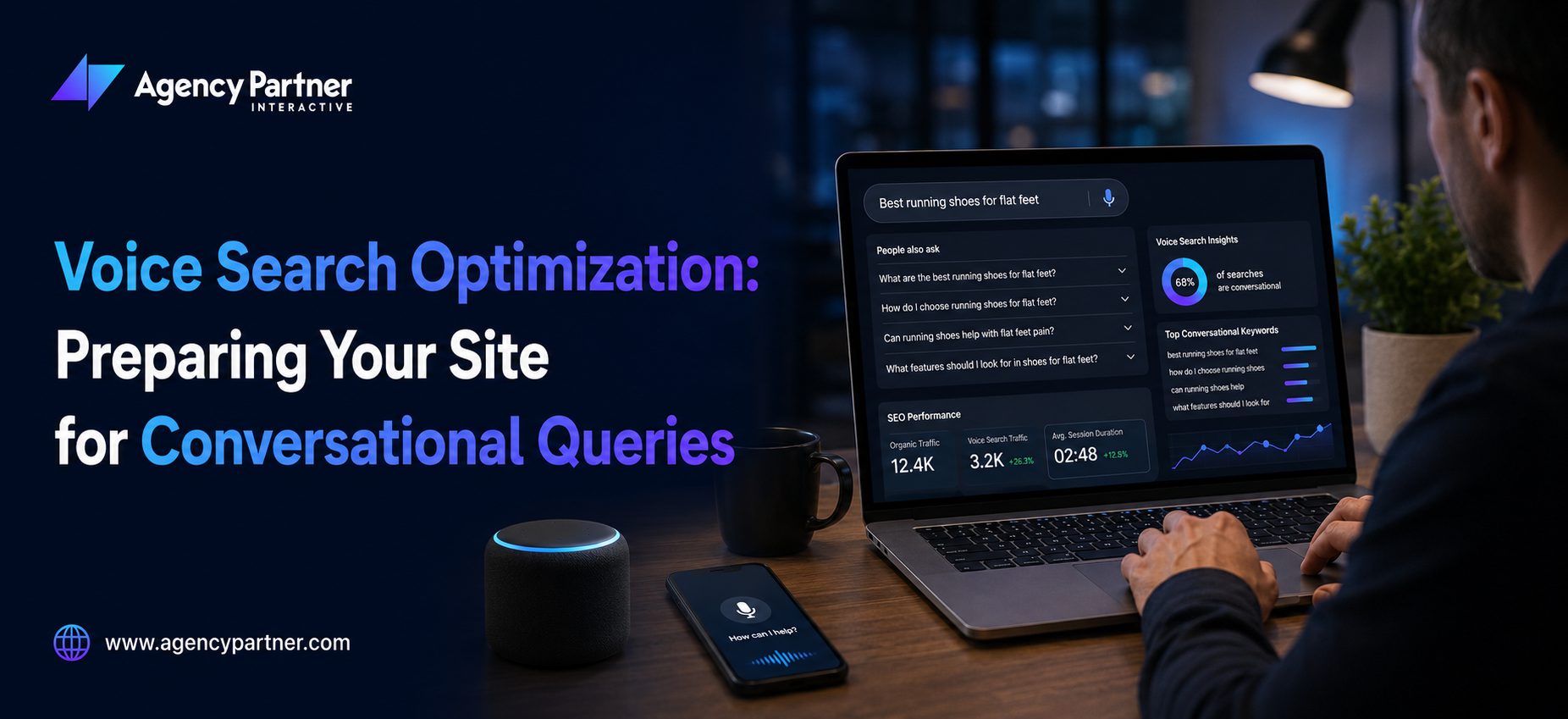
Most businesses are optimizing for how people type. The problem: an increasing share of their potential customers aren’t typing at all. With over 8.4 billion voice-enabled devices in use globally and 153.5 million Americans actively using voice assistants, the shift from typed to spoken queries has already passed the tipping point. Voice search hit 27% of all queries in 2026, and the latest data puts it at 31% as of May 2026. That’s nearly one in three searches your SEO strategy may be completely blind to.
Voice search growth is accelerating. Google voice search alone processes billions of queries daily. Businesses investing in voice search seo optimization now are capturing traffic that competitors are leaving entirely unaddressed. What is voice search optimization, and why does it require a fundamentally different approach from traditional SEO?
This guide covers the 2026 state of play, the practical tactics that move rankings, and the voice search local and voice search for business strategies that convert searchers into customers.
What Is Voice Search and Why Is 2026 Different?
What is voice search? It’s the use of spoken natural language to query a search engine or virtual assistant, rather than typing keywords. When someone says “Hey Google, find me a marketing agency near Dallas open on Saturday,” they’re conducting a voice search. The query is longer, more conversational, and packed with intent signals that typed searches rarely include.
Voice search growth in 2026 is driven by four converging forces that make this year a genuine inflection point:
Device Proliferation
8.4 billion active voice assistants now exist worldwide, roughly double the 4.2 billion in use in 2020. Every smartphone, smart speaker, car, TV, and wearable ships with a voice layer by default. Any voice search company entering this space now is competing in a fully mature ecosystem.
AI-powered Natural Language Understanding
Voice queries average 29 words and use natural language. Modern voice assistants don’t just match keywords, they understand context, infer intent, and personalize results based on user history. Google voice search is powered by the same Gemini models now driving AI Mode, making voice search developments in 2026 inseparable from AI search developments.
Google Search Live and AI Mode Integration
The most significant of all voice search developments in 2026: Google’s Search Live now supports real-time voice and video conversational search across 200+ countries. Google voice search and AI search have converged, what is voice search today is inseparable from what is voice search in AI systems. Voice and AI search are the same optimization problem now, content that wins google voice search wins AI Overviews, and vice versa. This is the voice search developments shift most businesses haven’t yet internalized.
Behavioral normalization. 50% of the U.S. population engages with voice search daily. 73% of US adults aged 18–34 use voice search daily. 62% of US adults overall use voice search at least weekly. Voice search growth has normalized across all age groups, this is mainstream behavior, not an early adopter trend. Every voice search company targeting consumers in 2026 is operating in a voice-first environment whether they’ve prepared for it or not.
What Is Voice Search Optimization, and How Is It Different from Regular SEO?
What is voice search optimization (also called VSEO)? It’s the process of structuring your content, technical setup, and local presence so that voice assistants select your site as the answer when users ask spoken questions. What is voice search seo optimization vs. traditional SEO? Three core differences:
Query Structure
Voice queries are conversational: “What’s the best digital marketing agency for small businesses?” Typed queries are fragmented: “best marketing agency small business.” Voice search seo optimization targets how people speak, full questions, natural phrases, conversational intent, not the shorthand of typed search. Any voice search company that ignores this distinction is optimizing for the wrong format.
Featured Snippet Dependency
About 50% of voice search results rely on a featured snippet, the answer box Google shows above all other results. More than 80% of voice search answers on Google Assistant are from the top three search results. How to rank for voice search starts here: if you’re not in position zero or the top three, you’re largely invisible to voice. What is voice search optimization accomplishing if it doesn’t target this position? Very little.
Speed requirements. Pages that rank for voice search load 52% faster</cite> than average pages. Voice search seo optimization without speed optimization is incomplete, page performance is a prerequisite, not a nicety. What is voice search optimization without technical SEO foundations? A content strategy without infrastructure to deliver it.
How to Optimize for Voice Search: 7 Tactics That Work in 2026
1. Restructure Content Around Conversational Questions
How to optimize for voice search starts with your heading structure. Every H2 and H3 on your high-traffic pages should reflect exactly how someone would ask a question out loud. “Digital Marketing Services” becomes “What digital marketing services does [Company] offer?” “Pricing” becomes “How much does [Service] cost?”
This isn’t just a writing style change, it’s the architecture how to rank for voice search depends on, because voice assistants extract direct answers from question-format headings. How to optimize for voice search at scale means auditing every page for this question-format pattern before investing in any other voice search seo optimization tactic.
2. Win Featured Snippets (Position Zero)
Since 50% of voice answers come from featured snippets, winning the featured snippet is the highest-leverage voice search seo optimization move available. The format: a direct 40–50 word answer immediately below the question heading, followed by supporting detail.
Google voice search reads featured snippet content aloud, which means your snippet is your voice search result. Every piece of content you produce for voice search marketing should be structured with snippet capture as a primary goal. Voice search marketing that doesn’t target featured snippets is missing the channel’s primary distribution mechanism.
3. Prioritize Voice Search Local SEO
76% of voice searches are “near me” or local queries. 28% of local voice searches result in phone calls to businesses, while 19% lead to in-person visits within 24 hours.
Voice search local seo requires:
- A fully optimized, verified Google Business Profile, with accurate hours, services, photos, and recent reviews
- NAP (Name, Address, Phone) consistency across every online directory
- Local schema markup on your website
- Content that explicitly references your city, neighborhood, and service area
- Business listings with complete information, positive reviews, and accurate contact details receive 3.2 times more voice search visibility than incomplete listings.
Voice search local seo is the fastest path to revenue from voice for any local business. Voice search local queries have purchase intent built in, the searcher is near you, ready to act, and asking for help. The voice search local conversion advantage over typed search is significant: no other channel converts voice search local intent to in-person visits at 19% within 24 hours.
4. Implement Schema Markup Across Your Site
Schema markup (structured data) tells search engines exactly what your content means, and it’s one of the clearest signals for voice search seo optimization. The schema types most relevant to voice search for business:
- FAQ Schema: Directly maps question-and-answer content to voice query format
- Local Business Schema: Powers voice search local seo for address, hours, and services
- How To Schema: Captures step-based voice queries (“how do I…”)
- Organization Schema: Establishes entity authority that AI and voice systems rely on
Schema is the technical layer every voice search company and SEO team should implement before any other voice search optimization investment. Without it, you’re relying on voice assistants to infer what you are, which they frequently get wrong.
5. Target Long-Tail Conversational Keywords
Around 80% of voice searches are conversational in nature, moving away from short keyword queries. Your voice search marketing keyword strategy needs to reflect this.
Instead of targeting “digital marketing agency Dallas,” target “what is the best digital marketing agency for small businesses in Dallas?” Tools like Answer the Public, AlsoAsked.com, and Google’s People Also Ask boxes are the voice search company researcher’s best friends. They surface the exact conversational phrasing your audience uses with voice assistants. Voice search marketing at the keyword level is about meeting speakers where their language already is, not training them to speak like typed searchers.
6. Optimize Page Speed and Mobile Performance
Pages that rank for voice search load 52% faster than average pages. Voice assistants prioritize fast, mobile-optimized pages because users expect instant answers.
Voice search seo optimization technical checklist:
- Core Web Vitals pass (LCP under 2.5s, CLS under 0.1, INP under 200ms)
- Mobile-first design and responsive layout
- Image compression and next-gen formats (WebP)
- No render-blocking JavaScript on above-the-fold content
- HTTPS (required for many voice platforms)
7. Write in Conversational, Direct Language
The average voice search result fits into approximately 30 seconds of speech, roughly 29 words. How to optimize for voice search at the sentence level: answer directly in the first sentence. How to rank for voice search with language: write at a 9th-grade reading level, avoid jargon, and begin every answer with the answer, not the context.
This writing style serves two masters: it’s what voice assistants extract, and it’s what google voice search and AI Overviews cite. Voice search developments in 2026 have made these two targets nearly identical.
Voice Search for Business: Industry-Specific Impact
Voice search growth isn’t uniform across industries. Here’s where the ROI is highest for voice search for business:
- Local Services (plumbers, roofers, marketing agencies, dentists): The highest-conversion voice search local use case. “Near me” queries with purchase intent. Immediate voice search local seo investment pays off fastest here.
- E-Commerce: Voice commerce is projected to reach $164 billion by 2028 (Digital Applied, 2026). Product reorders, subscription management, and quick purchase decisions are moving to voice.
- Healthcare: Patients ask voice assistants for symptoms, specialist recommendations, and office hours. Voice search for business in healthcare requires HIPAA-compliant schema and authoritative content signals.
- Restaurants and Hospitality: 34% of local voice queries target restaurants. Hours, menus, availability, and reservation options must be accurately represented in structured data and Google Business Profile.
How to Turn On Voice Search for Testing Your Own Site?
Before you optimize, test the experience. How to turn on voice search on the major platforms:
- Google: Say “Hey Google” to any Android device or Google Home, or click the microphone icon in the Chrome search bar on desktop. How to turn on voice search on desktop: go to google.com and click the microphone in the search bar. Google voice search is now also accessible through Google Search Live on mobile, tap the camera + microphone icon for multimodal queries.
- Siri: Hold the side button on iPhone or say “Hey Siri.” Then ask a question about your business category. How to turn on voice search through Siri: Settings → Siri & Search → Listen for “Hey Siri.”
- Alexa: Say “Alexa, [your query]” to any Amazon Echo device.
What to Test?
Search for your business by name, by service + city, and by the problem you solve. If your business isn’t the voice answer, that’s your baseline and your benchmark. How to turn on voice search is step one of auditing your voice search seo optimization gaps. Google voice search is the primary platform for most voice search for business testing because it feeds directly from the same index your organic SEO targets.
The Future of Voice Search: What’s Coming in 2026 and Beyond
Future of voice search developments that will define the next 18 months:
- Multimodal Search: Google Search Live combines voice + camera queries simultaneously. Voice search developments are moving toward ambient, contextual awareness that no traditional SEO strategy addresses.
- Voice Commerce Acceleration: Voice commerce is projected to reach $164 billion by 2028, growing at 24% annually. Voice search growth in commerce will create new voice search for business revenue channels that currently don’t exist.
- AI Personalization: Voice results are becoming individualized, the same query gets different results for different users based on history and preferences. Voice search developments in personalization make voice search marketing a one-to-one channel, not a one-to-many broadcast.
- Convergence with AI Overviews: Google’s AI Overviews accompany featured snippets in 63.67% of cases voice-optimized content gains extra visibility in AI-generated responses. Future of voice search and future of AI search are the same strategic challenge.
The future of voice search belongs to businesses that treat conversational queries as first-class SEO targets today. Voice search growth will not slow, it will compound as more devices, more use cases, and more AI layers reinforce the voice-first behavior. Any voice search company waiting for this channel to “mature before investing” is already 18 months behind.
FAQs
What is voice search optimization?
Voice search optimization is the process of structuring website content, technical SEO, and local signals so voice assistants can understand, trust, and surface your pages for spoken queries.
How to optimize for voice search in 2026?
To optimize for voice search in 2026, target featured snippets, use question-based headings, add relevant schema markup, improve page speed, strengthen local SEO, and provide concise conversational answers.
What is voice search local SEO?
Voice search local SEO focuses on helping businesses appear for spoken location-based queries, especially “near me” searches, by optimizing Google Business Profile, local schema, NAP consistency, and location pages.
How to rank for voice search quickly?
To rank for voice search faster, use FAQ schema, place clear 40–50-word answers beneath question-based headings, improve page speed, meet Core Web Vitals, and target specific conversational queries.
What is the future of voice search?
The future of voice search is increasingly multimodal, AI-personalized, and commerce-driven, with voice experiences converging with AI search platforms and making voice and AI optimization closely connected.
Is your website ready for voice and conversational search? Agency Partner Interactive builds voice-optimized SEO strategies that put your business in front of the 31% of searchers now speaking instead of typing. Talk to our team.