Tag: SEO Strategy

  • The Importance of Backlinks in SEO 2023 Updated

    The Importance of Backlinks in SEO 2023 Updated

    Backlinks have always been an essential factor in establishing the relevance and authority of a website for search engine optimization (SEO). Backlinks are important links from other websites that point to your website and help search engines understand the popularity and credibility of your content.  

    While search engine algorithms have undergone significant changes over the years, the importance of backlinks has remained constant. In 2023, backlinks are still crucial in ranking higher in search engine results pages (SERPs). What strategies have you used to build backlinks for your website, and what kind of results have you seen? This blog post will help you explore the importance of SEO link-building for 2023 and the best strategies you can follow to rank. 

    What Are Backlinks? 

    Backlinks, also known as inbound links, are links from other websites referring to your website, which sends traffic from one website to another. When users click on a backlink on another website, they are directed to your website. This referral traffic can help increase your content’s visibility and reach. 

    There are two types of backlinks: no follow and do follow links:  

    • Do follow links are links that search engines follow and signal relevance and authority for your website.  
    • No follow links, on the other hand, are links that search engines do not follow and, therefore, do not pass on any authority to your website. 

    Why Are Backlinks Important for SEO? 

    Backlinks are essential for SEO because they help Google determine the authority and relevance of a website. When a website has a lot of high-quality backlinks from authoritative sources, it signals to Google that the website is a valuable and trusted resource in its field which can help to improve the website’s search engine rankings, leading to increased visibility and traffic. 

    There is a strong correlation between backlinks and higher search engine rankings. Many studies have found that websites with high-quality backlinks rank higher in search engine results pages (SERPs) than websites with fewer backlinks. 

    How to Acquire High-Quality Backlinks 

    Acquiring high-quality backlinks is crucial for improving search engine rankings and increasing website visibility. Here are some strategies for acquiring high-quality backlinks: 

    Guest blogging 

    Writing high-quality blog posts for other websites in exchange for a backlink to your website is a great way to acquire high-quality backlinks. However, choosing websites relevant to your niche and with a good reputation is essential. 

    Broken link building 

    Finding broken links on other websites and recommending a replacement link to your content is another effective strategy for acquiring high-quality backlinks. This method involves contacting website owners and suggesting a replacement link to your content relevant to the original content that the broken link was pointing to. 

    Creating valuable content 

    Creating valuable and informative content on your website is an effective way to attract high-quality backlinks naturally. When other websites find your content useful, they may link to it as a source of information for their audience. 

    What Should You Avoid While Acquiring Backlinks? 

    When making natural link acquisition, avoiding low-quality or spammy backlinks is essential, which can harm your website’s search engine rankings. Here are some tips for preventing low-quality or spammy backlinks: 

    Avoid paid links  

    Search engines can see paid links as spammy and can harm your website’s rankings. Avoid paying for links or participating in any link schemes. 

    Focus on quality, not quantity  

     Acquiring a large number of low-quality backlinks can be harmful to your website’s search engine rankings. Instead, focus on acquiring high-quality, relevant backlinks from authoritative sources. 

    Check the domain authority  

    Before acquiring a backlink, check the domain authority of the website it’s coming from. A backlink from a website with a high domain authority is more valuable than one with a low domain authority. 

    Best Practices for Backlinking in 2023 

    Have you ever been penalized by search engines for low-quality or spammy backlinks, and how did you address the issue? Google algorithms have evolved to become more sophisticated and better able to detect low-quality or spammy backlinks. As a result, it’s essential to follow best practices for backlinking in 2023 to ensure your website is not penalized by Google’s search engines. Here are some best practices for backlinking in 2023: 

    Focus on relevance 

    Backlinks that come from websites that are relevant to your niche are more valuable than those that come from unrelated sources. Acquiring backlinks from websites relevant to your content and audience is essential. 

    Diversify your sources 

    Acquiring backlinks from diverse sources is important to avoid appearing as though you are manipulating search engine rankings. Acquiring backlinks from various sources, including blogs, news websites, and social media platforms, is essential. 

    Avoid manipulative tactics  

    Google is becoming increasingly sophisticated at detecting manipulative backlinking tactics, such as paid links or link exchanges. It’s essential to avoid these tactics and focus on acquiring backlinks naturally. 

    Monitor your backlinks  

    Regularly monitoring your backlinks can help you identify any low-quality or spammy backlinks that could harm your website’s search engine rankings. Tools like Google Search Console and Ahrefs can help you monitor your backlinks and identify any issues. 

    Summing It Up: The Importance of Backlinks in SEO 2023 

    Backlinks continue to be a crucial factor in SEO, and their importance is expected to remain relevant in 2023. Backlinks help search engines determine the relevance and authority of a website and are strongly correlated with higher search engine rankings. By acquiring high-quality backlinks through strategies such as guest blogging, broken link building, and creating valuable content, website owners can improve their ranking on Google and increase their website’s visibility. 

    However, it’s essential to follow best SEO practices for backlinking in 2023; by doing so, website owners can avoid penalties from search engines and ensure that their backlinking efforts are practical. 

    Therefore, website owners must prioritize backlinking as part of their off-page strategy to improve their SERP rankings and increase online visibility. 

    Boost Your Website Ranking with a Top SEO Agency 

    As an award-winning Dallas-based SEO company, Agency Partner Interactive helps our clients maximize their online presence and attract scalable targeted website traffic. We understand the importance of SEO backlinks and their impact on a website’s search engine rankings. That’s why we specialize in creating high-quality, relevant, and authoritative backlinks for our clients. 

    As a result-driven agency, we work closely with our clients to develop a customized backlink and SEO strategy that aligns with their business aim and target audience at a reasonable cost of SEO.  

    Our SEO experts have worked with over 180+ clients and use outreach, content creation, and off-page link-building tactics to secure high-quality backlinks that drive traffic and improve search engine visibility.  

    Contact us today to learn more about how we can help you improve your website’s ranking! 

  • The Ultimate Guide to Ranking Your Business

    The Ultimate Guide to Ranking Your Business

    Local SEO, or search engine optimization, is optimizing a website to rank higher on Google. This type of SEO is focused on increasing visibility and attracting customers from a specific geographic area. 

    San Antonio has a rich cultural heritage and a booming economy, making it an attractive place for businesses to establish themselves. With so many companies vying for attention, investing in local SEO is essential to stand out and attract customers in the area. 

    This article will explore the key strategies for ranking your website in San Antonio’s local search results. We’ll cover everything from researching local keywords to optimizing your website for local search, building local links, and tracking your progress. By the end of this article, you’ll better understand how to improve your local SEO and attract more customers in San Antonio. 

    Researching Local Keywords 

    To identify local keywords for San Antonio, it’s essential to consider what your customers might be searching for when looking for businesses in the area. This could include keywords related to your industry, location-based terms like “San Antonio,” “near me,” and specific neighborhoods or landmarks in the city. 

    When researching keywords for local SEO, focusing on terms relevant to your business and having a high search volume in San Antonio is essential. Additionally, you’ll want to consider the intent behind each keyword and choose terms that indicate a high likelihood of a customer purchasing or visiting your business. 

    Many keyword research tools are available to help you identify the best keywords for your local SEO services. Some popular options include Google’s Keyword Planner, Moz’s Keyword Explorer, Ahrefs, and SEMrush.  

    These tools can help you find relevant keywords, assess their search volume and competition level, and identify related terms that could also be useful for your strategy. Conducting thorough keyword research ensures you’re targeting the most practical terms for your business in San Antonio. 

    Creating Local Content 

    When creating local content, you must focus on providing value to your customers while incorporating location-specific details that will help you rank higher in local search results. Some tips for creating high-quality local content include researching your audience, highlighting local events or landmarks, and incorporating local keywords naturally into your content. 

    Several types of content can be effective for local SEO, including blog posts, videos, infographics, and local guides. By creating diverse content that speaks to your audience’s interests and needs, you can establish yourself as a valuable resource in the community and attract more customers to your business. 

    Optimizing Your Website for Local Search 

    Creating a Google My Business listing is one of the most critical steps in optimizing your website for local search. This free tool allows you to manage your business information and appear in Google’s local search results and Google Maps. 

    Consistency is vital in local SEO, which applies to your business’s NAP (Name, Address, Phone number) information. Ensure your NAP is accurate and consistent across your website and other online directories. 

    Creating location pages on your website can also help you rank higher in search results. These pages should include detailed information about your business’s location(s), testimonials, reviews, and other location-specific details. 

    Another way to improve your website’s local SEO is by using schema markup to provide structured data to search engines which can help search engines understand the content on your website and display more relevant information to users in local search results. 

    Building Local Links 

    Local link building is an essential component of any local SEO strategy. Links from other local businesses or organizations can help improve your website’s authority and relevance in local search results and drive traffic to your website from other sources. 

    Several local links can be effective for local SEO, including links from local directories, local news outlets, and other local businesses or organizations.  

    Links from local bloggers or influencers can also help build awareness and credibility for your business in the community. 

    Strategies for building local links include: 

    • Reaching out to other local businesses or organizations and offering to collaborate on content or events. 
    • Participating in local sponsorships or events 
    • Leveraging your existing relationships with customers or partners to secure links from their websites or social media profiles.  

    Social Media for Local SEO 

    Social media can improve your local SEO efforts by providing additional visibility for your business and helping you engage with your audience in San Antonio. By leveraging social media platforms like Facebook, LinkedIn, Twitter, and Instagram, you can increase brand awareness, drive traffic to your website, and build relationships with local customers and influencers. 

    Consider leveraging paid social media advertising to target local customers and drive conversions. To optimize your social media presence for local search, include location-specific details in your profiles and posts. Use relevant hashtags and participate in local conversations to improve your visibility and credibility in the community. 

    Tracking Your Local SEO Progress 

    Some tools are available to help you track your local SEO progress, including Google Analytics, Google Search Console, and local SEO tracking software like BrightLocal or Moz Local. These tools can help you monitor your website’s traffic, search engine rankings, and local visibility over time. 

    Key metrics to monitor when tracking your local SEO progress include: 

    • Website traffic 
    • Click-through rates 
    • Search engine rankings for local keywords 
    • The number and quality of your local links 

    To analyze and adjust your local SEO strategy, consider conducting regular audits of your website and local listings, analyzing your competitors’ local SEO efforts, and incorporating feedback from local customers or partners.  

    Local SEO for San Antonio Businesses 

    Local SEO is essential to any business’s digital marketing strategy in San Antonio. By researching local keywords, creating high-quality local content, optimizing your website for local search, building local links, and leveraging social media, you can improve your visibility and grow your business in the local market. 

    Local SEO can be a complex and ever-changing field, but by staying current on the latest best practices and trends, you can stay ahead of the competition and achieve long-term success in the San Antonio market. 

    If you want help with your local SEO strategy, consider partnering with a local digital marketing agency specializing in local search optimization. With their expertise and guidance, you can develop a comprehensive and effective local SEO plan that drives results for your business. 

    An Award-Winning San Antonio SEO Agency 

    We understand the importance of SEO ranking well in local search results, especially in a competitive market like San Antonio. We are experts in helping businesses improve their online visibility through customized digital marketing strategies tailored to their unique needs and goals. Our team of experts is well-versed in the latest trends and best SEO services and SEO tips.  

    Agency Partner Interactive believes every business deserves a solid online presence and is committed to helping our clients achieve their goals. Whether you’re a small or a large company, we have the affordable SEO resources and expertise to help you rank 1 on Google SERPs in San Antonio and keep you there. 

    Our clients see up to 430% increase in web traffic and a 113% increase in top 3 keyword rankings. Ready to start dominating the market? Get in touch with our digital marketing experts for a free proposal now! 

  • Ultimate Guide of Conduct Keyword Research for SEO in 2023.

    Ultimate Guide of Conduct Keyword Research for SEO in 2023.

    Keyword research is the process of identifying and analyzing popular search terms that people enter on Google. Keyword research helps businesses and website owners understand what their audience is searching for and what words and phrases they use to find information online. 

    Keyword research is essential for SEO because it allows website owners to identify high-traffic keywords relevant to their business and optimize their content to rank higher on SERPs. 

    The landscape of keyword research is constantly changing, especially in 2023. Google has been evolving its algorithms and search results to match user intent better and provide more personalized results. According to Backlinko, Google’s search algorithm is estimated to use over 200 ranking factors to determine search results, making it increasingly important to conduct thorough keyword research and SEO optimization. 

    This means keyword research must focus more on user intent and context than the specific words used in a search query. Website owners need to consider not only the specific keywords they want to rank for but also the user’s intent and the context in which the search is being made to create content that aligns with both. Are you aware of the latest keyword research trends and techniques for SEO in 2023 

    Types of Keywords to Target in 2023 

    There are several types of keywords that website owners and marketers should target to improve their SEO and attract more organic traffic to their websites: 

    Short-tail keywords  

    These are short, generic keywords that are usually one or two words in length. They are broad and typically have a high search volume but are highly competitive. Examples of short-tail keywords include “shoes,” “holidays,” and “fitness.” 

    Long-tail keywords 

    These are more specific keyword phrases that are typically three or more words in length. According to SEMrush, long-tail keywords have become increasingly important in recent years, with over 70% of all searches conducted using long-tail keywords. 

    They have lower search volumes than short-tail keywords but are often less competitive, making them easier to rank for. Examples of long-tail keywords include “best running shoes for women,” “family-friendly beach vacations,” and “yoga poses for beginners.” 

    LSI (Latent Semantic Indexing) keywords 

    LSI keywords can include synonyms, related phrases, and concepts. These keywords are semantically related to a main keyword and help Google understand the context of the content. For example, if the main keyword is “fitness,” related LSI keywords might include “exercise,” “health,” and “nutrition.” 

    Geo-specific keywords 

    These are keywords that target a specific geographic location. They can include city names, state names, or other location-specific terms. For example, “best pizza in New York City” or “plumber in Los Angeles.” Geo-specific keywords can help local businesses attract more traffic and improve their visibility in local search results. 

    Voice search keywords 

    These are keywords that are tailored for use in voice searches. With the development of voice assistants and smart speakers, more people are using voice search to find information online. Voice search keywords are often conversational and may include question phrases such as “how to,” “what is,” and “where can I find.” Examples include “What’s the weather like today,” “Best Thai restaurant near me,” and “How do I fix a leaky faucet.” 

    Keyword Research Tools for 2023 

    Here’s an overview of some of the most popular tools: 

    Google keyword planner 

    This free tool provided by Google allows you to research keywords and see their search volume and competition levels. You can also get ideas for new keywords based on a website or a specific topic. 

    Ahrefs 

    Ahrefs is a paid tool that comprehensively analyzes a website’s backlinks, organic search traffic, and keyword rankings. It also includes a keyword research tool to discover new opportunities and analyze your competitors’ strategies. 

    SEMrush 

    SEMrush is a paid tool with keyword research, competitor analysis, and site audit features. It lets you discover new keywords, track your rankings, and analyze your competitors’ strategies. 

    Moz keyword explorer 

    Moz Keyword Explorer is a paid tool that features keyword research and analysis. It allows you to discover new keywords, analyzes search volume and difficulty, and track your rankings. 

    AnswerThePublic  

    AnswerThePublic is a free tool that provides insights into people’s questions about a particular topic. It generates a visual map of related questions and topics based on a keyword or phrase. 

    Easy Steps to Conduct Keyword Research in 2023 

    Here are the steps to conduct effective keyword research in 2023: 

    Determine your target audience 

    Before conducting keyword research, it’s important to understand your target audience and their search behavior. Consider their demographics, interests, and search intent. This will help you identify the keywords they will use when searching for your products or services. 

    Brainstorm keyword ideas 

    Start with a list of relevant topics and brainstorm keyword ideas relevant to those topics. Use your knowledge of your target audience and their search behavior to develop potential keywords. 

    Use keyword research tools 

    Use keyword research tools like Ahrefs, Google Keyword Planner, SEMrush, or Moz Keyword Explorer to expand your list of potential keywords. These tools can provide additional keyword suggestions and insights into the search volume and competition levels. 

    Analyze the competition and search intent 

    Analyze the competition for your potential keywords by looking at their search engine rankings and the content they are producing. Also, consider the search intent behind each keyword. Are people looking for information, products, or services related to that keyword? This will help you better target your content to the needs of your audience. 

    Prioritize keywords based on relevancy and search volume 

    Once you have a list of your keywords, prioritize them based on their relevancy to your business and search volume. Focus on highly relevant keywords to your business and have a high search volume which will help you target the right audience and attract more traffic to your website. 

    Best Practices for Keyword Research in 2023 

    To conduct effective keyword research in 2023, it’s important to follow best practices that keep up with the ever-changing landscape of SEO. Here are some best practices for keyword research in 2023: 

    • Google algorithms are constantly updating to provide better search results to its users. Stay up to date with these updates and adjust your keyword strategy accordingly. 
    • Focusing on user intent is more important than just search volume. Google’s algorithms are becoming more advanced in understanding user intent. Hence, creating content that aligns with what the user is looking for is important, which means considering the context and purpose behind a search query and creating content that provides value to the user. 
    • Keyword research is an ongoing process. It’s important to regularly monitor and adjust your keyword strategy based on changes in search behavior and algorithm updates. Keep track of your keyword rankings, search volume, and competition levels, and adjust your strategy accordingly. 
    • In addition to short-tail and long-tail keywords, use various keyword types, such as LSI, geo-specific, and voice search, to target different search queries, which will help you engage a wider audience and improve your chances of ranking for various relevant keywords. 

    To Sum Up: Ultimate Guide of Conduct Keyword Research for SEO in 2023 Updated 

    Keyword research is crucial for SEO in 2023. It helps identify high-traffic keywords and align content with user intent, increasing visibility and driving organic traffic. Stay updated on Google’s algorithm updates, focus on user intent over search volume, monitor and adjust your keyword strategy, and use various keyword types. 

    Brainstorm keyword ideas and use keyword research tools to expand and prioritize keywords based on relevancy and search volume. Monitor rankings and adjust your strategy to improve search engine visibility and drive traffic. 

    Get Customized SEO Solutions for Your Business Today! 

    At Agency Partner Interactive, we believe digital marketing is more than just a buzzword – it’s an important factor in any successful business SEO strategy. We provide services to help our clients achieve their online goals, like SEO keyword research, on-page SEO, social media, organic keywords, content creation, content marketing, and more, with low SEO costs. 

    We have a proven record of delivering results that exceed expectations. Our 180+ clients have seen an average increase of 45% in organic traffic after implementing our local SEO on their websites. 

    If you’re looking for a result-driven agency to help you achieve your aim, look no further than Agency Partner Interactive. Contact us today to schedule a free call to learn more about how we can help your business succeed online. 

  • SEO Guide: How Much Should You Pay for SEO Services in 2023?

    SEO Guide: How Much Should You Pay for SEO Services in 2023?

    Search engine optimization, or SEO, is a crucial tool for businesses looking to improve their online visibility and attract more website traffic. However, as you begin to explore the world of SEO, you may be wondering about the cost of these services. How much should you expect to pay for an effective SEO campaign? What factors affect the cost of SEO services?

    In this SEO guide, we’ll take a closer look at the cost of SEO in 2023 to help you plan your Google search engine optimization costs for the year. Whether you’re a small business owner with a limited budget or a larger company looking to invest heavily in SEO, this blog will provide you with the information you need to make informed decisions about your SEO spend.

    For a more detailed SEO guide personalized for your business needs, speak with an SEO expert at Agency Partner Interactive and get a free proposal today!

    What Are SEO Services?

    SEO (Search Engine Optimization) services help businesses improve their online visibility and attract more website traffic. SEO is an integral part of any internet marketing effort when designing and executing an effective strategy for optimizing your website’s pages and elements so they appear meaningful to search engine crawlers.

    How Much Do SEO Services Cost in 2023?

    While most business owners hope for an exact number that will fit neatly with their monthly or yearly budget, it’s more complex. The cost of SEO services can differ significantly depending on the services you need, the digital agency you choose, the level of services you require, and more.

    In 2022, the cost of localized SEO campaigns averaged $1,400 per month, while nationally focused campaigns ranged between $3,000 to $7,500 per month.

    Average Cost of SEO Services for US-Based SEO Agencies
    • Hourly – $100 – $300
    • Monthly retainer – $500 – $10,000+ per month
    • Project-based – $1,500 – $5,000. However, SEO requires diligence and continuous tracking on an ongoing basis.
    Additional factors to keep in mind:
    • eCommerce SEO services typically cost more
    • Plans with content creation and writing increase costs
    • Additional fees for link-building services
    What Affects the Cost of SEO Services?

    While how much you’ll spend on SEO services has much to do with which digital marketing agency you go with, the breakdown of costs depends on several factors, including:

    The size and complexity of your website – the overall technicality and content management system of your site determine the amount of effort needed for SEO services. For example, Agency Partner Interactive builds custom websites for each of our clients using SEO best practices tailored to Google and other major search engine algorithms. Having a technically sound and intuitive website created with SEO best practices in mind makes it much easier to optimize existing pages effectively and efficiently.

    Existing visibility, brand awareness, and exposure – if you’re starting from scratch with a brand new website with no rankings or domain authority, be prepared to pay more or wait longer to see results.

    Urgency – SEO is a long game and takes time to be effective. If you need to see quick results, it requires more effort, time, and resources from the SEO agency, leading to higher costs.

    Competition – the overall competitiveness of the keywords you want to target depends on your industry and the set of keywords.

    Target audience – local, national, or global campaigns may affect the overall cost of SEO services.

    Type of service – SEO pricing is often determined by whether you need to optimize your content for organic search, build up a review profile, produce and publish regular content pieces, and more. This can determine which SEO pricing structure and packages are best for your business. If you need help setting up your Google My Business account and optimizing site tags, it can be a one-time project, whereas if you want to build a comprehensive blog and gain ranking on the SERPs, monthly services might be a better option.

    How Much Should You Spend on SEO?

    The amount a business should spend on SEO services depends on its budget, goals, and size. Small to medium-sized companies with a limited budget may want to start with a smaller package. In contrast, enterprise companies with more resources may invest more heavily in SEO. Regardless of what you want from SEO efforts, you should set realistic goals and budget your digital marketing services accordingly.

    Paying for a talented and reputable SEO agency to create quality content and optimize your website can generate new leads for years to come, so the return on investment can pay off exponentially. In 2023, small business owners should budget around $1,000 to $5,000 per month for SEO services. Experienced SEO experts will provide scalable services without overlooking critical elements like

    • Quality content creation
    • Link building
    • Conversion rate optimization
    • Accessibility, usability, and functionality of your website
    • Customer review and GMB management
    What’s the Return on Investment (ROI) of SEO?

    While there is no guaranteed ROI for SEO services, it doesn’t mean that achieving a total ROI is rare. According to Hubspot’s 2023 Market and Strategy Trends Report, SEO ranks fourth in terms of ROI and effectiveness, and 88% of companies using SEO will increase or maintain investment in 2023.

    By choosing the right SEO agency and working with them to develop an effective SEO strategy aligned with your business goals and budget, you can reap the rewards for years to come.

    Currently, 53.3% of all internet traffic comes from organic search results, with Google having over 85% of the total search engine market. That means formatting your site and content to meet Google’s specifications is critical. If your business relies on SEO services, an agency with local SEO experts specializing in local search can help boost your business’s results on SERPs and improve your bottom line.

    It’s important to remember that SEO is not a one-time investment; it’s a long-term commitment to achieving better visibility and results. While there’s no one-size-fits-all package for SEO, working with a dedicated digital agency like Agency Partner Interactive can help you achieve scalable results and ROI through high-quality content marketing and bespoke SEO services.

    Agency Partner Interactive: The Best Dallas SEO Agency

    As the number one SEO agency in Dallas, Agency Partner Interactive’s vision is to be the catalyst to unlock growth and value for every business. Our SEO experts have the skills, resources, and expertise to help you reach your goals and beyond.

    Our work has won us awards, such as Top Dallas SEO Companies by DesignRush, FastTech 2022, and Clutch.co Global 1000. Experience the difference of working with a dedicated digital agency makes your success ours. Get in touch to receive your free personalized proposal today!

  • Top 10 SEO trends you need to know in 2021

    Top 10 SEO trends you need to know in 2021

    Expert Tips For Top 10 SEO trends you need to know in 2021

    It’s time to empower your website & brand with proper SEO-Optimization. For starters, search engine optimization is the most critical aspect of digital marketing for any online business in these times. Every web designer or digital marketer should understand SEO, how it works, and how the traffic potential it can generate for a brand’s website.

    SEO has two main goals. The first is to help you understand what users are searching for online so that you can create high-quality content to satisfy their intent. The second is to help you create a website that search engines can find, index, and understand its content.

    The most important SEO tasks have to do with identifying what users are searching for related to your products and services, creating content that will make users happy, providing the right signals to search engine crawlers, and algorithms through various SEO techniques.

    In today’s competitive market, SEO marketing is more important than ever. Search engines serve millions of users per day looking for answers to their questions or solutions to their problems. 

    Search engine optimization (SEO) is one of the most effective ways to attract potential customers to your website. But here’s the thing: you need to use it in the right way. According to stats, there are an estimated 3.5B searches on Google each day. But while only 0.78% of Google searchers click on results from the second page, the #1 result in Google’s organic search result gets an average CTR of 31.7%.

    The important part.

    Many brands and businesses know — or maybe think they know — that they need SEO for their digital brands and websites and the benefits they will receive from that SEO expedition being implemented on their behalf. But in reality, things are way more complex than people think.

    SEO in these modern times requires clarity and proper strategic implementation to help your brand leap. With Agency Partner Interactive, you can get the key insights about the best SEO trends and SEO Tips 2021 and use certified SEO experts to curate your SEO digital strategy that performs off the charts. 

    Focus on the user & the search intent.

    In 2021, it’s time to focus on the user and the search intent. While this is barely a new trend or concept, it’s important to refocus every year because searcher intent and behavior change, especially after the year 2020, when so much rapidly changed due to the ongoing pandemic. 

    Hiring an expert.

    Search Engine Optimization requires a lot of time. Apart from this, you must be aware of the current trends, algorithm changes, and strategies. Today, many marketers are aware of the fundamentals of Search Engine Optimization.

    Therefore, they can perform the optimization of their website themselves. However, most of them go on this adventure without being aware of the basics. This is where they end up making grave mistakes. If you don’t have the right skills and tools, we suggest that you hire the services of a professional instead.

    Believing in unrealistic promises.

    If you are going to hire a professional, make sure you go with one that uses safe methods. There are no shortcuts when it comes to getting your website ranked. Remember that you cannot trick major search engines, such as Google, to gain better rankings for your desired keywords. Today, search engines are brilliant.

    In other words, you should never try to cheat the system, or you may get penalized. So, you may want to hire a provider that makes realistic promises.

    Check methods.

    Before you go with a service provider, make sure you know the method they will use. What you need to do is follow only white hat practices. On the other hand, illegal SEO involves tips and tricks that violate search engine guidelines, such as keyword stuffing, buying backlinks, exchanging links, and hidden text.

    Although you can get quick gains through illegal SEO, you will be taking a lot of risks. So we suggest that you follow only white hat methods to improve your search engine rankings. This includes updating your website with quality content and optimizing the content for search engines. 

    Don’t ignore the google algorithm changes.

    Today, search engines are changing their algorithms to improve the way websites are ranked. The idea is to identify cheaters that manipulate the system. Over the past five years, Google algorithms have gone through many major changes, so Google follows a different method of ranking websites these days. With that in mind, you may want to follow the recent updates if you want to achieve great results. If you don’t have the time to read about this change, we suggest that you hire the services of an SEO expert.

    Opt only for the precise keywords.

    Lastly, one of the most common mistakes is to follow non-strategic keywords when it comes to SEO. You may not want to waste time optimizing your content for the wrong keywords. For example, you may not want to use overly competitive keywords. Instead, it would help if you used low competition keywords to get a lot of traffic.

    Consider personalization.

    According to statistics, at least 70% of customers that buy online are drawn to personalization on blogs and sites. For instance, when someone buys something from you, you may send them an email with their name in the email. The good thing is that personalization is not a costly or complicated process. The whole purpose of personalization is to make the buyers realize that you value them.

    Visual search features & YouTube SEO.

    According to statistics, visual search is quite effective these days. What do we mean by “visual search”? Let us explain: If a user clicks a product photo of their choice, websites such as Pinterest and Google show the buying options right under the picture of that product. That way, the buyers have the ability to buy the product by simply clicking the photo. Through this method, YouTube videos provide one of the most engaging platforms available for consumers. 

    Post video content.

    Video content is quite popular on social media platforms, such as Facebook. If you look at consumer statistics, you will know that 52% of buyers feel more confident when buying products after watching a video. At least 68% of buyers like to watch short videos to find out more about products instead of reading long articles, manuals, or infographics. 

    Utilize Google My Business.

    Google My Business helps small business owners stand out in search engines. Whether through a search result or a maps query, over five billion searches are made each day globally through Google. That means that a large audience can find your product or service quickly and easily. Not only does it increase your visibility, but it’s also a free way to optimize your website for local search.

    Your SEO experts in Dallas.

    Agency Partner Interactive (API) is the best custom web development and design agency in Dallas, TX, providing the best YouTube SEO, off-page SEO, on-page SEO, and SEO strategy solutions — all geared to perfection.

    Let us show you how to convert your visitors into lifelong customers with custom, perfectly suited web features. We can help your website be a true source of business intelligence, your sales machine that never sleeps. What are you waiting for?

    Let’s go the distance through precision SEO solutions with Agency Partner. 

    Not big on reading? That’s okay. Watch “Top 10 SEO trends you need to know in 2021” instead. Using the power of Artificial Intelligence, we turned this blog into a video for you. Check it out below!


  • 12 Steps to Building an Ecommerce Website: A Practical Launch Plan

    12 Steps to Building an Ecommerce Website: A Practical Launch Plan

    Building an ecommerce website involves more than choosing a theme and uploading products. Your store needs a clear commercial plan, accurate product information, reliable payments, workable fulfillment processes, and a shopping experience customers can use confidently.

    These 12 steps explain how to plan, build, test, and launch an online store. They also cover the work that continues after launch, when customer feedback and real transaction data can guide improvements.

    A 12 month roadmap can help organize investment and responsibilities, but it is not a required development timeline or a promise of business success. A straightforward store may launch sooner, while a project involving complex integrations, a large catalog, or migration may need more time.

    1. Define Your Customers, Offer, and Budget

    Start by identifying who you want to serve, what they need, and why they would choose your store. Review competing products, pricing, delivery options, and customer complaints to understand where your business can offer something useful.

    Build a budget that includes more than website development. Account for inventory, product photography, platform subscriptions, payment processing, packaging, shipping, returns, marketing, and ongoing support.

    Estimate how much remains from each order after the relevant costs. This helps you evaluate whether discounts, free shipping, and paid customer acquisition are sustainable.

    Before moving forward: Document your audience, initial product range, pricing assumptions, available budget, and responsibilities.

    2. Choose and Secure Your Domain Name

    Choose a domain that customers can recognize, spell, and remember. A short name can be useful, but there is no universal letter count that makes a domain suitable for every business.

    Check initial registration and renewal prices separately. Confirm who owns the domain, where it is registered, how renewal is managed, and which business account controls access.

    Avoid choosing a confusing name simply to include a search keyword. Your domain should support a recognizable brand rather than imitate another business.

    Before moving forward: Make sure the business retains control of the domain and recovery information, even if a development partner assists with setup.

    3. Define the Scope and Choose Your Development Approach

    Decide what the first version of your store must do. Separate essential requirements from features that can wait until you have evidence of customer demand.

    Your scope might include product variants, subscriptions, customer accounts, shipping rules, search filters, or integrations with inventory and accounting systems. Document these requirements before comparing proposals.

    A standard platform setup may suit a straightforward store. More complex workflows may require custom development. Compare proposed deliverables, exclusions, testing, ownership, training, and support rather than judging proposals only by price.

    Agency Partner Interactive’s ecommerce website development services can help you assess storefront requirements and define an implementation scope.

    4. Select Your Ecommerce Platform

    Choose a platform around your catalog, operational requirements, available skills, and ongoing budget. Compare hosting arrangements, customization options, payment availability, integrations, maintenance responsibilities, and data export options.

    Do not assume a platform is right for your business because a well-known retailer uses it. Your requirements may be very different.

    For a Shopify project, our Shopify development services can help you evaluate store setup, customization, and integration requirements.

    For businesses building on WordPress, our WooCommerce development services can help you plan the store alongside hosting, extensions, and maintenance needs.

    Before moving forward: Compare the total cost of operating each shortlisted solution, not just its advertised subscription price.

    5. Plan Your Store Structure and SEO

    Organize products into categories customers can understand. Plan how shoppers will move from navigation and category pages to relevant products, related items, and checkout.

    Research the language customers use when looking for your products. Use that research to inform useful category descriptions, product information, page titles, and internal links without repeating keywords unnaturally.

    Include crawlability, canonical URLs, sitemap generation, and controls for filtered pages in the technical scope. If you are replacing an existing store, review which URLs should remain and where redirects are needed.

    Our ecommerce SEO services can support keyword mapping, content planning, and technical search requirements. SEO should inform the build, but a new website does not guarantee rankings.

    6. Design the Mobile Shopping Experience

    Use your brand identity consistently, but make usability a priority. Customers should be able to understand your offer, browse products, select options, and complete checkout without unnecessary effort.

    Review navigation, text readability, image presentation, touch controls, and form errors on mobile devices. Do not judge the experience only from a desktop design preview.

    Make delivery information, returns guidance, and support options easy to find. Check accessibility needs such as keyboard navigation, clear labels, and readable contrast.

    Before moving forward: Test a complete shopping journey with representative users and resolve the problems that prevent them from completing it.

    7. Prepare Product Content and Store Information

    Create accurate descriptions that help customers decide whether a product meets their needs. Include relevant specifications, dimensions, materials, compatibility, care instructions, and variant information.

    Use clear images that represent what customers will receive. Explain limitations instead of relying on broad claims such as “best quality” or “perfect for everyone.”

    Prepare contact details, delivery information, return procedures, and other business policies before launch. Have qualified advisers review legal, tax, and privacy requirements appropriate to your products and markets.

    Before moving forward: Check that product availability, prices, images, and descriptions agree across the store and connected systems.

    8. Configure Payments, Shipping, and Integrations

    Choose payment options your customers can use and your business can support. Compare processing fees, settlement arrangements, supported currencies, refunds, and compatibility with the selected platform.

    Define shipping zones, delivery methods, stock handling, and order notifications. If you offer store collection, document how staff receive, prepare, and hand over orders.

    Map how orders and inventory move between your store, accounting software, warehouse tools, and other systems. Assign responsibility for investigating failed synchronization or missing data.

    Before moving forward: Test successful and failed payments, refunds, shipping calculations, stock changes, and order notifications.

    9. Build a Permission-Based Launch Audience

    An optional coming soon page can explain your offer and invite interested visitors to receive launch updates. It should clearly state what people are signing up for.

    Do not automatically add personal contacts or business partners to a promotional list. Use a clear signup process, keep appropriate records, and provide an easy way to unsubscribe.

    Plan messages around useful information, such as product availability, launch timing, or relevant buying guidance. Our beginner’s guide to email marketing offers supporting background for planning your communications.

    A prelaunch page does not guarantee backlinks, followers, or rankings. Google describes several launch approaches in its ecommerce website launch guidance.

    10. Prepare Product Feeds and Marketing Partnerships

    Choose sales and discovery channels based on your audience, product eligibility, and operational capacity. Google, social platforms, marketplaces, and creator partnerships should not automatically receive equal investment.

    If you use Google Merchant Center, ensure product information matches the website and that the store meets the relevant requirements. Prepare feeds before launch, but do not assume an unfinished store is ready for product listings or advertising. Review Google’s checkout requirements.

    For creator partnerships, agree on deliverables, usage rights, and disclosure responsibilities. Free products can also create a relationship that needs disclosure when a creator endorses them. Follow the FTC’s influencer disclosure guidance for campaigns reaching US consumers.

    11. Test the Store and Launch in a Controlled Way

    Before opening the store widely, run complete test purchases on mobile and desktop. Check product selection, discount codes, shipping, payments, confirmation emails, cancellations, and refunds.

    Confirm that analytics record the intended events and that test orders do not distort business reporting. Check broken links, access permissions, backups, and any launch changes to indexing settings.

    A limited launch can help your team identify operational problems before sending a larger audience to the store. Decide who will monitor orders, answer customer questions, and resolve technical issues.

    Before moving forward: Assign an owner to every unresolved launch issue and agree which problems must be fixed before accepting customers.

    12. Measure Performance and Improve the Store

    Launch is the beginning of ongoing store management. Review where customers come from, which products they view, where checkout fails, and why orders are returned or cancelled.

    Track revenue alongside costs, refunds, and profitability. Evaluate mobile and desktop performance separately when it helps reveal problems.

    Prioritize improvements based on evidence. A confusing delivery message or broken payment option may deserve attention before a new feature or a visual redesign.

    Maintain a regular schedule for platform updates, integration checks, product information reviews, and customer feedback. Assign ownership so ongoing work does not depend on somebody noticing a problem by chance.

    An Illustrative 12 Month Roadmap

    This example shows how planning, implementation, and improvement could fit into a year. It is not a standard delivery commitment. Activities can overlap, and the schedule should follow your project’s requirements.

    Months 1 and 2: Business planning and requirements

    Validate the offer, estimate costs, define the initial catalog, and document essential workflows.

    Months 3 and 4: Platform selection, structure, and design

    Choose the implementation approach, map categories and URLs, and test the proposed shopping experience.

    Months 5 and 6: Development and content preparation

    Build the store, prepare product information, configure integrations, and begin testing as features become available.

    Months 7 and 8: Operational testing and launch readiness

    Test payments, fulfillment, support, analytics, and product feeds. Resolve launch blockers and prepare customer communications.

    Month 9: Controlled launch

    Open the store when readiness checks are complete. Monitor orders and customer feedback closely.

    Months 10 to 12: Improvement and responsible expansion

    Address friction, refine marketing, and evaluate additional features using real customer and financial data.

    Plan Your Ecommerce Project With Agency Partner Interactive

    Whether you are launching a new store or improving an existing one, start with clear requirements and a realistic view of the work involved.

    Share your product range, current systems, operational needs, and budget expectations with Agency Partner Interactive. Discuss your ecommerce project so the proposed scope reflects what your business needs to launch and maintain the store.

  • How Much Does Good SEO Cost in 2020

    How Much Does Good SEO Cost in 2020

    Tips from SEO Experts

    Search engine optimization (SEO) is the process of achieving increased visibility online. In 2020, many businesses invest thousands of dollars into developing a sound SEO strategy.

    If you’ve just started a new business or want to reconsider your current marketing strategy, you may be asking the important question, “how much does good SEO cost in 2020?”

    The answer varies based on your specific needs and the scope of your strategy. However, knowing what quality seo optimization costs can help you navigate the murky waters of choosing the right SEO agency.

    Why is SEO Important?

    According to Statista, 1.8 billion people across the world shopped online. In fact, 63% of all shopping occasions begin online. It’s no secret that consumers believe the internet to be a valuable tool.

    With that said, will your website be one of the first they’ll see when they want to search for a product or service? By hiring an SEO agency, you can position your business to rank well online, even over your competitors.

    With SEO being a commodity and essential marketing process, it understandably will require you to invest significant capital in quality services. This doesn’t, however, mean that you should spend an arm and a leg on a prospective agency.

    How Much Does Quality SEO Services Cost?

    Upfront, you can expect to spend anywhere from $650 to $1,500 a month for quality SEO services. Depending on the agency you work with, these prices can vary tremendously. This is why you should do your due diligence in requesting a quote or researching the pricing plans of a prospective agency.

    Fortunately, many agencies are very transparent about their pricing. Therefore, this eliminates any possible hidden fees or tricks. Ultimately, it’s your call on how much you want to spend.

    Outside of quality SEO agencies, you have a wide variety of options to choose from. In the following section, we’ll go over those options.

    Is There a Such Thing as “Cheap” SEO Services?

    The short answer to this question is yes. Generally speaking, you get what you pay for. There are many SEO agencies that will charge you as little as $300 per month. Does that mean that you will be given quality services?

    There’s a high chance that you won’t. Agencies that charge “cheap” rates have to work quickly to turn a decent profit.

    These companies are more likely to rush your services and deny you a positive SEO experience.

    Hence, there is a such thing as “cheap” SEO services. However, this is much different than affordable SEO services.

    Agencies that provide quality SEO services will charge you accordingly, but this means that they’ll be more likely to go the extra distance for you.

    It may cost you more, but hiring an experienced SEO agency is vital to securing qualified leads for your business, since SEO is one of the most proven ways of gaining online real estate.

    What Do SEO Services Include?

    Common SEO services include keyword research, website audits, on-page SEO, off-page SEO, link-building campaigns, and blogging services. Together, all of these initiatives can impact your SEO.

    However, SEO isn’t the only marketing process that contributes to an increased online ranking. There are other marketing strategies that are integral to improving online visibility. Content marketing, pay-per-click (PPC), and link-building are also important factors that influence SEO.

    Therefore, when choosing an SEO agency, make sure you inquire about the type of services you’ll be receiving in return. Avoid SEO companies that offer one-size-fits-all packages.

    How Much Should You Pay for SEO in 2020

    If you’re running a small business, it may be difficult to allocate most of your marketing budget to the purposes of securing quality SEO services. It’s important to treat SEO like an investment.

    It takes several months to see tangible growth in your online presence, but if a top SEO agency is working for you, you’ll receive a more than sufficient return in your investment over time.

    Overall, only pay what you can for an SEO agency in your area. After all, you can only pay what you have. There are many agencies out there that will work with you to develop a custom package that will benefit your business.

    Build Your Online Presence Today!

    Finding the right SEO can be challenging, especially if you have a set budget. At the end of the day, you’ll need to hire an affordable company you can trust. Give us a call today at (877) 682-2012 to learn more.

    Not big on reading? That’s okay. Watch “How Much Does Good SEO Cost in 2020” instead.

    Using the power of Artificial Intelligence, we turned this blog into a video for you. Check it out below!


  • Why Are Google Reviews So Important to SEO

    Why Are Google Reviews So Important to SEO

    Expert Tips For Google Reviews

    SEO is one of the most important aspects of internet marketing. Many businesses today utilize SEO to achieve more traffic to their website and build an online presence. If you’re going to receive the results you’re looking for, then you’ll need to develop an effective SEO campaign.

    So, where do Google reviews come to play? Google reviews are valued by search bots to see which businesses should rank at the top of Google’s search results. You should invest the time and resources in aggregating positive Google reviews for your business.

    Keep reading below to learn more about why Google reviews are so important to SEO.

    What is SEO?

    SEO, or search engine optimization, is the process of building online real estate. Simply put, having your website near or at the top of Google’s search rankings is an indicator of good SEO.

    Having great SEO can help you attract qualified leads to your website, build your online presence, and help you rank above your competitors. Without an SEO plan in place, you could waste your time and hard-earned money on other marketing initiatives. 

    It’s important to go ahead and hire an SEO company to help your website transform into a powerhouse for qualified leads.

    Why are Google Reviews Important?

    Google reviews are online notes left behind by consumers. Not only are these referenced important for consumers, but they are also valued by search bots. Why?

    Google reviews provide a glimpse of why it’s ideal to work with your business. Without any Google reviews, your target audience will be more inclined to do business with your competitors instead.

    For this reason, it’s important to accumulate positive Google reviews for your business. By doing so, your website will receive more exposure, which will help generate more qualified leads for your business.

    How do Google Reviews Relate to SEO?

    Google’s new algorithm is designed to provide the best search results for web users. To do so, Google takes online reviews very seriously. For example, if you’re trying to search for the best gym in your area, Google will obviously present the gym with the best Google reviews.

    As you can, Google reviews are an important part of the ranking process. It may not be the only way to rank well online, but it’s essential to accumulate enough Google reviews to give your online presence a boost.

    Fortunately, there is a way to gain legitimate Google reviews. Continue reading the next section to learn more.

    How to Gain Positive Google Reviews

    The best way to accumulate positive reviews is simply to ask. Whenever you finish a business transaction, simply ask for an honest review. The more positive reviews you have, the more likely you are to rank well online.

    It’s never been simple to receive more Google reviews. Give this tip a try to begin improving your online presence.

    Give Us a Call Today!

    Do you want to begin making your website rank above your competitors? If so, give us a call at (877) 682-2012 or visit Agency Partner Interactive today to learn more. 

    Not big on reading? That’s okay. Watch “Why Are Google Reviews So Important to SEO” instead.

    Using the power of Artificial Intelligence, we turned this blog into a video for you. Check it out below!


  • How To Optimize Your Website for Voice Search

    How To Optimize Your Website for Voice Search

    Tips From Search Engine Optimization Experts

    Voice Search is one of the most growing trends of the past few years. If you don’t believe that, here are a few core voice search statistics you should be made aware of.

    • Smart speaker sales have grown tremendously across the globe and will reportedly surpass $30 by the year 2024, according to Global Market Insights. 
    • 55% percent of households are expected to own a smart speaker by 2020, according to OC&C Strategy Consultants.
    • 71% of smart speaker owners predict they’ll continue conducting voice searches in the future, according to PwC. 

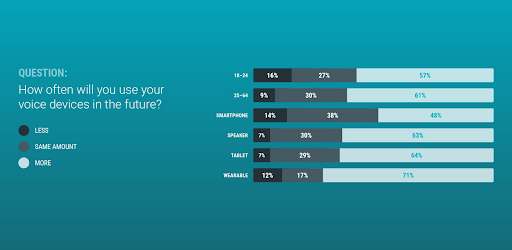
    That’s not all. Here’s an interesting infographic from Dialogtech that displays how smart speaker owners will use their devices in the future. 

    How Often You Will Use Voice Devices in the Future
    Question: How Often You Will Use Voice Devices in the Future

    As you can see, voice search is a massively growing trend. With that said, here’s how you can optimize your website for voice search.

    Perform Long-Tail Keyword Research

    If you’re using current technology, chances are that you’ve performed numerous voice searches. For example, if you’re on your way to a new job, you’ve likely asked Google to say, “Google, where are the nearest coffee shops near me?”

    If you haven’t, then you’ve probably asked Siri, “what’s the weather looking like outside?” Regardless of the questions you’ve asked using a voice search, there is one thing in common with all of the search terms you’re using.

    Almost all of the search terms you’ll use in voice search are long-tail keywords. Integrating long-tail keywords into your SEO Srategy can work wonders if you’re trying to generate qualified leads via a smart speaker.

    It’s as simple as using your keyword research tools to find popular long-tail keywords and generating vivid variations of each one you find. 

    Use Local Keywords

    Like Long-tail Keywords, utilizing local keywords is also important for Optimizing your Website for voice search. People commonly use smart speakers to find local businesses. Therefore, don’t count on Local SEO to go out of style now.

    You’ll still need to perform a lot of research on local keywords in your industry and invent creative ways of integrating these search terms in your site. For example, you can produce a FAQ page (we’ll get to this later) to post all of your local keywords and begin accumulating SEO real estate. 

    Provide Immediate Results

    When people use smart speakers, they expect immediate results. So, what does this mean? If you are trying to find a nearby donut shop on a smart speaker, would you really feel comfortable visiting a shop if your speaker didn’t give you any information on star reviews or even a phone number?

    With that said, make sure your Google My Business (GMB) profile is up-to-date and carries all of your business info. Your smart speaker will typically derive all of its information from your GMB profile.

    Still, this isn’t all. You’ll also need to make sure you have a fast website that’s extremely informative.

    Optimize for the Buyer’s Journey

    Regardless of the apparatus people use to conduct a search, optimizing your website for the buyer’s journey is a critical aspect of the sales and marketing process. For example, let’s say that you want to purchase a smart speaker. 

    This is what a typical buyer’s journey will look like and what you can expect a potential query to look like for each specific phase.

    • Awareness: “What’s the best smart speaker available?”
    • Interest: “Can you set an appointment with Google Home?”
    • Evaluation: “Is Google more intelligent than Siri?
    • Purchase: “How much does Google Home cost?”
    • Customer Support: “Why isn’t my Google Home not working?”
    • Loyalty: “What are some products that work with Google Home?”

    Predicting which questions your customers are asking via smart speaker will help you to create a roadmap and design content that will guide them through each phase.

    Add FAQs

    Adding FAQs to your website is a great way to improve your SEO Ranking for popular questions surrounding your products or services. Google is already displaying popular questions in their organic search results.

    If you take these questions and provide in-depth and helpful answers, there’s a good chance that Google or another search engine will feature your answer as a rich snippet. Since smart speakers almost always rely on rich snippets for the answers of questions, this can serve as an amazing boost to your website.

    Is Your Website Ready?

    It takes a lot of effort to make sure that your website is ready for voice search. If you want to receive professional assistance, give us a call at (877) 682-2012 or visit our website at Agency Partner Interactive for more information.

    Not big on reading? That’s okay. Watch “How To Optimize Your Website for Voice Search” instead.

    Using the power of Artificial Intelligence, we turned this blog into a video for you. Check it out below!