Tag: PPC Campaign

  • 10 Important PPC Trends to Watch in 2024

    10 Important PPC Trends to Watch in 2024

    Expert Tips For 10 Important PPC Trends to Watch in 2024


    The digital advertising landscape is ever-changing, and so is PPC. If you want to truly thrive in 2024 and beyond, you will need to be ahead of the curve. In this case, understanding and adapting to the latest trends-especially those related to the rise of AI and evolving algorithms-is critical to maximizing your ROI and reaching your target audience more effectively. Following are PPC trends that will shape the future of digital advertising in 2024.

    1. AI Revolution in PPC Advertising

      Artificial intelligence is rapidly changing how we manage and optimize PPC campaigns. AI-powered tools are becoming essential in any advertiser’s arsenal in making processes easier and outcomes better. Smart Bidding brings together Google’s advanced AI in analyzing massive datasets and automatically adjusts your bids in real time to ensure you get more value from your budget. Performance Max campaigns make campaign management simpler by leveraging AI to optimize across all of Google for better reach and more conversions.

    2. Hyper-Personalization: Reaching the Right Audience with the Right Message

      Generic targeting is a thing of the past. In today’s hyper-connected world, consumers expect experiences that are tailored to their unique needs and preferences. That’s where hyper-personalization comes in. With rich demographic data, interests, and online behaviors, you’ll be able to create hyper-targeted ads that drive relevance with distinct audience segments and unlock substantial lifts in engagement and conversion rates. Tools like Customer Match let you take your existing customer data and use it when crafting campaigns speaking directly to those who have shown a prior interest in your brand.

    3. Conversational Marketing: Having a Real-Time Conversation

      Customers want to feel immediately gratified and to converse in a personal way. Through the use of AI-driven chatbots, conversational marketing facilitates real-time engagement with prospective customers and puts at their fingertips what they need. Incorporating chatbots into landing pages or ad campaigns offers instant answers to common queries, personalized recommendations, and seamless guidance through the lead generation process. It’s a more humanized and engaging experience that breeds trust and drives conversions.

    4. How to Navigate the Privacy-First World of Advertising

      In an evolving data-privacy landscape, where third-party cookies are phased out, advertisers will need to be reinvented for the privacy-first world. First-party data, a collection of information directly from your audience by their interactions with your website or app, is about to become even more important. Google’s Privacy Sandbox includes tools that help you reach relevant audiences while protecting user privacy and complying with developing regulations.

    5. Video Advertising: Captivating Your Audience through Visual Storytelling

      Video remains the leading type in the digital space concerning viewer engagement and consumption. As 2024 dawns, video ads will continue to be an essential ingredient for successful PPC campaigns. Reach an audience of your desire, with YouTube offering unparalleled reach combined with advanced targeting capabilities. Build emotionally appealing video ads through storytelling that effectively communicates your brand message. Discover the various ad formats, including in-stream, bumper, and discovery ads, to help you get the most out of video advertising.

    6. Influencer Marketing: Putting to Work Authentic Relationships

      Influencer marketing has grown to be one of the most strong tools a brand can use in pursuit of extension and building up credibility. A partnership with relevant influencers in your niche provides access to an already established audience and enables one to leverage their organic connections. Influencers will effectively promote your products or services, drive awareness, engagement, and influence purchase decisions.

    7. Optimizing for the Evolving Search Landscape

      Voice search and visual search are now the way people are finding information online. The ability to keep your PPC campaigns optimized in light of these shifting ways in which people search is about visibility and relevance. Long-tail keywords representative of natural speech patterns over voice searches should be included. With visual search optimization, your website and metadata will need proper structure and labels to make your images pop up for the right image searches.

    8. Prioritizing the Mobile-First Experience

      Mobile devices have taken over as the number one way people access the internet. Making sure your PPC campaigns are optimized for mobile is no longer a nicety, but a necessity. Second, design responsive ads that adapt seamlessly to different screen sizes. Create mobile-friendly landing pages that load fast, providing a seamless browsing experience. Set up bidding strategies prioritizing mobile performance.

    9. Data-informed Decision Making: The Core of Success

      Analysis is really the heart of any great pay-per-click campaign. Take advantage of analytics systems for tracking key performance indicators: click-through rates, conversion rates, and cost-per-acquisition. These pieces of information offer valuable insights to continually develop and enhance your targeting and bidding strategy for overall campaign success. A/B testing is another essential aspect of data-driven decision-making that allows you to run tests on ad variations, landing pages, and targeting options in search of what works best with your target audience and continuously improve your campaign performance.

    10. Keeping Agile when Algorithms Change

      Google algorithms run continuously in an evolution cycle that comes up with new ways of ranking the ads in the SERPs. Stay updated with changes and updates in the air, so you can immediately understand any algorithmic changes and adapt accordingly. You will not be left out without options. Keep plugged into industry newsletters, follower authoritative blogs, and subscribe to webinars on the latest changes that come up; that way, you can stay current on current best practices. You could prevent your campaigns’ performance from getting decimated overnight by being proactive with their constant algorithm updates.

      Conclusion

      In a nutshell, The world of PPC advertising is continuously changing dynamically. By embracing these ten key PPC trends in 2024, you will be well on your way to achieving success in the digital Industry landscape. Remember, constant learning, adaptation, and devotion for the agencies and businesses to valuable, personalized experiences are what it takes to thrive in this competitive arena.
  • How to Use AI for PPC Ad Campaigns to Increase ROI

    How to Use AI for PPC Ad Campaigns to Increase ROI

    PPC ad campaigns are a vital strategy for businesses aiming to boost their online presence. However, successful PPC strategies focus on maximizing ROI, and this is where Artificial Intelligence (AI) steps in.  

    This blog delves into the transformative role of AI in PPC campaigns, illustrating how it can enhance ad performance and significantly increase your return on investment.   

    Understanding Smart PPC Campaigns  

    Artificial Intelligence (AI) is reshaping the PPC landscape by bringing human-like analysis and decision-making capabilities. By processing vast amounts of data at incredible speeds, AI helps identify effective PPC strategies, predict user behavior, and optimize campaigns.  

    Integrating AI into PPC translates into more targeted ads, better budget management, and innovative, data-driven decisions. This results in improved engagement, higher conversion rates, and a more substantial PPC ROI.   

    Enhancing PPC Campaigns with AI Strategies  

    AI-driven strategies are revolutionizing paid campaigns by optimizing keywords based on deep data analysis, enabling precise audience targeting, and implementing real-time bidding strategies. AI tools analyze search trends to pinpoint the most effective keywords, ensuring ads reach the right audience at the right time.  

    Additionally, AI’s ability to adjust bids based on conversion likelihood maximizes ad placement and budget efficiency. This holistic approach to PPC management streamlines the advertising process and significantly boosts campaign effectiveness.   

    Practical Steps to Implement AI for PPC Campaigns    

    Implementing AI in PPC campaigns begins with selecting AI tools that complement your existing strategies and platforms, focusing on features like data analysis and predictive analytics.  

    Gradual integration allows for a smoother transition, starting with one aspect, keyword optimization, and then expanding. Essential to this process is ensuring your team is well-versed in AI basics, balancing the automated insights provided by AI with human creativity and intuition to craft compelling PPC strategies.   

    Analyze and Optimize PPC with AI    

    AI’s role in PPC extends beyond setting up a paid campaign; it’s instrumental in analyzing and optimizing them. AI systems offer advanced campaign analysis, tracking user responses and conversion rates with remarkable precision.  

    This data is then used for predictive analytics, helping you anticipate market trends and consumer behaviors. Continuously optimizing campaigns using AI insights ensures that your PPC strategies evolve with changing dynamics, maintaining their effectiveness and efficiency over time.   

    Challenges and Solutions in AI-Driven PPC    

    While AI offers remarkable advantages for PPC campaigns, its implementation is challenging. These challenges range from technical complexities to ethical considerations, requiring careful attention and strategic solutions.  

    By understanding and addressing these challenges, businesses can fully leverage the benefits of AI in their PPC efforts.   

    AI technology is constantly evolving 

    AI technology is constantly evolving, with new advancements emerging rapidly. Staying abreast of these changes is challenging but essential to maintain a competitive edge in AI for PPC.   

    Solution: Engaging in continuous learning through workshops, conferences, and industry publications informs the team about AI trends and technologies. This proactive approach ensures that your PPC strategies remain relevant and practical.  

    AI is not perfect 

    The integration of AI into PPC involves understanding and adapting to its imperfections. While AI is a powerful tool, it is not without its flaws. Users of AI in PPC campaigns often encounter various quirks and errors. Recognizing and effectively managing these limitations is crucial.  

    Solution: The key to overcoming this challenge lies in educating your team about AI basics, including its potential errors and limitations. Regular training sessions should focus on AI’s capabilities and troubleshooting common issues.  

    Maintaining a comprehensive record of AI errors and their resolutions can be beneficial. This proactive approach ensures that all team members are prepared to handle AI’s imperfections, thereby improving your smart PPC campaigns’ overall performance and efficiency.    

    It’s difficult to balance AI and human insight 

    Finding the right balance between automated AI processes and human creativity and decision-making is a crucial challenge. While AI excels in data handling and analysis, the human element is vital for strategic thinking and creative input.     

    Solution: You can successfully balance AI and human insight by actively feeding AI systems with your insider knowledge. For instance, you can provide context, emotional intelligence, and creative flair to the data, which AI can use to refine its algorithms and outputs. This synergy of AI’s analytical prowess, human creativity, and strategic thinking can significantly enhance the effectiveness of PPC campaigns.    

    Elevating Your PPC Strategies with Agency Partner Interactive  

    As the digital world continues to evolve, AI will undoubtedly play an even more significant role in shaping the future of PPC advertising.  At our digital marketing agency, Agency Partner Interactive, we deeply understand the digital marketing landscape, and our strategic approach enables us to deliver high-impact PPC campaigns for our clients consistently.   

    Consider the success story of one of our clients. With our expertise as a pay-per-click agency, they experienced a remarkable 169% increase in conversion rate and a 65% decrease in cost per lead, all within just six months. This is a testament to our ability to optimize PPC strategies and achieve substantial returns for our clients.  

    Our comprehensive digital marketing services, including content marketing, email marketing, and SEO, ensure a holistic approach to enhancing your online presence.  

    Are you ready to enhance your PPC strategies with our digital marketing services? Contact Agency Partner Interactive for a free consultation. Let us help you build effective PPC strategies for your brand to help you achieve your marketing goals.   

  • Navigating PPC Cost: A Comprehensive Guide to PPC for Businesses

    Navigating PPC Cost: A Comprehensive Guide to PPC for Businesses

    Tips From Pay-Per-Click (PPC) Experts

    Pay per click advertising is a cornerstone in digital marketing, allowing businesses to appear prominently in search engine results and other digital platforms. The effectiveness of PPC for businesses, however, hinges significantly on understanding and managing PPC costs.  

    This blog aims to demystify PPC budgeting, providing valuable PPC tips and insights into allocating funds effectively for PPC services.  

    Understanding PPC Cost  

    A crucial aspect of launching a successful PPC campaign is grasping the various elements determining PPC costs. These costs are influenced by factors such as industry competitiveness, keyword specificity, and the choice of advertising platform.  

    Understanding the difference between cost per click (CPC) and other pricing models is fundamental for any business, especially for a pay per click agency like Agency Partner Interactive. Knowing how much you spend and understanding how that translates into tangible results is essential.   

    Setting a PPC Budget with a Clear Goal  

    The first step in effective PPC budgeting is setting clear, achievable goals. Whether you aim to increase website traffic, boost sales, or enhance brand awareness, these objectives directly influence your PPC strategies and, subsequently, your PPC budget.  

    For instance, a web development company might have different budgetary needs than a retail e-commerce business, where the latter may focus more heavily on immediate sales conversions through product-specific keywords.  

    The same goes for email marketing campaigns, which require a different allocation than content marketing efforts. The budget should align with your digital marketing strategies, ensuring every dollar spent contributes to your overarching business goals.  

    PPC Tips: Budget Allocation Strategies  

    Once goals are set, the next step is to strategize budget allocation. This involves decisions like concentrating on high-performing keywords or diversifying across various campaigns.  

    A balanced approach often works best, especially for businesses new to PPC. This might include allocating a portion of the PPC budget towards tested and successful ads while reserving some for experimenting with new PPC tips and strategies.  

    The aim is to find a sweet spot where your PPC for businesses yields optimal results without overspending.  

    Managing and Adjusting Your PPC Budget  

    Effectively managing your PPC budget is a dynamic process. It involves regular monitoring of campaign performance and making necessary adjustments.  

    For instance, a pay per click agency adjusts its bids on specific keywords based on its performance and reallocates the budget from underperforming ads to those yielding better results. Tools like Google Analytics play a crucial role here, providing insights that guide budget adjustments.  

    Remember, the goal is to stick to a PPC budget and adapt it to maximize campaign effectiveness.  

    Maximizing ROI on PPC Spend  

    To ensure you get the most out of your PPC spend, focus on strategies that enhance your return on investment (ROI). This includes optimizing ad quality, refining targeting strategies, and continuously testing and tweaking your ads.  

    A digital marketing agency specializing in PPC, like Agency Partner Interactive, can offer valuable PPC tips on how to increase ad relevance and click-through rates, thus improving your overall ROI. Remember that maximizing ROI often requires a blend of various digital marketing strategies, including SEO, content marketing, and email marketing, alongside your PPC efforts.  

    Common Mistakes to Avoid for Your PPC Campaign 

    When budgeting for PPC, it’s essential to be aware of and avoid several common pitfalls:  

    • Neglecting the SEO Budget: Focusing solely on PPC while overlooking SEO is a frequent oversight. Balancing your investment in both can lead to more sustainable long-term growth.  
    • Overlooking Landing Page Optimization: High ad costs with low conversion rates often result from under-optimized landing pages. Collaborating with an experienced web design agency like Agency Partner Interactive can ensure your landing pages effectively convert PPC traffic into valuable customer actions.  
    • Ignoring the Power of Testing: Not testing different elements of your PPC campaigns, like ad copy, keywords, and targeting, can lead to suboptimal performance. Regular testing and tweaking are essential to refine your strategy and improve ROI.  
    • Overlooking Campaign Analytics: Failing to analyze campaign data can lead to missed opportunities for optimization. Use analytics to understand user behavior, campaign performance, and areas for improvement.  
    • Setting and Forgetting Your Campaigns: PPC requires ongoing management. Simply setting up a campaign and not monitoring it can lead to a wasted budget and missed opportunities for improvement.  

    Avoiding these mistakes can significantly enhance the effectiveness and efficiency of your PPC campaigns.  

    Aligning Your SEO Budget and PPC with Agency Partner Interactive  

    Setting the right budget for PPC is vital for any business’s digital marketing strategies plan. It doesn’t matter if you’re starting or a big company looking to improve your paid strategies, knowing about PPC cost and managing your PPC campaign well is crucial.  

    At Agency Partner Interactive, we’re dedicated to helping businesses with their digital marketing strategies. Our extensive knowledge and proficiency in these fields establish us as a distinguished leader in the digital marketing industry.  

    Take our project with a Dallas logistics company, for example. They wanted more visibility and to hire the correct drivers. This company approached us intending to enhance visibility and attract qualified drivers. We significantly elevated their online presence through our strategic combination of SEO, content marketing, and PPC.  

    Within a year, our efforts skyrocketed their engagement by 446% and boosted organic traffic by 438%. This remarkable success story clearly demonstrates how a well-executed digital marketing plan with a solid PPC budget can lead to extraordinary outcomes.   

    With Agency Partner Interactive, your journey towards impactful digital marketing strategies is just a step away. Let us help you harness the full potential of your PPC campaigns and drive your business towards remarkable growth and visibility. 

    FAQs: PPC Tips & Strategies  

    Q: What is PPC and how does it benefit my business?   

    A: PPC, or pay per click, is a form of digital advertising where you pay each time someone clicks on your ads. It’s beneficial for businesses as it allows for targeted advertising, ensuring that your ads are seen by users who are most likely to be interested in your products or services.  

    Q: How does Agency Partner Interactive approach PPC strategies?   

    A: At Agency Partner Interactive, we tailor PPC strategies to align with your business goals. This involves analyzing your market, selecting the right keywords, creating compelling ad copy, and continuously optimizing campaigns for the best results.  

    Q: Can you explain PPC cost and how it’s calculated?   

    A: PPC cost primarily depends on the competitiveness of the keywords you’re targeting and the bidding strategy you choose. Costs can vary widely based on industry, target audience, and the specific goals of your campaign.  

    Q: What makes a PPC campaign successful?   

    A: A successful PPC campaign effectively reaches its target audience, delivers a high ROI, and meets the set business objectives. This often involves a combination of intelligent keyword choices, compelling ad copy, optimized landing pages, and continuous performance monitoring.  

    Q: How important is landing page optimization in PPC?   

    A: Landing page optimization is crucial in PPC as it significantly affects conversion rates. An optimized landing page should provide a seamless user experience, relevant information, and a clear call-to-action aligned with the ad that directed the user there.  

    Q: What kind of businesses can benefit from PPC services?   

    A: PPC is versatile and can benefit a wide range of businesses, from a web development company seeking to attract new clients to a retail e-commerce store looking to increase sales.  

    Q: How does PPC fit into overall digital marketing strategies?   

    A: PPC is a key component of digital marketing strategies, offering immediate visibility and targeted traffic. It complements other digital marketing efforts like SEO, content marketing, and email marketing by providing a direct and controlled channel to reach potential customers.  

    Q: What should I consider when setting a PPC budget?   

    A: When setting a PPC budget, consider your business goals, the competitiveness of your market, and the expected cost per click for your chosen keywords. It’s also important to factor in the potential return on investment.  

    Q: How does Agency Partner Interactive manage PPC budgets for clients?   

    A: Agency Partner Interactive manages PPC budgets by continuously monitoring campaign performance, adjusting to maximize ROI, and ensuring that every dollar spent contributes to achieving the client’s business objectives.  

  • How Can I Improve my PPC?

    How Can I Improve my PPC?

    Expert Tips For How Can I Improve my PPC?

    No matter the size of your business, it’s always important to make sure you’re using all the tools at your disposal to attract customers. One of the most effective ways to do this is through PPC advertising. But if you’re not seeing the results you want, don’t worry – there are definitely ways to improve your performance! In this post, we’ll outline some tips for boosting your PPC campaigns.

    • Set a clear goal

    Unless you know where you’re going, it’s hard to know how to get there. Make sure you’ve set clear, measurable goals in order to strategically and effectively optimize your PPC campaigns. Depending on the intended impact, some PPC goals to set could be:

    • Getting traffic to your website
    • Improving sales
    • Gaining subscribers or downloads

    Always keep your goals realistic, too. Success can be very motivating, but only if it’s actually achievable!

    • Strategize using high-performance keywords

    Finding the right keywords can make or break any campaign, including PPC, and the most important keywords have a high CTR or ‘click-through rate.’ Thoroughly check their performance on SEO (Search Engine Optimization) platforms like SEMrush or Moz.

    Bonus tip: Maybe your users live in a different part of the world than where you’re based. A VPN can help you reroute your searches to include the right regions for your needs.

    • Boost the quality of your keyword score

    Loading your campaigns with all the keywords you possibly can may seem like a good idea… but unfortunately, it’s not. ‘Keyword stuffing’ as it’s known is prioritizing quantity over quality. Refine what you include to reach a better, more targeted audience to make your efforts efficient.

    Consider if your ad copy truly supports the keyword objective and clearly speaks to your customer’s pain points.

    • Combine Similar Conversion Events Into A Single One

    If multiple PPC events can be combined into one, you’re both streamlining the process AND refining machine learning. Whichever PPC platforms you’re using will be much better equipped for delivering your ads at higher optimization. More singular data for conversion = better conversion results.


    • Add Google ad extensions

    Attach additional company or product info with ad extensions to help searching users learn more about you.

    • Manual ad extensions can be customized with site links, your location, reviews, contact info, etc.
    • Automated ad extensions work, well, automatically and can dynamically include previous visits, consumer and seller ratings, structured snippets, etc.
    • Create a list of negative keywords

    Negative keywords are a good thing to have, we promise! Say you are selling ‘brand new’ TVs, so you wouldn’t want your ads to show up as a result for someone searching for ‘refurbished’ TVs. This list helps keep your PPC targeted to your most relevant click and conversion opportunities, thus further maximizing your campaign budget.

    • Take advantage of remarketing

    Instead of looking at a high bounce rate as defeat or frustration, look at it as an opportunity. This is just a sign to implement remarketing tools which send a follow-up ad via cookies to potential customers who have already looked at your site or product. It’s a very cost-effective option that has a proven history of higher ROI (return on investment).

    • Some ideas might be
    • Try A/B testing on lead magnets
    • Promote to users based on YouTube usage
    • Utilize your CRM
    • Boost your ad copy engagement 

    All the remarketing in the world won’t do much unless it’s in support of a solid campaign message. Take another hard look at your ad copy. Is it…

    • concise?
    • Considering character limits, make the most of your available space with a clear, direct copy about what you do and what it can do for the user.
    • relevant?
    • Does the copy reflect the audience segment you’re retargeting? Does it match its attached landing page?
    • attention-grabbing?
    • This is the perfect place for high impact, motivating words like ‘discover’, ‘exclusive’, ‘limited’, ‘instant’
    • coupled with a strong, clear CTA (call to action)?
    • Tell the user exactly what you want them to do next. ’Shop Now!’ ‘Get 1 Month Free’ ‘Learn More’
    • Avoid remarketing too frequently 

    When setting your remarketing ad frequency, be aware of what you set the amount to. If it’s too often or for too long a timeframe, you run the risk of irritating those potential customers. Keep in mind that these remarketing campaigns cannot account for users who follow through offline, like if your CTA is to call your business for an appointment. 

    With so many factors to consider in optimizing your remarketing campaigns, Agency Partner is ready to help you through every step. Give us a call today for a consultation!

  • PPC Strategies for Home Services Companies

    PPC Strategies for Home Services Companies

    Expert Tips For Home Services Companies

    The home service industry is ultra-competitive. Whether you are a repair person, plumber, HVAC technician, electrician, or any other expert in the field, the business competition –nationally, regionally, and locally is endless.

    In this fight for recognition, the marketing strategy you choose for your business is crucial—the more active the approach you choose, the better.

    One of the best, most versatile, and cost-effective strategies you can use for online marketing, especially for home service companies, is pay-per-click or PPC.

    In this post, we will discuss some of the most useful PPC strategies for home service companies.

    What is PPC?

    Pay-per-click is a form of Digital Marketing. You can create ads for your business, bid to display them in search results for specific keywords and encourage people to convert into leads.

    The way it works is straightforward. Your listing comes up through chosen keywords before the organic search results on a search engine’s results page or appears on that engine’s vast network. When a user clicks on your listing, you pay the search engine a small fee for advertising.

    PPC can be challenging to get started, especially without the help of a specialized PPC Agency. However, once you have begun a well-organized PPC campaign, it will quickly become a vital aspect of your business.

    Google ads

    Google is the giant, So obviously, it’s an excellent place for your business’s PPC campaign. Google ads bidding system approach to PPC is pretty simple: companies and advertisers bid for keywords when users search those keywords, Google shows relevant ads, the more you play, the higher your ad will appear in search results, and it’s cost-effective because if your ad is not clicked Google does not charge you.

    Google’s the more you play, the higher your ad displays approach is appealing because it allows businesses of all sizes to compete for advertising eyeballs. – in the home services sector, this is important.

    Say, for instance, you are a plumber; if you plan your campaign strategically enough, you should be able to get your ad placed relatively high in search results. Combine a good PPC campaign with excellent customer service and five-star work, and your business will be off to a great start.

    Facebook ads

    Facebook ads like Google is another giant. Facebook alone provides tons of users for advertisers to target.

    Facebook is well known for offering all of the data it collects on its users. The information includes age, gender, location, job, income, hobbies, and more. Instead of targeting keywords like Google, Facebook ads target interests and demographics.

    Not only are Facebook ads affordable, but the platform allows you to choose all of the demographic factors that you want, choose from a variety of ad styles, and fill in the blanks.

    If you’re in the home services industry, the ability to have almost limitless ways to target prospective customers is something you should want to take advantage of, and it’s affordable.

    Plus, you can use Facebook’s platform for advertising on Instagram since Facebook bought Instagram a few years ago.

    PPC is flexible and quantifiable

    Advertising in a newspaper at one time was the most cost-effective, efficient, and reliable method of getting your branding across to prospective customers. These days that couldn’t be further from the truth.

    Newspapers are not only wildly outdated but placing ads in newspapers has proven to be wildly inefficient in large part because there’s no real way to measure the success or failure of your ad.

    Pay-per-click provides you with immediate metrics, is flexible enough to allow you to make changes once the ad has launched, and is adaptable based on your budget and business flow.

    If a particular ad isn’t performing, change it.

    You can also pause or stop a PPC campaign altogether if the business gets a little hectic or needs time to adjust.

    Strategic negative keywords

    Including negative keywords – words you don’t want to trigger your ad is a great way to make sure you only bid on the keywords most relevant to your business and to the desired search results you want to yield.

    For example, if a person searches for “cheap area plumbers,” they are probably not likely to convert into a well-paying customer.

    So, unless part of your marketing strategy is Joe, the plumber who will fix your toilet’s slow flow for very little dough, you might want to include the word cheap as a negative keyword so you can exclude those unintended customers.

    Picking Great Keywords

    The linchpin to PPC advertising success is selecting the right keywords and targeting your messaging to what people are searching for online.

    Be strategic about the keywords you choose. Choosing the first keywords that come to mind may be easy to do. But your keywords are what is going to drive those prospective customers to your website.

    Think about what makes you unique, what section apart from your competitors? The phrase “mean what you say, say what you mean” applies here. Think about your business, which you envisioned your business serving when you started it, and speak to those with every keyword you choose to use.

    PPC experts are just one call away

    At Agency Partner, we understand the ins and outs of PPC. We also understand how vital and beneficial it can be to your home services business. As we discussed earlier, the home services industry is brutally competitive. The competition you are up against nationally, regionally, and locally is not lost on us.

    PPC home services advertising is the perfect tool to help you compete with the big companies on the block.

    Our team of experts has years of experience getting you the organic search results you want. With our team working for you, you will generate leads and one of the most efficient and cost-effective ways possible.

    If your business is in the home services sector and you want more leads, higher and more consistent conversions, and simply smarter digital marketing, give us a call now.

    Not big on reading? That’s okay. Watch “PPC Strategies for Home Services Companiesinstead. Using the power of Artificial Intelligence, we turned this blog into a video for you. Check it out below!


  • How the 2020 Election Season Affect PPC Campaigns

    How the 2020 Election Season Affect PPC Campaigns

    Expert Tips For 2020 Election Season

    Pay per click (PPC) advertising is one of the best ways to attract new leads to your brand, especially with Google Ads and Facebook Ads. But with the 2020 election quickly approaching this November 3rd, you may be wondering, “how does the election affect PPC advertising?” After all, the 2016 presidential election put Facebook Ads under scrutiny with a scandal of Russian influence on the platform. Given that recent history, are your PPC campaigns going to be affected due to the upcoming 2020 election?

    The answer is most likely yes, and that exactly how the election will affect your PPC advertising is going to depend on the geolocations you’ll be advertising too. As a leading digital marketing agency that specializes in being a PPC agency, here is a discussion of four ways we expect PPC campaigns to be affected in the coming weeks leading up to the 2020 election.

    • Getting Your Ads Approved Will Likely Be Harder as Google Ads and Facebook Ads Want to Ensure Ad Legitimacy

    PPC campaign platforms like Facebook have come under the microscope for allowing fake or misleading ads on its platform both politically related and not. As such, both Facebook ads and Google ads are expected to be harder to get approved in the weeks before the 2020 election and to take a longer time to get approved too.

    The reason – Google Ads and Facebook Ads want to make sure they are approving PPC campaigns that are legitimate and true. Since many different organizations run political ads outside of official candidates’ campaigns, you can expect there to be an influx in new Google Ads and Facebook Ads getting in line to be approved.

    As a PPC agency, we encourage you to be proactive about getting your PPC campaigns, especially any that you have specifically created for the fall or the holiday season, created and submitted for approval in advance. By creating content now, even for ads you want to run for Halloween or Thanksgiving, you’ll be one step closer to getting them approved more quickly given the expected PPC campaign approval bottleneck thanks to the 2020 election.

    • Facebook Ads and Google Ads Won’t Run Local 2020 Election Ads in Washington State and Canada

    If you’re planning to run political PPC campaigns for the 2020 election, you should know they’re not allowed everywhere. Both Washington state and Canada have, through the threat of litigation, caused Facebook and Google to make the decision to not run any local election ads in these geolocations.

    If you’re looking to create PPC campaigns on Facebook Ads or Google Ads that will be political in nature, you’ll need to look for an alternative advertising channel to get your message across to your intended audiences.

    • There’s The Potential for Consumer Distrust in Pay Per Click Ads As the 2020 Election Approaches

    As the 2020 election gets closer and closer, you can expect more pay per click ads to appear online on platforms like Google Ads and Facebook Ads. These PPC campaigns will be run by candidates, major parties, lobbyists, PACs, and Super Pacs, and more.

    While some people love getting involved in elections and the political process, others don’t. This latter group is especially likely to have a growing distrust of political PPC campaigns, and potentially all PPC campaigns, the closer we get to the 2020 election.

    As a digital marketing agency, we have a few suggestions to help maintain trust amongst Facebook Ads and Google Ads viewers. First, if your brand is apolitical and your company doesn’t support any political party, don’t mention politics or the 2020 election in your ads. This will help keep those who are tired of hearing about politics from avoiding clicking on your ads. However, if your ads will be political in nature, or have a political slant, make your political leaning very clear. This will help you better pinpoint your target audience and get a better response to your ads’ call to action, too.

    • PPC Ads Are Expected to Spike in the Swing States

    Our final thought in answering the question, “How does the election affect PPC advertising?” is that there’s an anticipated influx of PPC ads coming to American swing states in the coming weeks. This can mean a few things if you advertise in a swing state.

    First, with the expected increase in Facebook Ads and Google Ads in swing states, there’s also the anticipation for ad fatigue until the 2020 election season is over. This means you may see a temporary drop in clicks to your PPC campaigns in these geolocations as Internet users simply get tired of seeing so many pay per click ads.

    Second, if your product or service is discussed in politics, keywords that you commonly use may be in higher demand, thus driving up their cost per click (CPC). For example, if you work in the healthcare industry, you can expect related keywords to become more frequently bid on in the next few weeks, thus driving up your CPC on them.

    Finally, just as we mentioned earlier that ads are going to start taking longer to get approved, these delays may be even more pronounced in swing states. So if you’re planning on running a geo-targeted PPC campaign in Ohio, for example, get started on it now.

    As a PPC Agency, We Can Help You with Your Pay Per Click Campaigns

    While we are a full-service digital marketing agency, many of our clients know us for our PPC agency specialities. We help brands throughout the US create, optimize, and manage a variety of PPC campaigns on Google Ads, Facebook Ads, and other pay per click platforms.

    Whether you want to pay per click advertising help for the short term because of the upcoming 2020 election, or you’re ready to engage with a PPC agency to take over your PPC campaign efforts, we can help. Simply contact us today to express your needs by calling (877) 682-2012, emailing sales@agencypartner.com, or filling out our online contact form.

    Not big on reading? That’s okay. Watch “How the 2020 Election Season Affect PPC Campaigns” instead.

    Using the power of Artificial Intelligence, we turned this blog into a video for you. Check it out below!


  • The Guide to Ecommerce PPC on Google, Bing, and Amazon

    The Guide to Ecommerce PPC on Google, Bing, and Amazon

    Expert Tips From Pay-Per-Click (PPC) Experts

    If you’re running an e-commerce store, then you have a wide variety of options at your disposal. You can either sell your products on your website or transfer these products to Google. 

    The choice is yours. However, having a versatile e-commerce strategy will increase your chances of gaining conversions from several prominent online platforms. With that said, which e-commerce platforms are you using to advance your marketing goals?

    If you’re using a limited suite of e-commerce options, then you should keep reading. In this article, you’ll learn how you can streamline your marketing goals on Google, Bing, and Amazon.

    Google

    Google is the world’s largest search engine. Therefore, it’s no surprise that millions of businesses use this platform to achieve better results with their PPC campaigns. If you’re already using Google as an advertising space, then you need to follow these tips:

    • Use as much information as you possibly can. The more information you provide, the better Google can align your ads with incoming search queries. Also, the more Google can match these ads to search queries, the more relevant these ads become.
    • Develop a targeted description and title. This will help your ads become more enticing to your target audience.
    • Create the best landing page experience. Your landing page is the end of your sales funnel and should be very persuasive. 

    Bing

    Many businesses choose to use Bing because of the low barrier of entry, the possibility of using less of your budget, and a higher chance of online visibility with your paid ads. If you want to begin optimizing your Bing ads, then you should follow these steps.

    • Avoid import errors. Google and Bing ads require different minimum thresholds. When you import Google ads to Bing, it will instantly set the values of these bids according to its platform. Make sure all of these values are correct before moving forward.
    • Look at the targeting settings. The difference between Google and Bing ads involve the targeting settings of both platforms. More often than not, you’ll need to set up specific target settings on Bing. 

    Amazon

    Amazon is becoming one of the most preeminent advertising platforms online. There are a few tips you should be aware of before beginning your PPC campaign on Amazon.

    • Keep your campaigns structured consistently. It’s essential to make sure all of the aspects of your campaign are structured identically. This means that your brand, product category, and top-selling products should look the part.
    • Post similar products in the same ad groups. When you set up new ad groups, you should be able to place similar products in these groups. Doing so will lead to increased visibility for these products so you can achieve maximum conversions.
    • Use some automated features. PPC is now becoming automation to streamline the mundane process and achieve enhanced results. Don’t be afraid to use Amazon’s automated products if you don’t have the time to manage your campaign.

    Impact your PPC Campaign Today!

    If you want to impact your PPC campaign, then you’ll come to the right place. Give us a call at (877) 682-2012 or visit Agency Partner Interactive today for more information. 

    Not big on reading? That’s okay. Watch “The Guide to Ecommerce PPC on Google, Bing, and Amazoninstead.

    Using the power of Artificial Intelligence, we turned this blog into a video for you. Check it out below!


  • What Is Voice Search And Why It Matters To Pay-Per-Click (PPC)

    What Is Voice Search And Why It Matters To Pay-Per-Click (PPC)

    Tips From Pay-Per-Click (PPC) Experts

    Voice search is a growing trend around the world, especially in this quarter of the century. According to OC&C Strategy Consultants, 55% of households will own a smart speaker by 2022. 

    In addition, 65% of 25-49 year-olds use a smart speaker at least once per day. With that said, is there a correlation between voice search and pay-per-click (PPC)? If so, can voice search impact the performance of a PPC Campaign?

    All of these are interesting questions that have answers. Take a look below for more information.

    What is Voice Search?

    Voice search is a practical way people use a smart speaker to conduct an online query. Alexa is a popular smart speaker that allows users to search for local businesses, ask questions, and shop digitally.

    You can also use your smartphone to conduct a voice search. The reason voice search is becoming more popular is that it’s more convenient than typing out a query. Voice search is set to surpass traditional search by 2020

    This means marketers will know how to leverage Voice Search to complement their other Digital Marketing initiatives, particularly PPC.

    What is PPC?

    PPC is a Digital Marketing Advertising model that’s used to drive traffic to websites. Businesses that use PPC Advertising pay publishers when their ads are clicked. This is a mutual benefit to both parties – publishers make money and businesses receive exposure.

    You’ve likely seen a PPC ad recently while searching for a raincoat online. PPC Ads typically are positioned above organic search results. In the near future, Pay-Per-Click (PPC) Ads could be displayed on smart speakers.

    Continue reading below to see how this can be taken into effect.

    Voice Search May Get Monetized Soon

    Voice search is continually growing. However, it hasn’t been monetized yet by major publishers such as Amazon, Google, and Apple. This may become a problem in three major ways:

    • The rise of voice search will cripple traditional PPC Advertising
    • Online advertising would have to change if it can’t be Monetized.
    • Google, Amazon, and Apple would lose out on significant advertising revenue.

    Simply put, publishers can’t afford to allow voice search to grow any further without monetizing it. Nonetheless, it will become a challenge to allow ads to be displayed on voice speakers without impeding its usability.

    This challenge will have to be embraced very soon since more and more consumers are using voice search everyday for routine tasks. 

    What Does This Mean for PPC?

    Since it remains likely that publishers will begin to monetize smart speakers in the future, one can’t help but imagine that PPC fundamentals will also change. With that said, marketers must stay on their toes.

    Many businesses depend on their PPC Strategy to drive qualified leads and revenue. If PPC were to drastically change, it would become difficult for these businesses to succeed. The only viable solution is to make voice search a part of your marketing strategy.

    Leverage Voice Search Today!

    Do you want to begin using voice search as a staple in your Marketing Strategy? If so, give us a call at (877) 682-2012 or visit our website at Agency Partner Interactive today.

    Not big on reading? That’s okay. Watch “What Is Voice Search And Why It Matters To Pay-Per-Click (PPC)” instead.

    Using the power of Artificial Intelligence, we turned this Blog into a video for you. Check it out below!


  • How To Use Pay-Per-Click To Get More Phone Calls

    How To Use Pay-Per-Click To Get More Phone Calls

    Tips From Professional Pay-Per-Click (PPC) Marketers

    Let’s say that you recently set up a Pay-Per-Click Campaign that was mildly successful. You’re noticing that your ads are garnering clicks, but one thing is irritating you.

    That is – your ads are getting clicks but no one is buying anything. PPC Ads aren’t cheap, and your campaign could be hemorrhaging money by the day if your conversions and clicks aren’t matching up.

    To capitalize on hot leads while their interest levels are still high, you should Optimize your PPC Campaign to get more calls instead of clicks. 

    Here’s how you can do this.

    Utilize Call Extensions

    When you perform an online search, you’ll probably run into a few ads that have a call extension – that is a blue, formatted phone call link on the top of the ad.

    Call extensions can increase your Click-through Rate (CTR) significantly. Why? It makes it easier for potential customers to contact you.

    With call extensions, a lead won’t have to fill out a form or navigate through your landing page just to find your office number. They’ll simply call you on the spot if they’re interested or want to learn more about your business.

    Call extensions may become increasingly important to implement. This is because consumers are constantly being bombarded with commercial emails, which makes it less likely that they’ll answer your email if you take the traditional route of linking your ads to your website.

    Make Your Phone a Click-to-Call 

    When your ad appears on a search engine, your phone number will be automatically formatted to be dialed once it is clicked on a mobile device.

    On your landing page, you should also format your phone number in your call-to-action to do the same. This makes it easier for consumers to contact you instead of writing down or remembering your phone number.

    Eliminating friction by making your phone number simpler to dial is key because humans value simplicity. It doesn’t take much effort to format your phone number in this way, and it can tremendously impact your bottom line in a positive way.

    Make Calling your Intended Call-to-Action 

    Landing pages will often have a clear call-to-action to either dial a phone number or visit a web page. Sometimes, this doesn’t happen in ads, and it can throw off its effectiveness.

    In your ads, you should make it clear that you want your audience to call you. You can post your phone number in your ad while your copy says to visit your website.

    Something this subtle can confuse your audience. For example, let’s say that you’re a Personal Injury Attorney & your PPC Ad Copy simply says “Get your maximum Compensation! Call us Today for a Free Consultation!”
    How is someone supposed to follow through with this call-to-action? Make your call-to-action clear that you intend on your leads to dial your phone number.

    Do you want to improve the performance of your PPC Ads to generate more phone calls and sales opportunities? Our experts have a proven track record of developing high-performance PPC Campaigns.

    Contact Agency Partner Interactive Today to speak to a member of our sales team.

    Not big on reading? That’s okay. Watch “How To Use Pay-Per-Click To Get More Phone Calls?” instead.

    Using the power of Artificial Intelligence, we turned this Blog into a video for you. Check it out below!


  • The Beginner’s Guide To PPC Strategies For Service Companies

    The Beginner’s Guide To PPC Strategies For Service Companies

    Tips From Professional Pay-Per-Click (PPC) Marketers

    Many business leaders falsely believe that Pay-Per-Click (PPC) Campaigns are ideal for eCommerce retailers. Nothing can be further from the truth than this because many businesses utilize PPC Services to drive more leads and revenue.

    If you’re running a service company, you should have a definite campaign in place to attract more leads, receive increased phone calls, and capitalize on wide-open sales opportunities.

    With that said, are you new to the concept of PPC? If so, continue reading to familiarize yourself with PPC and how you can leverage it to make more money online.

    Begin Brainstorming

    The first thing you should do when setting up your PPC Campaign is understanding your target audience. Sure, if you’re a contractor, you would apparently know that your target audience is home and business owners.

    However, do you know where these consumers shop? Are you familiar with the exact demographics of your target audience? Understanding this information is pivotal toward realizing where your audience will conduct a search for your business.

    If you’re reaching homeowners, then it’s reasonable to assume that Google and Facebook are excellent platforms to post your ads. If your services are geared toward young adults, then Facebook may be a great option.

    With any marketing strategy, knowing your target audience is key. The principle is true for a PPC campaign.

    Begin With Keyword Research

    Keyword research is an important aspect of PPC. Knowing which Keywords your audience searches for online will help you to bid on high-volume search terms.

    This means that your ads will show up more frequently at the right time to increase your conversions. Google Adwords Keyword Planners is a great tool to conduct basic and extensive Keyword Research.

    However, it’s best if you consult a Digital Marketing Company to guide you in the right direction to ensure that your budget is utilized properly to net you a high return on your investment.

    Organize and Structure Your Keywords

    Once your keyword is complete, it’s time to gather your keywords and organize them into neat groups. The best practice for structuring your keywords is to organize them according to a generic, brand, competitor, and related terms.

    Again, consulting a digital marketing company is ideal during this stage. If you’re a plumber, then you should rely on an internet marketing company that provides pay per click for plumbers.

    You should do the same if you’re an electrician or another contractor that needs specialized PPC services.

    Write Superb Ad Copy

    Once your ads are designed, writing copy for it is the next major step. Ad copy is what your audience will see when your ad is presented to them.

    Ads that contain enticing language that encourages consumers to press action almost always leads to successful campaigns. However, be mindful of making your ad copy seem robotic or dull.

    Oftentimes, you’ll need to tweak your ad copy to achieve better performance with your ads. Does all of this sound like something you have the time or expertise to you?

    If not, contact Agency Partner Interactive today to speak to a member of our sales team.

    Not big on reading? That’s okay. Watch “The Beginner’s Guide To PPC Strategies For Service Companies?” instead.

    Using the power of Artificial Intelligence, we turned this Blog into a video for you. Check it out below!


  • The Definitive Guide To Maximizing Your PPC Campaign

    The Definitive Guide To Maximizing Your PPC Campaign

    The Guide For Boosting ROI from PPC
    Tips From Pay-Per-Click (PPC) Experts

    If you’re investing significant resources in your pay-per-click (PPC) campaign, the worst thing to do is get complacent or gullibly believe that results will always come eventually no matter what you try.

    This could lead to you wasting time and money on PPC strategies that just don’t work. Of course, effective PPC strategies take time to develop and produce results (both positive and negative), especially during experimentation.

    However, if you aren’t cognizant of using fundamental PPC strategies and building off of them, your campaigns won’t be effective.

    To help you maximize your PPC campaign, this guide will outline fundamental PPC strategies and innovative ways you can alter them to obtain steadfast results.

    Understand your audience

    I know.

    Every PPC-related article on the internet will likely tell you that you need to understand your audience for your PPC campaigns to perform better.

    However, in Digital Marketing knowing your audience goes beyond demographics. You’ll need to intrinsically understand their shopping patterns, motivations, and reservations before purchasing to craft the perfect PPC strategy.

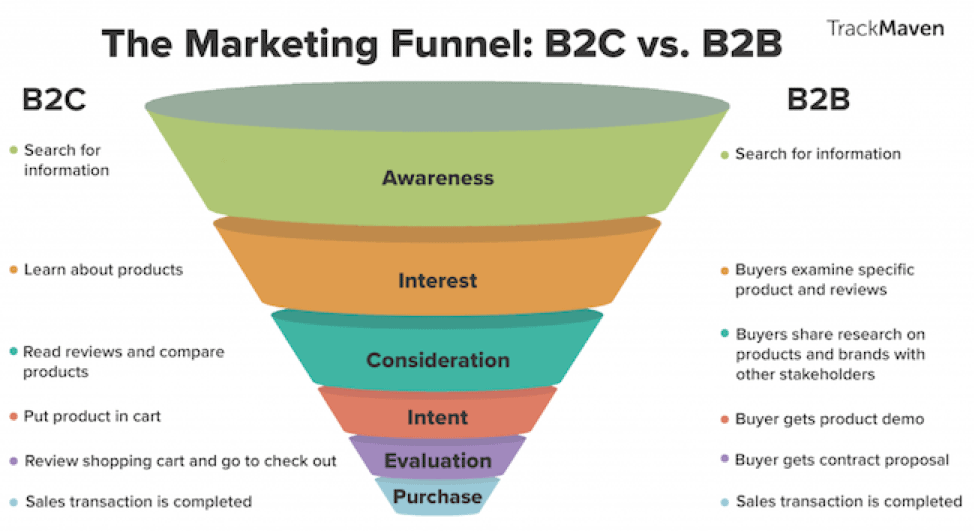
    Depending on your consumer base, whether they’re B2B or B2C, these values will differ tremendously. To give you more context, here is a marketing funnel for both B2B and B2B audiences from TrackMaven.
    PPC marketing funnel
    You’re probably wondering what’s the difference between B2B and B2C consumer bases. After all, the funnel between the two consumers doesn’t seem all that different.

    Let’s start with B2B consumers. These clients go through a much longer sales funnel because purchasing decisions typically go through a host of executives, who then rationalize the decisions instead of an emotional trigger that results more commonly in consumer purchases.

    With that being said, average consumers vary. Some might conduct extensive research before buying a product or service. Some may just purchase from you based on a whim.

    Nonetheless, the difference between these two consumer bases should reflect on how you structure your PPC campaign.

    For example, since B2B consumers go through an elongated journey to make a purchase, you should provide top-of-the-funnel marketing resources to give them all of the information they need to confer and eventually make a purchasing decision.

    Conversely, B2C consumers are attracted to a more straightforward marketing approach. They mainly want to know how your product or service will immediately benefit them. If your campaign reflects this, they’ll usually decide without extensive time and research.

    Now that you understand this fundamental tip, here are some actionable ways you can incorporate new PPC methods to give your campaign a boost.

    • B2B Audience – Market any helpful e-books that will convince your audience that your service will be beneficial to them. Don’t promote anything. These e-books should only highlight the problem your audience has and provide a solution.
    • B2C Audience – Keep PPC ad copy extremely enticing. Don’t advertise the features of your product or service. Instead, promote the benefits and people will click.

    In summary, B2B PPC strategies require you to know much more about your consumer base, while B2C strategies are essentially more product-focused.

    Craft the perfect offer

    Let’s take a moment to paint a relatable scenario.

    An employee of a large consulting firm, Mandy has been tasked with finding the best available lead management software available. Knowing nothing about lead management software, she does a Google search for “best lead management software”, and she immediately sees numerous ads on the results page.

    She may click the first ads she sees or some that catch her attention. Ultimately, most of these ads will offer free trials and one will offer a free buyer’s guide.

    Which form do you think Mandy will fill out first?

    With a buyer’s guide, not only are you more likely to capture a high-quality lead, but you are also providing Mandy with exactly what she needs, a helpful guide to help her navigate through a complicated app.

    For this reason, crafting the perfect offer is paramount to the success of your PPC campaigns. Using outdated offers, such as live demos and free trials, will ultimately lead to your offer being rejected, ignored, or skipped over.

    This is because there is profound evidence that proves that the alternatives are much more effective. What’re the alternatives, you may ask?

    The answer is anything that will provide value to your audience without them being forced to commit.

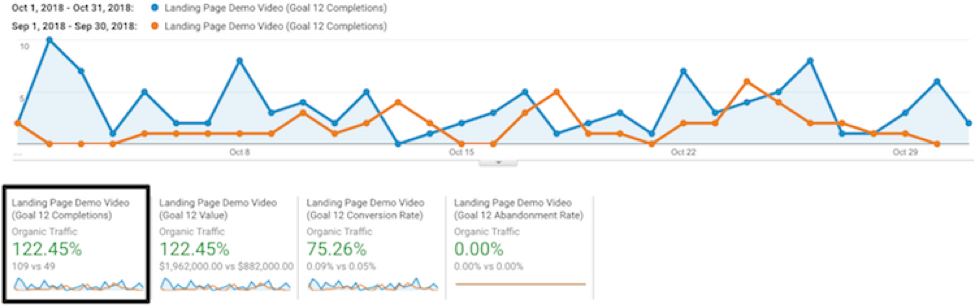
    PPC Hero recently experimented with their B2B audience by using demo videos in their ads. They found that demo videos have much less friction than live demos and free trials, because people may be hesitant to commit or spend time talking to a sales rep.

    By adding a “watch demo video” call-to-action (CTA) to one of their core website pages, they received a 122.45% increase in conversions.
    Google Ads PPC marketing

    Furthermore, if you have prospects landing on your website directly through a search engine, chances are that they’ve never heard of you.

    This means that you have a small chance of convincing a potential customer to sign up for a free trial on search terms that most ads are using, such as “best” or “top”.

    Because of this, your offer has to break through the reservations a potential customer may have about working with you. The only way this can happen is by creating an offer that your audience can’t resist and won’t immediately commit to.

    Doing so will allow them to see what you’re all about and make a decision for themselves.

    Calibrate Search and Social Messages

    You should never treat social media users the same as search engine users. Although your PPC campaign may exist on both platforms, using the same message will be counterproductive to what you’re trying to achieve.

    Also, user behavior is vastly different across your marketing channels, so why craft the same message?

    Let’s dig a little deeper into the concept.

    People go on social media networks to consume content. These people aren’t looking for any salesly or consumer-related. They just want content, whether it’s informational or entertainment-based.

    However, those that arrive at your website via search engine are looking for something. They have a need or want, and they believe you can help.

    Again, why use the same message on both platforms? The reason this question is being asked twice is that many businesses and marketers fall into this trap in an attempt to streamline their PPC campaign.

    Just like how you shouldn’t create the same social media posts on your Facebook and LinkedIn accounts, you definitely shouldn’t make this mistake.

    For social media PPC campaigns, you’re targeting users based on their demographics, such as their job title in the case of LinkedIn. For Paid Search Ad Campaigns, your ads’ visibility is based on keywords.

    Therefore, people who search for these keywords are actively looking for a product or service, whereas, a social media user is minding their own business looking for engaging Content.

    It should now be apparent why offering an educational resource is better on social media, rather than search. Ultimately, your PPC ads on social media should strive to build awareness, through e-books and reports.

    Anything that stirs an emotional response will do well on social media.

    Meanwhile, paid search ads should get to the point and make an offer. Demos and interactive content are great for these ads because people who click them are looking for a solution to a need or want they have anyway.

    If you’re still lost in how you can calibrate your messages across social media and search platforms, just remember this fundamental question.

    “Why are my prospects using this platform?”

    And, there you have it. You should instantly surmise that Facebook users didn’t log on to be advised to sign up for a free trial of anything. Therefore, create a campaign that centers on driving emotional responses from your target audience.

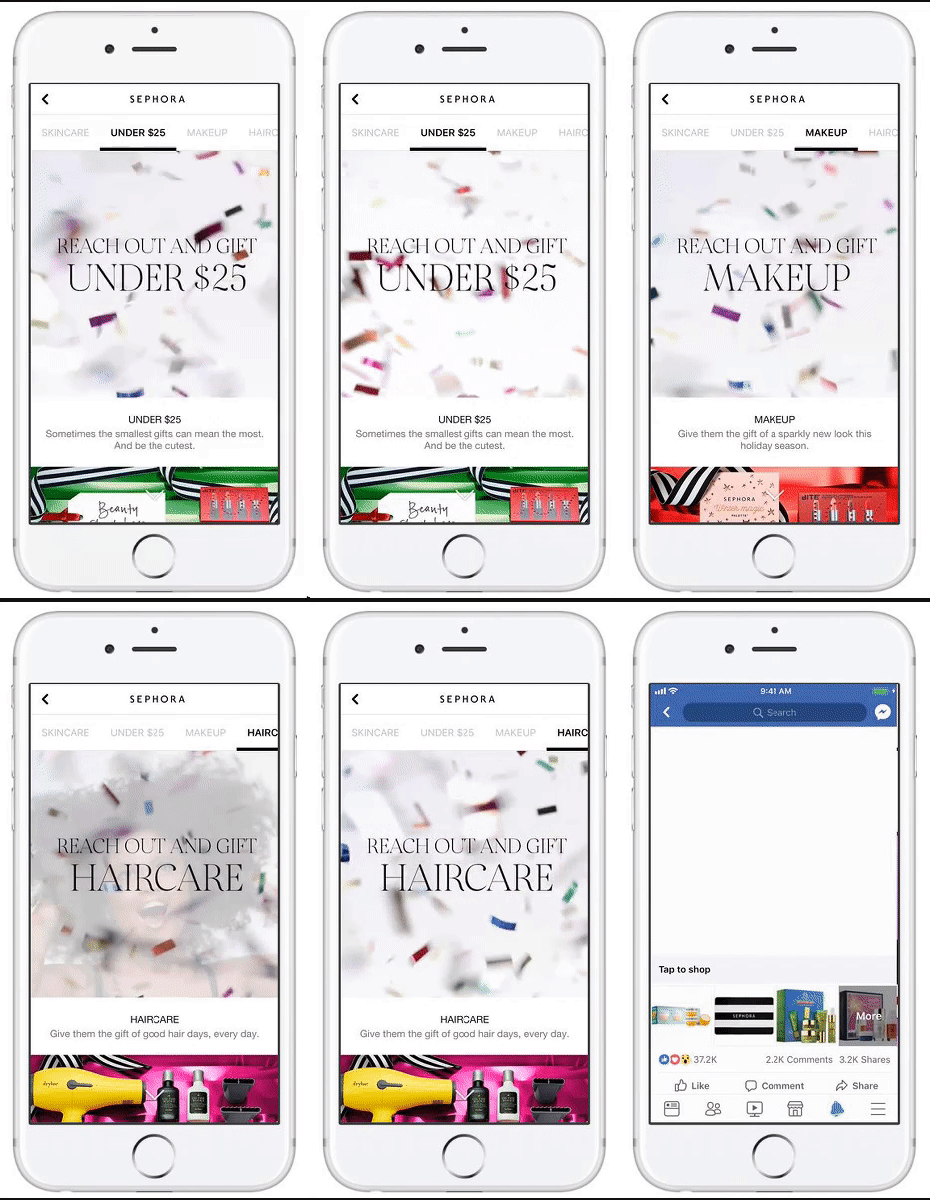
    For example, this video ad from Sephora works because it showcases multiple promotions and piques the curiosity of their target audience.

    retail mobile marketing

    That’s why the ad was able to achieve a 41% higher click-through rate (CTR) than the brand’s previous ads.

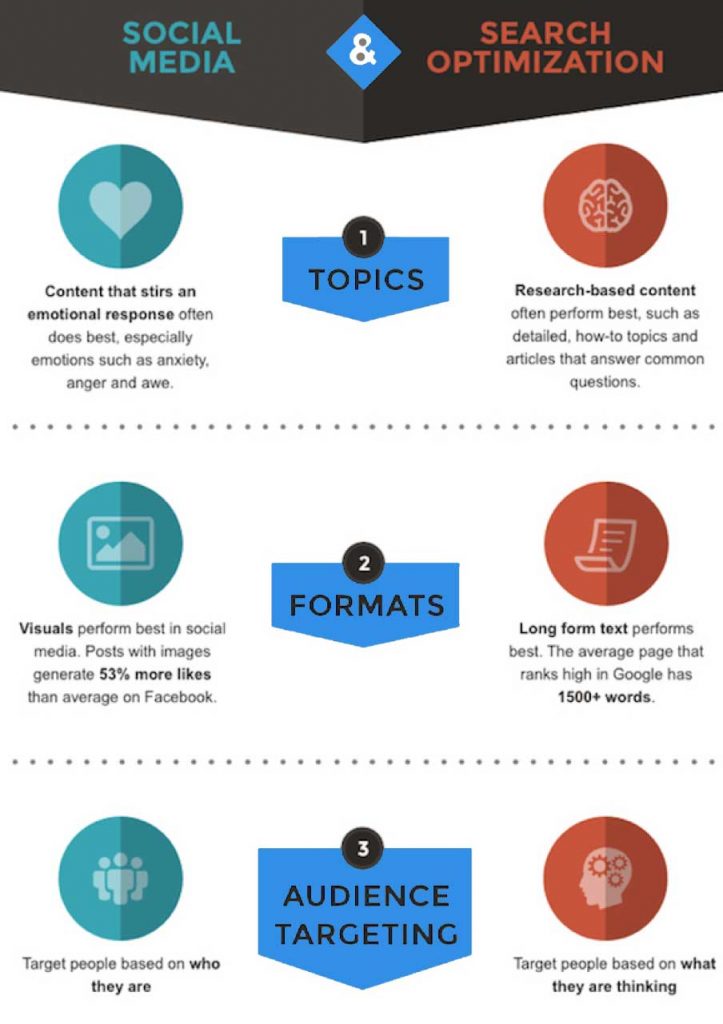
    Do you want to emulate the same success through all of your marketing channels? If so, take a look at this infographic from Orbit Media that details how you should structure both social media and paid search ads.

    Google Ads PPC Management Search v Social Ads

    Prioritize Remarketing

    Finally, we’ve arrived at one of the most popular PPC strategies, known as “remarketing”.

    Once you’ve got someone to land on your website and they leave without converting, you’d want to bring them back to your site for a second chance, right?

    This sounds very much like the concept of dating. However, what if this same person doesn’t convert after a third or fourth time?

    What’s going on?

    The answer is that you’re probably using the same offer every time. Obviously, if that person didn’t bite on the offer you originally introduced, they won’t budge if you do the same again.

    Now, let’s present a solution. First, cut off any leads that just aren’t in your market. Not everyone who visits your website through an ad is interested in working with you.

    They may just be curious, found another solution, etc. Therefore, only begin the remarketing stage for leads that have visited your landing page at least twice.

    Similarly, you can do the same for leads who left your website in the middle of filling out a form.

    Next, segment your leads based on where they are in the buyer’s journey. For example, for leads that haven’t watched your demo video, retarget them with a demo ad.

    For leads that have watched the demo video, follow-up and re-target them with a free trial ad. The goal here is to be very specific with your segmentations so you can convert leads throughout your marketing funnel.

    In Social Media Marketing, the strategy is the same. If you have received PPC insights from social media users who haven’t converted, you’ll have to understand the proven social behaviors for these users.

    This is: social media users are constantly scrolling on their feed and may not want to commit to you just yet.
    Why?

    Because they’re still busy scrolling on their feeds.

    With an accurate remarketing strategy, you can send a gentle reminder at an appropriate time to re-engage social media users who have left your site.

    Realize Your SERP Potential

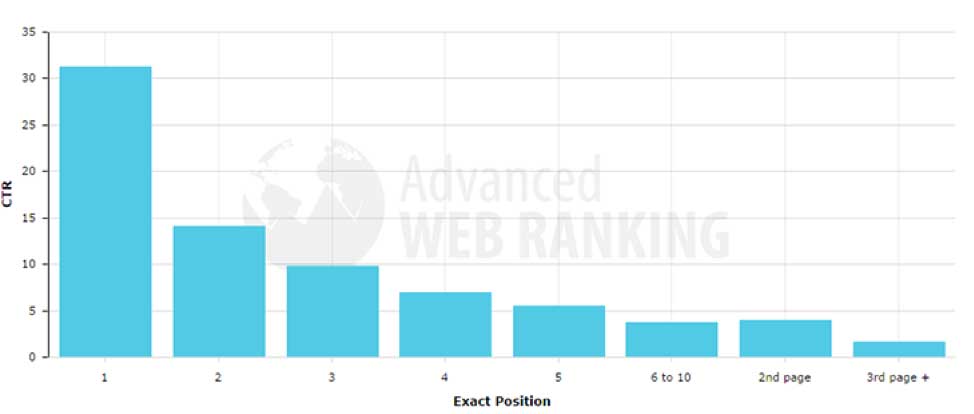
    There was a promising study conducted by Advanced Web Rankings where they studied the differenced in CTR between ad placements on the search engine result pages (SERP).
    Google-Ads-PPC-optimization
    It’s important to realize right now that PPC success doesn’t solely depend on placement, but rather a myriad of other factors, such as conversion value, budget, competition, industry, geotarget, LTV, and more.

    For certain industries, it may be beneficial to bid higher to rank high for productive keywords. However, in competitive markets, your ROI will begin to decline at a certain point using this strategy,

    Ideally, it’s up to you to find the right balance for your particular market.

    For example, paying a high price for a competitive market like auto insurance may not be profitable, considering how people normally shop for auto insurance.

    Similar to B2B Marketing, consumers will readily shop around for auto insurance until they can find an affordable deal for the right type of coverage they’re looking for.

    Because of this, a Search Engine user may click on your ad, no matter if it’s first, second, third, or fourth on the SERP.

    Regardless of this fact, humans make most purchasing decisions based on trust, and nothing screams trust more than high-ranking websites.

    So, the moral of this section is to realize that ad placement isn’t everything for a successful PPC Campaign. Nonetheless, your Search Engine Optimization (SEO) and Pay-Per-Click (PPC) Strategy should work together to maximize your CTR and create the perception that you’re a leader in your industry.

    Final Words

    Now that you realize the fundamental strategies of building a solid PPC campaign, it’s up to you to conduct your own experiments and use your data to create PPC Ad Campaigns that work for you.

    Understanding these fundamental strategies and the unique characteristics of your business will help you to achieve long-lasting results, instead of relying too much on online advice and your gut to design your campaigns.

    Search marketing is a very competitive game of Marketer vs. Marketer. We know that Google and Bing are continually adjusting their Search Engine Algorithms and the best way to ensure that you are not wasting your time and money is to hire Agency Partner to do it for you. API has experience in managing big Budget PPC accounts so whether you are managing a budget of $5,000 or $50,000 per month, contact Agency Partner Interactive today and let us help you maximize your ROI.