
Social Media News: Is TikTok a Trojan Horse for the Chinese Communist Party?
Last month, BuzzFeed reported on leaked audio from 80 internal meetings at TikTok offices revealing that the company routinely allows Beijing-based employees to access private US user data.
This comes after public statements to news outlets and the US Congress, swearing under oath that TikTok user data would not be compromised or shared with Chinese Communist Party (CCP) officials. For years the company promised that US user data would be stored on US-based servers and would not be shared with officials from our largest foreign adversary.
The trouble is that, as one TikTok employee from the Trust and Safety department said, “everything is seen in China.”
Irrespective of where the servers are physically located, as easily as accessing a song or iMessage from the cloud, Beijing-based ByteDance employees tap into US-based servers with ease. From one headline to the next, US-based TikTok spokespersons continue to contradict themselves, gaslighting the American public and US regulators instead of owning up to their ugly truth.
Today, a TikTok exec said it was “simply false” for me to say that they collect faceprints, browsing history, & keystroke patterns.
Except, I was quoting directly from TikTok’s own disclosures ⬇️
TikTok’s concerning pattern of misrepresentations about U.S. user data continues. https://t.co/mflMAC2yzZ pic.twitter.com/sJMqj4hwrg
— Brendan Carr (@BrendanCarrFCC) July 3, 2022
On one hand, TikTok’s 1 billion users (and growing) are sharing vast amounts of in-app usage, device, and biometric data. The social entertainment app can track where you go and when, and then process that data into meaningful patterns of behavior. All of this data goes through a process of machine learning, which optimizes TikTok’s “For You” algorithm.
If you stop right there, this isn’t really a story worth talking about. After all, American social media companies do this kind of stuff everyday for purposes of generating advertising revenue.
But scratch the surface just a bit deeper. TikTok is not like an American social media company. TikTok is an app that’s owned by a Chinese tech company called ByteDance Ltd.
To be clear, ByteDance is an asset that is owned and controlled by the People’s Republic of China. That’s why US regulators and lawmakers such as Senator Ted Cruz warn that TikTok is “a Trojan horse for the Chinese Communist Party [that can be used] to influence what Americans see, hear, and ultimately think.” He’s not wrong.
What You Need to Know About ByteDance’s Power Structure
Founded by Zhang Yiming, ByteDance Ltd. was incorporated in the Cayman Islands in 2012, though Beijing is its global headquarters. As a company ByteDance designs, develops, and operates several applications, including TikTok, other social media apps, news apps, business apps, and more.
In Communist China, there is no real concept of private ownership.
All ownership is collectively held by the government and any sense of private ownership is a temporary allowance that is granted by the socialist market economy. Why do you think counterfeit goods and a black market flourishes in China? Because like in North Korea and other totalitarian states, they need it! The ruling Chinese Communist Party owns the economic output of all companies and no one gets to operate or “own” anything without expressed consent from the CCP. Think about home ownership in the United States. In China, no citizen or business can own the land that their home or office rests on. The closest you can get is an allowance from the government to lease the land for 70 years.
ByteDance HQ Isn’t Staffed with Hipsters and Tech Bros
Looking specifically at ByteDance’s corporate structure, we’re not talking about a company that is run by software engineers with Star Wars shirts and digital marketers that portray themselves as over-manicured hipsters.
The company is a Chinese state-controlled enterprise that has government officials in corner offices. While it happens to have non-Chinese investors including Sequoia Capital, SoftBank Group, and Kohlberg Kravis Roberts, these non-Chinese financiers have no actual control over ByteDance.
In fact, the CCP controls the company through a state-owned enterprise called the Cyberspace Administration of China, and a government appointed official, Wu Shugang, sits on ByteDance’s board of directors. That relationship, coupled with Chinese national security laws, gives the CCP sole decision-making authority at ByteDance HQ.
Further to that, within the ByteDance org chat, there is a group that functions as an “internal Chinese Communist Party committee,” managed by ByteDance vice president, Zhang Fuping. This group routinely meets to study speeches and instruction from President Xi Jinping. Their purpose is to ensure that the company works in lockstep with CCP political goals.
As for any business executives that defy or embarrass the CCP, punishments include public humiliation, indefinite detainment, or worse. Like Canadian-Chinese billionaire Xiao Jianhua or Jack Ma, some executives simply disappear, only to reappear months or years later — if at all.
Even ByteDance’s founder and first CEO, Zhang Yiming, has been negatively impacted by the CCP’s thirst for absolute control. In May 2021, he quickly resigned from his position due to a lack of censorship on two of ByteDance’s other apps that were exclusive to mainland China. The company is now run by Zhang’s former roommate, Liang Rubo.
Seriously Think About The Back Office and Its Motivations
Here’s the thing… every concern expressed by Senator Cruz and FCC Commissioner Carr is founded on reality.
TikTok isn’t just an app and ByteDance isn’t just a company. These are direct extensions of a Xi Jinping controlled Chinese Communist Party that seeks to dominate the world and so far, they have managed to build a weapons-grade attention engagement algorithm into TikTok. That’s why it works so well.
Xi is a leader that has big aspirations. He dreams of a world where China is the single dominant world power, both economically and militarily. Xi assumed power in 2012 and under his leadership, political observers have cited an increase of mass surveillance, state-controlled censorship, a deterioration of human rights, and a cult of personality developing around his persona.
In 2018, Xi Jinping removed his 2-term limit, elevating his status to “president for life.” Sounds like Vladimir Putin, right? This makes him the most powerful leader the country has had since Mao Zedong. Under his leadership, his government has been repeatedly exposed for committing some of the worst, most frequent human rights atrocities on Earth. I’m talking about genocide, child slavery, and so much more.
In Xi’s China, apps have already been used to assert power and suppress dissent. Most recently China used a COVID health tracking app to restrict citizens from lawfully leaving their apartments. This COVID app leverages QR codes and a color code system to allow citizens access to buildings and transportation. QR code scans take place after routine COVID screenings (every 48 hours), and if you have a green light in your app, it means you can leave your apartment. The CCP has been using this app and giving a red light to citizens that have been deemed politically unfavorable, restricting their ability to travel for work, to get food, and more. This concept is in essence, an extreme version of vaccine passports.
This is what can happen when the govt controls your data: #China Covid app overnight restricts residents who need the health code to enter buildings and shops, use public transport, or leave the city. https://t.co/PCVDma5QKy
— rinachandran (@rinachandran) June 14, 2022
Xi Jinping and the CCP view apps as a tool that strengthens their surveillance capabilities and to assert power. It would be extremely naive for US national security analysts and consumers to view ByteDance or TikTok as anything other than malignant… a wolf in sheep’s clothing.
A Rare Glimpse At How ByteDance Has Already Targeted US App Users
A new report from Emily Baker-White highlights that TikTok’s parent company intentionally used one of its apps to distribute pro-China messages to millions of Americans.
A now defunct news app called TopBuzz was used to secretly share and promote pro-China messages to Americans, while actively suppressing anything that was critical of the CCP. This app, TopBuzz, was basically a news aggregator app that the Communist Party could use to influence the world of news and entertainment. In the US, the concept of “fake news” has been all the rage, and in 2018 TopBuzz took that to the next level for its 80 million users.
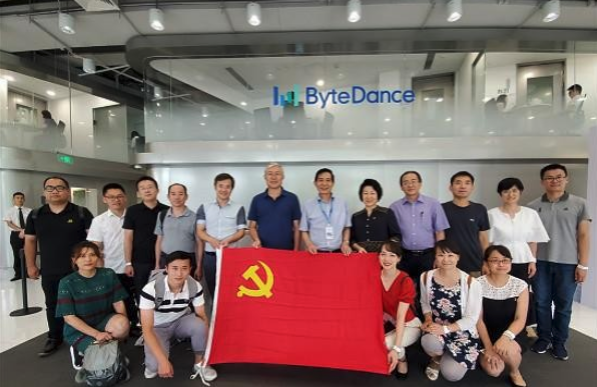
Following interviews with over 15 former ByteDance staffers that were assigned to TopBuzz, it became apparent that a content review system would filter content in such a way that allowed government fueled censorship. The Hong Kong “freedom protests” were suppressed, and oddly, the cartoon Winnie the Pooh was banned as it has become a vehicle in China to mock President Xi Jinping.
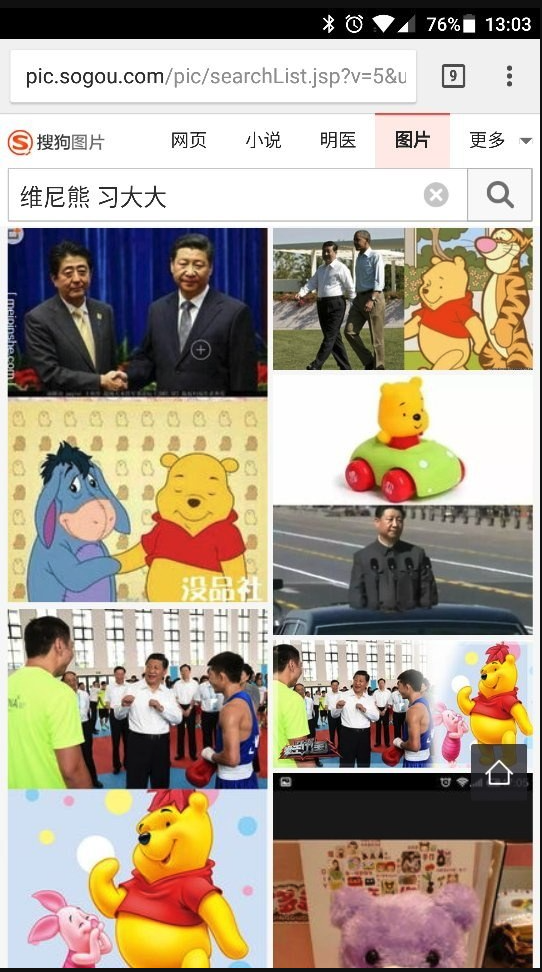
Don’t forget, commies can’t take a joke without trying to take your head.
Thankfully, TopBuzz shuttered in June 2020 but during its time, here are some of the things it was up to:
- Removing all coverage of Honk Kong Freedom Protests
- Removing any news and editorial content depicting openly gay people
- Removing all content critical of Xi Jinping and the CCP
- Scraping content from 3rd party publishers & running fake bylines to support political objectives
- Creating fake user accounts to promote and comment on politically relevant stories
- Running news and editorial content specific to US elections, politicians, & current events
If that isn’t smoke, this headline from the DailyMail is fire:
China Asked TikTok for Stealth Account Where it Could Spread Propaganda in the West
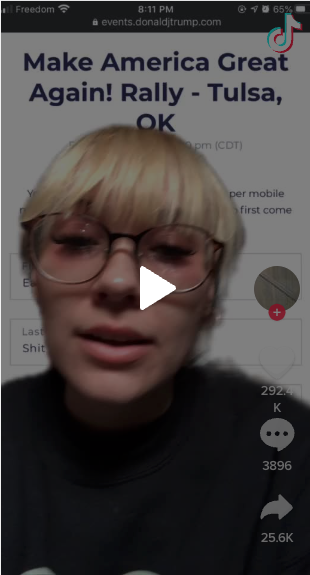
New information from Bloomberg hit the press after a TikTok whistleblower shared that the Chinese government made a “sensitive request,” asking TikTok leaders to create a stealth propaganda account.
The DailyMail notes that the CCP was facing harsh global scrutiny in the early days of the COVID-19 pandemic and this request was designed to try and mitigate damage to China’s international reputation.
[Cough, cough, “Wuhan lab leak,” cough, cough..]
The request went to the company’s international management team, including US-based Global Head of Corporate Affairs and General Counsel, Erich Andersen, as well as Elizabeth Kanter who heads TikTok’s government relations for the UK, Ireland, Netherlands, and Israel.
Since President Trump worked to remove TikTok from the US market in 2020, the company has been under increased scrutiny, prompting its PR teams to try and create a perceivable distance from its direct association with the Chinese government.
Perhaps because of this, and the fact that internal whistleblowers shared the story, this particular request was not implemented. But how far and frequent are requests like this? Will we have to rely on future whistleblowers to expose injustices within the ranks of ByteDance or is there already enough information to give us a clear answer for how we must move forward? It seems there are a lot of sparks here — and tons of smoke. As we know, where there is smoke, there is fire.
As Americans, business leaders, taxpayers, patriots, and freedom-loving people, we have to really come to terms with reality here.
How far are we willing to let this go and, given ByteDance’s power, can it impact future elections and world events? It seems that it’s already happening.

Can Agency Partner Interactive Help Me With Social Media?
As Dallas’ top digital marketing agency, we optimize marketing investments in real-time with our digital marketing and social media management services. We help businesses determine how and to what extent they should be leveraging social media marketing. TikTok is a very murky place right now, though there are many businesses that are finding ways to create value with it. The future is uncertain and when it comes to lead generation, our digital marketing team can help diversify risk and create a multitude of online channels that add value to your business.
If you’re looking to safely navigate online marketing, our digital marketing experts will work to understand your business goals and objectives — thereby working to help you attract valuable customers, drive sales, increase your leads, build brand awareness, and more.
Are you ready to optimize your business with an award-winning social media marketing agency? Maybe you just have some basic questions? Let’s talk — Contact us today!