Tag: Google Ad

  • Best Google Ad Strategies for 2024

    Best Google Ad Strategies for 2024

    Tips From Digital Marketing Experts

    In the ever-evolving landscape of digital marketing, staying ahead is important for businesses and agencies striving for growth, scale and competitive advantage. Google Ads, as a key player in online advertising, offers immense opportunities and presents ongoing challenges due to its constant evolution time to time. As a business or agency id you want to optimize ad spend for your clients and drive impactful results in 2024, They must have align their ad marketing strategies with the latest trends and based on Google’s algorithm updates. Here’s a detailed exploration of the top strategies to maximize your results in 2024.

    Leverage the Power of AI and Automation

    Advancements in artificial intelligence (AI) and machine learning (ML) by Google have transformed how ad campaigns are managed and optimized. agencies can now leverage these tools to simplify campaign management and achieve enhanced performance.

    • Smart Bidding allows Google’s AI to automatically set bids based on real-time signals and campaign objectives, ensuring you achieve the best possible outcomes with minimal manual intervention.
    • Performance Max Campaigns represent a breakthrough, enabling advertisers to maximize reach across all Google channels through a single, AI-powered campaign type.
    • To enhance efficiency and relevance, consider Dynamic Search Ads, which automatically generate ads tailored to your website content, ensuring they resonate with your clients, and the audience.

    Refine Audience Targeting and Segmentation

    In an era where personalization is paramount, generic targeting is no longer effective. Precise audience segmentation is essential and effective for reaching the right users and driving leads and conversions .

    • Customer Match enables businesses to upload customer data and create highly targeted audience segments, ensuring you reach users who are most likely to convert.
    • Utilize Detailed Demographics to refine your targeting based on specific criteria such as age, gender, income levels, and interests. This ensures your ads resonate with the right audience.
    • Leverage In-Market and Affinity Audiences to connect with users who are actively researching or showing interest in products or services similar to yours, capturing their attention at critical decision-making moments.

    Prioritize Mobile-First Experiences

    With mobile devices driving a significant portion of online activity, optimizing your campaigns for mobile is no longer optional—it’s a necessity.

    • Ensure your landing pages are mobile-friendly, providing a seamless and positive user experience across all devices. A poorly optimized mobile experience can lead to lost opportunities and diminished returns.
    • Design responsive ads that adapt seamlessly to various screen sizes and formats, ensuring maximum visibility and engagement.
    • Adjust your bidding strategies to account for device-specific data, enabling you to maximize ROI by optimizing for mobile performance.

    Tap into the Power of Video Advertising on YouTube

    YouTube’s dominance as a video platform offers unmatched opportunities for connecting with a vast audience. Incorporating video advertising into your strategy can drive significant engagement and brand awareness.

    • Create engaging video ads that captivate your audience and communicate your message effectively, leaving a lasting impression.
    • Use YouTube’s robust targeting options to ensure your ads reach the most relevant viewers based on demographics, interests, and watch history.
    • Explore Video Discovery Ads, which promote your videos alongside related content, increasing visibility and driving traffic to your YouTube channel.

    Experiment with New Ad Formats and Features

    Staying ahead in digital advertising requires experimentation with innovative ad formats and features introduced by Google.

    • Enhance your text ads with Image Extensions, making them visually appealing and boosting click-through rates.
    • Use Lead Form Extensions to capture leads directly from your ads, streamlining the process and improving conversion rates.
    • Gallery Ads allow you to showcase multiple images or videos in a single ad unit, creating an engaging and interactive experience for potential customers.

    Conclusion

    In a nutshell, Adopting these top Google Ads strategies for 2024 empowers the ventures to navigate the dynamic landscape of digital advertising effectively. By aligning your business campaigns with these approaches, you can maximize your ROI and achieve your marketing objectives. Regularly monitor and analyze campaign performance, adjust strategies based on result-driven insights, and embrace innovation to maintain a competitive edge.



  • 10 Trends That Influence Paid Search in 2020

    10 Trends That Influence Paid Search in 2020

    Expert Tips on Paid Search

    Paid search is a lifeline for businesses across the world. It enables organizations even with a rocky online presence to generate qualified leads through effective ads. Granted, there is competition in paid search, but it’s one of the more convenient avenues toward meaningful online revenue opportunities. 

    In order to maximize the performance of your paid search campaign, you should always look toward new trends in the marketing sector. Understanding these trends will help you try new methods of reinforcing your campaign to ultimately make more money from your ads.

    Do you want to explore 10 trends that are influencing paid search today in 2020? Continue reading to learn more. 

    1. Machine Learning and Artificial Intelligence Will Evolve

    It can be easy to understate the impact of machine learning and artificial intelligence (AI) has had on world innovations in the 21st century. Both technologies allow any computer-based to learn and get smarter over time. 

    Their impact on paid search has been undeniable recently and doesn’t figure to change any time soon. Popular PPC platforms like Google Adwords have already begun to utilize AI in their algorithms, as well as other PPC agencies across the country. 

    2. Human Marketers Will Continue to Be Indispensable

    Technology and innovation have its perks and it will undoubtedly continue moving forward, but there are downsides such as human jobs becoming obsolete. In the award-winning video game, Detroit, Androids began to overpopulate and ultimately take over all of the jobs humans normally did, such as construction and even law enforcement.

    Will machine learning and AI have the same effect on the jobs of human marketers. The answer is no. Both innovations are essential for performing consistent tasks for making PPC campaigns more efficient. Though, it’s up to humans to interpret and act on received data. 

    3. Amazon Ads Will Get More Popular

    Amazon rules the world in regards to e-commerce. They have now created an advertising platform where brands can construct PPC ads to generate more qualified leads.

    Amazon

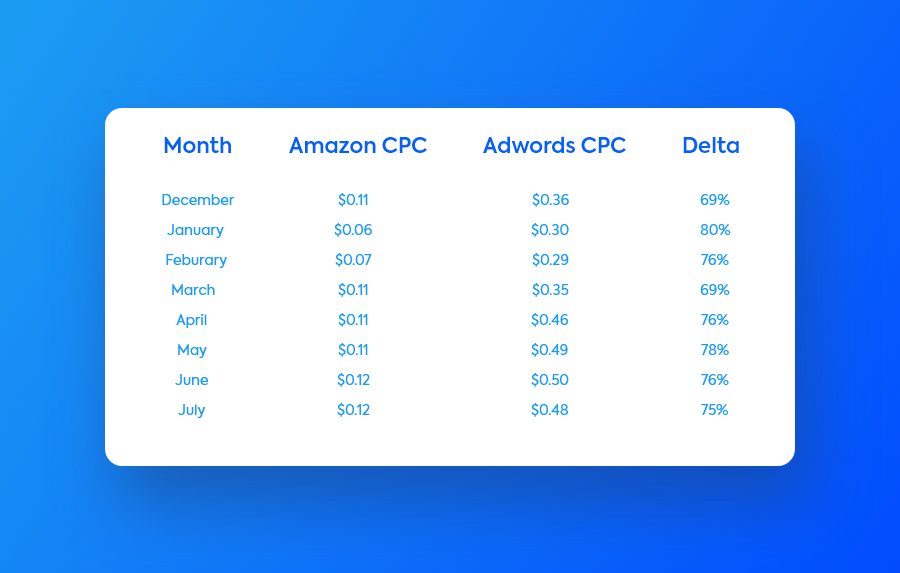
    Experts predict that the use of Amazon ads will continue to increase. Why? That’s mainly because the cost-per-click (CPC) of Amazon ads are significantly lower than Google ads.

    Google Adwords’ CPCs are necessarily expensive, but Amazon has far cheaper rates. Not only that but Amazon rivals Google in company size and potential visibility, especially for e-commerce brands. 

    If you operate in the retail industry, leveraging Amazon ads maybe your best option for putting your resources to better use. 

    4. A Universal Shift from Keywords to Audiences Will Take Place

    Many marketers and business leaders carry out marketing campaigns with a broader emphasis on its technical aspects rather than its value. For example, some SEOs tend to focus more on accumulating visibility for keywords instead of creating content their audience will enjoy.

    Google has stated it time and time again that user experience is significantly important to them and their rankings. In the same way, marketers should shift their focus on their ad quality score instead of worrying too heavily about the keyword usage. 

    5. Text Ads Are Still Here to Stay

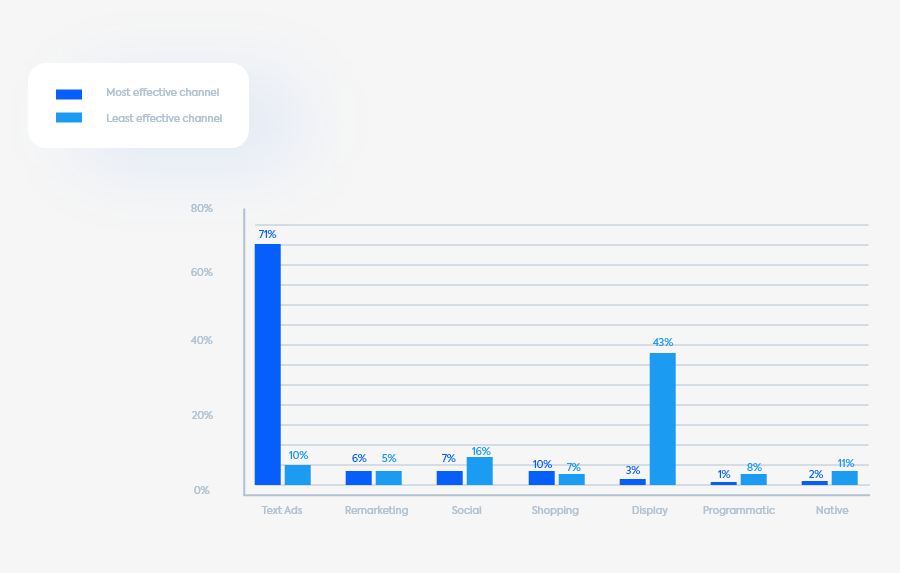
    With new technologies changing the way PPC ads are developed, some think that text ads are going out of style. In reality, text ads are the most productive types of ads.

    HannapinStateOfPPC_TextAds

    Therefore, while voice, video, and other ad formats are becoming increasingly popular, text-based ads still reign supreme. This is good news for a lot of marketers, mainly since text-based ads are simple to create.

    What are the chances that the most convenient form of paid advertising is also the most effective?

    6. Video Ad Usage Will Continue to Grow

    It’s nothing new that video marketing is a growing trend of 2020. Just last year, video marketing accounted for 80% of all internet traffic. You could say the video is taking over the internet. 

    With that said, video advertising is also increasing. It now makes up 25% of digital ad spending in the United States. It’s not a surprise that video usage is increasing in this vein.

    Video ads can easily be engaged with and provide a unique opportunity to show off the unique selling proposition (USP) of your brand without much effort.

    7. Mobile Use is Thriving

    If there was any safe and obvious prediction on this list, this entry would be it. With a majority of internet traffic being derived from mobile devices, it’s a no-brainer that this trend is taking place. 

    This proves that a larger emphasis on mobile-friendliness needs to be addressed by marketers. Therefore, the question here is will you optimize for it? Luckily, optimizing mobile-friendly ads isn’t difficult if you have a qualified PPC agency on your side. 

    8. Voice Search is Thriving

    20% of mobile searches were conducted on a smart speaker or via voice search. Therefore, it’s not like you have to get ready for a voice search to affect your campaigns. It already has begun to affect your campaigns. 

    Now, voice search has not been monetized yet but there are a lot of ways to get this done. voice search has not been monetized yet but there are a lot of ways to get this done

    9. Facebook and Google Will Automate Their Ads

    Facebook and Google house two of the most preeminent advertising platforms in the world. Both platforms have already introduced dynamic ads that make ad creation almost effortless. 

    In the near future, these companies could make it possible for their algorithms to completely customize ads for users.

    This isn’t a stretch considering that Facebook and Google are billion-dollar companies with unlimited resources at their disposal. 

    10. Facebook, Google, and Others Will Master Attribution

    Attribution has been something like a Rubix cube for several years. Even seasoned marketers have difficulty leveraging attribution to impact their campaigns. Fortunately, machine learning and AI were designed to perform complex tasks like this.

    To make advertising easier and boost their own agenda, look for Facebook, Google, and other companies to use technology and master attribution. 

    Give Us a Call Today!

    Do you want to improve the performance of your PPC ads? If so, give us a call at (877) 682-2012 or click here to receive a free quote. 

    Not big on reading? That’s okay. Watch “10 Trends That Influence Paid Search in 2020instead.

    Using the power of Artificial Intelligence, we turned this blog into a video for you. Check it out below!


  • Your Guide to Google Ads for Real Estate Investors

    Your Guide to Google Ads for Real Estate Investors

    Expert Tips on Google Ads For Real Estate Investors

    Real estate investors often find it difficult to capture qualified leads. This is because real estate is one of the hardest propositions to sell, mainly with leads backing out of deals arbitrarily. 

    This often negates all of the hard work you put into converting each lead, but it’s never the end of the world if a promising lead rejects you. There are certain marketing initiatives that will guarantee diverse incoming leads to your website every month.

    One of them is pay-per-click (PPC), the lifeline for millions of small and large businesses throughout the world. Many businesses use PPC to create a continual flow of leads, but every campaign is different.

    Do you want to know how to set up a successful campaign for your real estate business? This guide will break down all of the tips to help you succeed in that regard?

    1. Set Up a Plan

    Regardless if you’re a new or veteran real estate investor, you may not be all too familiar with the aspects of setting up and configuring a successful Google Ads campaign. This is why you should take a step back and create a plan. 

    Just like starting a business, creating a PPC plan is the first natural step of building a campaign. Ideally, the details of your preliminary plan to answer the following questions:

    • What type of campaign are you seeking to build? Will it target buyers or sellers?
    • What is your ideal customer acquisition cost?
    • What is your maximum cost per click (CPC)?

    The last question is especially important because it will base the affordability of your campaign and determine how much you can spend. Therefore, you can use this helpful formula to calculate your maximum CPC.

    (revenue per customer) x (conversion rate) x (1 – profit margin) = Max CPC 

    Now that you have got the preliminary planning out of the way, it’s time to execute the last steps of the planning process. This entails:

    • Estimating your Google AdWords budget.
    • Determining your keyword test budget.

    Google ads campaigns are not plug-in-play. A great deal of experimentation goes into setting up your campaign correctly. For this reason, determining your keyword test budget is key.

    Here is a formula you can use to get the job done. 

    Keyword test budget = (100 clicks) x (Calculated CPC)

    Congratulations!

    You’ve now completed the first step and can now move forward to the next one – keyword research.

    2. Perform Keyword Research

    Once your plan is in place, keyword research becomes the next logical step. Keyword research is a comprehensive phase that includes finding intent keywords, competition, and researching your market. 

    • Identify Your Target Audience: Experienced real estate investors likely know who they’re dealing with, while rookie investors are still searching. If your business is already up and running, your target audience should be clearly identified to begin making a profit and capturing leads from your Google ads.
    • Identify Your Target Locations: You should also determine the locations where your target audience commonly abides. These locations need to be specific down to the zip codes. 
    • Collect Keywords: You can find and collect keywords from popular resources such as Ubersuggest and the Adwords Keyword Planner.
    • Define Negative Keywords: These are commonly called negative keywords, meaning that you don’t want your business to show up when these are typed into a search engine. 
    • Sort Your Keywords: There are different types of keywords. In regards to real estate, there are research and customer intent keywords. Sorting your keyword list will help you monitor the progress of your campaign and see if you’re overspending on particular keyword usage.
    • Spy on Your Competitors: If your competitors are successful, you take a look at their formula by using tools like SpyFu or SEMRush.

    3. Determine Your USP

    Your USP, or unique selling proposition, is a distinct advantage you have over your competitors. This keeps your business and offerings unique in a competitive marketplace such as real estate.

    Essentially, you should ask yourself:
    “Why should my target audience choose me instead of my competitors?”

    Whether your USP is your massive level of insider experience in the USP or a level of credibility, this will need to be added to your ads. You only get one first impression when it comes to how your ads are presented. Hit your prospects hard with an irresistible ad that they will be hard-pressed to refuse. 

    4. Create the Perfect Offer

    There are three main factors that will impact the success of your Google ads campaign: your copy, your audience, and your ad copy. 

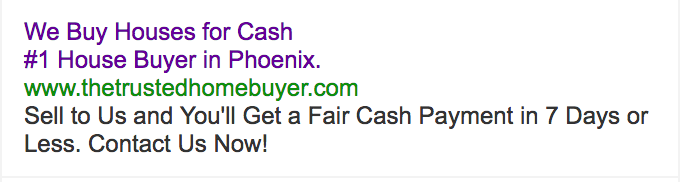
    Just take a look at how these successful ads look.

    Ad Example #1

    ads_example
    Ad Example #2

    ads_example2
    There are a variety of enticing offers that you could use to reinforce your ads. For example:

    • No agents
    • Close in less than 14 days
    • No extra fees
    • Cash in as less than 7 days
    • Cash offer in 24 hours

    Do you see the different types of offers presented here? These are:

    • Guarantees
    • No commissions
    • Free quotes

    Based on your target audience, you should craft an attractive offer. Don’t worry if your offer doesn’t result in a high close rate immediately. If you don’t receive the results you’re looking for, you can always experiment and modify your offers accordingly.

    5. Keep Experimenting

    Setting up your Google ads campaign is only half the battle. Experimenting is the rest, and you could quickly lose sight if you don’t regularly perform tests. To save money and optimize your ads, it’s essential to steadily figure out what’s working and what’s not.

    This, unfortunately, can take a lot of time that most people don’t have. By hiring a qualified PPC agency, you can have professionals continually work on your campaign so you don’t have to.

    This will ensure that you are maximizing the performance of your Google ads without sacrificing the projection of your ROI.

    Hire Agency Partner Interactive Today!

    Do you want to learn more about how you hire an experienced marketing agency? If so, give us a call today at (877) 682-2012 to learn more about how we can help you. 

    Not big on reading? That’s okay. Watch “Your Guide to Google Ads for Real Estate Investorsinstead.

    Using the power of Artificial Intelligence, we turned this blog into a video for you. Check it out below!