Tag: ecommerce marketing

  • From Clicks to Sales: Tips for Building an Effective eCommerce Website

    From Clicks to Sales: Tips for Building an Effective eCommerce Website

    An eCommerce website is a powerful tool for reaching potential customers, driving sales, and growing your brand. However, building a custom eCommerce website is a challenging task. It requires careful planning, attention to detail, and a thorough understanding of what makes a website successful. 

    This blog post will provide tips and best practices for building an effective eCommerce website. We’ll also cover various aspects of eCommerce website design. So, let’s get started! 

    Design and User Experience 

    Your eCommerce website’s design and user experience are crucial in determining its effectiveness. Here are best some tips to help you optimize your website design for user experience: 

    Have a visually appealing website 

    The design of your website should be visually appealing and consistent with your brand image. Use high-quality images and videos to display your products and make your website visually appealing and on-brand. 

    Make navigation easy 

    Your website should be intuitive and easy to use. Use clear and descriptive labels for your navigation menus and submenus. Place your navigation menus in a prominent location on your website. 

    Use clear calls-to-action (CTAs) 

    Your website should have clear CTAs that guide users toward making a purchase. Use contrasting colors and make your CTAs stand out from the rest of your website. 

    Keep your website clutter-free 

    Your website should be clutter-free, with a clean and professional design. Avoid using too many fonts, colors, or design elements, as they can be distracting and make your website difficult to navigate. 

    Optimize for page load speed 

    Slow page loading can frustrate users and lead to higher bounce rates. Optimize your website for speed by minimizing image sizes, using a CDN (content delivery network), and compressing your website’s files. 

    Optimizing your website design for user experience can improve your website’s effectiveness and drive more clicks and sales. 

    Product Pages 

    Product pages are the main factor of any eCommerce website. They are where customers can learn about your products and make a purchase. Here are some best tips for creating compelling product pages: 

    Use high-quality product images 

    High-quality images are essential for showcasing your products and attracting customers. Use multiple photos from different angles and zoom levels to provide a complete view of your products. 

    Write comprehensive product descriptions 

    Your comprehensive product should be detailed and informative, giving customers the information they need to purchase. Use concise language to highlight your product’s key features and benefits. Don’t forget to optimize your descriptions with appropriate and relevant keywords! 

    Use user reviews 

    User reviews are a powerful tool for building customer trust and increasing sales. Allow customers to leave reviews on your product pages and promptly respond to negative reviews. 

    Provide product recommendations 

    Show customers related products and accessories on your product pages to increase the chances of upselling and cross-selling. 

    Include social proof 

    Use social proof, such as customer feedback or product awards, to build customer credibility and trust. 

    Checkout Process 

    The checkout process is where customers decide to purchase your products. A complex or confusing checkout page can lead to cart abandonment, frustration, and lost sales. Here are some best tips for optimizing your checkout process: 

    • Your form should be easy to use and only ask for essential information. Remove unnecessary fields and use a clear layout to guide customers through checkout. 
    • Offer customers multiple payment options like credit cards, PayPal, or Apple Pay, giving them the flexibility they need to purchase. Providing After pay or the ability to pay installments over time can drive customer retention, satisfaction, and sales. 
    • Give customers clear and transparent shipping and delivery information. Let your customers know when they can expect their products to arrive and provide tracking information where possible. 
    • A secure checkout process is essential for building customer trust. Use SSL encryption to maintain customer data and display security badges to reassure customers that their information is safe. 
    • Give customers a contact support resource, such as a live chat or phone number, to help them feel more confident in their purchases and give them peace of mind. 

    Search Engine Optimization (SEO) 

    (SEO) Search engine optimization helps to rank high on Google. Here are some best tips for optimizing your website for search engines: 

    • Use relevant keywords in your website content, including product descriptions, titles, and meta descriptions. Use keyword research tools to identify the best keywords for your products. 
    • Your meta descriptions should be descriptive and include relevant keywords, which can help search engines rank your website and encourage users to click through to your website. 
    • Use header tags (H1, H2, H3) in your website content to help search engines understand the structure of your content. Use relevant keywords in your header tags to improve the website’s ranking. 
    • Backlinks from high-quality websites can improve your website’s authority and search engine rankings. Reach out to relevant websites and ask them to link to your website. 
    • Optimization is crucial for eCommerce stores, as search engines prioritize mobile-friendly websites. Use a responsive design and minimize load times to improve your website’s mobile optimization. 

    Mobile Optimization 

    A mobile-optimized website is essential for reaching customers on mobile devices and driving sales. As more customers shop on mobile devices, having a mobile-optimized website is essential for eCommerce success. Here are some of the best tips for optimizing your website for mobile devices:  

    • A responsive design adjusts your website’s layout to be suitable for the screen size of the device used, which ensures your website is easy to use and navigate on any device. 
    • Mobile users expect fast load times, and slow load times can lead to frustration and cart abandonment. Optimize your website’s images and files to minimize delays. 
    • Mobile devices have smaller screens, so it’s important to use mobile-friendly fonts and controls that are easy to read and tap. 
    • Simplify your navigation menu for mobile devices so it’s easy for users to find what they’re looking for. Use a hamburger menu or a collapsible menu to save space. 
    • Optimize your checkout process for mobile devices by using a simple and easy-to-use checkout form. 

    By implementing these tips, you can improve your website’s mobile optimization and provide a better experience for mobile users. 

    Social Media Integration 

    Social media integration can build brand awareness, engage customers, and drive sales. Here are some tips for integrating social media into your eCommerce site: 

    • Add social media share buttons to your product pages so that customers can share your products on social media, which helps you reach a huge audience and drive more traffic to your website. 
    • Showcase customer reviews to build credibility and trust with potential customers. Share positive client reviews on social media and encourage customers to share their experiences. 
    • Use social media to provide customer support and engage with customers. Respond to customer questions and comments promptly to provide excellent customer service. 
    • Use social media to promote products and drive sales. Share product photos, videos, and promotions on your social media channels to encourage customers to purchase. 
    • Integrate social media into your website design by adding icons and feeds to help you build a strong social media presence and increase customer engagement. 

    Wrapping Up: How to Build an Effective eCommerce Website  

    In this blog post, we’ve covered a range of tips for building an effective eCommerce website. Here are the key takeaways: 

    • Design and User Experience: Have a visually appealing website, make navigation easy, use clear calls-to-action, keep your website clutter-free, and optimize page load speed. 
    • Product Pages: Use high-quality product images, write detailed product descriptions, use user reviews, provide product recommendations, and include social proof. 
    • Checkout Process: Have a clear and straightforward form, offer multiple payment options, provide shipping and delivery information, have a secure checkout process, and provide customer support options. 
    • Search Engine Optimization (SEO): Use relevant keywords, optimize your meta descriptions, use header tags, build high-quality backlinks, and optimize for mobile. 
    • Mobile Optimization: Use a responsive design, minimize load times, use mobile-friendly fonts and buttons, simplify your navigation, and optimize your checkout process. 
    • Social Media Integration: Add social media share buttons, showcase customer reviews on social media, use social media to provide customer support, use social media to promote your products, and integrate social media into your website design. 

    Result-Driven Digital Marketing Agency for Effective Ecommerce Website 

    Are you an eCommerce store owner looking for effective digital marketing solutions? Look no further than Agency Partner Interactive! As a top-notch digital marketing company, we offer a huge range of services like Dallas eCommerce website development and eCommerce marketing to help businesses of all sizes thrive online. 

    At Agency Partner Interactive, we understand that eCommerce websites are the backbone of online businesses. That’s why we provide comprehensive web and mobile app development designed to help you boost sales, improve customer experience, and enhance your online presence.  

    We also offer custom eCommerce email marketing, SMS, social media, PPC, SEO, and content marketing services to help you maintain growth and stay ahead in an increasingly competitive market. 

    Ready to get started? Contact us today to schedule a free consultation and see how Agency Partner Interactive can help your eCommerce website thrive in today’s digital age. 

  • How Developing a Custom Ecommerce Web App Drives Sales

    How Developing a Custom Ecommerce Web App Drives Sales

    With the rise of online shopping, businesses increasingly realize the importance of a strong online presence to grow sales and customer base. Do you want to avoid generic ecommerce solutions that don’t fit your business needs? It’s time to explore the world of developing custom web!   

    According to Statista, retail eCommerce sales reached almost $5.2 trillion in 2023. This amount is anticipated to increase by 56% over the following years, reaching about 8.1 trillion dollars by 2026.  

    Developing a custom ecommerce web app is a powerful way for businesses to differentiate themselves from the competition and drive sales. This blog post will explore how to create bespoke eCommerce web sales, so let’s dive in.  

    Ways That a Custom eCommerce Web App Can Help Drive Sales:  

    Developing a custom eCommerce web app not only provides businesses with a range of benefits, but it can also positively impact sales. Here are some ways that a custom eCommerce web app can help drive sales.  

    Improved customer engagement and retention  

    A custom eCommerce web app can provide customers with a more engaging and personalized shopping experience, increasing customer loyalty and retention. Businesses can enhance customer satisfaction and encourage repeat purchases by tailoring the online shopping experience to match the customer’s preferences and needs.  

    Personalization and targeted marketing  

    A custom eCommerce web app can allow businesses to personalize marketing messages and product recommendations based on a customer’s browsing and purchase history. This targeted marketing approach can lead to higher conversion rates and increased sales.  

    Streamlined checkout process  

    A custom eCommerce web app can simplify the checkout process, making it faster and more efficient for customers to complete their purchases. By removing any barriers or friction points in the checkout process, businesses can increase the likelihood of a sale.  

    Enhanced search and product discovery  

    A custom eCommerce web app can provide customers with advanced search and filtering capabilities, making finding the products they are looking for easier. This enhanced search functionality can increase sales by helping customers discover new products they may be interested in purchasing.  

    Improved analytics and insights  

    A custom eCommerce web app can give businesses access to detailed analytics and insights into customer behavior, which can help them make data-driven decisions to optimize their Dallas ecommerce store and increase sales. 

    Easy Steps to Build a Custom eCommerce Website  

    Here are some easy steps to build a custom eCommerce website: 

    Identify your business needs  

    Understanding your business requirements is the first step in choosing the right technologies to support your operations, which involves identifying your business goals and objectives, pain points and challenges, required features and functionalities, a budget for investing in technology solutions, and your current technology infrastructure.  

    By considering these factors, you can determine the specific outcomes you want to achieve and select technology solutions that can address your business needs and help you achieve your objectives.  

    Consider your budget  

    Budget is an essential factor to consider when selecting technologies for your eCommerce website, as it affects the types of solutions you can afford.  

    Cost factors include software, hosting, payment processing, security, maintenance, and support costs. By identifying your budget and carefully weighing these cost factors, you can make informed decisions about the technologies that best support your eCommerce website and provide the most value for your investment.  

    Evaluate technology options  

    Various technologies are commonly used in eCommerce website development, including CMS, platforms, eCommerce store payment gateways, and hosting providers.  

    CMS options like WordPress, Drupal, and Joomla are user-friendly and customizable but may not be suitable for large-scale eCommerce websites. eCommerce platforms like Shopify, Magento, and WooCommerce are explicitly designed for online selling but may have limitations on customization and scalability.  

    Payment gateways provide secure payment processing for online transactions but can have high transaction fees and set-up costs. Hosting providers offer server space and infrastructure for your website but may require technical knowledge for server configuration and maintenance.  

    When evaluating these options, it’s important to consider scalability, security, customization, and associated costs to make the best decision for your eCommerce business.  

    Look to the future  

    When selecting technologies for your eCommerce website, it’s essential to consider future growth and changes.  

    Choosing scalable solutions, technologies that can easily integrate with other systems, and staying up-to-date with emerging technologies are all vital considerations that will help accommodate future growth, streamline business operations, and enable your eCommerce website to remain competitive and successful.  

    By anticipating future needs and selecting flexible technologies, you can ensure that your eCommerce website remains effective in the long term. 

    Key Takeaways 

    Developing a custom eCommerce web app can provide businesses with a range of benefits and can positively impact sales. A custom eCommerce web app can improve customer engagement and retention, provide personalized and targeted marketing, streamline the checkout process, enhance search and product discovery, and provide valuable analytics and insights into customer behavior.  

    Additionally, case studies have shown that businesses across various industries have experienced significant improvements in conversion rates and sales after launching a custom eCommerce web app.  

    Therefore, businesses must consider developing a custom eCommerce web app as a strategic investment to drive sales and stay competitive in today’s eCommerce landscape. Companies should prioritize tailoring their online shopping experience to match their customers’ preferences and needs and look for features and functionalities that can provide a unique and personalized experience.  

    Boost Your Sales with a Custom eCommerce Web App Agency  

    Developing a custom eCommerce web app is a worthwhile investment for businesses that want to stay ahead of the curve and maximize their potential for driving sales and growth in the long term.   

    As a digital marketing and web app development agency, we aim to help businesses succeed online by leveraging the power of custom eCommerce web applications.  

    Our custom web app agency experts create bespoke solutions tailored to your unique needs that can help drive sales, increase brand awareness, eCommerce marketing, and create a personalized customer experience.  

    Our more than 1800+ clients are happy with us, so do you want to be one of them? Contact us now to take your online business to the next level with our custom web development app solutions.  

  • The Basics of Building Custom eCommerce Web Applications

    The Basics of Building Custom eCommerce Web Applications

    The basics of eCommerce refer to the fundamental principles and practices involved in buying and selling goods or services online using digital technologies and internet platforms. eCommerce has become a crucial component of the contemporary corporate environment as the globe grows increasingly digital.  

    According to Statista, the global eCommerce market will reach over 6.38 trillion US dollars in 2024. Selling products and services online allows businesses to reach a wider audience and increase revenue. However, with the rise of eCommerce has come an abundance of off-the-shelf solutions that may not meet individual businesses’ specific needs and goals. 

    This blog post will be your guide to building eCommerce web applications in 2023.  

    Planning and Research 

    Planning and research are the first steps in building a custom eCommerce web application which involves identifying your business goals and objectives, understanding your target audience, and choosing the right technology stack and eCommerce platform. 

    Identifying business goals and objectives 

    Before starting any eCommerce project, clearly understanding your business goals and objectives is crucial, which involves defining what you want to achieve through your eCommerce platform, such as increasing revenue, improving customer engagement, or expanding into new markets. Once you know your objectives, you can develop a strategy for achieving them through your custom eCommerce solution. 

    Conducting market research and competitive analysis 

    Market and competitive analysis are essential for understanding your target audience and the competitive landscape, which involves analyzing your competitors’ eCommerce offerings, identifying market gaps, and researching your target audience’s preferences and behaviors. Understanding the market profoundly allows you to tailor your eCommerce platform to meet your customers’ needs and stand out. 

    User personas 

    User personas are fictional representations of your customers based on research and data. Creating user personas helps you to understand your customers’ needs, preferences, and behaviors, which can inform the design and development of your custom eCommerce solution.  

    Selecting the right technology stack and ecommerce platform 

    Choosing the right technology stack and eCommerce platform is essential for building a scalable and robust custom eCommerce solution. The technology stack includes the programming languages, frameworks, and tools to build your platform.  

    Design and Development 

    Once you have completed the planning and research phase, it’s time to move on to the design and development of your custom eCommerce web application. This phase involves several key steps: 

    Designing user Interface and user experience 

    Designing a user-friendly and engaging user interface (UI) and user experience (UX) is critical to the success of your custom eCommerce solution. Your UI should be intuitive, easy to navigate, and visually appealing, while your UX should focus on creating a seamless and enjoyable shopping experience for your customers. 

    Developing front-end and back-end components 

    The development phase involves building the front-end and back-end components of your custom eCommerce web application.  

    Front-end development focuses on the user-facing parts of your website, such as the layout, design, and user interface. Back-end development involves building server-side components, such as the database, payment processing, and other functionality that runs behind the scenes. 

    Integrating third-party API and services 

    Integrating third-party APIs and services can enhance the functionality of your custom eCommerce solution, which could include integrating with payment gateways, shipping providers, or other third-party services to streamline your business operations and improve the customer experience. 

    Ensuring website scalability, security, and performance 

    It’s essential to ensure your custom eCommerce web application is scalable and secure. It involves optimizing the codebase, implementing security measures to protect user data, and testing the website’s performance under different conditions. You can provide your customers with a reliable and enjoyable shopping experience by ensuring website scalability, security, and performance. 

    Testing and Deployment 

    The testing and deployment phase is critical to ensure your custom eCommerce web application is ready for launch. This phase includes several key steps: 

    Conducting comprehensive testing and quality assurance 

    Testing and quality assurance are essential to ensure that your custom eCommerce solution is functioning as expected and is free of bugs and errors, including conducting manual and automated testing, performing user acceptance testing, and ensuring the website is compatible across different devices and browsers. 

    Deploying the website to a live environment 

    Once testing and quality assurance are complete, it’s time to deploy your custom eCommerce web application to a live environment, including configuring the server infrastructure, migrating the database, and ensuring the website is fully functional and accessible. 

    Setting up analytics and monitoring tools 

    Setting up analytics and monitoring tools is essential to track website traffic, user behavior, and other vital metrics, which can include integrating with tools like Google Analytics, setting up monitoring alerts to detect website downtime or errors, and implementing security measures to protect user data. 

    Conducting post-launch testing and bug fixes 

    After the website is live, it’s important to continue testing and bug fixes to ensure the website remains functional and error-free. This includes monitoring website performance, addressing issues, and implementing new features and improvements as needed. 

    These key steps ensure your custom eCommerce web application is fully functional, secure, and optimized for the best possible user experience. 

    Maintenance and Optimization 

    The maintenance and optimization phase is an ongoing process essential to ensure the long-term success of your custom eCommerce web application. This phase includes several key steps: 

    Regular website maintenance and updates 

    Regular website maintenance and updates are critical to ensure your eCommerce platform remains secure, up-to-date, and fully functional, including software updates, maintaining server infrastructure, and ensuring the website is optimized for speed and performance. 

    Analyzing website data and user behavior 

    You must analyze website data and user behavior to understand how your clients use your eCommerce platform. This might involve observing user behavior using tools like Google Analytics, keeping an eye on website traffic, and studying sales statistics. You may spot areas for improvement and make data-driven decisions to optimize your website by receiving insights into user behavior. 

    Implementing optimizations and improvements 

    Based on the insights gained from website analysis and user behavior, it’s essential to implement optimizations and improvements to improve the overall user experience and drive conversions. This can include improving website navigation, optimizing product pages, and implementing new features and functionality to meet your customers’ needs better. 

    Scaling the website to accommodate growing business needs 

    As your business grows and your eCommerce platform becomes more popular, it’s essential to scale your custom ecommerce website to accommodate increasing traffic and business needs. This can include upgrading server infrastructure, building a custom web, custom web development, optimizing website performance, and implementing new features and functionality to support your business goals. 

    To Sum Up: The Basics of Building Custom Ecommerce Web Applications

    In 2023, building a custom eCommerce web application requires careful planning, design, development, testing, deployment, maintenance, and optimization.  

    This investment provides benefits such as greater flexibility, customization, and control over the user experience. It also allows businesses to gain valuable insights into user behavior, make data-driven decisions, and continually optimize the ecommerce website for the best user experience.  

    Building a custom eCommerce platform requires time, effort, and expertise, but it can provide significant long-term benefits by delivering results and driving growth through careful planning, design, and development. 

    Your Trusted Digital Marketing Partner for Custom eCommerce Solutions 

    Agency Partner Interactive is a trusted digital marketing and web development agency for all your digital and ecommerce marketing needs. We specialize in building custom eCommerce web applications for online businesses of all sizes and niches. Our team of experts understands the complications of creating a unique, engaging, and highly functional website for your business needs. 

    From design and eCommerce website development to implementation and optimization, we provide end-to-end solutions to help you achieve your business goals. Our team is skilled in the latest technologies and trends, ensuring your eCommerce web application is up-to-date, secure, and user-friendly. 

    Our custom web app agency prides itself on our personalized approach, working closely with you to understand your business objectives and provide tailored solutions that align with your Dallas eCommerce store. 

    Choose Agency Partner Interactive and let us help you with our eCommerce solutions and drive success for your business. 


  • eCommerce Platform vs Marketplace: Which is Right for Your Business?

    eCommerce Platform vs Marketplace: Which is Right for Your Business?

    In the world of eCommerce, the decision between using a platform or a marketplace can be a daunting one. Both options have unique advantages and disadvantages, and choosing the right one for your business can make or break your online success. In this blog, we’ll break down the key differences between eCommerce platforms and marketplaces and help you determine which option is best for your business goals.

    Getting Started with eCommerce

    Ecommerce platforms and marketplaces are the two most popular options for merchants and sellers to start an online business. Each one attracts a different consumer base with varying capabilities, so understanding which is better suited for your business is essential before going online.

    eCommerce Platforms

    E-Commerce or eCommerce is the buying and selling activities over the web. In contrast, an eCommerce platform is a software application that facilitates product purchases between the buyer and the seller.

    eCommerce platform services involve website design and development, inventory management systems, and customer service and navigation infrastructure. eCommerce web design agencies like Agency Partner Interactive LLC can create features customized for your business, like convenient checkout, in-app analytics, product catalog navigation, personalized notifications, and optimized, responsive design for multiple screens.

    It can be a website or app for your online store that enables customers to discover your products, add them to their cart, and check out. Online stores involve one seller who handles the manufacturing, storing and distribution of goods to the buyer.

    This eCommerce channel is ideal for merchants launching an online store or as an addition to brick-and-mortar locations. Some of the most popular eCommerce platforms are Shopify, Magento, WooCommerce, OpenCart, and BigCommerce.

    Advantages

    • Easily collect customer data, performance, and feedback for future eCommerce marketing strategies.
    • Fewer restrictions and rules
    • Total control over your website’s design, functionality, and navigation
    • Ability to adopt a ready-made approach to website creation or go with a custom solution

    Disadvantages

    • Greater investment in time and money to build and maintain your eCommerce website.
    • More financial risks as you scale your business
    • Bringing in traffic and customer engagement takes substantial effort, and results won’t be immediate.
    • Requires eCommerce hosting services

    An eCommerce platform will be your best option for small businesses, startups, and small to medium-sized companies with the time and resources to develop a unique presence and build brand awareness over time.

    Marketplaces

    Marketplaces are eCommerce sites or apps where multiple vendors sell products. Buyers can purchase products from different brands and pay for them all at once at checkout. The marketplace owner does not own third-party inventory; instead, they show these products to customers and facilitate transactions while taking a cut of the profit. Online marketplaces also handle the storage and logistics aspects of distribution.

    Advantages

    • Extend sales reach
    • Save money on startup and initial investments
    • Quick and easy setup
    • Less financial risk for expansion
    • No need to manage inventory and shipping processes

    Disadvantages

    • Highly competitive
    • Lack of access to customer analytics, data, and communications essential for eCommerce marketing campaigns
    • Unable to build brand awareness

    The COVID-19 pandemic led to the proliferation of eCommerce out of necessity, and it shows no signs of slowing down. Today, online marketplaces like Amazon, eBay, Facebook Marketplace, Google Shopping, Walmart, and Alibaba, to name a few, are expanding services and offerings at lightning speed.

    In 2022, marketplaces accounted for more than two-thirds of the global online retail market, with $3.23 trillion spent globally on the top 100 online marketplaces. This rapid proliferation comes with increasingly tough competition for individual vendors to stand out. However, putting your business where customers want to buy from can increase revenue.

    eCommerce Platform and Marketplace Differences

    Time, effort, and money

    eCommerce platform – building an eCommerce website for your brand is more expensive upfront and requires effort to maintain a fully functional site or app. However, the ability to customize your online presence, get insight into customer data, and deliver personalization and experiences rather than just products can be extremely valuable for your brand.

    Online marketplace – creating a seller profile and online shop on Amazon or Google Shopping is quick, takes minimal technical skill, and you can start generating sales and profits immediately.

    eCommerce Marketing

    eCommerce platform – direct access to your customers allows you to reach out to customers for promotions and campaigns and can help you deliver better customer service through personalization.

    Online marketplace – limited access to customers makes it difficult to build engagement. Even if you’re selling unique products, you’ll have to rely on offering lower prices to attract customers and stand out in a competitive market.

    Brand growth and scalability

    eCommerce platform – greater risk and financial investment is required to scale as your business grows, and it takes more time to do so. Instead of having to get more inventory and hire more employees to handle the increased workload, companies should invest more in their website development and ensure they deliver excellent user experiences and customer service.

    Online marketplace – since there are fewer financial risks and no need to manage inventory or storage, businesses can see higher sales volume and revenue faster.

    Platform vs Marketplace Key Takeaways

    According to Statista, online retail sales will reach $6.51 trillion by this year. By 2025, eCommerce retail sales are projected to reach $8.5 trillion globally. While online retailers have a significant profit opportunity, choosing the right option depends on your business needs, goals, and unique product niches.

    Online marketplaces are an excellent way for merchants to start selling goods online because the time, costs, and risks are significantly lower. For brands that want a custom solution without sharing profits and customers, the versatility of eCommerce platforms can enable long-term scalability and eCommerce marketing advantages, helping you achieve your long-term goals.

    Dallas eCommerce Web Design Agency

    If you’re looking for a partner to work through your eCommerce ideas or help with choosing the best platform based on your needs and budget, get in touch with Agency Partner Interactive.  

    As a full-service digital marketing and web design agency, we work with clients spanning multiple industries to create award-winning eCommerce websites and apps that drive results. Our transparent process ensures you’re in the loop every step of the way, from your website kick-off call to successful deployment and maintenance. Speak with a strategist and get your free personalized proposal today!

  • How to Get Ready for the Holiday Shopping Rush in Your eCommerce Business

    How to Get Ready for the Holiday Shopping Rush in Your eCommerce Business

    The holidays are here, and you know what that means: shopping! The months leading up to Christmas and New Year’s Day are prime times for online sales. With so many people looking to buy presents for their loved ones or take advantage of post-holiday deals, chances are they’ll be looking online before they go into stores. If you’re an eCommerce shop owner, this is your opportunity to take advantage of increased traffic on your site and make some extra revenue. This blog post will help you prepare for the upcoming high-traffic period by outlining how long it takes for orders placed today to ship out tomorrow (and beyond). 

    Get a Jump Start on Inventory 

    As you’re getting ready to start the holiday shopping rush, there are a few things you should consider. First and foremost, make sure that your inventory is in order. You need to know what you should be ordering, how much of it, and whether or not it’s available in enough quantity or color options. 

    If your product is unavailable when customers want it (or worse yet, if they can’t find it), your business could lose revenue. That’s why Agency Partner Interactive recommends taking a proactive approach by getting an accurate count of how many products you need and putting in your order early enough so as not to run out before most people even start their shopping season. 

    Make Sure Your Website and all Related Platforms are Tested and Functioning 

    This is an excellent time of year for eCommerce businesses, but it can be stressful for you and your team. Make sure your eCommerce website is working properly and that all related platforms are tested and functioning. If you still need to optimize your site for search engines, this is the ideal time to get started! Once you’ve done that, look at improving user experience by making navigation easier to use and ensuring that customers have a good experience while on your website. This will help keep them coming back again and again! 

    Be Mobile Ready 

    As mobile commerce continues to rise, ensuring your website or app is ready for the holiday rush is essential. You can only fully take advantage of the increased traffic at this time of year if you’re prepared. 

    First, check your site’s user experience (UX) on mobile devices. Conduct a usability test with friends and family members who use their smartphones more than any other device; get some expert advice from an experienced UX professional—and make sure you’ve already tested out any new features before making them live! If your website isn’t easy to navigate from a small screen, people won’t be able to find what they want and will likely leave before deciding what gifts to buy. 

    Second, ensure that whatever functionality your customers expect from their phones works well when accessed through them. For example: does shopping cart abandonment convert into actual sales? Can people check out quickly without having to stay logged in for hours? Is there enough space between buttons, so people don’t accidentally click on something else instead? These things matter! 

    Personalize Your Customer Experience 

    Personalization is a vital part of the customer experience. If you need to personalize your customer interactions, you should start doing so today. You can improve the customer experience through email marketing, social media posts, and other channels that allow for different levels of personalization. 

    Personalization can be a great way to build customer loyalty. If a customer knows that you care about them as an individual and are willing to tailor your approach based on their needs and desires, they’ll likely feel more compelled than ever before to return in the future. And when they come back, they’ll be more excited about it because they expect to be treated differently each time (and hopefully better). 

    Personalizing your approach also has another benefit: increased sales! Customers who feel valued by companies are much more likely to make purchases than those who don’t feel valued or have no connection at all. 

    Get Your Marketing Campaign Ready to Go 

    You must ensure that you have a social media presence and email marketing before the holiday shopping rush begins. Social media is a great way of reaching out to customers and providing them with information about your business and products while also letting them know about upcoming deals or offers. Email marketing allows you to send out emails reminding your customer base about the discounts or offers available during this time of year and other holiday-themed landing pages. 

    Conclusion 

    With a bit of preparation and support, you can make this time a win for your business. A little preparation goes a long way toward giving your customers an unforgettable experience that will keep them coming back for more. And when they do come back, it’s crucial not only that their favorite products are in stock but also that they find what they want easily—or at least quickly enough so as not to be frustrated with how long it took to locate it. So, get ready now with these tips and tricks for reducing customer frustration during the holiday shopping season! 

    Agency Partner Interactive 

    With the holiday shopping rush in full swing, you’ll want to make sure your eCommerce marketing campaign is ready. It’s a great time to use social media and email marketing platforms to reach out to your customers and remind them of your discount or offer. If you need help getting your marketing strategy ready in a pinch, get in touch with an internet marketing expert at Agency Partner today! We’ve had extensive experience with holiday marketing campaigns on a tight deadline, and we can help you grow your business and sales this season and beyond. Schedule your consultation today! 

  • ECommerce Marketing in 2020

    ECommerce Marketing in 2020

    Expert Tips For How to Improve ECommerce Marketing in 2020

    It’s 2020, and the future is here (as well as Coronavirus). While you may have created your Ecommerce website by yourself with Shopify or another out-of-the-box web design tool, you simply can’t go without an Ecommerce marketing agency in our ever-changing online environment. Marketing is part art, part science, and when it comes to marketing your Ecommerce site, it requires a lot of technical knowledge about search engines.

    Marketing in 2020 also requires you to be especially aware of the unique opportunities created for online retailers in the wake of the Coronavirus pandemic.

    As an Ecommerce marketing agency and Ecommerce marketing experts, we’ve put together this blog post to share our best tips for marketing your website.

    Always Run PPC Ads

    PPC ads (pay-per-click ads) are a great way to drive traffic to your online retail website. While the most common PPC ads are on Google and YouTube, you can also run campaigns on Bing or on social media platforms like Facebook and Instagram and even on mobile devices.

    In general, here are a few different types of PPC ads that you can choose from:

    • Paid search ads, which is when you bid on keywords. When someone searches those keywords and you win a bid, your ad is displayed on the search results page.
    • Display ads, which are shown on websites related to the keywords you have bid on, or are part of a remarketing campaign.
    • Product Listing ads, such as Google Shopping ads or Bing Shopping ads, which are perfect for eCommerce sites like yours.

    Choosing all the settings for these ads, however, is an extremely technical task. In fact, there are people who spend their entire careers focused on search engine marketing! Trust us, you want to be working with an ecommerce marketing agency like ours for all your PPC ads to achieve the best ROI.

    Your Website Must Be Search Engine Optimized (SEO) or It Won’t Be Discovered

    In addition to paid traffic, you want your website to be found organically. But your site will never rank on Google if you aren’t deploying the most current SEO trends.

    SEO is an entire sector of marketing that is entirely focused on getting web pages to rank highly on search engines like Google. Current things that help web pages rank include:

    • Using quality keywords throughout your webpage copy.
    • Optimizing web elements like title tags, image descriptions, and meta tags.
    • Creating a content marketing campaign that incorporates popular search terms related to your brand or product, such as a blog campaign.

    Whether you need our help with web copy, content marketing, or something else, our Ecommerce marketing agency can fulfill all your SEO needs.

    Make Sure You Have Social Proof Including Positive Reviews

    It used to be that if you wanted to find a new product or service, you’d ask your friends and family. In 2020, that’s all changed. 

    New research shows that in 2020, 84% of people trust online reviews from complete strangers just as much as they trust the recommendations of their actual friends and family whom they know in real life. This news is great if you’ve got a 5-star rating on your Google My Business page. This is not-so-great news if your Google My Business is only filled with complaints, or perhaps even worse, has no feedback at all.

    In E-commerce marketing, reviews fall under the umbrella of social proof. Social proof encompasses a wide variety of feedback from real users of your products or services that other online retail shoppers use to make a purchasing decision.

    The type of social proof that your customers may consider include:

    • Reviews and ratings posted on your website, social media sites, and your Google My Business page.
    • Professional organizations that your business is a member of that you display on your website.
    • Awards you’ve won and mention on your website
    • Big press hits in major publications and websites that you showcase on your website, such as “As Seen in INC.”
    • Recommendations from social media Influencers who are relevant to your brand.

    As an Ecommerce marketing agency, we can help you put together a plan to gather more social proof. Our work together may include:

    • Creating an incentive program for customers to leave an honest review of your product or service, and automating the request of these reviews.
    • Submitting your company, products, and services for industry-recognized or consumer awards.
    • Running a public relations campaign to increase media coverage of your Ecommerce website.
    • Working with social media Influencers, such as on Instagram, to give your brand a lift.

    Ecommerce Marketing in the Age of Coronavirus

    With more people working from home and taking breaks to surf the Internet, or helping their kids do school virtually, there’s never been a better time than now to be running Ecommerce marketing campaigns.

    Internet traffic is up in 2020, which means that despite the challenges the economy has undergone this year, the Internet is still ripe with people who may be casually browsing online, but whom you can also quickly convert into customers when you present them with compelling content, messages, and social proof.

    As an Ecommerce marketing agency, we’ve been diligently studying pandemic Ecommerce marketing. We know insider tips and tricks to help convert casual browsers who may be taking a break in between Zoom calls into paying customers.

    Trust us, you don’t want to let 2020’s unique Ecommerce marketing opportunities pass you by.

    Call Our Ecommerce Marketing Experts for Help with Your Campaigns

    If you’re not yet working with an Ecommerce marketing agency, you need to be. 2020 is the most technically advanced year we’ve ever experienced, as well as a high Internet traffic year due to COVID-19 shutdowns. You don’t want to trust your Ecommerce marketing efforts to just anyone, and you definitely don’t want to go it alone without the help of Ecommerce marketing experts like us.

    To start and implement an Ecommerce marketing strategy, call our agency to begin a discussion on your website’s unique needs. We can be reached at (877) 682-2012.

    Not big on reading? That’s okay. Watch “ECommerce Marketing in 2020” instead.

    Using the power of Artificial Intelligence, we turned this blog into a video for you. Check it out below!


  • eCommerce Marketing Strategy During COVID19

    eCommerce Marketing Strategy During COVID19

    Expert Tips For eCommerce Marketing Strategy

    As the current resurgence of COVID19 cases in the US – especially in the Sunbelt – is showing eCommerce marketers like you, the COVID19 pandemic is going to stay with our country and the world for a while longer. But how can you best pivot your eCommerce marketing efforts to be sensitive about the COVID19 pandemic and its resurgence in the US while maintaining current customer engagement and finding potential new customers?

    To help you stay relevant during these unprecedented times and maintain customer engagement, here are 3 eCommerce marketing strategies we recommend you deploy now.

    • Reach Out to Your Customer Base in an Authentic Way

    COVID19 is affecting everything – from businesses to schools to the economy – so we know that it must be impacting your eCommerce business in some way too. 

    Your staff might be working remotely now – while also trying to keep their kids entertained or on target with distance learning milestones – which may mean that it’s taking longer for your team to respond to customer phone calls and emails. Or, you might be experiencing delays in your supply chain or shipping timeline, which means it’s taking longer for your products to get into your customers’ hands.

    Whatever your eCommerce business’s unique case, make sure to send an email update to your current customer base about how you’re both responding to COVID19 and how it’s impacting your business. Also, create a special page on your website – with an easy-to-see alert on your homepage – for new customers to read about these impacts as well.
    For example:

    • If you’ve implemented a work-from-home policy, let your customers and prospects know, as well as any delays this new policy may have on customer service.
    • If your product shipments are taking longer to be received, give your customers a heads up so they won’t be left in the dark wondering where their packages are.
    • If you’re taking special precautions at your business location to make sure everything is properly sanitized to ensure a safer work environment for your employees, tell your customers. They’ll appreciate knowing you’re doing everything possible to protect your team.
    • If you’re doing anything special to support your community during this pandemic, such as donating a portion of sales to non-profits responding to COVID19 emergencies, share this information. Modern customers love hearing about corporate stewardship.

    Whatever you do, don’t make promises you can’t keep. Adding a closing line to your customer email or COVID19 response web page such as, “Let us know if there’s anything else we can do to support you,” may sound helpful, but it could be easily misconstrued as carte blanche by some customers who have fallen on desperate times.

    Instead, make supportive statements about your newly implemented policies you are ready to follow through on, such as promising a quick refund on a back-ordered item, and a full refund on an item that gets delayed in shipping by your predetermined amount of days, and so on.

    • Increase Customer Engagement Through Regular Social Media Updates

    Social media has always been a great customer engagement tactic. But now that massive amounts of people are working from home and staying at home when they’re not working due to social distancing measures, more people are online now than ever before.

    First, make sure to use your social media to communicate how COVID19 is impacting your business, just as was suggested in the tip above. Then, post content that is pandemic-sensitive to boost customer engagement.

    For example, now’s not the time to be putting hard pushes on social media for a new product. And with many locations still having strict social distancing measures in place, it’s also not a good idea to encourage your followers to “venture out” or enjoy your products while “on a night out on the town.”

    Instead, post social media content that checks in on how your customers are doing mentally and emotionally while being distanced from their friends and extended family members, juggling work and family obligations, shows how your products can assist them as they’re working remotely and social distancing, and highlights any community service or corporate stewardship you’re doing right now.

    • Use Your Blog – or Start Blogging if You Aren’t Already – To Increase Your Website’s SEO Value

    Blogging has long been an important eCommerce marketing task to increase the SEO value of your website. When you blog SEO content relevant to your eCommerce business, it increases the likelihood it’ll rank high in search engines, and thus makes your eCommerce site easier for new customers and prospects to find.

    But blogging has other values outside of the SEO world.

    People love consuming good content. And since they’re spending so much time online these days, they’re reading more if it. This means a blog you write with the intention of boosting your SEO eCommerce marketing efforts can also be repurposed in an email blast to customers or a social post on a platform like Instagram, Facebook, or Twitter. And best of yet, when your customers are reading your content as they’re spending their days inside their homes, they’re thinking about your brand and your products.

    An Important Note on COVID19 Messaging

    When you’re creating content specifically related to the pandemic, keep in mind that it can be a polarizing topic for some. If you’re a company that likes to put a flag in the ground and state your opinion on controversial issues, go for it and be true to your brand. 

    But if you want your messaging to be all-inclusive, keep a neutral tone in all content related to the pandemic.

    Call Us for Help Pivoting Your eCommerce Marketing Strategy in the Midst of COVID19

    Are you so deep in the trenches making your business work during this pandemic that you don’t have time to dedicate to pivoting your eCommerce marketing strategy? If so, we completely understand and we’re here to help.

    Our team of digital marketing experts is currently helping eCommerce sites just like yours adjust their marketing strategies in the wake of COVID19. We can help you develop a solid COVID19 digital marketing strategy too. 

    Call us to schedule a free consultation so that we can learn about your business and your unique marketing needs in the wake of this pandemic. We can be reached at (877) 682-2012 or through our online contact form.

    Not big on reading? That’s okay. Watch “eCommerce Marketing Strategy During COVID19instead.

    Using the power of Artificial Intelligence, we turned this blog into a video for you. Check it out below!


  • E-commerce Marketing 101

    E-commerce Marketing 101

    Expert Tips For E-Commerce Marketing

    Online shopping has never been more prevalent than it currently is now. Generally, online shopping is more convenient than purchasing products from a physical location. What’s more is that younger generations value convenience, which makes e-commerce a growing global trend. 

    Having a marketing strategy for any business is essential, much less an online retailer. Needless to say, developing a marketing strategy for an e-commerce retailer is much different than for a local business.

    E-commerce retailers require special attention while creating their marketing campaigns. If you want to begin brainstorming the ideas for your new e-commerce marketing strategy, then continue reading this guide for more details.

    What is E-Commerce Marketing?

    Again, e-commerce marketing is fairly different than most marketing campaigns. This is because many e-commerce companies are geared towards B2C audiences and mainly sell products instead of services.

    Selling online products can be tricky. Services are typically items people need, such as HVAC and primary healthcare solutions. Even important products, like CPAP machines, cannot be easily sold without a marketing strategy. 

    For this reason, e-commerce marketing entails the steps of achieving visibility for online products and enticing an audience to purchase them. Take a look at this image to learn about all of the methods of how you can market your products.

    e-commerce_marketing
    Let’s break down each method in detail:

    • Banners: Banner ads exist all throughout the web for the purpose of building brand awareness and encouraging high CTRs.
    • PPC Campaigns: Pay-per-click or PPC campaigns help marketers gain traffic commensurate with the money they spend. Utilizing PPC can help you grow your business while your SEO strategy is in effect.
    • Social Media Exposure: Social media hosts billions of people across the world. This presents marketers with a golden opportunity to advertise their products to new audiences.
    • SEO Strategy: SEO or search engine optimization is the process of growing your online presence in the search engine results pages (SERPs). A firm strategy must be in place for your business to thrive online.
    • Coupons and Discounts: Do you want to drive interest in your products? If so, coupons and discounts administered through an email marketing campaign will do the trick. 

    These methods make up a standard e-commerce marketing strategy. It’s important to practice all of them to build brand awareness and usurp your competitors.

    Why is E-commerce Marketing Important?

    There are two types of marketing: traditional and digital marketing. Traditional marketing entails the process of mainly increasing the brand awareness of your business through print media, billboard advertisements, and TV commercials.

    Digital marketing is a culmination of methods to increase your online presence. If you have a physical store location, you can take advantage of the fact that potential customers can find you while randomly traversing the city.

    This isn’t the same for e-commerce retailers. The internet is a vast place full of billions of websites. If you don’t develop a strong e-commerce marketing strategy, your website simply won’t rank on the first page of Google.

    It also won’t receive exposure on social media or even from paid media. Therefore, it’s not an option. Invest thoroughly in hiring a digital marketing agency to lead these efforts.

    Tip #1: Use Facebook

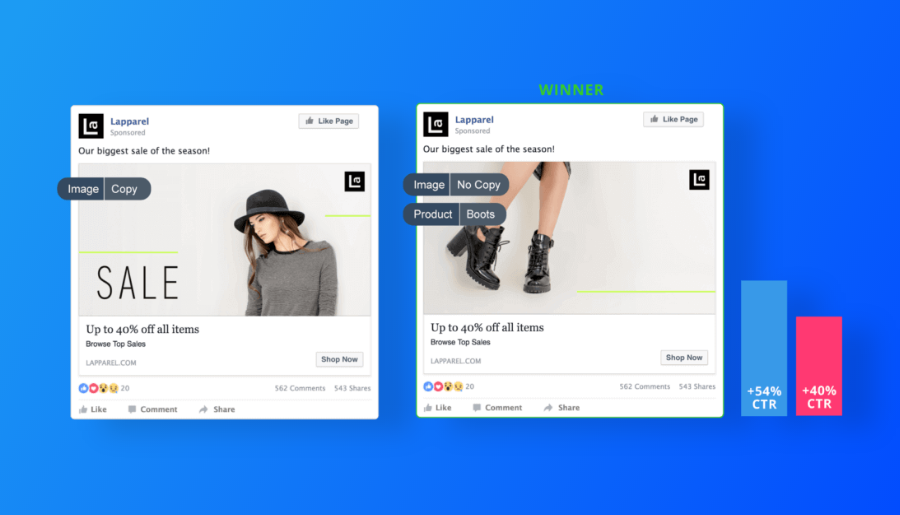
    Have you ever browsed through Facebook only to see an ad for clothes? Facebook is the most popular social media network in the world. It makes sense why businesses flock on their advertising platform to increase the exposure for their products.

    Just take a look at how this retailer created an ad for their product.

    tip1_e-commerce_marketing
    In the same way, you should use Facebook to generate interest in your products in front of millions of potential customers.

    Tip #2: Develop a PPC Strategy

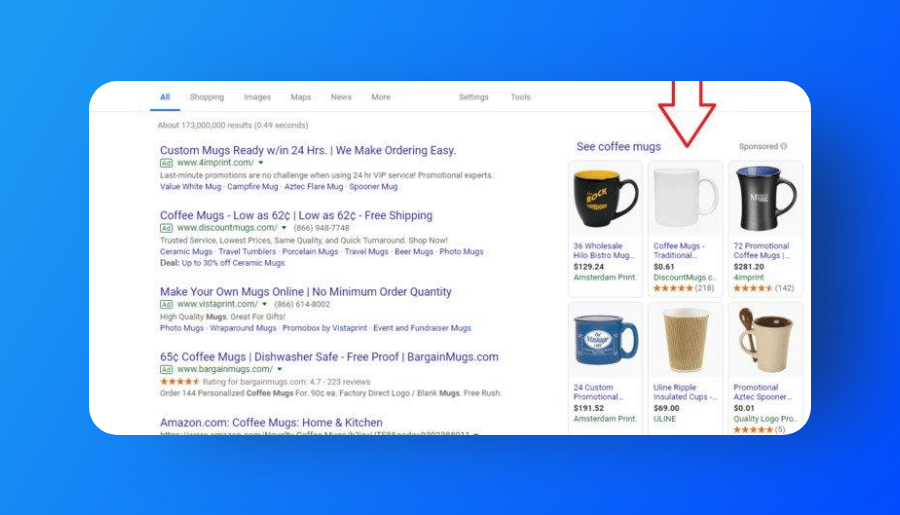
    Unlike SEO, it doesn’t take much time to build positive results with a PPC campaign. That’s only if you are conducting your campaign correctly. Google has shown PPC ads of online products extensively for at least a decade. 

    tip2_e-commerce_marketing
    Getting that type of exposure on Google can be huge for your business, improving the CTR of your ads. The higher the CTR, the higher your ad quality score will be. This will result in increased web traffic at a more affordable price in your campaign.

    Tip #3: Leverage Technical SEO

    Technical SEO is the process of optimizing a website to be crawled and indexed. As its name suggests, technical SEO is very technical. It entails things like improving your page speed and making your site mobile-friendly.

    For this tip, you should definitely hire an experienced digital marketing agency. If you don’t know much about SEO or how to build your own campaign, seeking outside help will be in your best interest.

    Mainly, paid speed and mobile optimization are the two most important areas of improvements for most marketplaces. 

    Tip #4: Create a Stunning Website

    Do you already have a website that doesn’t look the way you want it to? If so, you should create a new design for your website. Doing so will reinvigorate your brand and attract your target audience to your brand.

    Give Us a Call Today!

    Agency Partner Interactive specializes in delivering full-service marketing services for e-commerce retailers. If you want to increase your online exposure, then you’ve come to the right place.

    To learn more about how we can help you, give us a call today (877) 682-2012 or click here to Get a Free Quote. 
    Not big on reading? That’s okay. Watch “E-commerce Marketing 101instead.

    Using the power of Artificial Intelligence, we turned this blog into a video for you. Check it out below!


  • How COVID-19 Is Affecting E-commerce

    How COVID-19 Is Affecting E-commerce

    Expert Tips For E-Commerce Marketing

    The coronavirus (COVID-19) has undoubtedly left an indelible impact on the world. Thousands of people have been infected with the virus with many unfortunately perishing as a result. 

    This is not to mention the millions of people who are currently unemployed due to government regulatory measures to restrict physical movement. Overall, the effects of COVID-19’s impact can be felt worldwide.

    Interestingly, the virus has caused a certain trend to form in the e-commerce sector. If you are currently running an e-commerce marketplace, then you should continue reading to learn more about how the coronavirus could potentially alter your business.

    Millions Are Staying at Home

    Again, the coronavirus is an airborne affliction that requires extended quarantine periods to restrict its growth in communities. As such, state governments in conjunction with the federal government have mandated a quarantine period, keeping millions of people at home.

    Of course, these people still desire to carry on with their everyday lives even though it’s been altered. Without a lot of outside options to carry out grocery shopping duties, purchase essential products, and splurge, many are turning to the internet for a solution.

    According to the senior enterprise contributor at Forbes, Louis Columbus explains that mandatory stay-at-home periods have increased the appetite of e-commerce shopping since not many other alternatives exist.

    “In many families, online grocery, apparel, and entertainment shopping will replace store and mall visits permanently until a vaccine is available.”

    In addition, key global trends point to a correlation between stay-at-home orders and e-commerce industry growth.

    • The year-over-year (YoY) revenue growth of online retailers has increased by 68% as of Mid-April, outgrowing a peak percentage of 49% in January. 
    • There is currently a 129% increase in the YoY growth of online retailers in the United States and Canada, as well as a 146% increase in all online orders
    • Conversion rates online have increased by 8.8% since February, highlighting a renewed sense of urgency online products not seen since Cyber Monday. 

    With more people at home, online shopping has become ubiquitous throughout the world. This puts pressure on online retailers to make changes to their marketplaces and internal marketing strategies to accommodate the growing surge of consumers. 

    Increased Mobile Usage

    The domination of mobile usage in today’s global internet traffic is nothing new. According to Search Engine Land, nearly 60% of all online traffic comes from mobile devices. However, since the dawn of the coronavirus, mobile online traffic has skyrocketed.

    Per the PYMNTS’ 2020 Remote Payments Study, 72% of consumers are using mobile devices to purchase online products. As a result, e-commerce retailers have to be mindful of how they can optimize and curate positive user experiences for all potential customers.

    This means leveraging fundamental mobile optimization strategies to improve the responsiveness of their platforms. Hiring a web development agency to audit and performance improvements will be necessary for getting your marketplace ready for today’s new crop of consumers.

    More People Will Continue Shopping Online

    Stay-at-home orders are currently interim, at least in the larger states of the U.S. where the coronavirus has run rampant. This, however, doesn’t mean that these trends will decrease any time soon. 

    A Morning Consult study concluded that 24% of consumers wouldn’t shop at a mall for at least six more months. This makes sense, being that a vaccine for the coronavirus would have to be available before larger stores and outlets could be safely reopened. 

    This could mean that current e-commerce trends could continue growing. After all, online shopping is more convenient than any other alternative. Also, younger generations value convenience more than anything else when making a purchasing decision

    How to Optimize Your E-Commerce Marketplace

    As you can see, COVID-19 has tremendously affected the growth of the e-commerce industry, albeit in a positive way.

    This growth is insofar of how proactive you are in adapting your marketing strategy to fit the changing times.

    Remember, just because more online shopping is taking place doesn’t mean consumers will settle for any marketplace. It only means that the saturation of the e-commerce industry has increased, so there are thousands of retailers fighting for position. 

    If you want to stay afloat, here’s how you can revamp your marketing strategy.

    • Make sure that your e-commerce platform is mobile-friendly. This is absolutely essential as there are strict penalties for not having a responsive website. 
    • Reduce the friction on your site. Friction is defined as an obstacle that prevents a potential customer from converting. Therefore, ensure that your website is simple to navigate.
    • Increase the speed of your website and perform a technical SEO checklist to make sure that your marketplace will rank online and be seen by your target audience.

    Unfortunately, if you’re not an SEO expert, these steps will be incredibly difficult to perform. The good news is that the team at Agency Partner Interactive can be of service to you.

    How Agency Partner Interactive Can Help

    Agency Partner Interactive is a boutique digital marketing agency, specializing in creating high-performance marketing campaigns. We mainly provide services to e-commerce retailers.

    By working with us, we can get down to the bottom of your marketplace’s failures and formulate an effective solution to increase its web traffic and conversions. Our decisions are based on highly-qualitative data.

    Therefore, you can always be sure we are making the right decisions to help you achieve the highest return on your return on investment (ROI). SEO is very technical expertise and requires the brightest minds to have any effect on your campaign. 

    If you want to put a proven professional in your corner, look no further than Agency Partner Interactive.

    Give Us a Call Today!

    The coronavirus has changed the way we do business. Unless you have a strategy to overcome your losses and reinvigorate your bottom line, it will be complicated to surpass your competitors and survive.

    If you want to learn more about how we can help you, give us a call today at (877) 682-2012. You can also click here to receive a free quote. 

    Not big on reading? That’s okay. Watch “How COVID-19 Is Affecting E-commerceinstead.

    Using the power of Artificial Intelligence, we turned this blog into a video for you. Check it out below!