
Expert Tips For Small Businesses
The infographic below is retained from the original article and is not a current pricing comparison. Refer to the updated platform sections and official sources for current costs and terms.
E-commerce is a thriving industry.. this is a fact. If you are struggling to cope with this, then you should take a look at the following infographic from BigCommerce.
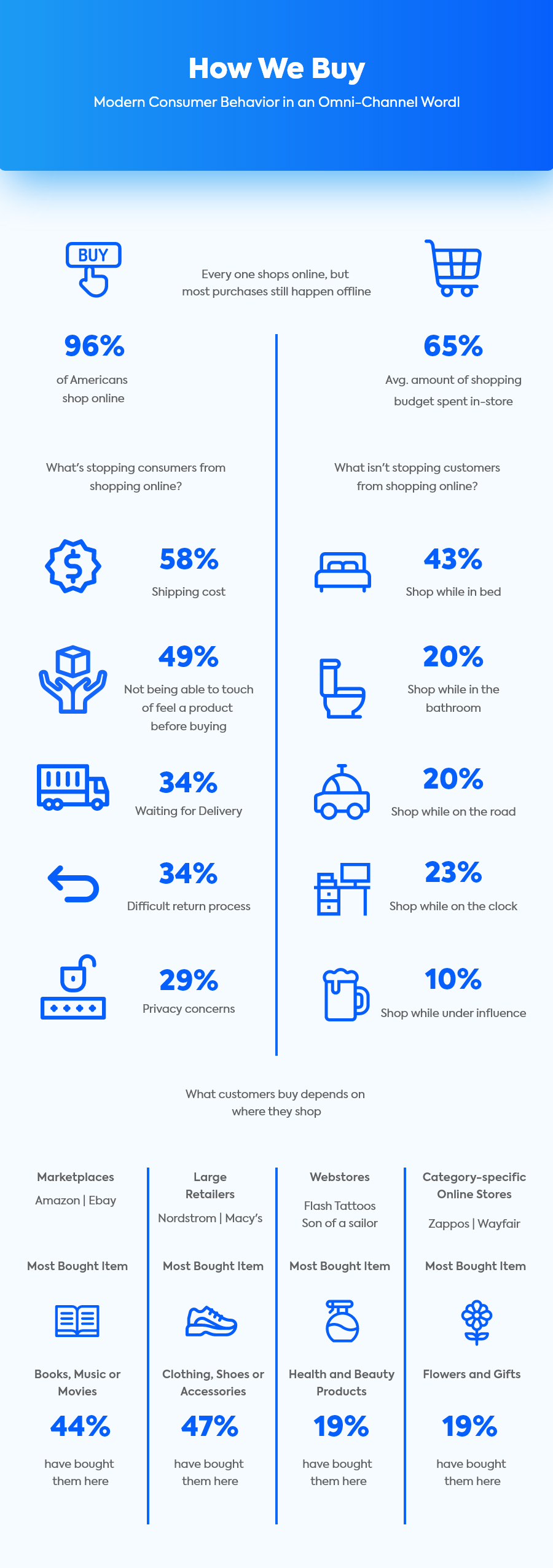
If you want to start an online store or simply wish to migrate to an existing content management system (CMS), there are fortunately numerous options for you to choose from.
If you are moving an existing store, review our website migration services to discuss content, URL redirects, and launch planning.
Here are 10 ecommerce platforms small businesses can evaluate. The right choice depends on your products, workflows, budget, and available technical support.
Pricing and fees: Subscription charges, platform transaction fees, and payment processing fees are different costs. Prices and availability depend on country, billing term, plan, and payment provider. Review the official sources linked below and account for taxes, apps, hosting, implementation, and ongoing support before choosing a platform.
1. Shopify
Benefits: Hosted storefront and store management
Pricing: Paid plans vary by billing cycle and market. Budget separately for any paid themes, apps, and implementation work.
Transaction and processing fees: Payment processing rates depend on your plan and payment method. Third-party transaction fees may apply when using an external payment provider.
Compare the features included in your chosen plan with your catalog, checkout, and integration requirements. Do not compare subscription prices alone.
Shopify official pricing and fee information
If Shopify fits your requirements, explore our Shopify development services to discuss store setup, customization, and integrations.
2. BigCommerce
Benefits: Hosted ecommerce with plan-based selling features
Pricing: Plan costs and upgrade requirements depend on features and sales volume. Review current GMV thresholds and any overage charges.
Transaction and processing fees: Payment provider fees are separate from the subscription. BigCommerce distinguishes embedded payment providers from other providers, so confirm applicable platform fees for your setup.
Compare the required plan, payment provider, and integrations before estimating total cost. BigCommerce and Shopify should not be treated as having identical pricing.
BigCommerce official pricing and fee information
3. Shift4Shop (formerly 3dcart)
Benefits: Hosted store builder with product and order management
Pricing: Check the current offer and eligibility directly with Shift4Shop rather than using historical 3dcart plan prices.
Transaction and processing fees: Confirm available payment providers, processing rates, and any conditions attached to the chosen offer before signing up.
3dcart is now called Shift4Shop. Evaluate its current storefront tools and integrations against your requirements; older feature counts and payment-provider lists may no longer apply.
Shift4Shop official pricing and fee information
4. Volusion
Benefits: Hosted storefront with product and staff-account options
Pricing: Subscription plans differ by annual GMV, product limits, staff accounts, and support. Check which tier fits your expected sales and catalog.
Transaction and processing fees: Processing costs depend on the payment setup. Volusion notes that additional fees may apply for non-preferred payment gateways or additional services.
Review plan limits and payment terms together. Do not assume Volusion will have lower processing costs than another platform without comparing quotes for your business.
Volusion official pricing and fee information
5. PrestaShop
Benefits: Open-source store software with hosting choices
Pricing: The Classic software is available as a free download, while the Hosted offer has a subscription. Budget for hosting, modules, themes, development, and ongoing maintenance where applicable.
Transaction and processing fees: Payment provider charges and any paid payment-module costs depend on your chosen setup. A free software download does not mean a free-to-operate store.
Choose between managing your own hosting and using a hosted offer based on your technical resources and support needs. Confirm what each offer includes before comparing total costs.
PrestaShop official pricing and fee information
6. WooCommerce
Benefits: Open-source ecommerce for WordPress
Pricing: The core WooCommerce plugin is free. Hosting, paid extensions, themes, development, and maintenance can add to the total cost.
Transaction and processing fees: WooCommerce does not add a core platform transaction fee, but your chosen payment processor charges its own fees.
WooCommerce can suit businesses that want to build a store on WordPress. Include responsibility for updates, backups, security, and extension compatibility in the project scope.
WooCommerce official pricing and fee information
For a store built on WordPress, our WooCommerce development services can help you plan product management, checkout, and integration requirements.
7. Squarespace
Benefits: Website publishing and integrated selling tools
Pricing: Subscription prices depend on the plan, billing term, and region. Confirm that the plan includes the selling features your business needs.
Transaction and processing fees: Online-store transaction fees and digital-content or membership fees can differ by plan. Payment processing is a separate cost.
Compare product, shipping, and integration requirements before choosing a plan. A lower subscription price does not necessarily produce the lowest overall selling cost.
Squarespace official pricing and fee information
8. Square Online
Benefits: Online selling within the Square ecosystem
Pricing: Square offers free and paid plans. The free plan has no monthly subscription charge, but payment processing and optional paid services still cost money.
Transaction and processing fees: Processing fees vary by plan and payment type. Use the current rates for your country and sales channel rather than a single rate for every transaction.
Square Online is separate from Squarespace. Businesses considering Square should assess how online orders, in-person sales, inventory, and fulfillment need to work together.
Square Online official pricing and fee information
9. Sellfy
Benefits: Selling digital downloads, subscriptions, and merchandise
Pricing: Paid plans vary by billing term, annual sales volume, and included features. Check sales limits and upgrade requirements.
Transaction and processing fees: Sellfy does not charge its own transaction fee, but PayPal or Stripe processing fees still apply. Confirm payment availability and rates for your country.
Compare file limits, marketing features, and customization needs before choosing a plan. Selling digital products does not automatically make every plan suitable for every business.
Sellfy official pricing and fee information
10. AmeriCommerce
Benefits: Ecommerce with payment-gateway choices
Pricing: Request current plan details and confirm the scope and any additional charges. Do not rely on the historical price range previously listed here.
Transaction and processing fees: AmeriCommerce documents additional processing fees for non-Nuvei gateways based on plan level. Confirm these separately from the payment processor’s own charges.
Check gateway compatibility and the complete fee schedule for your store before committing. Growth can change the required plan and costs; it should not be treated as automatic or free.
AmeriCommerce official pricing and fee information
Give Us a Call Today!
Do you need direction in choosing the right e-Commerce platform for your business? If so, give us a call at (877) 682-2012 to speak to a member of our award-winning team.
Choosing a platform is only the first step. As an ecommerce web development company, Agency Partner Interactive can help you assess storefront requirements, integrations, and implementation scope before starting your project.
Archive video: This video reflects an earlier version of the article. Platform names, prices, and fees mentioned in it may be outdated. Use the updated written guidance and official sources above for current purchasing decisions.