Tag: content marketing services

  • Navigating Ethical AI in Content Creation: 8 Best Practices for 2024

    Navigating Ethical AI in Content Creation: 8 Best Practices for 2024

    Artificial Intelligence (AI) has become increasingly prevalent in content creation, revolutionizing how content is generated, curated, and distributed. However, as AI technologies advance, so do the ethical considerations surrounding their use. In this article, we will explore the 8 best practices for navigating ethical AI in content creation in 2024, highlighting key strategies from content marketing best practices to maintaining accountability in AI usage. 

    Understanding the Role of AI in Content Creation 

    AI’s automation capabilities serve as a digital assistant, seamlessly integrating into digital marketing and content creation workflows. By handling repetitive tasks, AI allows human creators to channel their energy into more creative endeavors, fostering innovation and originality in content development. Additionally, AI’s data analysis functions as a digital microscope, diving deep into vast datasets to uncover hidden patterns and trends in digital marketing services. This invaluable insight guides content strategy, ensuring that creators are delivering content that resonates with their audience and enhances their online presence.   

    Moreover, AI’s ability to generate insights transforms raw data into actionable information, providing content creators with a competitive edge in content marketing services. This not only enhances content quality but also ensures that the content remains relevant in a rapidly evolving digital landscape. However, it’s crucial to approach AI with a discerning eye, understanding its capabilities and limitations. This understanding empowers creators to wield AI ethically and responsibly, maintaining the integrity and authenticity of their content, and avoiding potential Google penalties. 

    Transparency in AI Use

    Transparency is fundamental in using AI for content creation. It involves openly disclosing that AI plays a role in creating content. When creators are transparent about AI use, they establish trust with their audience. People are interested in understanding the origins and methods behind the content they consume. Transparently disclosing AI use demonstrates a commitment to honesty and openness.  

    This transparency helps build trust and authenticity in content creation processes, aligning with the principles of responsible AI and content moderation. It also ensures accountability in AI use and reflects best practices in content marketing services. Additionally, it enhances digital marketing strategies, contributes to a strong online presence, and helps avoid penalties from search engines like Google. Overall, transparency in AI use is crucial for ethical content creation and maintaining trust with the audience. 

    Guarding Against Bias

    Identifying and mitigating bias in AI is essential for ethical content creation. Bias can inadvertently seep into AI systems from their training data, affecting the content they generate. To ensure fairness and impartiality, it is crucial to actively recognize and address these biases. 

    The impact of bias on content and audience perception can be significant. Biased AI-generated content can reinforce stereotypes and negatively influence how the audience perceives the content. Mitigating bias is therefore crucial for creating content that is inclusive, diverse, and free from harmful stereotypes. This approach aligns with responsible AI practices and helps maintain a positive audience perception. 

    Respecting Intellectual Property 

    Respecting intellectual property rights is paramount in AI-driven content creation. It is crucial to ensure that AI-generated content does not infringe on copyrights or patents. Content creators must take proactive measures to uphold these rights. 

    Balancing automation with originality is key when using AI in content creation. While AI can streamline processes, maintaining the creativity and uniqueness of the content is equally important. Striking this balance ensures that AI enhances, rather than detracts from, the creative process. 

    Prioritizing Data Privacy 

    Safeguarding user data is crucial in AI-driven content creation. As AI often relies on user data, protecting this information is essential to ensure user privacy and comply with data protection regulations. 

    Compliance with data protection regulations, such as GDPR and CCPA, is mandatory for content creators using AI in content creation. Adhering to these regulations ensures the ethical and responsible use of data, enhancing user trust and maintaining legal compliance. 

    Human Oversight and Final Review 

    Human oversight is crucial in AI-generated content to ensure that it meets quality standards and aligns with ethical guidelines. Human editors provide a critical layer of oversight, ensuring the content’s quality, accuracy, and relevance. They also play a vital role in ensuring that the content aligns with ethical guidelines, helping to mitigate the risk of biased or misleading information. While AI can automate many aspects of content creation, human creativity remains essential for producing engaging, impactful content that resonates with audiences. Human creativity adds a unique and irreplaceable element to content creation, allowing for the development of authentic content that connects with audiences on a deeper level. 

    Empowering Creativity with AI 

    AI can enhance human creativity by providing insights, suggestions, and automation tools that augment the creative process. It serves as a valuable assistant, offering new perspectives and ideas to creators. However, it is crucial to view AI as a tool that complements human creativity, rather than a replacement for it. Human creativity is integral to content creation, adding a unique and irreplaceable element that AI cannot replicate. Combining AI’s capabilities with human creativity leads to more innovative and impactful content creation.   

    Ensuring Ethical Content Distribution   

    AI is often used to distribute content to target audiences, making it imperative to ensure ethical practices are maintained throughout the process. This is crucial for maintaining trust and credibility with audiences. AI-powered content distribution must steer clear of manipulation and misinformation, as these can significantly damage the credibility of the content and erode the trust of the audience. Ethical distribution practices are essential for upholding the integrity of the content and ensuring its impact remains positive. 

    Continuous Education and Adaptation 

    Staying informed about the latest developments in AI ethics is essential for content creators to ensure that they are using AI ethically in their content creation process. This ongoing education allows creators to stay ahead of emerging ethical issues and guidelines. As AI technologies and ethics evolve, content creators must be prepared to adapt their practices to align with these changes. This adaptability ensures that creators can continue to use AI responsibly and ethically, even as the technology and ethical landscape evolve. 

    Measuring Ethical AI Success  

    Developing metrics to assess the ethical use of AI in content creation can help content creators evaluate their practices and identify areas for improvement. These metrics should include considerations for bias, transparency, and user privacy.  

    • Monitoring and Improving Ethical AI Performance 

    Regularly monitoring and improving the ethical performance of AI in content creation is essential for ensuring that AI is used responsibly and ethically. This involves tracking key metrics and adjusting ensure ethical standards are maintained. 

    • Adhering to Industry Best Practices and Guidelines 

    Content creators should adhere to industry best practices and guidelines for using AI in content creation to ensure ethical and responsible use of AI technologies. This includes following guidelines from organizations such as the IEEE and the AI Ethics Lab, as well as keeping abreast of developments in AI ethics. 

    Conclusion 

    In conclusion, prioritizing ethical AI practices in content creation is vital for maintaining trust, transparency, and integrity in the digital landscape. These practices ensure that content creators respect user rights, uphold privacy standards, and mitigate biases. By following ethical guidelines, content creators can contribute to a more sustainable and responsible future for the industry. 

    If you’re seeking guidance on ethical AI implementation in content creation, our agency specializes in providing tailored solutions. Contact us today to explore how we can help you integrate ethical AI practices into your content strategy, ensuring a positive impact on your audience and the industry. 

  • What’s the Best Content Marketing Strategy for Startups in Austin?

    What’s the Best Content Marketing Strategy for Startups in Austin?

    If you’re a startup in Austin, you know you’re in an area full of innovation and competition. That’s why having an exceptional content marketing strategy is so important.  

    How do you ensure your business stands out in a city filled with tech gians and startups? This blog will guide you through the best content marketing strategy for Austin startup businesses. Keep reading to learn how to get the attention your business deserves. Let’s dive in!  

    Content Marketing Austin: Why it’s Crucial for Startups 

    Why should startups invest in content marketing? For starters, content marketing provides a cost-effective way for businesses, especially new ones, to attract and retain customers. Different from traditional forms of advertising, which can be expensive and not consistently effective, content marketing can be tailored to fit even the most modest budgets.  

    Another advantage is the potential for long-term impact. Well-crafted content stays strong, engages audiences, and brings in organic traffic at no cost, unlike PPC and paid search advertising. Simply put, content marketing offers scalable growth and lasting ROI, making it an invaluable tool for startups. 

    Understanding Austin’s Startup Ecosystem 

    Austin is a center of innovation and diversity, making it the perfect place to leverage content marketing services. With Pheabs ranking Austin as the #1 city for startups, it’s clear that this city is an excellent place to start for entrepreneurial success. But what sets this city apart is its openness to new ideas, a quality that provides a unique setting where your content can stand out. 

    austin-content-marketing[Source: United States Census Bureau] 

    These statistics demonstrate the city’s dynamism and offer hints at the types of audiences you could reach with a targeted digital marketing Austin approach.  

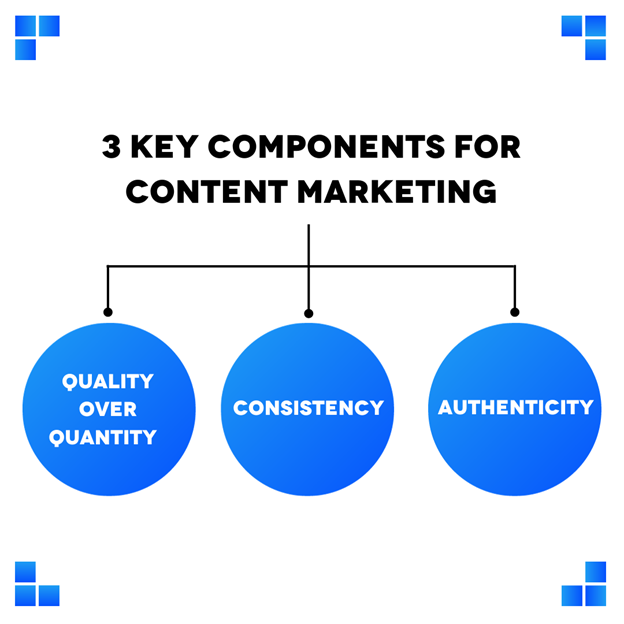
    3 Key Components of an Effective Austin Content Marketing Strategy 

    Let’s understand the core elements that make a startup marketing strategy effective:  

    1. Quality Over Quantity  

    It’s tempting to churn out content, but what matters is the quality. Your audience will appreciate well-researched, thoughtful articles and webpages over a flood of superficial ones.  

    2. Consistency Consistency  

    Your messaging and posting schedule helps establish trust and authority. If you’re unpredictable, you’ll lose your audience’s attention.  

    3. Authenticity  

    Your target audience in Austin will appreciate genuineness. Be yourself and let your brand’s unique personality shine through your content. Authenticity helps to create a strong brand identity that people can relate to.  

    Understanding Your Target Audience in Austin 

    To thrive in Austin’s competitive business landscape, you need more than just a great product or service—you also need to understand who you’re selling to.  

    The first step in this journey is to conduct market research for your marketing strategy in Austin. Utilize resources like online surveys and social media metrics to learn more about the people engaging with your business in Austin. 

    After gathering sufficient data, the next move is to develop customer personas. These profiles serve as templates for your ideal customer and are invaluable in fine-tuning your content marketing strategies developing a content calendar for startups. 

    By conducting diligent market research and crafting accurate, informed customer personas, you’ll be well-equipped to create a marketing strategy that resonates with Austin’s diverse and tech-savvy consumers, setting your business on the path to success. 

    Types of Content that Work Well for Austin Startups 

    In a city brimming with innovation like Austin, the right type of content can set you apart. As an Austin digital marketing agency specializing in content and copywriting services, we’ve found these content types to be the most effective for broadening reach, driving brand awareness, and boost user engagement. Let’s dive in:  

    Blog Posts 

    Blog posts are timeless content pieces that offer value to your audience. They are highly versatile, allowing you to cover topics from industry news to how-to guides. In a city like Austin, where innovation is in the air, thought leadership pieces can position your startup as an industry expert.  

    Social Media Marketing 

    Given Austin’s young and tech-savvy demographic, social media platforms can be a powerful tool for reaching your target audience. Regular updates that share insights, news, or even behind-the-scenes looks at your startup can keep your audience engaged. 

    Video Content 

    Austin’s dynamic environment offers a perfect stage for video content. Whether it’s a product demo, an interview with the founders, or even a virtual tour of your startup, video content can be incredibly impactful.  

    Case Studies 

    Case studies can provide social proof and illustrate your startup’s value propositions. Focusing on how your services or products serve the local Austin community could be particularly impactful.  

    In short, choosing suitable types of content is crucial for startups marketing strategy. Implementing a well-thought-out content calendar for startups can help you consistently produce high-quality content that resonates with your target audience in Austin.  

    Digital Marketing Austin: How to Distribute Your Content  

    Once you’ve created compelling content, the next pivotal step is to get it in front of the right eyes. A well-thought-out distribution strategy is imperative for maximizing your content’s reach and impact.  

    Austin SEO Strategy 

    Search Engine Optimization (SEO) ensures that your content reaches its intended audience. By interlinking search terms, or keywords, within your website and blog content, you’ll be able to reach people searching for those specific terms, driving organic traffic and website users while gaining authority within your domain. With Austin’s high labor force participation rate, people frequently seek services and information online. Utilize local SEO to make sure you’re visible to this active audience.  

    Social Media Platforms  

    Platforms such as Instagram, Twitter, and LinkedIn are more than just networking tools; they’re essential for reaching and engaging your target audience. By crafting strategic posts and leveraging each platform’s unique features, you can forge meaningful connections and cultivate a loyal community around your brand.  

    Email Marketing 

    Given Austin’s educated demographic, a well-curated email newsletter can effectively distribute your content, mainly if it provides value and isn’t just promotional. 

    Regarding distribution, the key is to use a multi-channel approach tailored to Austin’s unique landscape.  

    Measuring Content Marketing Austin Success: KPIs to Track  

    After diving into the types of content that work well and how to distribute them, it’s essential to gauge their effectiveness. This brings us to monitoring key performance indicators (KPIs) that align with your business goals. Let’s explore some of the most telling metrics you should watch: 

    Organic Traffic 

    Monitoring website traffic can give you a basic understanding of how many people interact with your content. However, looking at metrics like time on the page is essential to get a better sense of how your content is performing. 

    Engagement Rate 

    Metrics like likes, shares, and comments on social media can provide insights into how well your content resonates with your audience.  

    Organic Conversions 

    The ultimate goal of any marketing effort is conversion. Track how many engagements lead to desired actions such as sign-ups, downloads, or sales.  

    Overall, understanding and monitoring the right KPIs is essential for evaluating the success of your content marketing efforts in Austin’s competitive startup environment.  

    Hire a Digital Marketing Agency Austin for Content Marketing Services 

    The world of content marketing is ever-changing, requiring regular assessments and tweaks to your strategy. Staying ahead of industry trends, audience preferences, and the competitive landscape is crucial. Failing to adapt could mean missing out on opportunities or losing relevance.   

    Consider collaborating with a digital marketing agency like Agency Partner Interactive to make this process more convenient while still seeing excellent results. Staying stagnant is not an option; continuous monitoring and adaptation are essential to long-term success. 

    Experience the Difference with Agency Partner Interactive  

    In the crowded Austin startup landscape, having an exceptional content marketing plan can make all the difference. At Agency Partner Interactive, we are your trusted Austin web development and design agency, specializing in startups.   

    We have a proven track record of delivering measurable results. We helped one of our startup business clients achieve a revenue target of over $4 million, up from a projection of $2.5 million in the previous year through hyper-focused local SEO, content marketing, and PPC campaign strategies.  

    Why wait if you want to elevate your startups marketing strategy? Reach out to schedule your free consultation today and take the initial steps toward boosting your content marketing strategy! 

  • Maximize Web Traffic with These Content Amplification Strategies

    Maximize Web Traffic with These Content Amplification Strategies

    More than high-quality content is required to attract and retain an online audience. With so much content on the internet, it’s easy for your content to get lost in the sea of information. That’s where content amplification comes in. 

    Content amplification refers to the various strategies and tactics that can be used to increase the reach and visibility of your content. According to HubSpot, 87% of marketers use email marketing to distribute content and maximize website traffic.  

    Blogs, social media posts, videos, and other forms of online content can be amplified using different techniques such as social media marketing, influencer outreach, email marketing, and paid advertising. By leveraging these strategies, businesses and individuals can maximize their web traffic and reach a wider audience. 

    The importance of content amplification in maximizing web traffic cannot be overstated. Without a solid amplification strategy, even the best content can go unnoticed. This blog will discuss various content amplification strategies to help you get your content in front of the right audience and drive more traffic to your website. 

    Understanding Your Audience 

    Before you amplify your content, it’s important to understand your audience. This involves identifying your target audience, creating buyer personas, and understanding their interests and behavior. 

    Determining your target audience 

    Identifying your target audience means defining the people you want to reach with your content. This could be based on demographics such as age, gender, income, and location or psychographics such as interests, values, and beliefs.  

    Creating buyer personas 

    Buyer personas are fictional representations of your potential customers. They are created based on research and data about your target audience. Buyer personas typically include demographics, goals, pain points, interests, and behavior. You may better understand your target audience by developing buyer personas, enabling you to provide content that appeals to them. 

    Knowing your audience’s interests and behavior 

    Knowing your target audience’s interests and behavior is key to creating content that resonates with them. This involves understanding their online behavior, such as what social media platforms they use, websites they visit, and keywords they search for. It also involves understanding their interests and pain points, which can be identified through surveys, social media listening, and other forms of research. 

    Content Creation for Amplification 

    Creating high-quality and engaging content is essential for content amplification. Here are some best tips for creating content that is optimized for amplification: 

    Creating high-quality and engaging content 

    High-quality content is informative, relevant, and valuable to your audience. It should be well-researched, easy to read, and visually appealing. Engaging content is also important, as it encourages your audience to interact with your content, share it with others, and return for more. 

    Creating content with shareability in mind 

    Creating content that is easy to share on social media can increase its reach and virality. This means including social media share buttons on your website, creating catchy headlines and compelling visuals, and writing easily digestible and shareable content. 

    Creating different types of content 

    You can reach a larger audience and keep your material interesting and new by producing several sorts of content. This can include:  

    • Videos are highly engaging and can showcase products, explain complex topics, and share stories. 
    • Infographics are simple to share on social media and have the potential to promote interaction. They are visual representations of facts and information. 
    • Blog posts are a great way to share insights, opinions, and news about your industry or niche. 

    Analyzing and Measuring Results 

    Analyzing and measuring the results of your content amplification efforts is essential for optimizing your strategy and achieving your goals. Here are some tips for analyzing and measuring your results: 

    Setting goals and objectives 

    Setting specific, measurable, and realistic goals and objectives is important for measuring the success of your content amplification efforts. Your goals include increasing website traffic, growing your social media following, generating leads or conversions, or increasing brand awareness. 

    Measuring success with key performance indicators (KPIs) 

    KPIs are metrics that are used to assess the effectiveness of your content amplification efforts. Some common KPIs include website traffic, engagement rates on social media, conversion rates, and cost per click (CPC) for paid advertising.  

    Analyzing and adjusting your strategy based on results 

    Analyzing your results and adjusting your amplification strategy is key to improving effectiveness. This could involve experimenting with different social media platforms, adjusting your targeting for paid advertising, or trying out different types of content. You can optimize your content amplification efforts and achieve your goals by continually analyzing and adjusting your strategy based on your results. 

    7 Effective Content Amplification Channels to Drive Traffic to Your Website 

    Here are some content amplification channels that can help drive traffic to your website: 

    Social media 

    Sharing your content on social media platforms like Facebook, Twitter, LinkedIn, and Instagram can help you reach a massive audience and drive traffic to your website. 

    Influencer marketing 

    Partnering with influencers in your industry can help you reach their followers and drive traffic to your website. 

    Content syndication 

    Publishing your content on third-party websites can help you reach a new audience and drive traffic back to your website. 

    Email marketing 

    Sharing your content with your email subscribers can help drive traffic to your website and build customer loyalty. 

    Paid advertising 

    Investing in paid advertising channels like Google Ads or Facebook Ads can help you target your ideal audience and boost traffic to your website. 

    Guest blogging 

    Contributing guest posts to relevant industry blogs can help you reach a new audience and drive traffic back to your website. 

    Search engine optimization (SEO) 

    You can improve your SERP ranking and increase organic website traffic by optimizing your content for search engines. 

    Final Thoughts on the Best Content Amplification Strategies 

    Content amplification refers to the various strategies and tactics that can be used to increase the reach and visibility of online content, such as blogs, social media posts, videos, and other forms of content. It involves understanding the target audience, creating high-quality and engaging content, and leveraging different amplification strategies such as social media, influencer marketing, email marketing, and paid advertising to drive more traffic to a website.  

    The success of content amplification efforts can be measured using key performance indicators (KPIs), and the strategy can be adjusted based on the results to optimize its effectiveness. Content amplification is essential for maximizing web traffic and reaching a broader audience in today’s digital age. 

    Maximize Web Traffic with Agency Partner Interactive 

    Are you looking for the best digital marketing in Dallas? With so many digital agencies vying for your attention, it can be difficult to find the perfect partner to help you achieve your business goals. 

    At Agency Partner Interactive, we specialize in providing top-notch digital marketing services that help businesses grow. With over a decade of experience and a portfolio of successful projects, we have the knowledge, tools, and resources to boost your online presence. 

    As one of the top digital marketing agencies in Dallas, we offer various services to help businesses like yours build a reputable presence and drive scalable website traffic. Here are some our customizable services:  

    At Agency Partner Interactive, we work with our clients to create customized Dallas content marketing strategies that align with their business goals and objectives. 

    So, if you’re looking for a reliable digital marketing partner to help you achieve long-term growth, look no further than Agency Partner Interactive. We make your business success ours. Get your free personalized proposal today! 

  • Content Marketing 101: The Art of Creating Shareable Content

    Content Marketing 101: The Art of Creating Shareable Content

    Content marketing has become a crucial aspect of a successful marketing plan in the digital era, which requires producing and sharing valuable, relevant, consistent content to draw in and retain a specific target audience and drive profitable customer engagement 

    While making top-notch content is essential, creating content that people will share is equally critical. The audience considers shareable content valuable and compelling enough to share with others. According to HubSpot, 88% of marketers prioritize creating audience-focused content that provides value. 

    Shareable content can help establish your brand as an industry thought leader, establish credibility and trust with your audience, and ultimately generate conversions and revenue. When your content is shared, it has the potential to reach a wider audience, increase brand awareness, and increase traffic to your website. In short, creating shareable content is a key component of any successful content and digital marketing strategy. 

    Understanding Your Audience 

    To create shareable content, it’s essential to understand your audience and what motivates them to engage with your brand. Here are some key steps in understanding your audience: 

    Identifying your target audience 

    The first step is identifying your target audience, which involves creating buyer personas representing your ideal customer. This includes demographic information such as age, gender, location, income, and education and psychographic information such as values, interests, and behaviors. 

    Analyzing audience interests and preferences 

    Once you’ve recognized your target audience, the next step is to analyze their interests and preferences, which can be done through social listening, surveys, and analyzing website and social media analytics. Understanding your targeted audience’s interest can make content more likely to resonate with them. 

    Understanding the audience’s behavior on social media 

    Lastly, it’s essential to understand your audience’s behavior on social media, including what platforms they use when they are most active and what content they engage with. Understanding how your audience interacts with social media allows you to tailor your content and posting schedule to maximize engagement and sharing. 

    Creating Shareable Content 

    Now that you understand your audience, it’s time to create shareable content. Here are some key steps to create content that your audience will want to share: 

    Choosing the right content formats 

    Different types of content formats work best for different content and audiences. Consider which formats will best convey your message and resonate with your audience. Some examples of popular content formats include blog posts, images, videos, infographics, podcasts, and social media posts. 

    Crafting compelling headlines and subheadings 

    Headlines and subheadings are critical components of shareable content as they often determine whether or not someone will read your content. Make sure your headlines and subheadings are attention-grabbing, descriptive, and promise value. 

    Writing engaging and informative content 

    When it comes to producing shareable content, the key is to create informative and engaging content. Use storytelling, humor, and personal anecdotes to keep your audience interested. 

    Incorporating visuals and multimedia 

    Visuals such as images, videos, infographics, webinars, and videos can make your content more shareable and engaging. Incorporating multimedia can also help break up long blocks of text and make your content more visually appealing. It also allows your content to be easily digestible and convenient for users who don’t prefer to read long-form articles. 

    Incorporating social proof 

    Incorporating social proof into your content can also help you position yourself as an industry authority. You can provide social proof through case studies, testimonials, and referral programs depending on your industry and business type. 

    Optimizing for search engines 

    Optimizing your content for search engines, including using relevant keywords, optimizing your meta descriptions, and using internal and external links, is paramount.  Even if your content is unique, relevant, and high-quality, without optimization, it will be nearly impossible for people to find it, let alone share it. That’s why optimizing your content for search engines is the key to gaining more visibility and traffic to your website. 

    Promoting Your Content 

    Understanding your audience and creating shareable content are simply the beginning. Once you have created your content, the next step is promoting it to your audience. Here are some key steps to promote your content and increase the chances of it being shared: 

    Choosing the right social media platforms 

    Different platforms work better for different types of content and audiences. For example, LinkedIn is better for B2B content, while Instagram is better for visual content. Select the platforms that align with your target audience and content. 

    Building a social media following 

    Consistently sharing valuable content, engaging with your audience, and promoting your social media channels through email signatures and website links can help increase your following. 

    It’s best to include a posting schedule when creating your content calendar so your promotional efforts are aligned with your overall campaign strategy. Automating your publishing process is an excellent way to save time, stay on schedule, and monitor your performance metrics. 

    Using hashtags and keywords 

    Using relevant keywords and hashtags can help your content get discovered by new audiences. Research your industry’s most popular hashtags and keywords. 

    Engaging with your audience 

    Engaging with your audience is critical in encouraging them to share your content. Responding to user comments, asking for feedback, and running contests can increase engagement and promote your content. 

    Measuring the success of your content 

    Measuring your content’s success is critical and allows you to determine what’s working and which areas need improvement. Here are the metrics you should track: 

    • SEO Content: organic traffic, organic conversion rate, users, average session duration, and bounce rate 
    • Social Media: engagement rate (likes, shares, and comments), impressions, follower count, and click-through-rate (CTR) 
    • Email Marketing: Subscribe rate, unsubscribe rate, conversion rate, CTR, and open rate 

    Best Practices for Creating Shareable Content 

    To create content your audience will want to share, there are some best practices to remember. Here are some critical practices for creating shareable content: 

    Consistency and frequency 

    You can build trust and credibility with your audience by constantly developing and distributing quality content. By posting content regularly, you can keep your audience engaged and encourage them to share it while building a community around your brand. 

    Authenticity and transparency 

    You can establish trust and build a loyal following by being authentic and transparent with your audience. Sharing personal stories and experiences can help you connect with your audience on a deeper emotional level, increasing the likelihood that your content will be shared. 

    Providing value to your audience 

    Creating useful content for your audience is essential for motivating them to share your content. You can position yourself as a leader in your industry and encourage your audience to share the content with their network by giving helpful ideas, thoughts, and guidance. 

    Staying up-to-date with current trends and news 

    Staying up-to-date with current trends and news is also important in creating shareable content. By creating relevant and timely content, you can increase the chances of your audience sharing your content. 

    Collaborating with influencers and other brands 

    Collaborating with influencers and other brands can increase the visibility of your content and encourage more shares. By partnering with influencers and other brands that align with your values and target audience, you can increase the reach of your content and drive more traffic to your website. 

    Key Takeaways of the Art of Creating Shareable Content 

    According to Ahrefs, 87% of marketers use content marketing to generate leads, and businesses with a blog see 67% more leads than those without. Creating shareable content is key to any successful content marketing strategy. You can boost your chances of sharing and reaching a larger audience by analyzing your target, developing appealing content, and successfully advertising it. 

    It’s important to follow best practices such as providing value to your audience, staying up-to-date with current trends, and collaborating with influencers and other brands. Measuring the success of your content and optimizing your strategy accordingly is crucial in achieving your marketing goals. 

    Upgrade Your Content Marketing with Ease 

    When done correctly, content marketing has the potential to accelerate your brand’s growth cost-effectively. As a top Dallas digital marketing agency, Agency Partner Interactive provides industry-leading content marketing services that drive organic traffic, conversions, search visibility, and more. 

    We follow best practices for content marketing services, like providing value to your audience, using storytelling techniques, best digital marketing strategy, campaigns, content creation, and leveraging multimedia to enhance the content’s visual appeal. 

    We work with our clients to understand their target audience, brand persona, and objectives before creating a custom content marketing strategy, including creating high-quality, relevant, and shareable content for your audience.  

    Our data-driven process means we constantly monitor your online presence and ensure all of your brand’s marketing efforts realize ROI. Ready to kick start your business growth with a premier partner? Schedule your free strategy session today! 

  • How to Run a Content Audit

    How to Run a Content Audit

    A content audit is a comprehensive review and analysis of all websites content to identify areas for improvement, enhance quality and relevance, and meet business objectives. By conducting a content audit, you can identify which areas require updates and adjustments to optimize your website. 

    A content audit ensures that the content meets the needs of its targeted audience and is aligned with business goals. If you’re looking for effective content audit tips and how to run a proper content audit, let’s dive in! 

    Easy Steps to Audit Your Website’s Content 

    Auditing your entire content library is extensive, but we’ve broken down the steps to help you get started. To learn more about how your content is performing relative to your competitors, and how to achieve your business goals quicker, get in touch with an Agency Partner Interactive content marketing expert today! 

    Identify your goals 

    Before you start the content audit, you’ll need to define what you hope to achieve. Based on your objectives, you can determine what to look for and how to prioritize your findings. Here are some common goals to set for the basis of your content audit:  

    Collect data 

    Collect data on all the posts and pages on your website. Compile all the URLs of your website’s posts and pages. You can use tools like SEMrush, Google Analytics, or Ahrefs to gather information about pageviews, time on page, bounce rate, and other metrics. You can also manually review each page and make notes about its content and performance. 

    Analyze your findings 

    Once you have collected all the data, you can start analyzing your findings. Look for patterns or trends that can help you identify content that is performing well and content that needs improvement. You can use filters and sorting functions in your sheet to make it easier to analyze high volumes of raw data. 

    Monitor progress 

    After you have made changes to your content, monitor your progress over time. Keep track of key metrics like engagement, page views, and conversions to see if your changes are positively impacting those results. If they aren’t you can make necessary adjustments to ensure your efforts pay off. 

    A content audit involves identifying your goals, collecting data, creating a spreadsheet, analyzing your findings, monitoring progress, and taking action. By conducting content audits regularly, you can improve your website’s performance and ensure that your content strategy is aligned with your business goals. 

    Why Content Audits Are Important for Your Website 

    A content audit is essential for any growth-focused business or organization looking to optimize its content marketing strategy. Here are some ways a content audit benefits your business: 

    Identify gaps in content 

    A content audit helps in analyzing your content marketing strategy’s effectiveness. You can identify where you need to create more content and if you can repurpose existing content to better serve your target audience. 

    Running a content gap analysis helps you identify what’s missing from your existing website. Based on these findings, you can brainstorm topics and create new content that’s relevant for your target audience and aligns with the stages of their buyer’s journey. 

    Improve search engine optimization  

    An SEO content audit can help you improve your search engine visibility by identifying content that needs updating, editing, or removing. By enhancing the quality of your content, you can boost your search engine rankings, engage with more audiences, and achieve a steady stream of organic traffic to your website over time. 

    Simplify content creation  

    A content audit helps you identify the types of content that are most effective for your audience. By analyzing which pages perform well based on bounce rate, time on page, and more, you can focus on creating more of the content that works and eliminate what doesn’t. This can save you time and make better use of the resources involved in your content creation process. 

    Optimize user experience  

    A content audit helps you ensure your content meets your audience’s needs. By identifying obsolete, confusing, or irrelevant content, you can remove it and improve the overall user experience on your website. Similarly, a content gap analysis can improve user experience by offering insight into your audience’s questions and concerns and allow you to provide relevant, helpful solutions. 

    Measure content performance 

    A content audit helps you measure the performance of your content over time. You can identify trends and make data-driven decisions about your content strategy by tracking metrics such as social shares, engagement, and conversions. 

    An overall content audit is important because it helps you with a content gap analysis in your content strategy, streamlines content creation, improves your SEO, optimizes user experience, and measures content performance. By conducting regular content audits, you can ensure that your content marketing strategy is aligned with your business and meets your target audience’s needs. 

    SEO Content Audit: Final Thoughts 

    A content audit is essential for any business or website to achieve long-term goals or enhance online visibility. A content audit is not a one-time task, and this process should be done regularly to ensure your content remains relevant and effective. Conducting a proper content audit and making changes based on your findings can improve your website quality, increase traffic, and ultimately help you achieve scalable growth.  

    Boost Your Online Presence with Agency Partner Interactive 

    At Agency Partner Interactive, we know having a dynamic online presence is the key to success in today’s digital landscape. We offer effective content marketing services to help businesses like yours attract, engage, and retain customers through strategically creating and publishing valuable content relevant to your audience.  

    Our content marketing and SEO teams will work with you to develop a customized digital marketing strategy that fits your unique needs and goals. If you need help auditing your existing content, our team will meticulously analyze your website to identify areas of improvement and opportunities for growth. We’ll help you develop a compelling strategy to increase engagement, drive traffic, and boost conversions. 

    Agency Partner Interactive is a full-service internet agency that offers a wide range of solutions to help businesses thrive. We leverage the unique skillset of our professional teams to provide award-winning web development, content strategy, social media marketing, paid advertising, and more. Ready to get started? Schedule your free consultation today! 

  • How To Improve Your Content’s Organic Click Through Rate

    How To Improve Your Content’s Organic Click Through Rate

    Click-through rate (CTR) is a key metric for web content, particularly for internet marketing campaigns. Click-through rate helps you measure the effectiveness of your content, so you can make adjustments to improve it. This article will explain what a click-through rate is and how you can optimize your site’s CTR to rank higher on search engine results pages (SERPs). 

    What Is a Click Through Rate? 

    Click Through Rate (CTR) is the percentage of people who click a link. It’s a metric that indicates user engagement and how well your content is performing. 

    How To Improve Click Through Rate 

    To improve your organic click-through rate, you need to optimize the headlines, meta descriptions, and content of each webpage that you want to rank for. 

    The headlines are what people see first when they search for something. Make sure it’s compelling enough to make them click through to your page. Meta descriptions are the short snippets of text that appear under each search result listing in Google and Bing SERPs. Optimize these as well so that they describe what can be found on your website without being too long-winded or spammy. They should also be relevant and include keywords related to your business or product/service offerings. 

    Optimize Headlines 

    Your headline will entice the reader to click on the link by making them curious or answering their questions before they even ask them. If you don’t have a good headline with keywords implemented, your content will be easy to miss and may get lost in the sea of internet information. 

    Here are some best practices: 

    • Use a descriptive headline – A descriptive headline has keywords that tell people what they can expect to read in your article. It should be something that would catch their eye and make them want to click on it.
    • Be unique – Make sure you stand out from other headlines by using something different than everyone else is doing right now (this could include using puns or humor). You can also try changing the order of words in standard phrases like “how to” or “the best way” so that it still makes sense but doesn’t look like every other title out there. 

    Meta Descriptions 

    Meta descriptions are the snippet of text that appears below the title on a search result, and they’re the first thing users see when they land on your page. This is your chance to entice them with a short, engaging description that will compel them to click through to read more. 

    It makes sense that SEO experts want you to include keywords in meta descriptions because it will help get your content ranked higher in SERPs. However, while keyword optimization is important for SEO purposes, it can be difficult if you focus too much on them and end up writing something overly promotional or generic instead of concise and informative—which is what Google wants from meta descriptions anyway! 

    Content To Spark Interest   

    This is the key to creating content that will get you more organic clicks. If your audience isn’t interested in what you’re writing, they won’t share it with their friends, who won’t be inclined to click on it. You must consider what will spark the interest of your target audience and what format that information should take for maximum impact. The following are some basic guidelines for creating engaging and effective content: 

    • Relevancy: Your content must be relevant to your target audience. Relevance is one of Google’s ranking factors, so if someone visits your site or clicks on your blog post and finds the information misleading or off-topic, it will hurt how your audience perceives you, and your rankings will suffer.
    • Approachability: Ensure your content is easy to understand for anyone looking for information. A well-written article should be easy enough so anyone can understand its main points without needing any prior knowledge about them beforehand. Don’t make people work too hard when reading your articles! If your point doesn’t come across clearly or if you’re using too many complex terms, your readers may not engage and convert.

    User Input Optimization 

    After all the hard work you put into writing the content, it would be a shame if no one clicked on it. Your goal is to get your visitors interacting with your content as much as possible, and one of the best ways to do this is by including user input optimization. 

    User input optimization includes features like: 

    • Comment Form: Give visitors a way to interact with your content by asking them questions or encouraging them to share their opinions or experiences in the comments section. This will encourage more visitors to engage with your site and click through on links contained in the comment box.
    • Contact Form: If people don’t feel comfortable leaving comments online, they may be more inclined to contact you directly by filling out a form. Your form can ask for just an email for newsletter subscriptions or something more in-depth like your client’s pain points, address, mailing info, etc.

    Conclusion 

    Your content’s click-through rate is essential for ranking higher on SERPs. As you can see, there are many ways to improve your CTR, and it’s not just about using keywords. Ensure your users have a positive experience with your content so that they stay longer on your site and engage with you.  

    Agency Partner Interactive 

    Digital marketing is all about constantly optimizing, staying agile, and improving. Our transparent communication process keeps you in the loop every step of the way as we help you create engaging content, optimize your website, and sustain your digital presence. Get a proposal from Texas’ top digital marketing agency!