Tag: Content creation

  • Navigating Ethical AI in Content Creation: 8 Best Practices for 2024

    Navigating Ethical AI in Content Creation: 8 Best Practices for 2024

    Artificial Intelligence (AI) has become increasingly prevalent in content creation, revolutionizing how content is generated, curated, and distributed. However, as AI technologies advance, so do the ethical considerations surrounding their use. In this article, we will explore the 8 best practices for navigating ethical AI in content creation in 2024, highlighting key strategies from content marketing best practices to maintaining accountability in AI usage. 

    Understanding the Role of AI in Content Creation 

    AI’s automation capabilities serve as a digital assistant, seamlessly integrating into digital marketing and content creation workflows. By handling repetitive tasks, AI allows human creators to channel their energy into more creative endeavors, fostering innovation and originality in content development. Additionally, AI’s data analysis functions as a digital microscope, diving deep into vast datasets to uncover hidden patterns and trends in digital marketing services. This invaluable insight guides content strategy, ensuring that creators are delivering content that resonates with their audience and enhances their online presence.   

    Moreover, AI’s ability to generate insights transforms raw data into actionable information, providing content creators with a competitive edge in content marketing services. This not only enhances content quality but also ensures that the content remains relevant in a rapidly evolving digital landscape. However, it’s crucial to approach AI with a discerning eye, understanding its capabilities and limitations. This understanding empowers creators to wield AI ethically and responsibly, maintaining the integrity and authenticity of their content, and avoiding potential Google penalties. 

    Transparency in AI Use

    Transparency is fundamental in using AI for content creation. It involves openly disclosing that AI plays a role in creating content. When creators are transparent about AI use, they establish trust with their audience. People are interested in understanding the origins and methods behind the content they consume. Transparently disclosing AI use demonstrates a commitment to honesty and openness.  

    This transparency helps build trust and authenticity in content creation processes, aligning with the principles of responsible AI and content moderation. It also ensures accountability in AI use and reflects best practices in content marketing services. Additionally, it enhances digital marketing strategies, contributes to a strong online presence, and helps avoid penalties from search engines like Google. Overall, transparency in AI use is crucial for ethical content creation and maintaining trust with the audience. 

    Guarding Against Bias

    Identifying and mitigating bias in AI is essential for ethical content creation. Bias can inadvertently seep into AI systems from their training data, affecting the content they generate. To ensure fairness and impartiality, it is crucial to actively recognize and address these biases. 

    The impact of bias on content and audience perception can be significant. Biased AI-generated content can reinforce stereotypes and negatively influence how the audience perceives the content. Mitigating bias is therefore crucial for creating content that is inclusive, diverse, and free from harmful stereotypes. This approach aligns with responsible AI practices and helps maintain a positive audience perception. 

    Respecting Intellectual Property 

    Respecting intellectual property rights is paramount in AI-driven content creation. It is crucial to ensure that AI-generated content does not infringe on copyrights or patents. Content creators must take proactive measures to uphold these rights. 

    Balancing automation with originality is key when using AI in content creation. While AI can streamline processes, maintaining the creativity and uniqueness of the content is equally important. Striking this balance ensures that AI enhances, rather than detracts from, the creative process. 

    Prioritizing Data Privacy 

    Safeguarding user data is crucial in AI-driven content creation. As AI often relies on user data, protecting this information is essential to ensure user privacy and comply with data protection regulations. 

    Compliance with data protection regulations, such as GDPR and CCPA, is mandatory for content creators using AI in content creation. Adhering to these regulations ensures the ethical and responsible use of data, enhancing user trust and maintaining legal compliance. 

    Human Oversight and Final Review 

    Human oversight is crucial in AI-generated content to ensure that it meets quality standards and aligns with ethical guidelines. Human editors provide a critical layer of oversight, ensuring the content’s quality, accuracy, and relevance. They also play a vital role in ensuring that the content aligns with ethical guidelines, helping to mitigate the risk of biased or misleading information. While AI can automate many aspects of content creation, human creativity remains essential for producing engaging, impactful content that resonates with audiences. Human creativity adds a unique and irreplaceable element to content creation, allowing for the development of authentic content that connects with audiences on a deeper level. 

    Empowering Creativity with AI 

    AI can enhance human creativity by providing insights, suggestions, and automation tools that augment the creative process. It serves as a valuable assistant, offering new perspectives and ideas to creators. However, it is crucial to view AI as a tool that complements human creativity, rather than a replacement for it. Human creativity is integral to content creation, adding a unique and irreplaceable element that AI cannot replicate. Combining AI’s capabilities with human creativity leads to more innovative and impactful content creation.   

    Ensuring Ethical Content Distribution   

    AI is often used to distribute content to target audiences, making it imperative to ensure ethical practices are maintained throughout the process. This is crucial for maintaining trust and credibility with audiences. AI-powered content distribution must steer clear of manipulation and misinformation, as these can significantly damage the credibility of the content and erode the trust of the audience. Ethical distribution practices are essential for upholding the integrity of the content and ensuring its impact remains positive. 

    Continuous Education and Adaptation 

    Staying informed about the latest developments in AI ethics is essential for content creators to ensure that they are using AI ethically in their content creation process. This ongoing education allows creators to stay ahead of emerging ethical issues and guidelines. As AI technologies and ethics evolve, content creators must be prepared to adapt their practices to align with these changes. This adaptability ensures that creators can continue to use AI responsibly and ethically, even as the technology and ethical landscape evolve. 

    Measuring Ethical AI Success  

    Developing metrics to assess the ethical use of AI in content creation can help content creators evaluate their practices and identify areas for improvement. These metrics should include considerations for bias, transparency, and user privacy.  

    • Monitoring and Improving Ethical AI Performance 

    Regularly monitoring and improving the ethical performance of AI in content creation is essential for ensuring that AI is used responsibly and ethically. This involves tracking key metrics and adjusting ensure ethical standards are maintained. 

    • Adhering to Industry Best Practices and Guidelines 

    Content creators should adhere to industry best practices and guidelines for using AI in content creation to ensure ethical and responsible use of AI technologies. This includes following guidelines from organizations such as the IEEE and the AI Ethics Lab, as well as keeping abreast of developments in AI ethics. 

    Conclusion 

    In conclusion, prioritizing ethical AI practices in content creation is vital for maintaining trust, transparency, and integrity in the digital landscape. These practices ensure that content creators respect user rights, uphold privacy standards, and mitigate biases. By following ethical guidelines, content creators can contribute to a more sustainable and responsible future for the industry. 

    If you’re seeking guidance on ethical AI implementation in content creation, our agency specializes in providing tailored solutions. Contact us today to explore how we can help you integrate ethical AI practices into your content strategy, ensuring a positive impact on your audience and the industry. 
  • Unpacking Top 5 CMS Platforms: Which Is Best for Your Business?

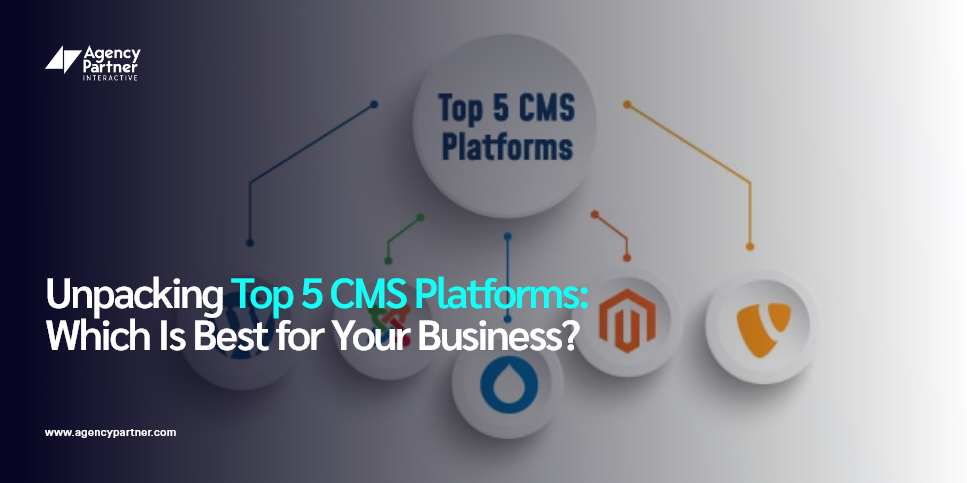
    Unpacking Top 5 CMS Platforms: Which Is Best for Your Business?

    In the digital era, choosing the right Content Management System (CMS) is crucial for any business aiming to thrive online. A CMS not only simplifies content creation but also enhances your online presence.   

    At Agency Partner Interactive, a leading digital marketing agency and web development agency, we understand the significance of selecting a CMS that aligns with your business needs. In this blog, we’ll explore the top 5 CMS platforms, equipped with the latest statistics, to help you make an informed decision.  

    What is a CMS?  

    A CMS, or Content Management System, is a software application that enables users to create, manage, and modify website content without specialized technical knowledge.   

    The ideal CMS for your business should offer ease of content creation, flexibility, and robust support. Regarding CMS platform selection, it’s essential to consider factors like scalability, user-friendliness, and customization options.  

    Top 5 CMS Platforms  

    Navigating the diverse landscape of CMS platforms for businesses can be challenging, but understanding the strengths and specialties of each can guide you to the perfect choice for your business.   

    Let’s delve into the top 5 CMS platforms in 2023, each with unique offerings tailored to different business needs, from user-friendly designs for beginners to advanced functionalities for large-scale operations. 

    1. Shopify 


    Shopify is best suited for businesses focused on e-commerce. Its user-friendly design and robust sales tools are perfect for entrepreneurs who want to set up an online store quickly without extensive technical expertise.   

    If your business revolves around online retail and you need a platform that easily handles everything from product listings to payments and shipping, Shopify is an excellent choice.  

    Shopify, a leader in e-commerce CMS, boasts over 1.75 million merchants and has a 32% market share in the U.S. e-commerce platform sector. Its user-friendly interface and comprehensive e-commerce tools make it ideal for businesses looking to establish or expand their online stores. Shopify is particularly beneficial for those requiring a reliable, scalable platform with strong online sales and marketing support.  

    2. WordPress 

    WordPress is incredibly versatile, making it ideal for a wide range of businesses, from small blogs to large corporate websites. Its strength lies in its extensive customization capabilities and vast plugins, which can cater to almost any business need. WordPress is a strong contender if you need a flexible platform that can grow and change with your business.  

    Powering 45.8% of all websites on the Internet as of 2023, WordPress’s open-source CMS nature offers versatility and a vast array of customization options through themes and plugins. It’s suitable for a wide range of businesses, from tiny blogs to large corporate websites, and is a popular choice for its extensive community support and SEO-friendly nature . 


    3. Magento 


    Magento is best for large-scale e-commerce businesses requiring high customization and scalability. Its advanced features are well-suited for enterprises with complex product inventories and those who need a robust platform to support rapid business growth.  
     

    Magento is likely the right choice if your business demands a powerful e-commerce solution with extensive customization capabilities.  

    Magento, the 8th most widely used e-commerce platform worldwide, powers 0.13% of all websites on the Internet. Ideal for large enterprises with complex online store requirements, Magento is known for its scalability and advanced features. Online stores built with Magento grow three times faster than those using other e-commerce technologies . 


    4. Wix 

    Wix is renowned for its simplicity and ease of use, making it an excellent choice for small businesses and individuals new to website creation. Its drag-and-drop interface and wide range of templates allow quick and easy website development without coding skills.   

    Wix is ideal for those who prioritize ease of use and quick setup in their content management system for businesses.  

    Wix, holding a 3.5% share of the CMS market as of 2023, is a testament to its popularity, especially among users who value simplicity and ease of design in a web design agency context.  


    5. OpenCart

    OpenCart is an open-source CMS tailored explicitly for e-commerce businesses. Known for its straightforward and user-friendly interface, OpenCart is ideal for small to medium-sized companies looking to establish an online store quickly.   

    It offers a range of features like multi-currency support, product reviews, and ratings, making it a comprehensive solution for online retailers.   

    While OpenCart is praised for its simplicity and range of features, it also provides flexibility for customization, which is highly beneficial for businesses with specific requirements. As a platform, it strikes a balance between user-friendliness and comprehensive e-commerce functionality.   

    As of 2023, OpenCart powers 237,812 live stores, showing its substantial presence in the e-commerce space. Notably, OpenCart stores experienced a remarkable 79% year-over-year growth in 2023 Q3 and a 14.3% increase quarter-over-quarter, highlighting its growing popularity and effectiveness as an e-commerce platform . 

    Choosing the Right CMS for Your Business 

    The best CMS for your business depends on your specific needs. Consider your business size, industry, technical expertise, and future growth plans. Whether you need a simple platform for content creation or a complex system for e-commerce, there’s a CMS out there that’s right for you.  

    Start by assessing the size of your company and industry, as these factors will heavily influence your CMS requirements. Additionally, consider the level of technical expertise available within your team, as some CMS platforms may require more technical skills than others.   

    Future growth plans are also critical; you need a CMS that can scale with your business, accommodating increasing traffic, content, and functionality needs. Whether you’re looking for a straightforward platform primarily for content creation or a more complex system capable of supporting a full-fledged e-commerce operation, a CMS fits the bill.   

    It’s about finding the best CMS platform where functionality, ease of use, and scalability intersect with your business goals and resources. 

    Choose Agency Partner Interactive for CMS Web Design Services 

    Selecting the right CMS is a crucial decision for your online presence. The top CMS platforms each offer unique features and benefits, and finding the one that perfectly aligns with your business goals and capabilities is critical to your success.  

    Deciding which Content Management System is the best fit for your brand is the first step. The next is to build your website tailored to your brand, ensuring responsiveness, optimizing for SEO, and more.  

    At Agency Partner Interactive, we offer web development services and comprehensive digital marketing services tailored to enhance and optimize your chosen CMS. Our team, equipped with over 100 years of collective experience and a track record of over 1800 successful website projects, excels in CMS web design and development.   

    Whether you need help deciding which CMS best suits your business needs, creating a site from scratch, updating it for the latest plugins and functionalities, or even maintaining your website, our web design and development agency can help. Our expertise and dedication to turning your vision to life have won us awards like Clutch Global 2023, Inc. Power Partner 2023, Top Web Development Agency by DesignRush, and more. 

    By partnering with us, you can access a team dedicated to maximizing your digital potential. Contact us for a free proposal and start transforming your digital strategy today! 

  • How to Choose the Right CMS Platform for Your Business

    How to Choose the Right CMS Platform for Your Business

    A content management system (CMS) is a software program that facilitates the creation, administration, and distribution of digital information across numerous platforms. It’s a must-have tool for organizations of all sizes since it simplifies content generation and administration, allowing you to present a consistent message to your audience.  

    According to a survey by WP Engine, 40% of consumers will leave a website if it takes more than three seconds to load. Choosing the right CMS can help improve website speed and prevent users from leaving your site. 

    Selecting the right CMS for your business is crucial because it can affect your website’s performance and your team’s workflow. This article provides a comprehensive guide to help you choose the best CMS for your business.  

    By the end of this article, you’ll have a better idea of selecting the best CMS for your company, whether a small start-up or a large corporation. 

    What is a CMS Platform? 

    A CMS or Content Management System platform is a software application that allows you to create, manage, and publish digital content. It provides a user-friendly interface and tools that allow users to create and edit web content without requiring technical knowledge or programming skills.  

    A CMS platform typically consists of two parts: a content management application that allows to create and manage content and a content delivery application that delivers the content to the website or other digital channels. CMS platforms manage many types of digital material, such as text, photos, videos, and audio files. 

    Factors to Consider When Choosing a CMS 

    Here’s what you should consider before selecting a platform that’s right for your business needs. 

    Ease of Use 

    The usability of a CMS is critical for content creators since it affects their ability to generate high-quality material effectively. A user-friendly interface and straightforward content management tools can let writers focus on the content rather than the CMS. 

    Customization Options 

    Customization options are essential because they allow businesses to tailor the CMS to their unique needs. With customization options, businesses can modify the CMS’s design, functionality, and user experience to match their brand and business goals. 

    Customization options are particularly crucial for businesses that require specific features or have unique design requirements that may not be available in a standard CMS. 

    Scalability 

    Scalability is crucial for businesses that plan to grow and expand over time. A scalable CMS can handle increasing traffic, larger volumes of content, and more complex functionality without sacrificing performance or stability. 

    Choosing a CMS that can scale with your business is essential to avoid the cost and disruption of migrating to a new CMS as your needs evolve. 

    What Are Popular CMS Platforms? 

    When choosing a CMS, there are several popular platforms to consider. This section will overview three popular CMS platforms: WordPress, Drupal, and Joomla. 

    WordPress 

    WordPress is one of the world’s most widely used CMSs, powering more than 40% of all websites on the internet. According to W3Techs, WordPress is used by 43.2% of all websites. Its user-friendly interface and an extensive library of plugins and themes, which make customization simple, are partly responsible for its popularity.  

    WordPress’s features 

    WordPress offers many features that make it an attractive option for businesses of all sizes. Some of its key features include: 

    • WordPress’s intuitive interface makes creating and managing content easy for all skill levels. 
    • With its hundreds of themes and plugins, WordPress can be customized to meet various corporate requirements. 
    • The design of WordPress is SEO-friendly, making it simple for businesses to optimize their website for search engines. 
    • WordPress offers several e-commerce plugins that allow businesses to sell products and services online. 

    Drupal 

    Drupal has over 1.5 million users and contributors in its community. Drupal is a highly customizable CMS used by many large organizations, including government agencies and universities. Its popularity is due in part to its scalability and security features. 

    Drupal’s features 

    Drupal offers many features that make it a powerful CMS option for businesses. Some of its key features include: 

    • Drupal offers extensive customization options through its robust API and theme system. 
    • Drupal’s caching and performance optimization features make it a fast and efficient CMS. 
    • Drupal has built-in security features and is known for its strong security track record. 
    • Drupal allows businesses to manage multiple websites from a single installation, making it an excellent option for businesses with a large online presence. 

    Joomla 

    Joomla has over 2 million active websites, and its community has over 800,000 registered users and contributors. Joomla is another popular CMS used by many businesses and organizations. Its popularity is partly due to its ease of use and strong community support. 

    Joomla’s features 

    Joomla offers many features that make it a powerful CMS option for businesses. Some of its key features include: 

    • Joomla’s intuitive interface makes creating and managing content easy for users. 
    • Joomla offers several themes and extensions that allow businesses to customize their website to match their brand. 
    • Joomla offers built-in support for multiple languages, making it an excellent option for businesses with a global presence. 
    • Joomla has a significant developer and user community that helps and contributes to its continuing development. 

    Comparison of the Three CMSs 

    When comparing WordPress, Drupal, and Joomla, it’s important to consider the specific needs of your business. While all three CMSs offer robust features and customization options, each has strengths and weaknesses. 

    WordPress is a wonderful option for businesses of all kinds, thanks to its extensive library of plugins and themes that allow it to be very configurable. Drupal is a good choice for companies with extensive customization and complicated requirements. At the same time, Joomla is a great choice for companies that need a user-friendly interface and multi-language support. 

    What Is Magento? WordPress vs. Squarespace 

    Magento is an open-source eCommerce platform that provides businesses with powerful features and customization options to create engaging and user-friendly online stores. Magento is designed for eCommerce, offering customizable templates and built-in features.  

    It also has advanced features for online sales, such as inventory management, payment processing, and customer management. Magento is a popular choice for businesses looking to build an online store with more advanced functionality than Squarespace provides for eCommerce. 

    When it comes to website building, choosing between Magento and Squarespace depends on your specific needs and goals. While Squarespace is a user-friendly platform for building a website with a modern design, Magento is a specialized platform for building an online store with advanced eCommerce features. Understanding the differences between these platforms can help you make an informed decision and choose the right platform for your business needs. 

    How to Choose the Right CMS for Your Business 

    To sum it up, a CMS is a software application for creating, managing, and publishing digital content. It provides a user-friendly interface and tools that allow users to create and edit web content without requiring technical knowledge or programming skills. Popular CMS platforms include WordPress, Drupal, and Joomla. 

    When choosing a CMS for your business, it’s important to consider your business goals, ease of use, customization options, and scalability. Businesses can also choose between custom and open source cms software applications whose source code is publicly available, allowing users to modify, customize, and distribute the software as they see fit., each with advantages and disadvantages. Ultimately, selecting the right CMS for your business is crucial for your online presence and overall success and requires careful consideration of your specific needs and resources. 

    Custom CMS Solutions for Your Unique Business Needs 

    We understand the crucial role CMS plays in the overall performance of your website. Our expertise ensures your website is optimized for a seamless user experience and maximum functionality.  

    At Agency Partner Interactive, we specialize in helping businesses select and implement the right CMS that aligns with their business goals and objectives. Whether you need SEO optimization, web development services, digital marketing services, or content creation, Agency Partner Interactive is the premier partner to help you achieve your goals. 

    We’ve enjoyed working with numerous clients across various industries, providing customized CMS solutions that significantly improve their website’s performance. For instance, after we helped one of our clients implement the right CMS, they saw an impressive 40% increase in website traffic and a 25% increase in conversion rates. 

    So, if you’re seeking a trustworthy web design agency to assist you in selecting and implementing the best CMS for your website, look no further than Agency Partner Interactive. Contact us today to learn how we can help you take your online presence to the next level! 

  • How to Use Influencer Marketing to Grow Your Business

    How to Use Influencer Marketing to Grow Your Business

    Influencer marketing has become crucial to many businesses marketing tips recently. It involves partnering with individuals with a significant social media following and influence in a particular niche to promote your brand, products, or services. According to Influencer Marketing Hub, influencer marketing has become a $13.8 billion industry, and it is projected to grow to $22.3 billion by 2024  

    If you want to leverage influencer marketing to grow your business, this blog post will provide a comprehensive guide on how to do so effectively. 

    Identify Your Goals and Target Audience 

    To effectively use influencer marketing to grow your business, it’s essential to start by defining your goals and identifying your target audience. 

    Define your marketing goals 

    Before searching for influencers, you must clearly understand your marketing goals and how they align with your overall business goals. Your marketing goals should be specific, measurable, achievable, relevant, and time-bound (SMART). 

    Identify your target audience and their interests 

    Once you clearly understand your marketing goals, the next step is to identify your audience, which involves defining the demographic characteristics of your ideal customer, such as age, gender, location, and interests. You can use market research, customer surveys, and social media analytics to help you understand your target audience’s needs, pain points, and interests. 

    Identify the Social Media Channels Where Your Target Audience Is Most Engaged 

    Not all social media platforms are created equal regarding influencer marketing. You should focus your efforts on the platforms where your target audience is most active.  

    For example, your target audience is primarily millennials and Gen Z, platforms like Instagram, TikTok, and Snapchat might be the most effective for you.According to Business Insider, Instagram is the most popular social media platform for influencer marketing, with 79% of brands choosing it as their primary platform for campaigns.  

    LinkedIn might be better if your audience is more professional and B2B focused. 

    By identifying your goals and target audience, you’ll be better equipped to find the right influencers and create compelling campaigns that resonate with your target audience. 

    Find the Right Influencers 

    Finding the right influencers is critical to the success of your influencer marketing campaign. Here are some steps that you can follow when looking for influencers to work with: 

    Types of influencers 

    Choosing an influencer that aligns with your budget and goals is essential. There are several types of influencers you can work with, including celebrity influencers, macro influencers, micro-influencers, and nano-influencers. Each class has a different number of followers, level of influence, and cost to work with. 

    How to identify influencers who align with your brand values 

    When looking for influencers, choosing those who align with your brand values and have an engaged following is essential. You can start by researching influencers in your industry or niche and looking at their social media profiles, website, and blog to get a sense of their content and style. Check their engagement rate, comments, and followers to determine whether they have an active and engaged audience. Look at their past collaborations to see if they have worked with similar brands. 

    Tools for finding and evaluating influencers 

    There are many tools available to help you find and evaluate influencers. Some popular ones include: 

    • Social media listening tools like Hootsuite Insights or Mention monitor conversations and discover potential influencers. 
    • Influencer marketing platforms such as AspireIQ, Upfluence, or Grin provide a database of influencers and tools for managing campaigns. 
    • Influencer discovery tools like Klear, Traackr, or BuzzSumo help you find influencers based on keywords, demographics, and social media activity. 

    Build Relationships with Influencers 

    Once you’ve identified the right influencers to work with, building strong relationships with them is essential. Here are some steps that follow when building relationships with influencers: 

    How to approach influencers 

    When reaching out to influencers, personalize your message and explain why you think they’d be a good fit for your brand. Be transparent about what you’re offering and what you hope to achieve. Avoid generic messages or spammy pitches, and instead, focus on building a genuine connection with the influencer. 

    What to offer influencers in exchange for their promotion 

    Influencers expect to be compensated for their time and effort. Compensation can include monetary payment, free products or services, exclusive discounts or early access, or experiences or trips. Be clear about your offering and negotiate terms that work for you and the influencer. 

    How to maintain good relationships with influencers 

    Building long-term relationships with influencers requires ongoing communication, transparency, and mutual respect. Be responsive, respectful, and timely in your communication. Be sure to thank them for their work and provide feedback to help them improve. Consider sending personalized gifts or notes to show your appreciation. 

    Collaborate with Influencers 

    Collaborating with influencers involves creating content that promotes your brand, product, or service. Here are some steps to follow when collaborating with influencers: 

    1. Influencer collaborations include sponsored content, product reviews, giveaways, takeovers, and events. Choose the type of collaboration that aligns with your goals and budget. 
    2. To create effective influencer campaigns, provide clear guidelines and expectations while giving influencers creative freedom. Provide high-quality products, services, or experiences that align with your brand values. Encourage the influencer to create content that resonates with their audience while promoting your brand. 
    3. Measuring the success of influencer campaigns involves tracking key performance indicators (KPIs) such as reach, engagement, website traffic, and sales. Use tracking tools such as Google Analytics or social media analytics to measure the impact of your campaign. Analyze the results and use them to inform future campaigns and collaborations. 

    The Bottom Line: How to Use Influencer Marketing to Grow Your Business  

    Influencer marketing is a great tool for businesses looking to boost their brand and reach new audiences. Companies can create impactful campaigns that drive results by identifying the right influencers, building solid relationships, and collaborating effectively.  

    Influencer marketing constantly evolves, so staying updated with industry trends and best practices is essential. Businesses should also be open to experimenting with different influencer collaborations and metrics to determine what works best for their brand. 

    Drive Business Growth with Agency Partner Interactive: Your Trusted Digital Marketing Partner 

    At Agency Partner Interactive, we aim to help businesses grow their online presence and drive results through digital marketing strategies. We work carefully with our clients to develop customized solutions for their unique needs and objectives. Our team of experts specializes in various Dallas digital marketing tactics, including search engine optimization, social media influencers, and influencer marketing. 

    We understand the power of influencer marketing in today’s digital landscape, so we recommend it as a critical marketing strategy for businesses looking to grow their online reach and engagement.  

    Through our influencer marketing services, we help companies to identify and partner with relevant influencers in their industry, create compelling content that resonates with their target audience, and track and measure the success of their influencer campaigns. By leveraging the trust and authority of influencers, our clients can build brand awareness, content creation, campaign tracking, drive traffic and conversions, and ultimately grow their businesses. 

    Get in touch with our digital marketing experts today and discover the benefits of influencer marketing for your business!