Category: Mobile

  • How To Choose Between Native and Cross-Platform App Development

    How To Choose Between Native and Cross-Platform App Development

    When businesses plan mobile apps development in 2025, one of the biggest decisions they face is whether to invest in native app development or cross-platform mobile development. With new technologies, evolving mobile application development platforms, and rising user expectations, the choice has a direct impact on performance, scalability, and long-term ROI.  

    At Agency Partner Interactive, we help brands navigate these decisions by aligning technology with business goals. In this blog, we’ll break down the advantages, trade-offs, and use cases for both native mobile app development and cross platform app development, while guiding you on how to choose the best mobile app development platform for your project. 

    Understanding Native App Development 

    So, what exactly is native app development? Native apps are built specifically for one operating system, such as iOS (Swift/Objective-C) or Android (Java/Kotlin). This means developers use tools and frameworks optimized for a particular OS. 

    Key Features of Native Mobile App Development: 

    • Best-in-class performance because the code is tailored for the device. 
    • Full access to hardware features like GPS, camera, and sensors. 
    • Seamless integration with platform-specific design and UX guidelines. 
    • Higher security compared to shared frameworks. 

    For companies that require speed, reliability, and deep integration with device features, native mobile app development often delivers unmatched results. 

    What Is Cross Platform App Development? 

    On the other side of the spectrum, we have cross-platform mobile development. This approach allows developers to write a single codebase and deploy it across multiple platforms, typically iOS and Android. Popular mobile application development platforms like React Native, Flutter, and Xamarin have made this approach highly efficient. 

    Key Features of Cross-Platform Mobile Development: 

    • Faster time to market with one shared codebase. 
    • Cost-effective compared to maintaining two separate native apps. 
    • Easier updates and feature rollouts across all devices. 
    • Expanding ecosystem of plugins and third-party integrations. 

    For businesses prioritizing reach, speed, and budget, cross platform app development is a strategic solution. 

    Native App Development vs. Cross Platform Mobile Development: The Key Differences 

    When comparing native mobile app development with cross platform app development, several dimensions stand out: 

    1. Performance: Native apps typically deliver smoother performance and faster load times. 
    2. Development Cost: Cross-platform apps are more affordable upfront, as a single team can build for multiple platforms. 
    3. User Experience: Native apps often have the edge in aligning with platform-specific guidelines. 
    4. Time to Market: Cross-platform projects tend to launch faster due to unified codebases. 
    5. Scalability: Both approaches can scale, but native apps may be easier to optimize for specific devices. 

    Choosing the Right Mobile App Development Platform 

    The choice of mobile app development platform depends heavily on your goals. Consider these factors: 

    • Audience: If most of your users are on one OS, native could be the better choice. 
    • Budget: Limited budgets usually lean toward cross platform app development. 
    • Complexity: Apps requiring advanced device integrations often benefit from native mobile app development. 
    • Scalability: Cross-platform apps are easier to roll out quickly, but may require optimizations later. 

    At Agency Partner Interactive, we evaluate your market, business model, and growth trajectory to determine the best mobile application development platforms for your app. 

    When Native App Development Makes Sense 

    You should opt for native mobile app development when: 

    • Performance and speed are critical (e.g., gaming, finance, AR apps). 
    • You want to leverage platform-specific design patterns. 
    • You need complete hardware and OS access. 
    • Long-term scalability and future-proofing are top priorities. 

    Native apps may cost more initially, but the long-term payoff in performance and user satisfaction can outweigh the investment. 

    When Cross Platform App Development Is the Better Choice 

    Cross-platform mobile development is ideal if: 

    • You want to launch quickly across iOS and Android. 
    • Budget efficiency is important. 
    • Your app does not rely heavily on complex hardware integrations. 
    • You’re testing an MVP before scaling further. 

    Startups and mid-sized companies often choose cross platform app development to validate their ideas and capture broad audiences efficiently. 

    The Role of Agency Partner Interactive in Mobile Apps Development 

    At Agency Partner Interactive, we specialize in both cross platform app development and native mobile app development. Our experts understand the strengths of leading mobile application development platforms and tailor solutions based on your unique business needs. 

    Whether you’re building a high-performance app or a cost-effective cross-platform solution, our team provides end-to-end mobile apps development that scales with your growth. 

    FAQs 

    1. What is native app development? 

    Native app development means building apps for a specific operating system using its preferred programming languages and tools. 

    2. What is cross platform app development? 

    Cross platform app development allows one codebase to run on multiple platforms, like iOS and Android. 

    3. Which is better: native or cross-platform mobile development? 

    It depends on your priorities. Native is better for performance and device integration, while cross-platform excels in cost efficiency and time to market. 

    4. What are mobile application development platforms? 

    These are frameworks and tools like Flutter, React Native, Xamarin, or Swift that developers use to create apps. 

    5. Is cross platform app development cheaper than native? 

    Generally, yes. A single codebase for multiple platforms saves time and reduces costs compared to building two separate apps. 

    6. Does Agency Partner Interactive offer both services? 

    Yes, we offer both native mobile app development and cross platform app development, tailoring solutions to your specific business needs. 

    7. Can I switch from cross-platform to native later? 

    Yes, but it may require re-coding parts of your app. Many businesses start with cross-platform for MVPs, then transition to native as they scale. 

    8. Which approach ensures better ROI? 

    For short-term ROI, cross-platform mobile development often wins. For long-term ROI, especially with complex apps, native app development may be better. 

    Final Thoughts: Making the Right Choice 

    The debate between native app development and cross platform app development is not about which is universally better; it’s about what aligns best with your goals. Startups and budget-conscious businesses may favor cross-platform mobile development, while enterprises and performance-driven companies may prefer native mobile app development. 

    At Agency Partner Interactive, we guide you through the complexities of mobile apps development and help you select the right mobile application development platforms for maximum impact. 

  • Top 5 Programming Languages for Android App Development: Choosing The Ideal One

    Top 5 Programming Languages for Android App Development: Choosing The Ideal One

    As mobile technology rapidly evolves, Android continues to dominate the global mobile OS market with over 70% share. Whether you’re launching your first app or upgrading an existing one, selecting the right Android programming language is a crucial decision that impacts performance, scalability, and long-term maintenance.  

    With a range of Android App Development services available today, understanding the strengths and limitations of each language can help you make informed choices. 

    In this guide, we’ll break down the top 5 programming languages for Android app development, explore their pros and cons, and help you determine the best language for app development based on your business goals. 

    What Makes a Great Android Programming Language? 

    Before diving into our list, it’s important to understand what makes a programming language ideal for Android app development: 

    • Performance Efficiency: How fast and resource-optimized is the code? 
    • Ease of Learning: Is the language beginner-friendly? 
    • Community Support: Are there enough resources and developers? 
    • Integration: How well does it integrate with Android SDKs? 
    • Scalability: Can it support large-scale applications? 

    Whether you’re working with an in-house team or outsourcing to a partner like Agency Partner Interactive, your language choice sets the tone for your entire development process. 

    1. Java 

    Java has been the official language for Android development since the platform’s inception. It’s still widely used and supported across almost all Android development tools. 

    Features: 

    • Robust object-oriented programming language 
    • Large developer community 
    • Platform-independent via JVM (Java Virtual Machine) 

    Pros: 

    • Massive library support 
    • Reliable for enterprise-level applications 
    • Long-term support and documentation 

    Cons: 

    • Verbose syntax 
    • Slower build times 

    Ideal for: Complex enterprise applications that need long-term support and extensive backend integration. 

    2. Kotlin 

    Kotlin is now the preferred language recommended by Google for Android App Development services. It’s fully interoperable with Java and addresses many of its shortcomings. 

    Features: 

    • Concise and readable syntax 
    • Null safety 
    • Coroutines for asynchronous programming 

    Pros: 

    • Reduced boilerplate code 
    • Higher productivity 
    • Seamless Java integration 

    Cons: 

    • Smaller developer community compared to Java 
    • Learning curve for beginners 

    Ideal for: Teams seeking modern features with backward compatibility with Java-based codebases. 

    3. Dart (Flutter) 

    While not a traditional Android programming language, Dart powers Google’s UI toolkit, Flutter, which allows for cross-platform development. 

    Features: 

    • Compiles to native code 
    • Hot reload for faster testing 
    • Strong widget support for custom UIs 

    Pros: 

    • Write once, deploy anywhere 
    • Visually appealing UIs 
    • Rapid development cycles 

    Cons: 

    • Larger app sizes 
    • Not native Android, so limited access to some platform APIs 

    Ideal for: Startups and businesses wanting to deploy on Android and iOS simultaneously with minimal effort. 

    4. Python 

    Though not native to Android, Python can be used with frameworks like Kivy or BeeWare for Android app development. 

    Features: 

    • Simple and readable syntax 
    • Massive library support 
    • Ideal for AI/ML integration 

    Pros: 

    • Quick prototyping 
    • Excellent for data-heavy applications 
    • Great for beginners 

    Cons: 

    • Slower performance 
    • Limited access to Android SDK 

    Ideal for: MVPs and apps requiring heavy data processing or machine learning integration. 

    5. C++ 

    Used via Android Native Development Kit (NDK), C++ offers low-level access and high performance, making it suitable for specific types of apps. 

    Features: 

    • Memory management capabilities 
    • Native code execution 
    • High-speed performance 

    Pros: 

    • Great for game development 
    • Efficient for performance-critical apps 
    • Reusable C++ libraries 

    Cons: 

    • Difficult to debug 
    • Requires deep technical knowledge 

    Ideal for: Game apps, performance-intensive tasks, or apps requiring direct hardware-level access. 

    Bonus: Emerging Languages to Watch 

    Languages like Rust, JavaScript (React Native), and Swift (for cross-platform) are gaining attention in Android app development circles. While they haven’t replaced the core players yet, keeping an eye on their development is worthwhile. 

    Frequently Asked Questions 

    1. What language is used for Android apps? 

    The primary Android programming languages are Java and Kotlin. Others like Dart, Python, and C++ are also used depending on project requirements. 

    2. Is Kotlin better than Java for Android app development? 

    Kotlin offers a more modern, concise syntax and improved safety features, making it a preferred choice in many cases. 

    3. What’s the best language for app development in 2025? 

    Kotlin remains the top choice for native apps, while Dart (via Flutter) is popular for cross-platform apps. 

    4. Can I use Python for Android app development? 

    Yes, but it’s less common. Python requires third-party frameworks and may lack full access to Android’s native capabilities. 

    5. How do Android App Development services choose a language? 

    They consider factors like performance needs, team expertise, scalability, and long-term support. 

    6. Why use C++ for Android development? 

    C++ is ideal when performance is critical, such as in gaming or graphics-intensive apps. 

    7. Does Agency Partner Interactive work with all languages? 

    Yes, Agency Partner Interactive offers full-stack Android App Development services, customizing language choices to your project’s goals. 

    8. What language is used for Android apps built with Flutter? 

    Flutter uses Dart, which allows building high-performance apps with a single codebase for both Android and iOS. 

    Final Thoughts: Choosing the Best Language for Android App Development 

    The ideal Android programming language depends on your app’s complexity, target audience, and long-term vision. Java and Kotlin dominate the native space, while Dart is redefining cross-platform development. If you’re unsure, consulting a proven digital partner like Agency Partner Interactive ensures you align language choice with strategic business outcomes. 

    With the right Android App Development services, your app can thrive in a competitive market. 

    Let’s build the future of your mobile presence together. 

  • Top 10 App Development Tools: Features, Pros, and Cons

    Top 10 App Development Tools: Features, Pros, and Cons

    The app development landscape is constantly evolving, and with new demands from users, businesses must stay ahead with the right tools whether you’re building a native mobile app, a cross-platform solution, or a web-based application. Choosing the right App Development Tools can significantly impact performance, scalability, and time-to-market. 

    In this blog, we explore the top 10 tools for app developers, breaking down their key features, pros, and cons. We’ll also answer common questions and help you decide the best tool to develop mobile apps that align with your goals. 

    1. Flutter 

    Type: Open-source UI toolkit 

    Best For: Cross-platform development 

    Features: 

    • Single codebase for Android and iOS 
    • Fast development with hot reload 
    • Rich UI components 

    Pros: 

    • Strong community support 
    • Beautiful and customizable UI 
    • Backed by Google 

    Cons: 

    • Larger app size 
    • Limited native APIs 

    Use case: Ideal for startups and agencies looking to build apps quickly across platforms. 

    2. React Native 

    Type: JavaScript framework 

    Best For: Cross-platform development 

    Features: 

    • Reusable components 
    • Access to native APIs 
    • Live reload 

    Pros: 

    • Strong community and ecosystem 
    • Faster development time 
    • Cost-effective 

    Cons: 

    • Performance lags in complex apps 
    • Native modules require expertise 

    Use case: Great for MVPs and medium-scale business apps. 

    3. Xamarin 

    Type: .NET-based framework 

    Best For: Enterprise apps 

    Features: 

    • C# shared codebase 
    • Native UI and performance 
    • Microsoft Azure integration 

    Pros: 

    • Seamless integration with Microsoft tools 
    • High performance 
    • Reliable debugging tools 

    Cons: 

    • Slower updates for new OS versions 
    • Larger app size 

    Use case: Ideal for businesses in the Microsoft ecosystem. 

    4. Android Studio 

    Type: Official IDE for Android 

    Best For: Native Android development 

    Features: 

    • Fast emulator 
    • Code editor with intelligent suggestions 
    • Performance profilers 

    Pros: 

    • Official support from Google 
    • Rich debugging tools 
    • Excellent documentation 

    Cons: 

    • Resource intensive 
    • Limited to Android only 

    Use case: Preferred by developers focused solely on Android apps. 

    5. Xcode 

    Type: Official IDE for iOS/macOS 

    Best For: Native iOS development 

    Features: 

    • Swift and Objective-C support 
    • Interface builder 
    • Testing and debugging tools 

    Pros: 

    • Direct integration with Apple SDKs 
    • Robust simulation environment 

    Cons: 

    • Only runs on macOS 
    • Steep learning curve for beginners 

    Use case: Best for developing polished iOS apps. 

    6. Apache Cordova 

    Type: Mobile app development framework 

    Best For: Hybrid apps 

    Features: 

    • Access native device APIs using JavaScript 
    • Wide plugin support 

    Pros: 

    • Quick prototyping 
    • Familiar tech stack (HTML, CSS, JS) 

    Cons: 

    • Performance issues 
    • Outdated plugin ecosystem 

    Use case: Suitable for simpler apps and quick prototypes. 

    7. Ionic 

    Type: Open-source SDK 

    Best For: Hybrid and PWA apps 

    Features: 

    • Based on Web Components 
    • Integrates with Angular, React, and Vue 
    • Extensive UI components 

    Pros: 

    • Fast development 
    • Rich UI library 
    • Cross-platform flexibility 

    Cons: 

    • Not ideal for high-performance apps 
    • Requires additional optimization 

    Use case: Perfect for agencies and startups creating MVPs and progressive web apps. 

    8. Unity 

    Type: Game and app development engine 

    Best For: Game development and AR/VR 

    Features: 

    • 2D/3D rendering 
    • Real-time simulation 
    • Asset Store access 

    Pros: 

    • Rich graphics capabilities 
    • Cross-platform compatibility 
    • Extensive community 

    Cons: 

    • Resource-heavy 
    • Steeper learning curve for non-game apps 

    Use case: Excellent for interactive and gaming applications. 

    9. Appgyver 

    Type: Low-code platform 

    Best For: Rapid app development 

    Features: 

    • Visual builder 
    • Integration with REST APIs 
    • Cross-platform deployment 

    Pros: 

    • Great for non-coders 
    • Easy prototyping 

    Cons: 

    • Custom logic can be limiting 
    • Fewer templates for complex UI 

    Use case: Great for quick demos, MVPs, and internal tools. 

    10. BuildFire 

    Type: Customizable app builder 

    Best For: Businesses and non-technical users 

    Features: 

    • Drag-and-drop builder 
    • Pre-built templates 
    • Plugin marketplace 

    Pros: 

    • Easy to use 
    • Fast deployment 
    • Strong support 

    Cons: 

    • Limited flexibility 
    • Subscription cost 

    Use case: Best for small businesses looking for fast, functional apps. 

    Why Agency Partner Interactive Recommends the Right App Development Software 

    At Agency Partner Interactive, we’ve helped hundreds of clients choose the best mobile app development tools for their business. Whether you need powerful application development tools for enterprise solutions or low-code tools for app developers, our team can help you streamline development, reduce time-to-market, and scale faster. 

    We evaluate each project based on industry, timeline, team skillset, and desired functionality to recommend the best tool to develop mobile apps that drive ROI. 

    FAQs About App Development Tools 

    1. What are the best mobile app development tools in 2025? 

    Flutter, React Native, Xamarin, and Ionic continue to lead due to their cross-platform capabilities and performance. 

    2. What is the best tool to develop mobile apps for beginners? 

    Appgyver and BuildFire are excellent for non-coders due to their intuitive, low-code environments. 

    3. What are application development tools used for? 

    These tools streamline coding, design, testing, and deployment of apps across platforms. 

    4. Are free app development software tools reliable? 

    Yes, many free tools like Flutter and Android Studio are open-source and widely used in the industry. 

    5. Which tools are ideal for cross-platform app development? 

    React Native, Flutter, and Xamarin offer strong cross-platform performance. 

    6. How do I choose the best mobile app development tools? 

    Consider your project’s complexity, budget, team expertise, and platform requirements. 

    7. Why should I work with Agency Partner Interactive for app development? 

    We match you with the right tools, manage the development process, and help launch faster with expert support. 

    8. Do all tools for app developers support both iOS and Android? 

    Not all. Native tools like Xcode (iOS) and Android Studio (Android) are platform-specific. 

    Need help choosing the best mobile app development tools? Connect with Agency Partner Interactive and let us simplify your path to a successful mobile app. 

  • iOS vs Android: Which Is Better for Mobile Game Development?

    iOS vs Android: Which Is Better for Mobile Game Development?

    The age-old rivalry. iOS vs Android, has taken many forms. But when it comes to mobile game application development, the stakes are higher. From user base and monetization to development complexity and performance, choosing between the two can make or break your game’s success. 

    If you’re stuck between Android mobile game development and building for Apple’s ecosystem, this blog is your cheat code to making the right move. So let’s level up your knowledge. 

    Why Your Platform Choice Matters in Game Development 

    The mobile gaming market is booming, expected to hit over $315 billion by 2027. But it’s also a market of two titans, Android vs iOS development. Each platform has its own rules, audience, tools, and limitations. 

    Your choice affects: 

    • Your target audience reach 
    • Your development cost and time 
    • Your monetization strategy 
    • Your game’s performance and scalability 

    Spoiler: There’s no one-size-fits-all answer. But there is a better platform depending on your goals. 

    Audience Reach: Who’s Playing What? 

    When it comes to sheer volume, Android dominates globally. It powers over 71% of all smartphones, making it the king of market share. 

    • Android mobile game development is ideal if you’re targeting users in Asia, South America, or Africa. 

    If your game needs massive distribution, Android’s your playground. But if you’re going after a premium, high-spending market, iOS may be the better bet. 

    Development Tools & Ecosystem 

    Let’s talk code. Choosing between iOS and Android application development means working with different tech stacks. 

    Android App Game Development 

    • Language: Java/Kotlin 
    • IDE: Android Studio 
    • Open-source and customizable 
    • Fragmentation can be a pain (more on that later) 

    iOS Game Development 

    • Language: Swift/Objective-C 
    • IDE: Xcode 
    • Closed ecosystem = more control over devices 
    • Smoother development lifecycle due to limited device types 

    So when comparing iOS developer vs Android developer experiences, Apple’s ecosystem is often easier to manage, while Android gives more flexibility and freedom. 

    Cost of Development: Budget Considerations 

    Here’s a fact: Developing for Android is usually more expensive. Why? 

    • Android has a wider range of devices, screen sizes, and OS versions to support. 
    • Testing and debugging takes more time = higher dev hours. 
    • Game optimization is harder across dozens of devices. 

    On the flip side, iOS game developers build for fewer devices with consistent performance. That can lead to faster time to market and a tighter dev cycle. 

    If you’re working with a lean budget or tight timeline, iOS might save you some serious stress. 

    Monetization & Revenue Potential 

    Now, let’s talk about the $$$. 

    iOS: 

    • iPhone users are 40% more likely to make in-app purchases. 
    • Higher average revenue per user (ARPU). 
    • Dominates in premium game revenue. 

    Android: 

    • Higher total user base = more ad revenue potential. 
    • Easier to launch freemium or ad-supported models. 
    • Lower ARPU but greater reach. 

    So, if you’re planning a paid game or in-app purchases, iOS takes the win. But if your game relies on volume-based ad revenue, Android app game development might bring better returns. 

    Game Performance & User Experience 

    Apple’s closed ecosystem gives iOS developers a leg up in optimizing graphics, gameplay, and battery usage. Your game will likely run smoother across all Apple devices compared to Android’s fragmented device landscape. 

    That said, Android mobile game development has come a long way, with Google tightening hardware specs and improving performance tools. 

    User Retention & Engagement: Who Stays Longer? 

    Retention is where things get interesting. Studies show: 

    • iOS users have 20–30% better retention in mobile games. 
    • Android users are more likely to churn after the first install, especially in freemium games. 

    That means iOS and Android application development must account for different user behaviors. Apple’s users stick longer and spend more, while Android’s broad reach is better for awareness and top-of-funnel growth. 

    Publishing & App Store Guidelines 

    Apple’s App Store is famously strict. Game developers face longer review times and more rejections due to tight content and compliance guidelines. 

    Meanwhile, Google Play is more flexible and developer-friendly, making it easier to push quick updates or launch MVPs. 

    So, if you want more control and faster iterations, Android app game development might feel less like walking a legal tightrope. 

    What About Cross-Platform? Why Not Both? 

    Don’t want to pick sides? You don’t have to. 

    Using tools like Unity, Flutter, or React Native, you can build for both Android and iOS with a single codebase. While this won’t give you the same level of optimization as native development, it’s cost-effective and scales fast. 

    At Agency Partner Interactive, our mobile game development team helps brands choose the right framework, whether you’re going native or cross-platform. 

    How iOS and Android Handle Game Updates and Maintenance 

    Maintaining your game post-launch is critical for user retention. iOS has a more controlled update process, requiring Apple review, while Android allows faster rollouts. This can impact how quickly you fix bugs or push new content, especially during high-traffic events or promotions. 

    Partner With Experts in Android and iOS Game Development 

    Whether you’re building your first game or scaling an existing one, working with the right dev team is everything. At Agency Partner Interactive, we’ve helped startups, studios, and global brands create high-performing games on both iOS and Android. 

    From strategy and UX to launch and post-release support, our mobile game application development team delivers games that win players and revenue. 

    Ready to start your game dev journey? 

    Let’s talk. Whether it’s Android app game development, iOS game developers, or cross-platform strategies, Agency Partner Interactive is your creative, technical, and strategic partner. 

  • Houston’s Healthcare Tech Hub: Web Development Solutions for Medical Institutions

    Houston’s Healthcare Tech Hub: Web Development Solutions for Medical Institutions

    In the heart of Houston, a city known for its innovative spirit and top-tier medical facilities, healthcare institutions are integrating advanced web development solutions to transform patient care. The blend of cutting-edge technology and world-class healthcare is creating a dynamic environment where digital advancements are uplifting services and streamlining operations. 

    What makes this possible are web development solution providers like Agency Partner Interactive. With a deep understanding of healthcare technology trends, internet marketing, and comprehensive 360 solutions, Agency Partner Interactive delivers everything healthcare institutions need to thrive in the digital age. 

    Here’s a closer look at how Houston’s healthcare providers are taking advantage of web development to stay at the forefront of the digital age. 

    Why Houston’s Healthcare Web Development Services Matter 

    Houston is not just famous for its top-notch medical facilities. It’s also becoming a hotspot for healthcare tech hub for the people. A number of medical institutions are under the influence of the digital revolution which also includes web development services primarily to improve patient experiences and make their operations more efficient. 

    • Enhanced Patient Engagement: Custom websites and patient portals make it easier for patients to interact with healthcare providers, leading to higher satisfaction and better outcomes.
       
    • Streamlined Operations: Digital tools help automate administrative tasks, reducing the workload on staff and allowing them to focus more on patient care.
       
    • Increased Accessibility: Responsive web design ensures that patients can access healthcare services from any device, anywhere, making healthcare more accessible.
       
    • Improved Data Security: Secure web development practices protect sensitive patient information, ensuring compliance with HIPAA regulations and building patient trust.
       
    • Competitive Advantage: In a city as competitive as Houston, having a robust online presence helps medical institutions stand out and attract more patients. 

    The Rise of Healthcare Technology Trends Technology in healthcare is more than a fad—it’s essential. With the rise of telemedicine, electronic health records (EHR), and patient portals, having a strong online presence is important. As per the recent stats, more than 76% of the hospitals use telehealth services in order to make access to healthcare more feasible.  

    Why Healthcare Needs Web Development Solutions 

    As the healthcare industry evolves, the need for going digital is important. Whether it’s about enhancing patient care, streamlining operations, or simply spreading awareness through content marketing. Custom websites and patient portals allow patients to easily access information, schedule appointments, and communicate with healthcare providers, leading to improved patient satisfaction and better health outcomes.  

    Digital tools help automate administrative tasks, such as appointment scheduling and record-keeping, reducing the workload on staff and allowing them to focus more on patient care. With responsive web design, patients can access healthcare services from any device, anywhere, making it more convenient for them to seek care and stay informed. 

    Secure web development practices ensure that sensitive patient information is protected, helping healthcare institutions comply with HIPAA regulations and build trust with their patients. In a competitive market like healthcare, having a strong online presence helps institutions stand out and attract more patients, ensuring long-term success. 

    Tailored Web Development Solutions for Medical Institutions 

    Custom Websites for Better Patient Engagement

    User-friendly websites are key to effective patient communication. Agencies like Agency Partner Interactive create custom websites specifically designed for medical institutions. These sites are easy to navigate, ensuring patients can quickly find the information they need. 

    Secure Patient Portals

    Security is critical in healthcare. Houston’s web development experts focus on creating secure patient portals that comply with HIPAA regulations. These portals let patients access their medical records, schedule appointments, and communicate with healthcare providers—all while keeping their data safe. 

    Enhancing Online Presence with Houston Web Design Services 

    In a competitive city like Houston, standing out online and having a strong identity in the saturated world is healthcare is essential. Web design services play a significant role by focusing on responsive design, accessibility, and SEO. This ensures that medical institutions can effectively reach their target audience. 

    The Role of Content Marketing in Healthcare 

    Content marketing is a powerful tool for medical institutions. By providing valuable, informative content in the form of educational blogs, & newsletters, healthcare providers can establish themselves as leaders in the industry. Our content marketing services help create and distribute content that educates patients, builds trust, and enhances the overall patient experience. 

    Partnering with a Dallas Web Design Agency 

    Many Houston-based healthcare institutions partner with agencies from nearby cities like Dallas for comprehensive web development and digital marketing solutions. Depending upon the requirement and business goal, opting for a web development service provider who brings experience, and fresh perspectives is all that matters.  

    Internet Marketing for Medical Institutions 

    An effective online presence goes beyond web design. Internet marketing, including SEO, PPC, and social media marketing, is essential for driving traffic to your website. By leveraging the expertise of an internet marketing agency, healthcare institutions can attract more patients and build a stronger online presence. 

    Real-World Impact: Statistics and Facts 

    Improved Patient Satisfaction

    A study by the Journal of Medical Internet Research found that 80% of patients prefer healthcare providers who offer online scheduling and access to medical records. This shows the importance of investing in web development solutions that enhance patient convenience. 

    Increased Operational Efficiency

    According to Deloitte, healthcare providers using integrated web solutions saw a 30% increase in operational efficiency. This efficiency translates to better patient care and streamlines administrative processes. 

    Conclusion 

    Houston’s healthcare tech hub is thriving thanks to innovative web development solutions. By partnering with experts in web development, web design, content marketing, and internet marketing, medical institutions can enhance patient engagement, improve operational efficiency, and stay ahead of healthcare technology trends. 

    Ready to transform your healthcare institution’s online presence? Contact Agency Partner Interactive today. Let’s build the future of healthcare together. 

  • SEO for Houston eCommerce: How Web Design Plays a Crucial Role 

    SEO for Houston eCommerce: How Web Design Plays a Crucial Role 

    Search Engine Optimization (SEO) is a strategy businesses can’t afford to ignore. This is particularly true for Houston eCommerce businesses interested in using SEO in their marketing strategy. Visibility is everything online, and SEO puts you right where you need to be – in the spotlight. This blog uniquely examines the relationship between eCommerce web design optimization and SEO, tailored for businesses targeting or operating in Houston.   

    Houston eCommerce SEO Market: Trends & Statistics   

    According to the U.S. Census, Houston ranks as the 2nd fastest growing metro area in America and the 4th most populous city in the country. With the U.S. eCommerce sales rising to over a trillion dollars, marking a 7.7% YoY growth in 2022, Houston’s increasing population makes it an eCommerce focal point. While this booming industry is ripe for opportunity, standing out amongst the competition can be a challenge. That’s where eCommerce SEO services become a vital part of being seen and succeeding online.   

    The Intersection of SEO and Houston Web Design Services 

    Often overlooked, the relationship between eCommerce web design optimization and local Houston SEO plays a pivotal role in shaping online success. A poorly designed website can drastically affect your SEO rankings, no matter how good your products are.  

    Likewise, a stunning design won’t do you any favors if search engines can’t find your site. Simply put, eCommerce businesses require eCommerce web design services and SEO strategies to excel and stand out in the competitive online landscape.  

    4 Web Design Elements That Impact eCommerce SEO Houston 

    1 Page Load Speed  

    Page load speed is critical, not just for your users but also for SEO. A slow website will lose customer interest and be penalized by search engines like Google. Consider compressing images, limiting large media files, and leveraging browser caching to speed things up.  

    2 Mobile Responsiveness  

    During the first three months of 2021, more than half of the global web traffic came from mobile devices, accounting for approximately 54.8%. Google prioritizes mobile-friendly websites when ranking, and a responsive design ensures a smooth user experience, contributing to lower bounce rates and better SEO rankings.  

    3 User Experience and Navigation  

    A site must be easy to navigate. If users can’t find what they’re looking for, they’ll leave, and your bounce rate will increase, affecting your SEO rankings negatively. Top web design services help create an intuitive, easy-to-navigate website, which keeps users engaged and search engines happy.  

    4 On-Page SEO for eCommerce   

    On-page SEO elements like headers, meta descriptions, and alt text are vital, particularly for Houston eCommerce brands. Good web design integrates these elements seamlessly, making them easily editable and strategically placed to be user-friendly and search engine friendly.  

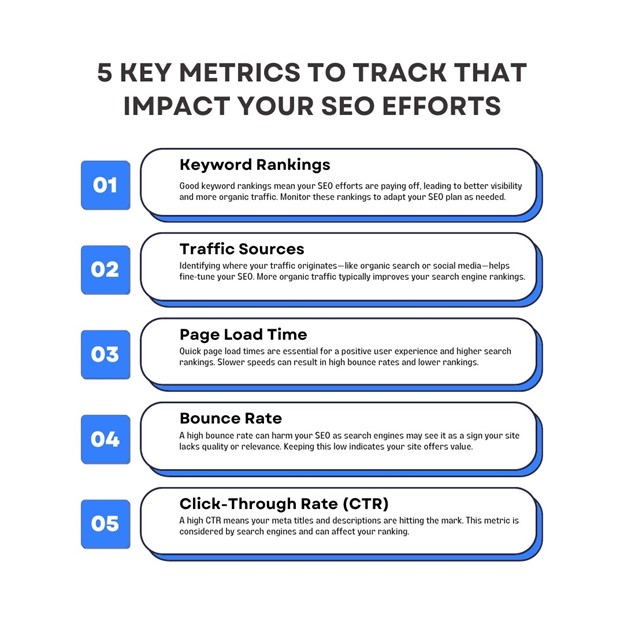
    eCommerce SEO Tips: 5 Key Metrics to Track  

    Knowing which numbers to watch can significantly impact your SEO efforts. Here are some key metrics to monitor to make sure you are on the right track: 

    houston-seo 

    Monitoring these metrics are valuable eCommerce SEO tips that can provide vital insights and help fine-tune your SEO strategy to rank higher on SERPs.   

    Features in Web Design Services to Improve eCommerce SEO  

    Your website’s design is a foundational aspect that can significantly influence your SEO efforts. Here’s how:  

    Structured Data Markup  

    Using this allows search engines to understand the content on your page better, making your website eligible for rich snippets in search results. This can increase your click-through rates and improve your ranking in the SERPs.   

    Optimized Images  

    Compressing images and using the correct file types reduces page load time. Search engines consider page speed when ranking sites because faster pages provide a better user experience.   

    Proper CSS/JavaScript Handling  

    Well-structured and minimized CSS and JavaScript files can also increase page load times. Google and other search engines reward faster-loading pages with higher rankings as they offer superior user experience.  

    Mobile-Responsive Design  

    Search engines prioritize mobile-friendly websites for their SERPs, especially after Google’s mobile-first indexing rollout. Therefore, a mobile-responsive design is essential for better rankings in a world where mobile usage is continuously growing.   

    Internal Linking Strategy  

    Effective internal linking helps users navigate your website more efficiently and allows search engines to find and index all your website pages more efficiently. Google’s algorithm views well-linked content as more valuable, leading to better rankings.    

    Now that we’ve outlined general web design tips for Houston eCommerce brands, let’s zero in on strategies uniquely tailored for businesses operating in Houston.  

    Web Design Tips: Local SEO Strategies for Houston Businesses 

    Local SEO for Houston businesses and eCommerce web design optimization strategies are essential for success. For instance, mentioning local landmarks in your web content can significantly bolster your local SEO efforts. 

    Incorporating elements of local culture into your website’s design can resonate more deeply with Houston consumers, improving user experience and potentially driving more local traffic to your site. Additionally, participating in or discussing local events on your platform can serve as another avenue to increase your visibility in local search results.  

    Choosing the Right Houston SEO Company and Web Design Agency  

    Choosing the right partner for your Houston web design services and SEO company is more than a decision; it’s an investment in your business’s future. That’s why at Agency Partner Interactive, we specialize in understanding the unique challenges and opportunities, especially in the Houston eCommerce SEO sector. 

    Our 2022 case study highlights our effectiveness, as we doubled a client’s keyword rankings and boosted their user traffic by 158%. Apart from being a top Houston web design agency, we offer custom digital marketing services, like local SEO services, content marketing, on-page product optimization, and more, always staying current with the latest trends to ensure you’re ahead of the curve. If you’re targeting the Houston eCommerce market, our local expertise becomes your asset for specialized Houston SEO and web design strategies.   

    Ready to maximize visibility and drive consistent sales?    

    Schedule a FREE consultation to discuss your business needs and build a tailored SEO and web design strategy that can give your eCommerce brand the boost it needs to stay ahead! 

  • Mobile App Development Austin: Harnessing Geolocation for Tailored Retail Offers

    Mobile App Development Austin: Harnessing Geolocation for Tailored Retail Offers

    Geolocation technologies in Austin allow local retail businesses to send tailored, real-time offers that can heighten customer engagement and boost sales. In this blog, we’ll review geolocation’s critical aspects, look at its multiple applications in the Austin retail sector, and give actionable tips for businesses eager to make the most of this technology. If you’re looking for an effective, scalable way to stay ahead in Austin’s rapidly growing market, read on! 

    What Is Geolocation & Why Is it Important for Austin Retail? 

    Geolocation, often called location-based redirection, is a core feature that mobile app development Austin firms, like Agency Partner Interactive, employ to offer a superior user experience. This technology enables retail brands to connect more authentically with their users, particularly in Austin. While geolocation works on a global scale, its real strength lies in its ability to provide localized content, which mobile app services in Austin seamlessly integrate.  

    This facet of app development, sometimes called localized SEO, offers a heightened level of customization compared to traditional broad-match SEO strategies. By leveraging the capabilities of mobile app developers in Austin, TX, your business can target users based on their precise location, presenting them with the most relevant content. This enhances the user journey and ensures that companies can effectively reach audiences, whether dispersed across continents or within a few city blocks. By partnering with the expertise of a local SEO and custom app development company in Austin, you can ensure that your geotargeting strategies are powerful and precise. 

    Austin: A Hub for Mobile App Development 

    Austin has consistently been a hotspot for innovation and technological development. As a result, it’s home to the best mobile app developers in Austin. With a promising future marked by a projected 15% growth rate in tech employment over the next five years, it’s no surprise that the city has earned the top spot on CompTIA’s Tech Town Index for three years running.  

    This combination of a vibrant tech community and a strong job market highlights Austin’s enduring commitment to technological innovation. From startups to big-name tech giants, Austin has them all. It’s a city that embraces growth, making it the perfect ground for Austin custom app development services.  

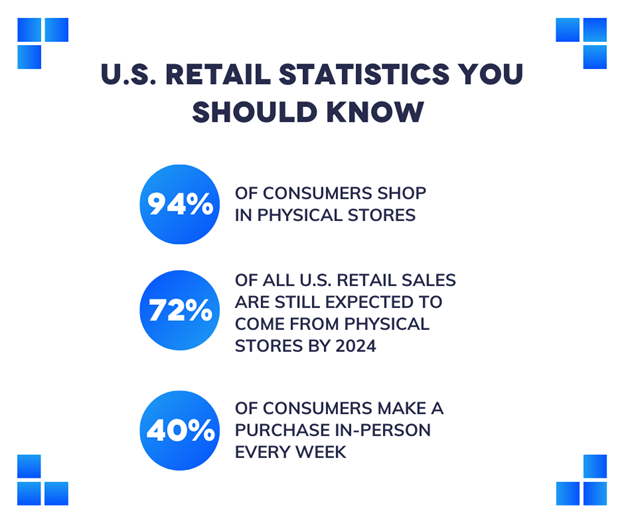
    Important Retail Statistics for Mobile App Developers Austin, TX 

    Now that we’ve highlighted the rise of app development services in Austin let’s take a quick look at some compelling statistics related to retail stores in the United States.

    logo-service

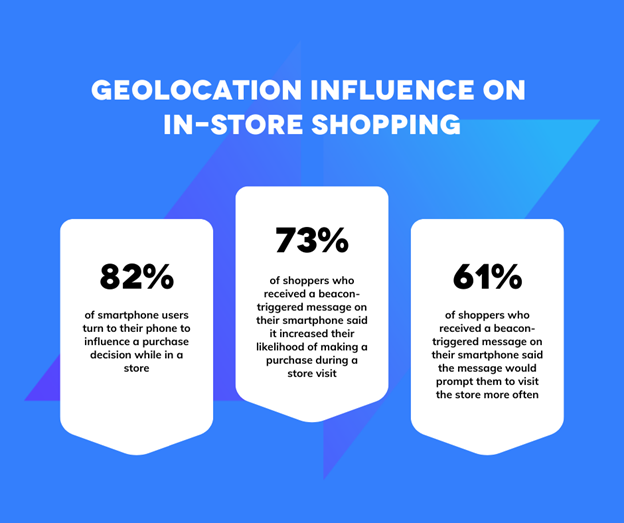
    Intersection Between Austin Local SEO and Mobile App Development

    Now, let’s shift our focus to the role location plays in shopping decisions. You may be surprised by how significantly geolocation data can affect customer behavior. A custom mobile app development company in Austin, like Agency Partner Interactive, can make the most of this geolocation data through local SEO services and award-winning mobile application development to improve customer engagement in a variety of retail applications.

    logo-services

    How Austin Mobile App Services and Geolocation Merge 

    When interacting with an app or online service, geolocation acts as your digital address. It identifies your location by communicating with GPS satellites, Wi-Fi access points, or cell towers. This technology is a powerful tool for businesses, especially in Austin’s retail market. 

    Retailers can better understand their customers’ behaviors and preferences based on location. For example, if you own a clothing store, geolocation can inform you about the highest traffic areas around your store, allowing you to strategically place advertisements or special promotions. 

    Moreover, geolocation through a mobile app development company in Austin can also give you insights into your target audience. Are most of your customers local, or do they usually come from other areas? By understanding where your customers are coming from, you can better tailor your marketing efforts, whether sending out location-specific offers or planning your following store location. 

    Overall, geolocation opens up an array of opportunities for retail businesses to better understand their audience, boost customer engagement, and even optimize store operations, making it an indispensable asset in today’s digital age. 

    Geolocation, Custom App Development, and Local SEO: Real World Applications 

    After understanding the basics of geolocation in mobile app development technology, let’s explore the diverse ways it can specifically benefit your Austin retail business. 

    Nearby store alerts entice local shoppers 

    Imagine you’re out for a coffee, and your phone buzzes with a notification. It’s an alert that your favorite retail store, which is just two blocks away, offers a 20% discount on all items for the next two hours. With a combination of local SEO services and Austin mobile app development, nearby store alerts give you the power to capture customers already near your store. 

    Personalized coupons can redirect foot traffic 

    Everyone enjoys a bargain, especially when it’s delivered to your smartphone while you’re already shopping. Leveraging a local SEO company in Austin, like Agency Partner Interactive, allows you to send coupons or promotional codes to customers near other stores, enticing them to visit yours instead. 

    Weather-based offers can be your retail advantage 

    The unpredictable Austin weather offers a unique opportunity for quick and relevant retail promotions. On scorching hot days, offer discounts on cold beverages or sunblock. You can provide a special price for raincoats or umbrellas when it rains. Tailoring your offers based on weather conditions adds a personalized touch to your retail strategy. 

    Time-sensitive promotions create a sense of urgency 

    Here’s another way to reel in customers. Let’s say someone is half a mile from your store. You can send them a special offer that lasts only for the next 30 minutes. This entices them with a good deal and adds a sense of urgency, making them more likely to head your way. 

    Local events in Austin are opportunities for special promotions 

    Austin is famous for its local events like SXSW or ACL Fest. You can leverage these local happenings to offer special promotions. For example, offer discounts on music merchandise or even parking if there’s a big concert in town. 

    Shopping history location matching improves targeted offers 

    By analyzing a user’s shopping history and locations, you can send highly targeted offers when they are near those stores again. 

    Legal and Ethical Considerations as an App Developer in Austin 

    Navigating the mobile app landscape in Austin requires not just technical prowess but also an acute understanding of the legal and ethical dimensions. Here’s a quick overview of the fundamental principles every app developer in Austin should adhere to: 

    • User Consent: The first rule of using geolocation is to get explicit consent from the user. Always be transparent about how and why you are using their location data. 
    • Data Privacy: Confidentiality is crucial. Follow data protection laws and guidelines to keep your customers’ information safe. 

    Austin, Texas SEO Company Tips: Implementing Geolocation in Retail Apps 

    The steps can be intricate, from selecting a geolocation API to integrating it into your mobile app. To help decode this process, we’ve broken down how Austin SEO companies implement geolocation for retail applications:  

    1. Start by researching and choosing a geolocation API that fits your needs 

    Numerous options are available, but the most popular are Google’s Location APIs or Apple’s Core Location. 

    2. Meet with your mobile app development agency to discuss integration 

    Before any coding begins, it’s essential to map out how the geolocation features will be integrated into your existing app architecture. If you’re ready to take this step, schedule your free consultation with our Austin custom mobile app development company today! 

    3. Design your app’s user interface for geolocation features 

    Determine how these new features will appear in your custom app, whether as notifications, map points, or other visual elements. 

    4. Proceed with the coding and integration process 

    Your Austin mobile app development firm will write code for the front-end and back-end systems to implement the geolocation features. 

    5. Conduct rigorous testing  

    QA is a critical aspect of any design and development project. Your mobile app developer will simulate hundreds of scenarios to check if the geolocation works as expected. Remember also to conduct real-world testing for accuracy. 

    6. Implement a user consent feature 

    Again, consumer privacy data laws are real. It’s vital to request user consent to access their location data when the app is launched. 

    7. Deploy your mobile app equipped with the latest geolocation features 

    After thorough testing, update your app in the respective app stores or prepare for the big launch of your new custom mobile app optimized for geolocation! 

    8. Monitor performance and update as necessary 

    After the launch, collect user feedback and monitor the geolocation features’ performance for future refinements. Your Austin mobile app developers should offer constant support and monitoring to ensure your application stays bug-free and running at peak performance. 

    By following these eight steps, you’ll be well on your way to successfully implementing geolocation features in your retail mobile app, enriching your customers’ experience, and creating exponential opportunities for engagement and sales. 

    Challenges & Solutions: An Austin App Developer’s Perspective 

    After tackling the essential steps for implementing geolocation, it’s crucial to anticipate and prepare for possible challenges. Let’s dive into some common issues and their solutions. 

    • Dealing with Inaccurate Location Data: Combining GPS, Wi-Fi, and cell tower triangulation can significantly improve the accuracy of location data. 
    • Addressing Privacy Concerns: Being transparent and communicating clearly about using user data can alleviate privacy concerns. 
    • Optimizing Battery Usage: Geolocation can be a battery drainer, so optimize the app to use this feature only when necessary. 
    • Navigating Legal Regulations: In Austin, you must be aware of the Texas Privacy Protection Act, which limits how personal data, including geolocation data, can be collected and used. Ensure you’re compliant with these regulations and any federal laws. 
    • Managing Costs: The use of third-party geolocation services can get expensive. Budget accordingly and explore package deals or volume discounts if available.
    • Lack of a Mobile App: If your business still doesn’t have a mobile app, consider hiring a mobile web developer or an application development company, like Agency Partner Interactive, to build a flawless one tailored to your business goals. 
    • Technical Expertise Gap: If you need help implementing geolocation features in your app, it would be worth investing in one of the best mobile app developers in the Austin area – Agency Partner Interactive – to ensure the best implementation. 

    Partnering With Agency Partner Interactive for Your Geolocation Needs 

    In the tech-savvy city of Austin, mobile app development with geolocation features offers an exciting pathway to enhance retail experiences. If you are considering implementing geolocation, collaborate with a mobile app developer company in Austin, TX, with years of retail app development experience and a portfolio of successful custom web design and mobile app development projects completed.  

    Listed as one of the best mobile app development companies by TopDevelopers.com, we at Agency Partner Interactive have a proven track record of delivering bespoke, cutting-edge solutions tailored to your retail business’s needs. 

    Schedule a FREE consultation to learn about our mobile app services in Austin. Let’s work together to transform geolocation into actionable strategies that drive your business success! 


  • Your Ultimate Guide to Mobile App Development in 2022

    Your Ultimate Guide to Mobile App Development in 2022

    Expert Tips For Your Ultimate Guide to Mobile App Development in 2022

    Mobile app development is no longer just for the big players. It’s time to stop thinking of mobile apps as a luxury and start thinking of them as integral to your business strategy. If you’re reading this blog post, it means that you are probably starting to think about mobile app development. 

    You should be!

    This article will provide you with some insights on what trends we see coming in 2022, so you can plan accordingly.

    What is Mobile App Development

    Mobile app development is developing mobile applications for smart devices, such as smartphones and tablets. Mobile apps are designed to run on your smartphone or tablet device. They are usually developed with a specific end-user in mind, focusing on what makes them unique compared to other platforms.

    The most common mobile app stores are the Apple App Store and the Google Play store. Apps are built using different programming languages, including Java, Swift, Dart, C#, and HTML 5.

    Why is Mobile App Development Important?

    Mobile app development is important because it allows businesses to create custom mobile applications to help them achieve their specific goals. For example, a business might want to develop a mobile app that helps customers make purchases or access information about their accounts.

    Mobile apps can also be used to collect customer data, which can improve marketing efforts and create a more personalized experience for customers. Mobile apps are projected to generate $693 billion in revenue for 2021 from app stores, in-app purchases, and in-app advertising.

    What is a Mobile App?

    A mobile app is a software application that runs on your smartphone or tablet device, allowing you to easily access information from various services right in front of you, no matter where you are. This means that it can be used for business and personal use case scenarios. An average smartphone user spends 35 hours per month using mobile apps. Apps like TikTok are set to have a revenue of over $2.3 billion dollars in 2021.

    What’s New?

    This article looks at the latest mobile app development trends in 2022. Here are some of the things you can expect for your business to have an advantage over others:

    Blockchain Technology

    While blockchain used to be synonymous with cryptocurrency and anonymous transactions, it can be used for decentralized data storage. Each record has a timestamp and unique hash value that cannot be altered without changing all subsequent blocks.

    This can be helpful when protecting user data and preventing data breaches. Apps backed by blockchain technology are end-to-end encrypted, meaning no one can access them without having specific encryption keys. With the rise of NFTs (non-fungible tokens), we expect blockchain to be a big player in 2022.

    Touchless UI

    Apps that utilize other input methods, such as voice and gesture control, are becoming more popular. We predict that there will be a surge in the use of touchless user interfaces (UI), which allow users to interact with apps using natural gestures and speech.

    There is a strong use case for voice applications, especially with Google Assistant and Amazon Alexa becoming more popular than ever before. This is great news if you own an Alexa or Google Home.

    Augmented Reality

    While augmented reality, AR, has been around for some time, it is now being used in apps at an increased rate. This trend will continue to increase over the next few years as AR becomes more mainstream and better integrated into mobile devices. Sellers, for example, can utilize AR to show how their products will look on a customer or in a customer’s home. We expect AR to become more popular in 2022, offering users a more personalized experience.

    Machine Learning / AI

    As AI technology continues to improve, machine learning will become a more significant part of daily life for many people worldwide. Machine learning helps computers learn and adapt to new information, while AI can complete tasks without requiring any instructions. Both machine learning and AI can be used in mobile apps for a variety of use cases such as:

    • recommending content based on your interests, likes, and dislikes
    • understanding user behavior better than ever before so brands can offer them more personalized experiences
    • facial recognition for added protection in mobile apps

    5G

    We expect the rollout of fifth-generation, or “5G,” wireless technology, also known as “the internet of things,” to impact mobile app development in 2022 significantly. This is because it will allow for faster download and upload speeds, which means that more data can be processed quickly without any lag time.

    Wearables

    Wearables, such as the Apple Watch and Fitbit, are becoming more popular each year. This presents a unique opportunity for mobile app developers to create apps that can be used on these devices. In 2022, we predict that even more wearable devices will be released on the market, so it’s essential to think about how your app will integrate and work with this kind of tech.

    VR

    With Facebook’s announcement of the Metaverse, we expect VR or virtual reality to play a significant role in 2022. VR allows users to experience digital environments and interact with them as if they were there. This can be used for a variety of purposes, such as:

    • education: giving students the ability to explore different parts of the world without leaving their classroom 
    • entertainment: immersing users in new and exciting worlds
    • business: training employees in new scenarios
    • medicine: allowing doctors to practice difficult procedures before ever touching a real patient

    VR can be used for entertainment, but it is also the next computing platform. There are many ways that VR will benefit mobile app development in 2022 and beyond.

    Are You Ready for 2022?

    Here at Agency Partner Interactive, we are excited for what the future holds. We know that mobile app development is constantly changing, and we want to help you reach your business goals in 2022 and beyond!

    If you’re thinking about developing an app but aren’t sure where to start, contact us today.We are one of the top mobile app development company by TopDevelopers.co

  • Developing a Mobile Strategy for Your Enterprise Business

    Developing a Mobile Strategy for Your Enterprise Business

    Expert Tips For Developing a Mobile Strategy

    Mobile device adoption is ubiquitous and has been for several years. If your enterprise business doesn’t have a mobile app strategy yet, you’re missing out on huge opportunities that can boost your organization’s productivity and impact its bottom line.

    Today’s enterprise businesses engage agencies like ours for a variety of mobile app development reasons. Some are looking to mobilize their workforce and allow their team members to easily complete internal processes on their own mobile devices. Others are looking for new revenue streams. And still, other enterprise businesses like yours develop a mobile app strategy to enhance customer experiences with their brands.

    There are so many different ways that having a mobile app strategy for your enterprise business can benefit your organization. As a mobile app development agency, here is a list of the top reasons enterprise businesses like you engage us to help develop a mobile app strategy and create apps for them.

    • Enable Team Members to Make More Informed Decisions

    With virtually all your team members having at least a smartphone, it simply doesn’t make sense to tie your employees down to desktop apps only. Having a mobile app strategy for your enterprise business based on getting information into your employees’ hands faster makes a lot of sense. This is especially true for enterprise businesses that have team members working in the field.

    Imagine this. If you have a field sales team, for example, in the past they would have had to log onto their laptop to do things such as write field reports, schedule visits in your systems, and update your customer relationship management (CRM) solution.

    Enterprise business mobile apps, however, can enable your mobile sales team to create this information in the field, at any time and from anywhere.

    This type of mobile app strategy benefits enterprise businesses like yours in a variety of ways. First, the sooner mobile team members are able to update information in your CRM, the less likely they are to forget and therefore omit important information. Also, the sooner these items are updated or created, the faster your in-house team can begin acting on them, such as by scheduling follow up appointments with clients or using CRM data to make sales forecasts.

    • Improve Organizational Operations

    Engaging in mobile app development for your enterprise business can also help you create apps that improve your organization’s internal operations. Let’s continue following the example of having a mobile salesforce team.

    Without a mobile app, your salesforce needs to log onto the laptop to complete follow up activities such as creating invoices to be fulfilled by the home office. But with a mobile app on their smartphone, iPad, or tablet, this task can easily be performed in the field – even in the parking lot of your customer’s office.

    Field sales team members can easily create invoices on the fly, which are automatically received by the home office.

    This enables your inside sales team to fulfill orders faster, and thus, get your products into your customers’ hands sooner.

    • Unlock New Revenue Streams

    Do you think that your enterprise business can’t generate more revenue by creating a mobile app strategy? Think again.

    There are a variety of ways that mobile apps can help you increase your revenue. A few examples include:

    • Creating an app for ordering your products or services, which can make it easier for customers to buy your products and services and thus incentivize them to do so more often.
    • Creating custom digital content to be consumed via a mobile app.
    • Creating a mobile app version of a desktop app that your technology company might already have.
    • Provide Better Customer Service

    Consumers love customer enterprise business apps for a variety of reasons. For example, if you create a mobile app strategy based on making it easier for your customers to purchase your products or services from their mobile devices, you’re removing purchasing barriers. Or, if you create a mobile app strategy for a customer loyalty app, you’re able to provide your customers with rewards and coupons, while also collecting invaluable information on consumer behavior, which can help you with sales and inventory forecasting.

    • Increase Brand Awareness

    Consumers like your customers are spending an increasingly longer amount of time in front of screens, including their mobile devices. This means that creating a fun and engaging app that gets your brand in front of them can boost your brand awareness and your customers’ loyalty to your enterprise business.

    For example, many enterprise businesses that have nothing to do with the gaming industries have found that branded mobile app games are a great way of increasing brand awareness among their consumers. This is especially true for brands that market to kids.

    Everyone from toy stores to fast-food restaurants is gamifying their customer experience by creating apps that their customers – especially kids – love to play to pass their time away. And the more time your customers are spending on your mobile game, the more they’re thinking about you, and the more likely they are to choose you when it comes to their next purchase in your industry sector.

    We Can Help You With Enterprise Business Mobile App Development

    As a mobile app development agency, we help enterprise businesses like yours develop mobile apps, and flesh out a mobile app strategy, all the time. We have extensive experience helping enterprise businesses create the types of mobile apps we’ve discussed above, and we can help you with your enterprise business mobile app, too.

    Whatever your specific needs or desires for an enterprise business mobile app, we can create it for you on either the Android or iOS platform – or both.

    When you come to us for enterprise business mobile app development, you’ll have a dedicated project manager who will be your go-to contact person and help you through every step of the app development process. We make providing great customer service just as important as developing a modern, easy-to-use mobile app for your enterprise business.

    We’d love to talk to you about your business’s specific needs. To schedule a conversation with us, call us today at  (877) 682-2012 or fill out our online contact form.

    Not big on reading? That’s okay. Watch “Developing a Mobile Strategy for Your Enterprise Businessinstead.

    Using the power of Artificial Intelligence, we turned this blog into a video for you. Check it out below!


  • How to Reduce the Cost on a Mobile App Development

    How to Reduce the Cost on a Mobile App Development

    Expert Tips For Mobile App Development

    Do you have an exciting mobile app idea? Great! Our agency is ready to bring your Android app or iOS app to life.

    We understand, though, that for some app innovators, finding capital to finance your mobile app development cost can be the biggest barrier to bringing your app idea to the market. Understandably, many people like you with app ideas are looking for ways to reduce the cost of mobile app development for an Android app or iOS app so they can get to market sooner rather than later. 

    This makes sense. After all, the sooner you can start generating some app revenue, the sooner you’ll have more capital available to fully fund your app idea to your highest expectations.

    As a mobile app development agency that has helped bring several Android apps and iOS app ideas to fruition, including from many app innovators just like you who are working with a limited startup budget, we know the tips and tricks to reduce mobile app development cost. And we’re here to share them with you!

    Continue reading to learn how choosing your mobile app development platform wisely, as well as creating stages to develop a mobile app, can help you trim your initial mobile app development cost, get to market sooner, and start generating app revenue as soon as possible.

    Mobile App Development Tip #1: Develop for Only One Platform at a Time

    We know that in a perfect world, you would develop both an Android app and an iOS app simultaneously. But developing on both platforms means you need two development teams working at the same time. And for many, these expenses push mobile app development costs out of reach.

    Instead, we suggest you do a deep dive into your target audience research to see which platform’s users you anticipate adopting your app most rapidly. If one platform has the potential to grow like wildfire compared to another, develop that app first so you can begin making revenue off your initial download, ad space, in-app purchases, or other app revenue models.

    If you expect both an iOS app and an Android app to be adopted equally, talk to a boutique mobile app development agency like us to see what the mobile app development cost will be for both an iOS app and an Android app. Then, develop your app for the most affordable platform first.

    Mobile App Development Tip #2: Create Stages to Develop a Mobile App

    Not everyone has the budget to have the first version of their app be the full project version with all their desired bells and whistles. You may have several great features planned for your mobile app, but not enough budget to have them all built and released in version 1. That’s okay. Lots of iOS apps and Android apps start out with a few unique features that make them interesting and then release compelling updates with exciting new features over time.

    In fact, many people just like you go with what we in the mobile app development industry call the MVP approach, which stands for the Minimum Viable Product. Basically, when you choose the MVP approach you:

    • Spec out what must be included in the initial version of your mobile app at a bare minimum in order to gain the traction and adoption you want (and thus, generate the revenue you’ll need to fund updates).
    • Create stages to develop your desired mobile app, with subsequent features that will be additional market differentiators being released in updated versions of your app.
    • Develop either an Android app or iOS app first, and add the second platform after you’re already generating income from your first app to fund that second platform’s cost of mobile app development.

    Mobile App Development Tip #3: Work with Your App Development Agency to Create an App Road Map

    Creating stages to develop a mobile app isn’t something you need to do entirely on your own. In fact, our Project Managers are very experienced in helping clients just like you do exactly that.

    In the mobile app development industry, we use the term “app road map” to refer to the various stages an app’s development will take. When you come to us for an initial conversation, we want to hear about all your goals for your app, even if you know you’ll be developing by following the MVP approach. 

    When you initiate a conversation with us, we want to know what today’s version of your ideal app looks like. From there, we’ll be able to help price out the cost of mobile app development for you to see what each piece of functionality will cost to develop.

    By working together, we’ll be able to prioritize which features come first on your road map, and which come later.

    This will help us to collaboratively determine what features will be in version 1, what features will be in version 2, and so on. 

    We can also work together to determine when to introduce a second app platform. Depending on your unique goals, it may make sense to get your ideal app out on one platform first, then develop for the other platform.

    Contact Us To Determine the Cost of Mobile App Development

    Now that you know our tips and tricks for helping to reduce the cost of mobile app development, it’s time to take that next step forward and engage us in a conversation. We’d love to help you turn your app idea into a reality, and we’re here to help you price out and stage your Android app or iOS app development.

    Our goal is to create a mobile app that meets your expectations and that your ideal users will love. And we want to help you get to market as soon as possible, even if your initial mobile app development budget is limited.

    To get the process started, reach out to us today. You can call us at 877) 682-2012 to schedule an appointment to talk to our team about your mobile app ideas.

    Not big on reading? That’s okay. Watch “How to Reduce the Cost on a Mobile App Developmentinstead.

    Using the power of Artificial Intelligence, we turned this blog into a video for you. Check it out below!


  • What You Need to Know to Successfully Build a Mobile App

    What You Need to Know to Successfully Build a Mobile App

    Expert Tips For Mobile App

    So you want to know how to build successful mobile apps that’ll be a hit in Google Play and the App Store? Get ready to drink from a firehose! Here’s a list of 11 things every app team must know in order to build an app that’s a hit with users.

    • What’s Your Elevator Pitch?

    One of the first steps you need to lock down in your mobile app development process is your elevator pitch. You’ve got a few precious seconds to explain your app to somebody and why it’s going to be the next big hit. What do you tell them in the clearest, most concise manner ever?

    For example, are you creating an app to digitize your mobile sales force? Is your goal to enable your sales team to enter sales visits and outcomes from the road, getting that information into the office quicker than ever before? Or do you have a completely different idea? Bottom line – you need to have a concise, mantra-like explanation of your app to share with others.

    • What Business Model Are You Using?

    When it comes to selecting a business model for your upcoming app, you have six main options:

    • Freemium, which is when you give users a free app to gain adoption, build trust, and encourage them to upgrade to the paid version.
    • In-app purchases, which are common in a variety of apps from games to Uber.
    • Ad income, which is when you make your app free, but sells ad space to other apps.
    • Selling user data collected from your app to a third party.
    • Affiliate, which is when your app makes money for promoting other products – either for services or a commission.
    • Enterprise apps you create to boost your own company’s productivity, reduce their paper usage, etc.
    • Who Will Use Your App?

    Before you begin developing an app, you need to have a good idea of who is going to find it useful, interesting, or fun and use it. Oftentimes we flesh out these steps during mobile app development by creating user cases, so we understand who uses the app a lot, who uses it a little, and what needs to happen to get someone to use the app more frequently. Knowing this information helps us build successful mobile apps.

    • What Functions Does Your App Need to Do?

    You may not be the technical person behind your app, but you’ve got to explain what features it needs at least at a high level. During our mobile app development process, we like to create user stories that explain how one process leads to another. It helps us to better understand who will be using the app, and how, as well as how different people will find the app useful for different reasons.

    • What Integrations Do You Need?

    Many of today’s most successful apps require third party integration. You may be building an app that needs to rely on Bluetooth Beacons or Saas. The possibilities are endless.

    • Who’s Going to be Accountable for What?

    At this (very important) step, you and your partner, if you have one, decide how you’ll work with your mobile app agency, and who will be responsible for what, and how much free reign your mobile app agency will have. The most important thing you can do in this step is to over-communicate. Make sure that everyone knows what’s expected of them, what they’re expected to come to you for, and how issues will be resolved.

    • What’s Your Budget?

    You absolutely must know the cost of your mobile app, as well as how you’re going to get the funding to build it. And whether you’ll be self-funding or raising capital, your budget must be locked down so that you don’t overspend.

    • How Are You Going to Market Your App?

    You can have the best, most bug-free app there is, but if you don’t promote it, it’ll get lost in a sea of apps in Google Play and the App Store.

    Your app promotion plan is going to depend on what type of app it is. Are you creating a game for the youngest members of GenZ? Advertise on YouTube! Have you created a business productivity tool to be used in your own organization? Work with your corporate communications team to create an in-house marketing push, as well as helpful guides, videos, and other information that will aid in the app’s adoption throughout your company.

    • What Are Competing Apps Like?

    You’ve always got to size yourself up against the competition. Even if your app is the first of its kind, look at the next closest competitor to see what they’re doing, what they’re not doing, what people love about it, and what they wish they could change.

    • What Are You Going to Do Post-Launch?

    Selling an app isn’t an event – it’s a process. While your first upload to the App Store or Google Play is a momentous occasion, your app will need to be constantly iterated on – and have new features added – to keep it relevant. Before you ever have a line of code written for your app, you should know how frequently you’re going to review and update it every year.

    • Android? iOS? Both?

    Finding the best platform for your app can be a tough decision, especially since the choice between Android and iOS can be polarizing. 

    In some cases, though, making a platform choice is easy. Are you making an enterprise app and the company has standardized on iPhones? Then you’re making an iOS app. Do they use Samsung phones instead? Then you’re making an Android app. Remember, even if you want to develop for both platforms, you can always focus your initial mobile app development efforts on bringing one platform to life, first.

    The Bottom Line When it Comes to Successful Mobile Apps

    You need more than a vision to create successful mobile apps. You need a plan that’s tied to a schedule and a budget. 

    At our mobile app agency, we help people just like you with mobile app development and determining the cost of mobile apps. If you need this assistance, we’re here to help! Simply call us at (877) 682-2012 to get the conversation started.

    Not big on reading? That’s okay. Watch “What You Need to Know to Successfully Build a Mobile Appinstead.

    Using the power of Artificial Intelligence, we turned this blog into a video for you. Check it out below!


  • Factors Impacting Mobile Development Cost

    Factors Impacting Mobile Development Cost

    Expert Tips For Mobile Development

    Do you have a great app idea, and are wondering what the cost of mobile dev is to bring your idea to life? If so, you’re in good company. At our mobile app services agency, the estimated mobile dev cost is the most common question we get from new contacts seeking out our app development services.

    The thing is, there’s no quick answer to this common question. You can think of estimating mobile dev costs the same way you would estimate the cost of purchasing a new house. What type of house do you want – a single-family home or a townhouse or condo? How many bedrooms and bathrooms do you need? Are you looking for a starter home that can be updated over time or a forever home with all the latest upgrades?

    The purpose of this house analogy is to show you that the cost of mobile dev depends on the scope of your project.

    And there are two main influences to project scope – internal and external mobile development factors.

    Internal Mobile Development Factors

    You – or your company – may have a lot of domain knowledge about the industry or consumer sector you want to target with the mobile app features you have in mind. Or you might just have a great idea, but need help fleshing it out. Your domain knowledge is going to directly impact the cost of your mobile dev. For example:

    • What’s the Scope of the Project that You Want to Outsource?

    Some companies looking for mobile app services need help with the entire project, including specifying how the app will work. Other companies already have an idea of what they want, they simply need a team of app developers to do it. Where you fall on this spectrum will impact mobile dev cost for your app.

    • How Strong is Your Domain Knowledge?

    Let’s say you have a great idea for a game app for kids. How much do you know about kids’ games, what colors and shapes they find appealing, what music they like, how challenging the app should be to keep them to want to continue playing it, and so on? If this knowledge is in your wheelhouse, then you’ll need less help from a mobile app services company like ours specifying your app.

    But if you simply have a great idea, but don’t have the domain experience to spec the app out yourself, you’re going to require more mobile app services. While agencies like ours can definitely help with this process, this work will add to your overall cost of mobile dev.

    • Will You Be Providing App Assets?

    Some companies seeking our mobile app development services have the in-house capabilities to create and share app assets, such as images for the app and app copy. If you’re going to be relying on your own internal team to create these assets, you’ll reduce your mobile dev cost. Conversely, if you need to outsource these tasks, your cost of mobile dev will go up.

    • What’s Your Entire Budget (Including for App Promotion)?

    When determining what mobile app features to include, you need to be thinking about your entire app budget. And it’s important that you don’t forget the cost of promoting your completed app, too. After all, you can upload an app to the App Store or Google Play, but it needs to have a marketing push behind it to get people to download it.

    Once you know how much of your entire app creation and promotion budget can be dedicated to each mobile app development stages – that is, planning and development, maintenance, scaling, and promotion – you’ll be able to have a better idea of what your mobile app dev costs will be.

    • How Tight (or Flexible) is Your Deadline?

    As the old saying goes, time is money. If you have a tight deadline for turning around your app, you’re going to need a larger development team, and thus, your mobile app dev costs will be higher. 

    Alternatively, if you’re flexible on your app upload date, a smaller team can work on mobile dev over a longer period of time, oftentimes for a lower cost of mobile dev.

    External Mobile Development Factors

    We live in a capitalistic society, which means, of course, that external mobile development factors are going to impact the cost of mobile dev for your new app. Some of the most common external mobile development factors include:

    • The Current Market Price for Developing Mobile App Features

    The supply of mobile app developers – and the demand for them – is constantly changing. This means, at any one given point of time, the cost of mobile dev for the same app will be different than it would be at another point in time. 

    Geography affects app development costs too. Mobile dev costs vary greatly by regions of the US and international locations.

    • Your App Contractor’s Company Size

    When you work with an established mobile app development company like ours, you will be paying a premium for that expertise. But that doesn’t necessarily mean you should search elsewhere if your budget is on the small size.

    Working with an experienced team may lead to more development delays, confusion, and bugs, which will end up costing you more in the long run.

    • Your App Contractor’s Location – And Whether or Not They Use Distributed Teams

    If you think your app must be developed by Silicon Valley developers, get ready to pay a premium. The simple fact is that the local economy of where your app development company is located will affect your mobile dev costs.

    After all, app development agencies have to be paid salaries comparable to what their local competitors are paying to their development teams.

    However, this is where the beauty of the distributed mobile app development industry comes into play. You no longer need a Silicon Valley resident to develop your app.

    Competent mobile app developers are located all across the US, and many of them work on remote teams using a variety of cloud-based workflow technologies to stay on the same page. 

    The simple fact is, you really can find the same caliber of app development talent in Dallas, Texas as you can in Cupertino, California.

    • Whether or Not You’ll Be Using Emerging Tech in Your App

    If you want to leverage emerging technologies and specialized development languages, you’ll be paying more for those services to create mobile app features because fewer people are capable of building apps with this new type of tech.

    But if you want to use tried and true technologies, your talent pool will be bigger, which will drive down mobile app dev costs.

    We Can Help You Develop Mobile App Features

    If you need to outsource mobile app development, we’re here today. Contact us today to schedule a consultation by calling (877) 682-2012 or fill out our online contact form.

    Not big on reading? That’s okay. Watch “Factors Impacting Mobile Development Costinstead.

    Using the power of Artificial Intelligence, we turned this blog into a video for you. Check it out below!


  • How Much Does it Cost to Make an App in 2020

    How Much Does it Cost to Make an App in 2020

    Expert Tips on Application Development

    If you’re here, then chances are you want the direct answer to “how much does it cost to make an app in 2020?” In reality, the answer varies depending on a wide variety of factors. You can’t possibly provide a universal cost when there are overseas and local options available. 

    Also, there are certain things that can affect the bottom line of any app. In order to receive an accurate estimate of the costs of developing an app for your brand, you should take the proper steps of familiarizing yourself with the app development process.

    As such, this guide will go over all of the details of how much it would cost to make an app in 2020.

    What is the Worldwide App Development Costs?

    Whether you’re a business leader or executive, you likely know of a secret production tactic that organizations across the world utilize. This is sending production overseas to save money.

    This has happened for generations, and it continues to happen in the app development industry. As you can imagine, costs for developing a fully-functional app vary tremendously based on the country you enlist assistance from.

    According to a report from GoodFirms, the average cost for a basic app is somewhere around $40,000 and $60,000. An app that needs a few custom functions could you run you between $60,000 and $70,000, which is good news for businesses on a budget that needs a few more accommodations with a basic app. 

    A complex app with numerous custom functions could cost you more than $100,000. Now, these are the total costs of apps. Let’s say that an app developer is charging you $50 an hour and is building a basic app for you. 

    The total cost based on the standard hours worked will be around $25,000, $40,000 to $70,000 for medium-complexity apps, and more than $70,000 for complex apps. Again, these rates vary from region to region. 

    Here is an image to help you understand how app development rates vary in each worldwide region.

    software_development

    If you take a look at all of these rates, they should look a bit normal except for one thing. The app development rates in India are noticeably cheaper, which is expected since outsourcing is ubiquitous in that region.

    Here comes the tricky part. You can’t just automatically send your app development project to India and expect quality. In fact, here are some things to consider before starting your app development project.

    • There are thousands of app development companies, experienced and new, local and overseas, large and small, and expensive and affordable. Selecting the right one for your brand will require in-depth consumer research.
    • A lot of misconceptions occur about finding the right app development company, such as expensive apps lead to better quality and new app companies are ill-equipped to handle large projects. 
    • Be wary of choosing cheap overseas app development companies. This isn’t to say that all of them do horrible work. Since apps are quite costly, do your research before falling too much in love with the price tag.

    The last bullet is very important and will be discussed in further detail in the next section.

    Local Development vs. Outsourcing

    Local development is simply the act of hiring an app developer close to your place of business. Outsourcing is hiring a company that isn’t local. From a logical standpoint, it seems right to hire a local company. 

    After all, you’ll be able to communicate with them face-to-face on the goals of your project. This isn’t always the case for all businesses. In fact, every business is different. Some may just have the wherewithal to purchase any type of app and wouldn’t care where they procured app development services.

    Some may have a stringent budget and have to be mindful as to where every dollar is going. In the case of the latter, here are the pros and cons of hiring a local app developer vs outsourcing these services.

    outsourcevslocal
    As you can see, local development has its perks. You get to receive deeper involvement and straightforward communication without any hurdles. However, local companies are usually more affordable and have a limited amount of resources.

    Companies outside of your region are cheaper, more flexible, have a huge talent pool along with a high-level of expertise. Though, there are some challenges regarding time zone discrepancies and a lack of being directly involved in your project.

    Depending on the scope of your project and budget, you should think carefully about the selection you make. 

    Time and Money Issues Relating to App Development

    App development companies generally prefer to charge an hourly rate for their projects. This means that you can estimate the amount you’ll spend on an app depending on the hours of development. 

    Here is a breakdown of the typical hours spent on app projects based on complexity. 

    • A basic app will take approximately 500-700 hours to complete. 
    • A basic app with custom functions will take 700-1000 hours to complete.
    • A time-consuming, complex app will often take more than 1200 hours to complete.

    If you were to quickly acquire the hourly rate of a prospective app company, you would be able to determine the ballpark amount for how much you should spend. 

    What Affects the Final Cost?

    When you hire an app developer, you cannot expect to receive an extensive list of development costs right off the bat.

    What usually happens is that you will be sent a proposal, a bill, and the company will estimate the preliminary hours it took to construct the build-out. 

    App companies cannot predict other costs that may be necessary, which include:

    • Platforms
    • App maintenance
    • Functionality and features
    • Specific customizations
    • App administration and backend infrastructure
    • Structure and location of the development team

    Give Us a Call Today!

    Do you want to know more about how you can develop an app for your business? If so, give us a call today at (877) 682-2012 or click here to receive a free quote. 

    Not big on reading? That’s okay. Watch “How Much Does it Cost to Make an App in 2020instead.

    Using the power of Artificial Intelligence, we turned this blog into a video for you. Check it out below!


  • Top Software for Game Designers

    Top Software for Game Designers

    Expert Tips From Dallas Software Developers

    There is no process of developing a video game without the necessary software. Video game engines, or software made to create video games, are essential in the development process.

    If you are new to the world of video game development, it’s important to study the available video game software to narrow down your choices. Ultimately, there is a wide variety of software to choose from to develop your game.

    Depending on the type of game you want to create, here are the best available choices to assist in your project’s development. 

    RPG Maker MV

    RPG Maker, produced by Degica, is one of the most preeminent video game engines for role-playing games. The widely-popular software has been used by millions of game designers and even featured in popular commercial games, such as To the Moon. 

    RPG Maker has built a solid reputation as one of the most simple to use video game engines. No coding knowledge is required to develop a quality game. RPG Maker MV is the latest installment to the RPG Maker series.

    It boasts significant improvements to its predecessor, RPG Maker VX ACE, giving users a professional game designing experience.

    Game Maker

    Game Maker is a powerful video game engine used to create many 2D games, from RPGs to adventure titles. Its simple interface and high compatibility with a wide variety of resources.

    If you are experienced as a coder, using Game Maker is an excellent option. This software has amazing potential, depending on how knowledgeable you are with a coding language.

    Unity 3D

    If you want to dive into the world of professional game designing, Unity 3D should be a top option. The software allows users to create their own custom 3D video games. Many games produced on this software have been featured on modern generational video game consoles, such as Playstation 4 and Xbox One. 

    However, you must have at least basic coding experience to use Unity properly. If you aren’t an experienced programmer, you can try to hire a professional from online development forums. 

    Unreal Engine

    Unreal Engine is used by countless professional video game development studios across the world, and it’s for a good reason. The powerful engine contains a full suite of essential tools to design and develop high-quality video games.

    Unlike Unity, Unreal Engine is a versatile engine that can create MMORPGs, first-person shooters, fighting games, etc. This is why it has been widely used for more than 20 years.

    Gamesalad

    If you want to build a basic app-style video game, then Gamesalad is a great choice. The software utilizes a drag-and-drop interface that’s easy to use for anyone without significant coding knowledge.

    It’s a free tool and doesn’t take much time to get the hang of. With this tool, you can build a quality game in as little as an hour and upload it to every known platform. 

    Do You Want to Design Your Own Game?

    Choosing to design a video game is a monumental decision. If you need help in leaning in the right direction, we suggest you give us a call at (877) 682-2012 to discuss your central strategy. 

    Not big on reading? That’s okay. Watch “Top Software for Game Designersinstead.

    Using the power of Artificial Intelligence, we turned this blog into a video for you. Check it out below!


  • The Future Of Mobile Apps

    The Future Of Mobile Apps

    Tips From Professional Mobile Developers

    Global sales of smartphones dropped for the first time in 2019. This is terrible news if you’re a cell phone manufacturer, but it could be great news for your business. The 3 billion global smartphone users downloaded a total of 194 Billion Mobile Apps in 2018, a figure that is only expected to grow in the future if trends continue.

    Apps have revolutionized the way we use our phones –  with most users spending 90% of their Screen Time on apps.

    With more than 2.4 Million Apps available for download and a 23% Rate of App Abandonment after one use, how can you stand out among the noise? In this article, we’ll look at the future of mobile apps to determine the probable impact of upcoming technology on how users interact with content on mobile phones.

    Artificial Intelligence and the Future of Mobile Apps

    Artificial Intelligence

    Every mobile phone currently utilizes artificial intelligence (AI) – whether their name is Siri or Alexa or it responds to the call of “OK Google.” In the future, we will likely see an increase in the use of apps built around AI  to increase productivity and save time. 

    Internet of Things

    The internet of things (IoT) refers to any device with an on/off switch and an internet connection. Wearable IoT devices like smartwatches, fitness trackers and household IoT devices such as doorbells and baby monitors have automated basic tasks.

    In the coming months and years, we are likely to see a rise in apps built around IoT devices as users increasingly adopt IoT technology to communicate, track goals, and simplify daily tasks.

    Personalization and its Effect on How Users Interact with Content

    Location-Based Technology

    From Tinder to Uber to DoorDash, many apps rely on Geolocation technology. In the future, we may see Geolocation used to increase a user’s experience with location-based special offers and other on-demand, location-specific services to make life easier. 

    The integration of location-based technology with an IoT device provides endless options for Mobile App Developers.

    Predictive Analytics

    Smartphone users are rarely separated from their device. This constant companion can gather an incredible amount of data on the user based on where they travel, with whom they communicate, and how they use the applications on their phone.

    Predictive analytics can increase user engagement and brand loyalty in a specific app by altering future offerings based on past behavior to improve a brand’s relationship with a client and increase sales.

    Innovative apps with cutting edge technology can increase customer satisfaction and increase sales. The use of intelligent design and the latest trends is the key to avoid joining the 23% of apps abandoned after one use.

    If you want to join the mobile app revolution, we want to help. Get in touch with Agency Partner Interactive today, and let our expert app designers create a Responsive Mobile Application designed to increase engagement and revenue.

    Not big on reading? That’s okay. Watch “Artificial Intelligence and The Future of Web Design” instead.

    Using the power of Artificial Intelligence, we turned this Blog into a video for you. Check it out below!


  • The Costs of Custom Mobile App Development

    The Costs of Custom Mobile App Development

    Tips from Top Mobile Developers

    Outsourcing mobile app development can provide organizations with cost-effective access to experienced developers who can develop high-quality mobile applications while allowing organizations to focus on their core business objectives. 

    Despite the changing numbers surrounding the expenses of custom mobile business app development, the question of how much to invest raises more inquiries during the initial stages, with industry surveys showing costs ranging from low six-figures to over one million dollars. 

    This article provides information on the crucial aspects of developing a custom mobile app for businesses, aiming to help readers gain a clear understanding of the process and achieve success in their projects. 

    Understanding the Costs Involved in Developing and Maintaining Your App 

    The first step in knowing how much you’ll pay to develop a custom mobile app for your business is to set realistic expectations for the development costs, considering the increasing number of mobile phone users worldwide. 

    The price for developing an app from idea to market correlates with the functional features and demands of the client.

    The ballpark figure that is accepted by the industry at large is between $100,000 and $500,000 USD, but small apps with few features can cost between $10,000 and $50,000. 

    The cost of keeping your app running each year will equate to 20% of the cost of making the app. This is without factoring changes in trends, new innovative technologies, or major infrastructure issues that could impede the normal running of your app.

    How to Calculate Mobile App Development Costs in 2023 

    This is the Formula to Calculate the cost of making a custom mobile business app:

    (App Features∗Time)∗HourlyRate=Cost

    This simple, yet realistic formula, can be used to structure your budget: App features can be separated in different complexity levels as we will see later on in this article. Time stands for the time needed to code the features described in the app’s functional scope. The hourly rate stands for the pricing of your developer, developer team or agency.

    Another way to understand and manage costs is to break down the level of complexity of the app. Factors would include features from simple, moderate to complex; the costs estimate per hour would fall in the range of $50 and $100/hour –prices vary in terms of technical expertise, experience level, and geographical location of the app developers appointed to your project.

    As of 2023, the average hourly rate for experienced iOS app developers in the US ranges from $120 to $150 per hour. However, the rates can vary based on the developer’s location, experience, and skillset. For instance, junior developers in Eastern Europe may charge a lower hourly rate, typically ranging from $40 to $70 per hour, depending on their experience and expertise. It’s important to consider the developer’s track record and capabilities, rather than focusing solely on the cost, when choosing a development team for your custom mobile app project. 

    This table from Think Mobiles gives you some estimates on mobile app costs based on varying complexity levels:

    Complexity Features Time, hrs Cost $50/hr Cost $100/hr
    Simple No API integration, no back-end, standard UI components, simple features like email subscription, login, calendar, etc. 400 20,000 40,000
    Moderate Custom UI features, payment features, API integration, headsets and tablets adaptation, back-end server 500-800 40,000 80,000
    Complex Multi-language support, 3rd-party integrations, custom animations, complicated back-end, professional design, real-time features, etc. 800-1500 75,000 150,000

    App development cost breakdown typically includes expenses for design, development, testing, deployment, and ongoing maintenance. The original cost of a mobile app development service can vary depending on a range of factors, including the app’s complexity, the team’s experience, expertise, and the geographic location of the developers. It’s important to remember that these development costs are estimates. Here are three examples of popular mobile apps in 2023 and their estimated development costs: 

    1. TikTok is a video-sharing app that has become incredibly popular recently, particularly among younger audiences. According to some reports, the estimated development cost for TikTok was around $1 billion. This is likely due to the app’s sophisticated algorithm, designed to personalize users’ feeds based on their preferences and behavior. 
    2. Uber is a ride sharing app that has revolutionized how people get around in cities worldwide. According to some estimates, the development cost for Uber was around $200,000 to $500,000. However, it’s worth noting that the app has undergone numerous updates and improvements since its initial launch so the total development cost may be much higher. 
    3. Instagram is a social media app allowing users to share videos and photos with friends and followers. The estimated development cost for Instagram was around $500,000, which is relatively low compared to other apps of similar popularity. However, it’s worth noting that Instagram has undergone numerous updates and improvements since its initial launch, so that the total development cost may be higher. 

    To estimate your custom mobile app development costs accurately, you can either use online app cost calculators or consult with an experienced developer team. By working with a team that understands the factors affecting app development costs, such as technology, complexity, and size, you can get a realistic budget that aligns with your project goals. While freeware platforms that offer ready-made modules for building mobile apps at no cost are available on the internet, they usually come with ads and lack the sophistication required for custom business app development. Therefore, if you aim to project a professional and refined image, it’s best to avoid such options and invest in a custom mobile app that meets your specific needs. 

    Additional Factors Affecting the Cost of App Development 

    It’s important to remember that these are just estimates. The actual development costs may vary depending on various factors, such as the app’s complexity, the features required, the development team’s geographic location, and the developers’ hourly rate. Additionally, developing multiple platforms can significantly increase app development pricing. Here are some updated estimated development costs for custom business app development in 2023, based on the platform:

    • Developing a custom business app for iOS can be more expensive than other platforms due to the platform’s closed ecosystem and higher development standards. The estimated development cost for an iOS app is around $150,000 to $250,000. 
    • Developing a custom business app for Android can be less expensive than for iOS due to the platform’s open nature and a broader range of device options. The estimated development cost for an Android app is around $100,000 to $200,000. 
    • Developing a custom business app for Windows can be less expensive than iOS or Android due to the platform’s smaller user base and more limited device options. The estimated development cost for a Windows app is around $75,000 to $150,000. 

    Going from idea to product, you might want to consider hiring professional assistance who understands the field of app development to make sure that misunderstandings between you and the developer, or developer team, will not become a big cost factor. 

    And don`t forget good freelancers are usually fully booked at least a few weeks in advance, don`t expect immediate availability or just plan in some weeks in advance on your development timeline. Same is true for the price range of good developers or as Benjamin Franklin put it: “The bitterness of poor quality remains long after the sweetness of a low price is forgotten.”

    Outsourcing Mobile App Development 

    Outsourcing mobile app development involves hiring a third-party company or team to develop mobile applications for your organization. Outsourcing mobile app development can be an effective strategy for organizations looking to develop mobile applications while minimizing costs and leveraging external expertise. However, choosing the right outsourcing partner and establishing effective communication and quality assurance processes are crucial to ensure a successful outcome.

    Here are some key considerations when outsourcing mobile app development 

    1. Cost 
    2. Expertise 
    3. Flexibility 
    4. Communication 
    5. Quality Assurance 
    6. Intellectual Property Rights 

    Outsourcing mobile app development can provide organizations with cost-effective access to experienced developers who can develop high-quality mobile applications while allowing organizations to focus on their core business objectives. 

    Final Thoughts: Mobile App Development Cost 2023 

    As of 2023, the costs of custom mobile app development vary widely based on a variety of elements such as the difficulty of the app, the platform it will be developed for (iOS, Android, or both), the location and expertise of the development team, the features, and functionality required. Statista states mobile app development cost is expected to grow from $318 billion in 2020 to more than $600 billion by 2025. 

    Developing a custom mobile app design cost can range from $10,000 to $500,000 or more, with most projects falling in between. Creating a basic app with standard features and functionality for small- to medium-sized businesses may start at around $20,000. A more difficult app with advanced features and custom app development design could cost $100,000. 

    Power Up Your Online Marketing with a Top Mobile App Development Agency 

    Agency Partner Interactive is the best mobile app development in Dallas that provides various services; here are some services that our mobile app development agency offers. 

    1. Requirement Analysis 
    2. UI/UX Design 
    3. Native or Hybrid App Development 
    4. Backend Development 
    5. Quality Assurance and Testing 
    6. Maintenance and Support 
    7. Cloud Integration 
    8. Analytics and Reporting 
    9. App Store Optimization (ASO) 

    Our mobile app development company experts work closely with you to develop customized marketing strategies for your business needs. Our friendly, approachable, and knowledgeable team makes the experience of working with us enjoyable and stress-free. We are dedicated to helping businesses succeed and are committed to providing exceptional customer service every step of the way. 

    Contact us now to discuss your next project in greater detail! 


  • The Difference Between Android and iOS App Development

    The Difference Between Android and iOS App Development

    Tips from Web Development Experts

    Two of the biggest brands, Apple with iOS and Google with Android, are consistently upgrading and reaching new levels within the tech world. Whether they’re improving phone features or fixing bugs, the value by which these companies operate is obvious–to improve the end-user experience.  

    To keep users happy, certain aspects of the app development process need to be taken into account. Especially if developers intend to see a return on investment. Essentials such as programming languages, design principles, time constraints, budget, user spending, and location all need to be considered. 

    Programming Languages 

    The tools used to create an app need to be taken into account. Those with expertise in Java or Kotlin will find Android a viable choice for the development phase, as iOS apps are coded in Swift. When it comes to the building sites, or the Integrative Development Environments (IDE), Studio and Xcode cater to Android and iOS app design respectively. 

    Design Principles 

    Aesthetics play a crucial role in the success of an app. Visual elements have powerful impacts on users and their concentration or distraction levels. When these elements fit in with the intent of the application, users are inclined to continue using it, based on the ease and enjoyment it provides.

    Costing Variations

    If you are creating your own app, rather than hiring a specialist, there are no initial costs during the design and development phases. However, publishing your app on the Android and iOS stores will cost a small sum of money. Android has a one time fee of $25 USD, while Apple charges $99 USD annually.

    App Store Verification 

    App Developers need to be aware of the potential damage that they could do to a brand if their product is not perfect. Android app creators need to be vigilant about potential bugs and errors within their designs, as the screening process prior to launch is carried out by a bot.

    Unfortunately, bots are not perfect just yet, which sometimes leads to applications being launched onto stores with minor faults–users are very quick to criticize any faults or bugs that are found. Apple’s verification can take up to three weeks to complete as it undergoes in-house expert scrutiny which makes it possible for rejection. 

    Monetizing Applications

    As a developer, armed with the knowledge that out of the two audience options, Android users are less likely to pay for apps, there is the chance to capitalize through in-app, optional purchases and the implementation of advertisement banners.

    Android And iOS App Development

    Developing an app for iOS may seem like a quicker process than doing so for Android, as the developer would only need to consider the Apple product lines released within 5 to 6 years. Whereas, when developing a mobile app for Android it must work on a wider variety of phones and tablets, which use varying Android operating systems. This explains why the app launches and updates are released earlier in iOS.

    The end goal is to have the app available on both platforms., however, which can be costly to implement in the beginning. As is evident, when narrowed down to the skeleton, deciding between Android or iOS development systems is not an easy feat, however, the answer lies in the specs as well as the developer’s resources and intent.

    With the help of our in-house experts, Agency Partner can assist with the design and development phases of both iOS and Android systems, curating your ideas and transforming them into innovative applications. From mobile versions of websites, restaurant applications, and games, Agency Partner can help you launch your app with ease.

    We even provide industry-leading support post-launch, with a team of digital marketers who will make sure that your app is well-received by your target market.

    Not big on reading? That’s okay. Watch “The Difference Between Android and iOS App Development” instead.

    Using the power of Artificial Intelligence, we turned this blog into a video for you. Check it out below!


  • 99 Problems But Custom Application Development Isn’t One

    99 Problems But Custom Application Development Isn’t One

    Tips from App Development Experts

    Creating a custom application is no small feat and it sounds pretty terrifying to most people, especially if you have no experience. If you happen to need a complex custom application with several integrations to power its features and functionalities, you should opt to hire a professional to take care of the design and development for you.

    At a super high level, here is a look at some of the components that go into this effort. 

    5 Things to Consider:

    1. Choose a Hosting Platform 

    A web host is a location where you decide to set up shop for your custom application. It is your landlord to whom you pay rent to house all of your digital content. Each page within your application is a room with its own set of amenities and décor such as the images you display on the walls.

    As you can imagine, some applications will have more detail than others depending on the level of attention given to keeping it clean and orderly.

    Just like any lease contract, you will want to do your homework when choosing a provider to host your custom app. Read all the terms and conditions and be sure to consider scalability. 

    2. Choose a Brand and Domain Name 

    A domain name or URL is your location’s home address. A website will typically serve as the front door to your web application — once you’re there, you step right into the app after successfully logging in.

    In cases where you are building a custom app for mobile, whether it by for iOS, Android, or a Hybrid app, your website serves to direct people to the app store for downloads and updates.

    3. Map It Out 

    This step is a process of strategically mapping out the type of furniture and décor that will go in each room. As stated above, each page of your app is its own “room” and each will serve a specific purpose. Your Home Page, or Landing Page, will serve as your front door — the first visual people see upon arriving at your site.

    Some people display big beautiful photos on their front door to entice people to enter while others may post their store hours and the services they provide and call it a day. 

    Before you start designing or building rooms, you should have a clear strategy for the furniture and décor (i.e. content) that those pages will contain. Whatever you do, at each step, be sure to put yourself in the customer or users’ shoes when making decisions.

    4. Design Your Custom Application

    The design step is easily the most complicated step for most people because it is the first technical step of building a custom app. People often hire a professional UI/UX designer. UI designers are experts at designing the User Interface, which is what app users interact with at face level. The UI is what you see.

    Additionally, a UX designer is someone who is an expert at User Experience design. These designers are a little more technical in nature and they aim to bridge the gap between the User Interface, the end users’ wants and needs, and how all that pertains to the overall business goal of the application. 

    5. Keep Up With Maintenance 

    Once you are up and running, you will want to ensure everything stays running smoothly and in working order.

    You’ll most likely need a maintenance repair person. If a light bulb goes out or the air conditioner breaks, who is meant to repair it? As often as not, hosting providers will offer this as an additional service or as part of a package deal. So it’s worth having a look at the ones that do — especially if you are not very tech-savvy.

    As you can see, building a basic application can be simple if you want a simple app for your business. However, the more complexities you add to your application, the more you’ll have to consider as it pertains to scalability, design, and development needs.

    Choosing the right web host platform for your business app can be a daunting first step. Although no two applications are the same, all great apps have one thing in common – a plan from start to finish and an ability to consistently improve. You could go it alone, but with Agency Partner, we’ll help you get past any learning curves to ensure that your project creates the most immediate value for your stakeholders.

    Not big on reading? That’s okay. Watch “99 Problems But Custom Application Development Isn’t One” instead.

    Using the power of Artificial Intelligence, we turned this blog into a video for you. Check it out below!


  • Mitigate Mobile Security Threats

    Mitigate Mobile Security Threats

    With Heightened Productivity Comes the Need to Mitigate Mobile Security Threats

    It has been predicted that by the year 202 nearly ⅔ of America’s workforce will use their mobile device or smartphone when carrying out their regular working duties. In fact, more than 60% of employees already do so.

    Several companies have already made the shift towards permitting their employees to use their own device, as part of a company BYOD plan.  With the increase in technology adoption, and in order to keep pace with skyrocketing trends, businesses and IT management are wise to pay attention to mobile security threats.

    Limiting Mobile Security Threats in the Mobile Business Age

    The answer begins with the development of a strict security policy. If a business permits their staff to connect with the corporate data system through their personal device or smartphone, they need to take steps to ensure that they are doing so safely.

    Businesses not planning to do this would be better off issuing company owned devices to those members of their workforce who need them and, in turn, forbidding access through personal devices.

    However, in the long run, this will likely cost the business more money than it would have to just create and enforce a policy and allow employees to bring their own devices.

    There are a few steps that businesses can take to lessen mobile security threats.

    • Take steps to ensure that all data is routinely backed up
    • Require the installation of company-approved security software
    • Block any unapproved apps
    • Report security breaches immediately
    • Consent to the consequences of noncompliance

    Eventually, the use of personal devices in the workplace will become the accepted norm. Businesses have already started to recognize the great benefits of BYOD programs, especially in terms of productivity and even cost savings.

    Just as technology expands, so does the ways in which criminals are using technology to their own advantage.

    Companies must take the necessary steps to safeguard their information and data. Mobile device and security policies are some of the ways that can be done.

  • Combating Showrooming with Mobile Apps

    Combating Showrooming with Mobile Apps


    Showrooming has become the thorn in the side of nearly every retailer. And with good reason.

    If you’re out of the loop, you might be asking yourself what ‘showrooming’ is and why it is relevant to your mobile strategy. Showrooming is a relatively new phenomenon and describes the act of visiting a brick-and-mortar retail location in order to try out a specific product, with no intention to purchase it from that specific retailer.

    Instead, after trying out the product, the individual will use their smartphone to research the product and find out which online retailer is offering the same item for the best price.

    The online industry has had several debates about how to best handle situations like this, the best approach comes from actually meeting the needs of shoppers who deploy showrooming tactics – on their smartphones.

    As a retailer, you can leverage strategic mobile apps to encourage consumers to purchase the item in the store, even if someone else is selling it at a cheaper rate somewhere else.

    Customer Loyalty

    Consider various rewards and loyalty programs. Any app that promotes customer loyalty necessitates a strong strategy that hones in on creating a rewarding customer experience while they are in the store. If there are special discounts that can be found on the store app, there is a better chance that a purchase will be made.

    Informed Store Associates

    One of the driving factors for customers using their smartphones to make their purchases comes from the ability to conduct their own product research. So much product information is available online, things like product reviews, comparisons with other products, etc. The modern consumer wants to make informed buying decisions.

    Interestingly, in-house sales associates are seen as less likely to know about the products they are selling then the Internet. Consumers are faced with the question of whether or not the person they are asking for feedback or information will really know the answer.

    In contrast, if employees were armed with mobile apps that were capable of conducting the same research the consumers were doing, how much of a better position would they be in to educate customers?

    By properly training employees, and giving them access to the tools they need to conduct their jobs, you are increasing the likelihood that they will be able to assist customers – and encourage sales – all things that lead to a stronger customer experience.