Category: AI Services

  • 10 Proven Benefits of AI Chatbots for Businesses in 2026

    10 Proven Benefits of AI Chatbots for Businesses in 2026

    Key Takeaways: 

    • The global AI chatbot market is on track to hit $11.45 billion in 2026, growing at a 23% annual rate 
    • Businesses that deploy chatbots for business report an average $3.50 return for every $1 invested 
    • AI chatbots handle up to 80% of routine customer inquiries, without a single human agent 
    • Companies using chatbots see response times drop from 6+ hours to under 4 minutes 

    Customers no longer wait. They expect answers in seconds, at 2 PM or 2 AM, on weekdays and weekends. If your business can’t deliver that, a competitor will. 

    That’s why the conversation around chatbots for business has fundamentally changed. This isn’t about automating an FAQ page anymore. In 2026, AI chatbots are full-scale revenue drivers, qualifying leads, closing sales, resolving support tickets, and personalizing every single interaction at a scale no human team could match. 

    Whether you’re a small business owner or a marketing director at a growing company, understanding the benefits of AI chatbots is now a strategic necessity. This guide breaks down 10 proven advantages, by current data, and shows you exactly how they translate into real business growth. 

    What Are the Benefits of Using AI Chatbots for Your Business? 

    The benefits of AI chatbots go far beyond answering simple questions. Modern AI chatbots use natural language processing (NLP) and machine learning to understand intent, remember context, personalize responses, and even act, like booking appointments, processing orders, or routing leads to the right salesperson. For businesses, this means fewer overhead costs, faster customer service, and higher conversion rates, all running simultaneously on autopilot. 

    Here are 10 proven benefits every business should know in 2026. 

    1. Are AI Chatbots Really Available 24/7, and Does It Actually Matter? 

    Yes, and it matters enormously. Chatbots for business never sleep, never take lunch breaks, and never call in sick. They respond to customer inquiries at 2 AM just as effectively as at 2 PM, something no human support team can realistically deliver without massive staffing costs. 

    Here’s why this is a financial game-changer: AI chatbot usage peaks between 8 PM and 11 PM, precisely the window when human support is unavailable. Small businesses miss up to 62% of incoming calls during business hours alone. After hours, that number climbs even higher. Each missed interaction is a missed revenue opportunity. 

    The advantages of chatbots at this level go beyond convenience. They ensure every potential customer gets an immediate response, regardless of time zone or hour, creating a consistent experience that builds trust and captures revenue your competitors are leaving on the table. 

    2. How Do Chatbots Help Businesses Cut Operational Costs? 

    The financial benefits of chatbots are among the most compelling reasons businesses are adopting them at record speed. A human agent interaction costs an average of $6.00 per conversation. An AI chatbot interaction? Just $0.50. That’s a 92% cost reduction per ticket. 

    Scaled across thousands of monthly interactions, this is transformative. Gartner projects that conversational AI will reduce contact center labor costs by $80 billion globally by 2026. For individual companies, well-implemented chatbot deployments are reporting $300,000+ in annual cost savings. 

    The benefits of chatbots for business in this area include: 

    • Eliminating the need to scale support headcount during peak seasons 
    • Automating tier-1 support tickets (password resets, order tracking, FAQs) 
    • Reducing agent workload by 50%, freeing your human team for complex, high-value issues 
    • Cutting training costs, since AI chatbots are updated centrally and instantly 

    For growing businesses that can’t afford to hire a 24/7 support team, this is one of the most immediate and measurable benefits of AI in business available today. 

    3. Do AI Chatbots Actually Improve Customer Satisfaction Scores? 

    Absolutely, and the data is decisive. 92% of businesses report on improved customer satisfaction after implementing AI chatbots. Companies using AI in customer interactions saw customer satisfaction scores jump by an average of 22.3%. 

    Why such a strong result? Because the biggest driver of dissatisfaction isn’t necessarily the answer customers receive, it’s how long they wait for it. AI chatbots cut first response times from over 6 hours to under 4 minutes, and full resolution times from 32 hours down to just 32 minutes, an 87% improvement. 

    AI-chatbot-for-CSAT-5-1536x876When customers get fast, accurate, relevant responses, they’re happier. And happier customers spend more, return more often, and refer more people. For businesses evaluating why chatbots are important, customer satisfaction metrics alone make the case. 

    4. How Do Chatbots Help Businesses Generate and Qualify Leads? 

    This is where chatbots for business move from a support tool to a revenue engine. A static contact form converts about 2% of website visitors. A well-designed AI chatbot converts 15–30% of the same traffic, by engaging visitors proactively, answering questions instantly, and removing the friction of forms. 

    But lead capture is just the start. AI chatbots qualify leads automatically using structured frameworks like BANT (Budget, Authority, Need, Timeline), asking the right questions in a conversational tone and sorting prospects into hot, warm, and cold segments before they ever reach your sales team. 

    The benefits of AI chatbots for lead generation also include: 

    • Speed to lead: AI chatbots respond in under one second. According to Harvard Business Review, contacting a lead within five minutes makes them 21x more likely to convert than following up after 30 minutes. 
    • Demo booking: Chatbots integrated with tools like Calendly or HubSpot Meetings can book a sales call in real time, shrinking the path from “interested visitor” to “booked meeting” from 7 days to 7 minutes. 
    • Pipeline volume: AI sales tools can increase qualified leads by up to 50%. 

    Businesses that use AI chatbots have 3x better conversion into sales than those relying on website forms alone. That’s not a marginal improvement, that’s a strategic advantage. 

    5. Can AI Chatbots Personalize Customer Experiences at Scale? 

    Yes, and this is one of the most underappreciated ai chatbot benefits available today. Traditional personalization requires significant data infrastructure and human effort. AI chatbots do it automatically, in real time, for every visitor. 

    By tracking behavior signals, pages visited, time on site, referral source, previous interactions, chatbots trigger personalized messages at the highest-converting moment. Returning visitors aren’t asked the same questions twice. Browsing history informs product recommendations. Purchase stage informs conversation tone. 

    This level of personalization was once reserved for enterprise companies with large CRM teams. The benefits of AI in business now make it accessible for any company deploying a modern chatbot. For e-commerce, this means AI-powered product recommendations and abandoned cart recovery. For B2B companies, it means tailored messaging based on company size, industry, or funnel stage, all delivered automatically, at scale. 

    6. What Are the Financial Benefits of Chatbots for ROI-Focused Businesses? 

    Let’s talk numbers, because the ROI case for chatbots is extraordinarily strong. Companies see an average return of $3.50 for every $1 invested in AI customer service. Top-performing organizations achieve up to 8x returns on their AI investments. 

    For businesses wondering about the financial benefits of chatbots, the returns come from multiple directions simultaneously: 

    • Reduced support costs: Automating routine inquiries cuts labor spend significantly 
    • Increased conversions: AI chatbot implementations have driven 20–40% lifts in conversion rates. 
    • Higher order values: Median order value increased by approximately 20% in online stores that implemented chatbots. 
    • E-commerce revenue growth: Chatbots boost e-commerce revenue by 7–25%. 

    Financial benefits of chatbots illustrationFor retail and e-commerce specifically, spending through chatbots is projected to explode from $12 billion in 2023 to $72 billion by 2028. The advantages of chatbots from a financial perspective aren’t theoretical, they’re showing up directly in revenue reports. 

    7. Why Are Chatbots Important for Scaling Without Hiring? 

    This is one of the clearest benefits of chatbots for business for companies in a growth phase. As your business scales, customer inquiries scale with it. Traditionally, that means hiring, more agents, more training, more overhead, more management layers. AI chatbots break that equation. 

    A single well-deployed chatbot can handle 10x the ticket volume of a human team, without a single additional hire. AI chatbots can manage up to 80% of routine inquiries autonomously, meaning your human agents are freed to focus on complex, high-value interactions that actually require empathy and judgment. 

    Why chatbots are important in this context is simple: they allow you to grow your customer base without proportionally growing your cost base. That’s a structural improvement to your business model, not just a tool upgrade. 

    8. How Do AI Chatbots Help Businesses Collect Better Customer Data? 

    Every chatbot conversation is a structured data source. Every question asked, every product clicked, every complaint raised, AI chatbots capture it all and feed it directly into your CRM, analytics platform, or marketing automation stack. 

    The benefits of AI chatbots from a data perspective include: 

    • Intent mapping: Understanding exactly what customers are looking for before they buy 
    • Funnel analysis: Identifying where prospects drop off in the buying journey 
    • Product insights: Discovering what objections, questions, or concerns come up repeatedly 
    • Segmentation: Automatically categorizing customers by behavior, geography, purchase history, or engagement level 

    This data doesn’t just improve chatbot performance over time, it improves your entire marketing and sales strategy. The benefits of AI in business compound: better data leads to better targeting, better messaging, and ultimately better conversions across every channel. 

    9. Can AI Chatbots Support Multiple Languages and Global Markets? 

    Yes, and for businesses operating across multiple markets, this is one of the most powerful yet overlooked ai chatbot benefits. Modern AI chatbots support 100+ languages, enabling businesses to deliver consistent, personalized support to customers across different countries without building separate regional teams. 

    This matters because customer expectations around response quality don’t vary by language, they’re universally high. A customer in Germany, Brazil, or the UAE expects the same fast, accurate, helpful experience as a customer in the United States. 

    ChatGPT Image May 13, 2026, 07_22_22 PMThe advantages of chatbots for international businesses include eliminating language barriers, enabling around-the-clock support across time zones, and ensuring brand consistency in every conversation, regardless of which market a customer is in. 

    10. How Do Chatbots Help Businesses Stay Competitive as AI Search Changes? 

    This is the forward-looking benefit of chatbots that most businesses haven’t fully considered yet. As AI search tools like Google AI Overviews, ChatGPT, and Perplexity change how customers research and discover businesses, conversational experiences are becoming the new front door. 

    35% of Gen Z now use AI chatbots as their primary search method. Customers increasingly expect to interact with businesses the same way they interact with AI tools, conversationally, instantly, and without friction. Businesses that deploy strong AI chatbots aren’t just improving customer service; they’re positioning themselves for the next wave of customer acquisition. 

    Additionally, 40% of enterprise applications will feature task-specific AI agents by 2026, up from less than 5% in 2025. The businesses building their chatbot infrastructure today will have a measurable head start when AI-first customer interactions become the industry standard. 

    The Bottom Line: Why Are Chatbots Important for Your Business Right Now? 

    Why chatbots are important in 2026 isn’t really a question anymore, the data answers it definitively. In 2020, only 5% of customer service teams used AI-powered chatbots. By 2025, that number had exceeded 80%, a 16x increase in five years, one of the fastest technology adoption curves in enterprise history. 

    The benefits of chatbots are compounding: lower costs, higher conversions, better data, happier customers, and the ability to scale without adding headcount. The benefits of AI chatbots extend into lead generation, sales, personalization, and global expansion, all from a single deployment. 

    Frequently Asked Questions About AI Chatbot Benefits 

    1. What are the main benefits of chatbots for business?  

    The primary benefits include 24/7 availability, significant cost reduction (up to 92% per interaction), faster response times, higher lead conversion rates, and scalable customer service without proportional hiring costs. 

    2. How do chatbots help businesses increase revenue?  

    Chatbots help businesses generate more qualified leads, reduce cart abandonment, increase order values through personalized recommendations, and convert website visitors at rates 3–15x higher than static contact forms. 

    3. What is the ROI of implementing an AI chatbot?  

    Companies report an average return of $3.50 per $1 invested in AI customer service, with top-performing organizations achieving up to 8x ROI. Some implementations report 148–200% first-year ROI. 

    4. Are AI chatbots better than human agents?  

    AI chatbots and human agents each excel in different areas. Chatbots are better for speed, volume, availability, and routine inquiries. Human agents are better for complex issues, emotional situations, and high-stakes decisions. The best-performing customer service operations in 2026 use both in a hybrid model. 

    5. How much do AI chatbots reduce customer service costs?  

    AI chatbot interactions cost approximately $0.50 compared to $6.00 for human agent interactions, a 92% cost reduction per conversation. At scale, businesses report $300,000+ in annual savings. 

    6. Which industries benefit most from chatbots for business?  

    Telecom leads AI adoption at 95%, followed by banking and finance at 92%, e-commerce, healthcare, and real estate. However, any business that handles repetitive customer inquiries, processes leads, or operates across time zones can see significant ROI. 

    Ready to explore what AI chatbots can do for your business? Agency Partner Interactive builds custom AI solutions for companies that want to compete in 2026 and beyond.  

    Get in touch today. 

    References 

    1. Mailmodo — 25 Key AI Chatbot Statistics You Need to Know for 2026 https://www.mailmodo.com/guides/ai-chatbot-statistics/ (74% increased revenue, 87% reduced agent effort, 92% faster issue resolution via 8×8; IBM: chatbots handle 80% of routine inquiries) 
    1. Martal — Lead Generation Statistics 2026: Trends, Benchmarks & Insights https://martal.ca/lead-generation-statistics-lb/ (Chatbot market growth $15.6B → $46B by 2029; 64% of agents handle complex issues when chatbots handle basic queries) 
    1. Envive AI — 44 AI Sales Agent Statistics for 2026 https://www.envive.ai/post/ai-sales-agent-statistics (Chat-to-lead rates up to 70%; 20% median order value increase; banks save $7.3B annually via chatbot automation) 
    1. Fullview.io — 100+ AI Chatbot Statistics and Trends in 2025 (Complete Roundup) https://www.fullview.io/blog/ai-chatbot-statistics (AI chatbot market size, McKinsey agent replacement projections, Gartner $80B labor cost savings) 
    1. ChatMaxima — AI Customer Support Statistics: 30 Numbers You Need to Know (2026) https://chatmaxima.com/blog/ai-customer-support-statistics/ ($3.50 ROI per $1 invested, 80% adoption rate, 16x increase in chatbot usage 2020–2025) 
  • Content Marketing AI? Writing Made Easy with Smart Tools

    Content Marketing AI? Writing Made Easy with Smart Tools

    Let’s face it; content is still king. But creating high-quality, consistent content at scale? That’s where most businesses struggle. This is exactly why ai content marketing is exploding in 2026. 

    From blog writing and SEO optimization to social media captions and email campaigns, ai for content marketing is transforming how brands create, distribute, and optimize content. Businesses that adopt content marketing ai are not just saving time; they are outperforming competitors. 

    So, here’s the real question: “Are you still writing content manually while your competitors scale with AI?” Let’s break down how content marketing and ai are reshaping the game, and how you can use it to your advantage. 

    What Is AI Content Marketing and Why It Matters? 

    Before diving deeper, let’s clarify what ai content marketing actually means. 

    Content marketing AI refers to using artificial intelligence tools to create, optimize, and manage content strategies. From keyword research to content generation, AI in content marketing helps businesses automate and improve every step of the process. 

    A strong ai-driven content strategy allows brands to: 

    • Create content faster  
    • Improve SEO performance  
    • Personalize messaging  
    • Analyze audience behavior  
    • Scale content production  

    This is why generative ai content marketing is becoming essential for growth-focused businesses. 

    Why Is Traditional Content Marketing No Longer Enough? 

    Let’s be honest, manual content creation is slow. 

    Writers spend hours researching, drafting, editing, and optimizing content. Meanwhile, competitors using ai tools for content marketing are publishing faster, testing more variations, and ranking quicker. 

    Traditional content marketing: 

    • Takes too long  
    • Lacks scalability  
    • Relies heavily on manual effort  
    • Struggles with consistency  

    On the other hand, automated content marketing powered by AI allows businesses to move faster and smarter. 

    1. AI Makes Content Creation Faster and Scalable 

    Speed is one of the biggest advantages of ai content marketing tools. 

    With the help of ai for content marketing, businesses can generate blog posts, product descriptions, social media content, and emails in minutes. 

    Benefits: 

    • Faster content production  
    • Consistent publishing schedule  
    • Reduced workload for teams  
    • Ability to scale content efforts  

    How ai agent transform content marketing? By turning hours of work into minutes, without sacrificing quality. 

    2. Smarter SEO With AI Tools for Content Marketing 

    SEO is no longer just about keywords, it’s about intent. Modern ai tools for content marketing analyze search behavior, competition, and user intent to create better content. 

    AI SEO Capabilities: 

    • Keyword suggestions  
    • Content optimization  
    • Topic clustering  
    • SERP analysis  
    • Internal linking recommendations  

    This makes ai in content marketing essential for ranking higher on Google and AI search platforms. 

    3. AI-Driven Content Strategy That Actually Works 

    A strong ai-driven content strategy is not about producing more content, it’s about producing the right content. 

    AI helps businesses: 

    • Identify trending topics  
    • Understand audience preferences  
    • Predict content performance  
    • Optimize publishing schedules  

    This is where content marketing and ai truly shine. Instead of guessing, you make decisions based on data. 

    4. Personalized Content at Scale 

    Personalization is one of the biggest ai marketing advantages. With generative ai content marketing, businesses can create tailored content for different audiences. 

    Examples: 

    • Personalized emails  
    • Dynamic website content  
    • Targeted ads  
    • Custom landing pages  

    How ai helps businesses here? It ensures every user sees content that feels relevant. 

    5. Automated Content Marketing for Efficiency 

    Imagine running your entire content pipeline on autopilot. That’s what automated content marketing enables. From scheduling posts to optimizing content and tracking performance, AI tools can manage multiple tasks simultaneously. 

    Key Benefits: 

    • Reduced manual effort  
    • Improved workflow efficiency  
    • Faster campaign execution  
    • Better resource management  

    This is why more companies are investing in ai content marketing agency services. 

    6. Better Content Quality with AI Assistance 

    AI is not just about speed, it’s about quality. 

    Modern ai content marketing tools can: 

    • Improve grammar and tone  
    • Suggest better headlines  
    • Optimize readability  
    • Enhance structure  

    When combined with human creativity, ai for content marketing produces high-quality content that performs better. 

    7. Data-Driven Insights for Better Performance 

    One of the biggest strengths of ai in content marketing is analytics. 

    AI tools provide insights into: 

    • Content performance  
    • User engagement  
    • Conversion rates  
    • Audience behavior  

    This helps businesses refine their AI-driven content strategy continuously. 

    8. Cost-Effective Content Production 

    Hiring large content teams can be expensive. With ai content marketing, businesses can reduce costs while increasing output. 

    Cost Benefits: 

    • Lower content creation costs  
    • Reduced dependency on large teams  
    • Faster ROI  
    • Efficient resource allocation  

    This makes ai tools for content marketing ideal for startups and growing businesses. 

    9. AI Helps Repurpose Content Easily 

    Repurposing content is essential for scaling. 

    With generative ai content marketing, you can turn: 

    • Blogs into social posts  
    • Videos into articles  
    • Podcasts into newsletters  
    • Reports into infographics  

    This is another way how ai agent transforms content marketing, by maximizing content value. 

    10. Competitive Advantage with AI Content Marketing 

    At the end of the day, ai content marketing is about staying ahead. 

    Businesses using content marketing ai are: 

    • Publishing faster  
    • Ranking higher  
    • Engaging better  
    • Converting more  

    If you are not using AI, you are already behind. 

    What Does the Future of AI Content Marketing Look Like? 

    The future of content marketing and ai is even more exciting. 

    Expect: 

    • Smarter AI tools  
    • Voice and video content automation  
    • Real-time personalization  
    • AI-generated campaigns  
    • Deeper integration with analytics  

    The evolution of ai content marketing tools will continue to reshape digital marketing. 

    Ready to Transform Your Content Strategy? 

    If your current content strategy feels slow, inconsistent, or ineffective, it’s time to upgrade. At Agency Partner Interactive, we help businesses build powerful ai-driven content strategy frameworks using advanced ai tools for content marketing. 

    From automated content marketing systems to full-scale generative ai content marketing solutions, we help you create content that drives traffic, engagement, and conversions. 

    Want to scale your content without scaling your workload? Let’s build your AI strategy. 

    FAQs 

    1. What is AI content marketing and how does it work? 

    AI content marketing uses artificial intelligence tools to create, optimize, and manage content. It works by analyzing data, generating content ideas, writing drafts, and improving performance through automation and machine learning. 

    2. How can AI improve content marketing strategies? 

    AI improves content marketing by providing data-driven insights, automating repetitive tasks, and creating personalized content. With ai-driven content strategy, businesses can target the right audience and improve engagement. 

    3. Are AI content marketing tools reliable? 

    Yes, modern ai content marketing tools are highly reliable when used correctly. They can generate high-quality content, optimize SEO, and improve efficiency. However, human review is still important for maintaining quality and accuracy. 

    4. What are the best uses of AI in content marketing? 

    The best uses of ai in content marketing include content generation, SEO optimization, personalization, analytics, and automation. These applications help businesses scale their content efforts effectively. 

    5. How does AI help businesses scale content production? 

    AI helps businesses scale content production by automating writing, editing, and publishing processes. With automated content marketing, companies can produce more content in less time while maintaining quality. 

    6. Should businesses use an AI content marketing agency? 

    Working with an ai content marketing agency can help businesses implement the right tools, strategies, and workflows. Agencies like Agency Partner Interactive provide expertise in building scalable and effective AI-driven content systems. 
  • 10 Benefits of Artificial Intelligence (AI) for Business

    10 Benefits of Artificial Intelligence (AI) for Business

    Let’s be honest, AI is no longer “the future.” It’s already here, quietly transforming how businesses operate, compete, and grow. From startups to global enterprises, artificial intelligence in business is becoming the difference between companies that scale and those that struggle to keep up. Whether it’s automation, data insights, or customer personalization, the impact of AI technology in business is massive. 

    But here’s the real question: Are you using AI to grow your business, or are you letting competitors use it against you? 

    In this guide, we’ll break down the 10 most powerful benefits of artificial intelligence for business, with real-world insights, smarter ai for business operations, and practical uses of ai in business that go beyond theory. 

    What Is AI for Business? 

    Before diving into the benefits, let’s quickly define what is ai for business. Simply put, artificial intelligence for business refers to using AI tools, machine learning, and automation to improve processes, decision-making, and performance. 

    From chatbots and predictive analytics to workflow automation, artificial intelligence in companies is reshaping everything, from marketing to operations. 

    1. Improved Efficiency Through AI for Business Automation 

    One of the biggest benefits of ai in business is automation. AI for business automation helps companies eliminate repetitive tasks, reduce errors, and save time. 

    Examples: 

    • Automating customer support  
    • Processing invoices  
    • Managing inventory  
    • Scheduling tasks  

    How does ai help businesses here? It allows teams to focus on high-value work instead of routine operations. This is one of the most practical advantages of artificial intelligence in business today. 

    2. Smarter Decision-Making with Data 

    Businesses generate massive amounts of data, but most people don’t use it effectively. That’s where AI technology in business makes a difference. AI can analyze patterns, predict outcomes, and provide actionable insights. 

    Benefits: 

    • Better forecasting  
    • Risk reduction  
    • Faster decisions  
    • Data-driven strategies  

    This is one of the key benefits of machine learning in business, turning raw data into real intelligence. 

    3. Enhanced Customer Experience 

    Customer expectations are higher than ever. Artificial intelligence for business helps deliver personalized experiences that improve satisfaction and loyalty. 

    Examples: 

    • AI chatbots  
    • Personalized recommendations  
    • Smart customer support  
    • Voice assistants  

    How can A.I. help boost business? By making every customer interaction faster, smarter, and more relevant. This is why ai marketing benefits are becoming essential for growth. 

    4. Increased Productivity Across Teams 

    When AI handles repetitive tasks, teams become more productive. AI for business operations allows employees to focus on strategy, creativity, and innovation. 

    Results: 

    • Faster workflows  
    • Reduced workload  
    • Improved collaboration  
    • Better output quality  

    This is one of the most immediate benefits of ai in business companies notice after implementation. 

    5. Cost Reduction and Operational Savings 

    AI doesn’t just improve performance, it reduces costs. Through ai for business automation, companies can minimize manual labor, reduce errors, and optimize resources. 

    Cost Benefits: 

    • Lower operational expenses  
    • Reduced human errors  
    • Efficient resource allocation  
    • Better ROI on processes  

    This makes artificial intelligence in business management a smart long-term investment. 

    6. Advanced Marketing Capabilities 

    Marketing has been completely transformed by AI. From targeting to content creation, AI marketing benefits are helping businesses reach the right audience at the right time. 

    AI in Marketing: 

    • Predictive targeting  
    • Automated campaigns  
    • Customer segmentation  
    • Content optimization  

    How does ai help businesses in marketing? It makes campaigns smarter, faster, and more effective. 

    7. Better Risk Management and Fraud Detection 

    AI can identify risks before they become problems. This is one of the most critical uses of ai in business, especially in finance, healthcare, and eCommerce. 

    AI Risk Capabilities: 

    • Fraud detection  
    • Cybersecurity monitoring  
    • Risk prediction  
    • Compliance tracking  

    Artificial intelligence in companies helps reduce uncertainty and improve security. 

    8. Scalability and Business Growth 

    AI makes scaling easier. Instead of hiring large teams, businesses can use ai for business operations to handle growth efficiently. 

    Benefits: 

    • Handle more customers  
    • Expand operations  
    • Enter new markets  
    • Maintain quality  

    How will ai affect business in the future? It will make scaling faster, cheaper, and more efficient than ever. 

    9. Competitive Advantage in the Market 

    Companies using AI are already outperforming those that don’t. Adopting artificial intelligence for business gives you an edge in innovation, efficiency, and customer experience. 

    Competitive Benefits: 

    • Faster decision-making  
    • Better customer insights  
    • Improved operations  
    • Stronger market positioning  

    This is one of the biggest advantages of artificial intelligence in business. 

    10. Continuous Learning and Improvement 

    AI systems improve over time. With machine learning, systems analyze new data and become smarter. 

    Benefits of Machine Learning in Business: 

    • Continuous optimization  
    • Improved accuracy  
    • Adaptive systems  
    • Better long-term performance  

    This is what makes artificial intelligence in business so powerful, it evolves with your business. 

    How AI Helps Businesses Thrive in 2026?  

    Let’s connect everything. How does ai help businesses? It improves efficiency, reduces costs, enhances customer experience, and drives smarter decisions. 

    How can ai help boost business? By enabling automation, personalization, scalability, and innovation. What is ai for business really about? It’s about using technology to make better decisions and deliver better outcomes. 

    Ready to Use AI for Your Business? 

    The question is no longer if you should adopt AI, it’s how fast you can do it. At Agency Partner Interactive, we help businesses implement ai for business operations, automation strategies, and data-driven solutions that drive real growth. 

    Whether you’re exploring ai in business management, improving marketing with ai marketing benefits, or building smarter systems, our team can guide you. 

    Want to turn AI into your competitive advantage? Let’s build your strategy. 

    FAQs 

    1. How does AI help businesses grow faster? 

    AI helps businesses grow faster by automating processes, improving decision-making, and enhancing customer experiences. By using artificial intelligence in business, companies can scale operations, reduce costs, and create more personalized services. 

    2. What are the main benefits of artificial intelligence in business? 

    The main benefits of ai in business include increased efficiency, cost savings, better data insights, improved customer experience, and scalability. These advantages help businesses stay competitive in fast-changing markets. 

    3. How can AI improve marketing strategies? 

    AI improves marketing by analyzing customer data, predicting behavior, and automating campaigns. AI marketing benefits include better targeting, higher engagement, and improved ROI through smarter decision-making. 

    4. What are common uses of AI in business? 

    Common uses of ai in business include automation, customer support, data analysis, fraud detection, marketing optimization, and supply chain management. These applications improve efficiency and performance across industries. 

    5. How will AI affect business in the future? 

    How will ai affect business in the future?
    AI will continue to transform industries by enabling automation, personalization, and smarter decision-making. Businesses that adopt AI early will gain a significant competitive advantage. 

    6. Is AI expensive for small businesses? 

    AI is becoming more accessible and affordable. Many tools offer scalable pricing, making artificial intelligence for business available to small and medium-sized companies looking to improve operations and growth. 

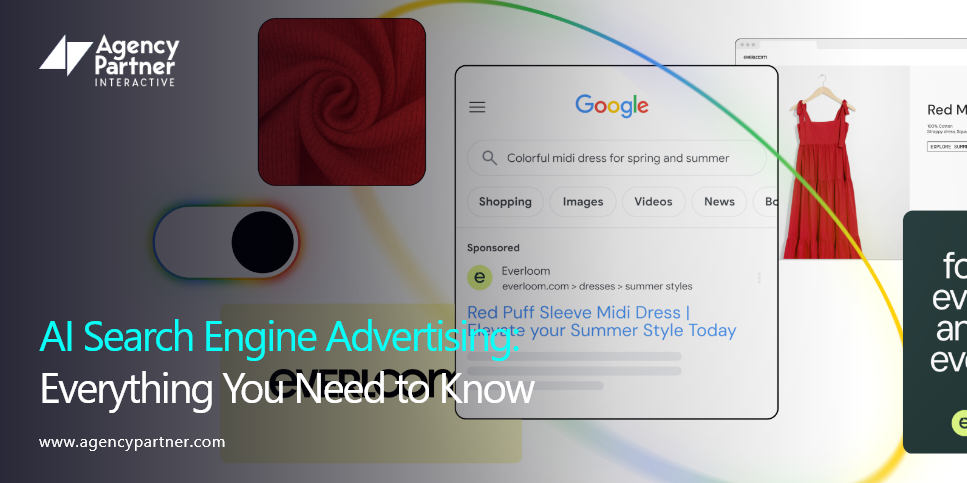
  • AI Search Engine Advertising: Everything You Need to Know

    AI Search Engine Advertising: Everything You Need to Know

    Search marketing is changing faster than ever. Traditional PPC campaigns are no longer enough to stay competitive. Businesses now need smarter targeting, faster optimization, stronger creative, and more personalized campaigns. 

    This is where AI in paid search is transforming the way companies approach search engine ads. 

    From ai generated ads and automated bidding to audience segmentation and ai powered advertising, artificial intelligence is reshaping how brands advertise on search engines. Businesses that embrace these tools can create better campaigns, improve ROI, and stay ahead of competitors. 

    So, ask yourself this: Are your search engine advertisers still relying on manual work while competitors are using AI to optimize every click? 

    Why AI Search Engine Advertising Matters in 2026

    Search engine advertisement is no longer just about writing a few headlines and setting up a budget. 

    Today, advertising on search engines requires: 

    • Smarter targeting  
    • Better audience segmentation  
    • Personalized messaging  
    • Automated bidding  
    • Faster campaign testing  
    • More creative ad formats  
    • Real-time optimization  

    This is exactly why AI in paid search is becoming one of the most valuable tools for modern marketers. 

    Businesses that use ai advertising campaigns Ai in programmatic advertising strategies can improve efficiency, reduce wasted spend, and generate better results across platforms like Google, Bing, YouTube, and other search networks. 

    How AI Is Changing Search Engine Ads

    Traditional search engine ads often require marketers to manually adjust bids, test headlines, review performance, and optimize targeting. 

    AI changes this process by automating many of these tasks. 

    Modern ai powered advertising tools can: 

    • Analyze large amounts of campaign data  
    • Predict which keywords will perform best  
    • Automatically adjust bids  
    • Identify the best audiences  
    • Recommend ad copy improvements  
    • Optimize landing pages  
    • Improve conversion rates  

    This makes advertising on search engines faster, more accurate, and more profitable. 

    For businesses with limited time and resources, AI can create a major competitive advantage. 

    AI Generated Ads and Smarter Creative

    One of the biggest shifts in ai and marketing or advertising is the rise of ai generated ads. 

    AI tools can now generate: 

    • Headlines  
    • Descriptions  
    • Display ad copy  
    • Product ad variations  
    • Video scripts  
    • Email subject lines  
    • Calls to action  

    This makes it easier for search engine advertisers to test more ad variations and find the highest-performing combinations. Ads creative ai tools can also help brands personalize messaging based on user behavior, search history, demographics, and interests. 

    For example, an ecommerce brand can create different ai generated ads for first-time visitors, returning customers, abandoned cart users, and repeat buyers. 

    This level of personalization improves both click-through rates and conversions. 

    The Role of AI in Programmatic Advertising

    Ai advertising campaignsai in programmatic advertising is becoming one of the fastest-growing areas in digital marketing. 

    Programmatic advertising uses automation to buy and place ads in real time. When combined with AI, programmatic campaigns become even smarter. 

    Ai in programmatic advertising can help marketers: 

    • Automatically target the right audiences  
    • Predict which placements will perform best  
    • Adjust budgets in real time  
    • Eliminate wasted ad spend  
    • Improve campaign performance faster  

    This approach is especially valuable for companies running large-scale search engine advertisement campaigns across multiple channels. 

    Why AI Powered Advertising Improves ROI

    One of the biggest reasons businesses are investing in AI-powered advertising is that it improves ROI. Traditional search engine ads often rely on guesswork, limited testing, and manual adjustments. AI allows marketers to make faster and more informed decisions based on real-time data. 

    Ai advertisement tools can help businesses: 

    • Reduce cost per click  
    • Improve quality scores  
    • Increase click-through rates  
    • Generate more qualified leads  
    • Improve conversion rates  
    • Lower wasted ad spend  

    This is why more businesses are working with ai advertising companies and hiring specialized ai advertising agency partners to improve performance. 

    AI Video Advertising and Search Campaigns 

    Search campaigns are no longer limited to text ads. Ai video advertising is becoming an increasingly important part of search marketing because video content often performs better across YouTube, display networks, and social platforms. 

    AI tools can now help businesses create: 

    • Video ad scripts  
    • Short-form video ads  
    • Personalized video messages  
    • Dynamic product videos  
    • Video remarketing campaigns  

    Ai video advertising is especially effective for businesses that want to explain products, demonstrate services, or increase brand awareness. When combined with search engine ads, video can help brands connect with audiences at different stages of the buying journey. 

    Common Challenges With AI Advertising

    While ai in paid search offers major advantages, there are still challenges businesses should understand. 

    Some common issues include: 

    • Over-reliance on automation  
    • Weak human oversight  
    • Generic ai generated ads  
    • Poor audience targeting  
    • Inaccurate campaign data  
    • Lack of creative differentiation  

    This is why businesses should not rely entirely on AI tools without a strategy. The best AI and marketing or advertising campaigns combine automation with human creativity, messaging, and decision-making. AI can improve efficiency, but a strong strategy still matters. 

    How to Choose the Right AI Advertising Agency?

    Not every agency understands ai powered advertising. When choosing an ai advertising agency, look for a partner that can combine strategy, creativity, data analysis, and campaign optimization. 

    The best ai advertising companies should offer: 

    • Search engine ads management  
    • Ai generated ads creation  
    • Ads creative ai support  
    • Programmatic advertising expertise  
    • Video advertising strategies  
    • Landing page optimization  
    • Audience targeting and retargeting  
    • Performance reporting  

    A strong ai advertising agency should help you understand where AI fits into your business goals rather than simply offering generic automation. 

    Is Your Business Ready for AI Search Advertising?

    If your current search engine advertisement strategy feels outdated, too manual, or too expensive, AI may be the solution. 

    Ask yourself: 

    • Are we spending too much time managing ads manually?  
    • Are our search engine advertisers generating enough leads?  
    • Are we testing enough creative variations?  
    • Are we using ai in paid search effectively?  
    • Are our competitors using smarter ad strategies than we are?  

    The answers to these questions can help you determine whether it is time to invest in ai powered advertising. 

    Conclusion 

    AI is changing the future of search engine ads. 

    From ai generated ads and ai video advertising to ai in programmatic advertising and smarter audience targeting, businesses now have more tools than ever to improve campaign performance. However, success with advertising on search engines still requires strategy, creativity, and ongoing optimization. 

    At Agency Partner Interactive, we help businesses build smarter search engine advertisement strategies using ai powered advertising, data-driven targeting, and creative campaigns designed to improve visibility, generate leads, and maximize ROI. 

    Whether you need help with ai generated ads, search engine advertisers, ai video advertising, or a complete ai advertising campaignsai in programmatic advertising strategy, our team can help you stay ahead of the competition. 

    FAQs 

    1. How is AI in paid search different from traditional search engine ads? 

    Ai in paid search uses machine learning, automation, and predictive analytics to improve search engine ads. Traditional campaigns often rely more on manual bidding, manual targeting, and slower optimization processes. 

    2. Can ai generated ads really improve campaign performance? 

    Yes, ai generated ads can improve campaign performance by creating more ad variations, testing headlines faster, personalizing messaging, and identifying what content performs best for different audiences. 

    3. What is ai in programmatic advertising? 

    Ai in programmatic advertising refers to using artificial intelligence to automate ad buying, audience targeting, bid adjustments, and campaign optimization. This helps businesses improve efficiency and reduce wasted spending. 

    4. Why should businesses work with ai advertising companies? 

    Businesses often work with ai advertising companies because these agencies understand how to combine automation, targeting, creative strategy, and campaign optimization. This can help improve ROI and reduce the time spent managing campaigns manually. 

    5. Is ai-powered advertising only useful for large businesses? 

    No, ai-powered advertising can benefit businesses of all sizes. Small and medium-sized businesses can use AI to automate repetitive tasks, improve targeting, create better ads, and compete more effectively without massive marketing teams. 

  • Unlocking Potential With Top AI Consultants for Small Companies

    Unlocking Potential With Top AI Consultants for Small Companies

    Small businesses are under more pressure than ever to do more with less. Limited budgets, smaller teams, rising customer expectations, and increased competition can make growth difficult. That is exactly why more companies are turning to ai consulting services to stay ahead. 

    From streamlining operations to improving customer experiences, artificial intelligence is no longer just for large enterprises. Today, ai consulting for small businesses is helping startups, local companies, ecommerce stores, and service providers compete in smarter ways. 

    If you are still relying on outdated systems, manual tasks, and disconnected tools, now is the time to ask yourself an important question:
    Is your business ready to work smarter instead of harder? 

    Why Small Businesses Need AI More Than Ever? 

    Many business owners assume that artificial intelligence consulting is only for major corporations with huge budgets. The reality is very different. 

    Modern ai consulting services are more affordable, scalable, and accessible than ever before. Small companies can now use AI to automate repetitive tasks, improve decision-making, enhance marketing, and deliver better customer experiences. 

    A skilled ai consultant can help businesses: 

    • Automate repetitive administrative work 
    • Improve customer service with chatbots 
    • Create smarter marketing campaigns 
    • Forecast inventory and sales trends 
    • Improve lead generation and conversions 
    • Analyze customer behavior more effectively 
    • Save time and reduce operational costs 

    For small companies, this means more efficiency, better performance, and stronger growth opportunities. 

    What Does an AI Consultant Actually Do? 

    An experienced ai consultant helps businesses identify where artificial intelligence can create the biggest impact. Instead of overwhelming your company with unnecessary tools, a professional artificial intelligence consultant will look at your current processes, systems, and goals to recommend practical solutions. 

    An ai business consultant may help with: 

    • Marketing automation 
    • CRM optimization 
    • AI-powered customer support 
    • Data analytics dashboards 
    • Sales forecasting 
    • Workflow automation 
    • Content generation tools 
    • Ecommerce personalization 

    The right ai consulting agency does not just recommend technology. They help you implement it in ways that improve your bottom line. 

    The Biggest Benefits of AI Consulting for Small Businesses 

    1. Improved Efficiency Across Daily Operations 

    One of the biggest reasons companies invest in ai consulting for small businesses is to improve efficiency. Many small businesses spend countless hours on repetitive tasks such as scheduling, data entry, invoicing, customer follow-ups, reporting, and inventory tracking. 

    This is where small business operational consulting combined with ai integration consulting can make a major difference. AI tools can automate repetitive work, giving your team more time to focus on growth, customer service, and revenue-generating activities. 

    That is why many businesses also work with small business efficiency consultants to identify inefficiencies and build better workflows. 

    2. Better Customer Experience 

    Customers expect faster responses, more personalized communication, and better service. 

    A professional ai consulting business can help small companies use AI-powered chatbots, automated email workflows, customer support systems, and recommendation engines to create a stronger customer experience. 

    For example, a local retail company may use local business intelligence consulting to understand customer buying behavior, while an ecommerce company may work with a small business ecommerce consultant to personalize product recommendations. The result is a better customer journey and more repeat business. 

    3. Smarter Marketing and Sales Strategies 

    One of the most valuable parts of artificial intelligence consulting is its ability to improve marketing performance. AI can help businesses analyze customer data, identify buying patterns, predict future demand, and improve ad targeting. 

    An experienced ai business consultant can help your company: 

    • Improve email open rates 
    • Optimize social media campaigns 
    • Personalize website experiences 
    • Increase PPC conversions 
    • Improve lead scoring 
    • Create better content faster 

    This is why ai consulting services are becoming essential for small businesses looking to maximize every marketing dollar. 

    AI Consulting for Ecommerce and Local Businesses 

    Not every business uses AI in the same way. Different industries have different needs. A local business may need local business intelligence consulting to better understand customer trends, buying patterns, and seasonal demand. 

    An ecommerce brand may need a small business ecommerce consultant to improve product recommendations, abandoned cart recovery, inventory forecasting, and customer retention. An ai consulting agency can create custom strategies based on your industry, size, and goals. 

    Questions Every Business Owner Should Ask? 

    Before investing in ai consulting services, ask yourself: 

    • Which tasks are taking too much time? 
    • Where are we losing leads or sales? 
    • What customer problems are we not solving fast enough? 
    • Which manual processes could be automated? 
    • Are we using our business data effectively? 

    These questions can help identify where ai integration consulting can create the most value. 

    Why Small Businesses Should Not Wait to Adopt AI? 

    Many small business owners delay investing in artificial intelligence consultancy because they think it will be too expensive or too complicated. The truth is that waiting too long can put your business behind competitors who are already using AI to improve operations and customer experiences. 

    Businesses that invest in ai consulting for small businesses today are often able to: 

    • Reduce costs faster 
    • Improve productivity 
    • Make smarter decisions 
    • Increase customer satisfaction 
    • Grow revenue more efficiently 

    The longer businesses wait, the harder it becomes to catch up. 

    Choosing the Right AI Consulting Agency 

    Not all consultants are the same. When selecting an ai consulting agency, look for a partner that understands your industry, your goals, and the specific challenges small businesses face. 

    The best ai consulting services should include: 

    • Strategic planning 
    • Process analysis 
    • AI tool recommendations 
    • Workflow automation 
    • Staff training 
    • Ongoing support and optimization 

    An experienced artificial intelligence consultant should focus on practical, measurable improvements instead of complicated technical jargon. 

    At Agency Partner Interactive, we help businesses identify where AI can deliver real value. Whether you need ai integration consulting, marketing automation, customer experience improvements, or operational support, our team creates solutions that fit your business goals. 

    Ready to Unlock Your Business Potential? 

    The question is no longer whether AI will impact your industry. The real question is whether your business will be ready to benefit from it. Investing in ai consulting services can help your company improve efficiency, save time, increase sales, and create better customer experiences. 

    Whether you need a trusted ai consultant, a strategic ai business consultant, or a full-service ai consulting agency, now is the perfect time to explore how artificial intelligence can support your growth. Agency Partner Interactive provides expert artificial intelligence consulting designed specifically for small businesses that want to compete smarter, move faster, and grow stronger. 

    FAQs 

    1. What are ai consulting services for small businesses? 

    Ai consulting services help small businesses identify where artificial intelligence can improve operations, customer experiences, marketing, and sales. These services often include automation, analytics, workflow optimization, chatbot implementation, and AI tool recommendations. 

    2. How can an ai consultant help a small business? 

    An ai consultant can help small businesses save time, reduce manual work, improve customer service, and make smarter business decisions. They analyze your current processes and recommend AI tools that create measurable business improvements. 

    3. Is artificial intelligence consulting expensive for small businesses? 

    Artificial intelligence consulting can be affordable for small businesses because many AI tools are scalable and flexible. Businesses can start with smaller solutions, such as marketing automation or customer support chatbots, before expanding further. 

    4. What is the difference between an ai business consultant and a traditional consultant? 

    An ai business consultant focuses specifically on how technology, automation, and AI tools can improve your business. Traditional consultants may focus more on operations, finance, or management without leveraging AI-driven solutions. 

    5. How do I know if my business is ready for ai integration consulting? 

    If your business struggles with repetitive tasks, slow customer response times, disconnected systems, inefficient workflows, or limited data insights, it may be the perfect time to invest in ai integration consulting. 

  • Affordable AI Strategy Consulting for Your Business Growth

    Affordable AI Strategy Consulting for Your Business Growth

    AI strategy consulting helps businesses identify how to use artificial intelligence to improve operations, increase revenue, and stay competitive. In simple terms, artificial intelligence consulting services guide companies on where AI fits, how to implement it, and how to scale it effectively. 

    Today, companies are no longer asking “Should we use AI?” 

    They are asking: “How do we use AI the right way without wasting budget?” That’s exactly where ai business consulting and ai management consulting come in. 

    An experienced ai business consultant or ai implementation consultant helps you: 

    • Identify high-impact AI opportunities  
    • Avoid costly trial-and-error  
    • Build a scalable roadmap  
    • Align AI with business goals  

    This is why ai consulting services are becoming essential for both startups and enterprise companies. 

    Why AI Strategy Consulting Is Critical for Business Growth? 

    Let’s be real, AI is powerful, but without direction, it becomes expensive noise. 

    Many businesses invest in tools but fail to see results because they lack proper ai strategy consulting. A structured approach through artificial intelligence management consulting ensures that AI is not just implemented, but actually delivers ROI. 

    With the right ai technology consulting, businesses can: 

    • Automate operations using AI  
    • Improve customer experience  
    • Make data-driven decisions  
    • Scale faster with fewer resources  

    This is the real value of consulting artificial intelligence, it transforms AI from a tool into a business growth engine. 

    What Does an AI Business Consultant Actually Do? 

    An ai business consultant doesn’t just suggest tools, they build a roadmap. 

    Through ai based consulting and artificial intelligence consulting, consultants: 

    • Analyze your business processes  
    • Identify automation opportunities  
    • Recommend the right AI solutions  
    • Guide implementation and scaling  

    This makes ai consulting services more strategic than technical. A skilled ai implementation consultant ensures that AI solutions are integrated smoothly into your workflows, not added as disconnected tools. 

    Types of AI Consulting Services Businesses Use 

    Not all ai consulting services are the same. Different businesses require different approaches depending on their goals. 

    • AI Strategy Consulting: This focuses on long-term planning and identifying where AI fits into your business model. 
    • AI Technology Consulting: Through ai technology consulting, businesses select the right tools, platforms, and infrastructure. 
    • AI Marketing Consultant Services: An ai marketing consultant helps optimize campaigns, automate content, and improve targeting using AI. 
    • Artificial Intelligence Consulting Services for Operations: This includes automation, predictive analytics, and workflow optimization through artificial intelligence consulting service solutions. 

    Each of these falls under broader artificial intelligence consulting services that help businesses scale intelligently. 

    Affordable AI Strategy Consulting: Is It Really Possible? 

    One of the most common questions businesses ask is: “Can we afford AI consulting?” 

    The answer is yes. 

    Affordable ai strategy consulting focuses on: 

    • High-impact use cases  
    • Scalable solutions  
    • Phased implementation  

    Instead of investing heavily upfront, businesses can start small and expand gradually using ai business consulting strategies. A reliable artificial intelligence consulting firm ensures that every investment is tied to measurable outcomes. Companies like agency partner interactive specialize in delivering cost-effective ai consulting services that align with business growth goals. 

    How AI Management Consulting Improves Efficiency? 

    Efficiency is one of the biggest benefits of ai management consulting. 

    Through artificial intelligence management consulting, businesses can: 

    • Automate repetitive tasks  
    • Reduce operational costs  
    • Improve workflow efficiency  

    For example, ai based consulting can help automate: 

    • Customer support  
    • Lead qualification  
    • Data analysis  

    This is where consulting artificial intelligence becomes a game-changer, it allows businesses to do more with less. 

    Choosing the Right Artificial Intelligence Consulting Firm 

    Selecting the right artificial intelligence consulting firm is critical. 

    Here’s what to look for: 

    • Proven Experience: A strong ai consulting services provider should have experience across industries. 
    • Scalable Solutions: Your ai implementation consultant should build solutions that grow with your business. 
    • End-to-End Support: From strategy to execution, a reliable artificial intelligence consulting service should cover the entire journey. 

    Working with experts like agency partner interactive ensures that your ai strategy consulting is aligned with real business outcomes. 

    How AI Consulting Services Drive Revenue Growth? 

    The ultimate goal of ai strategy consulting is growth. 

    Businesses using ai consulting services effectively can: 

    • Increase conversions through personalization  
    • Improve customer retention  
    • Optimize marketing performance  

    An experienced ai marketing consultant can use AI to: 

    • Predict customer behavior  
    • Optimize ad campaigns  
    • Improve targeting accuracy  

    This is why artificial intelligence consulting services are not just about efficiency, they are about revenue. 

    Conclusion 

    AI is no longer a future trend, it’s a present necessity. But without the right strategy, even the best tools can fail to deliver results. That’s why ai strategy consulting is essential for businesses looking to grow efficiently and competitively. 

    From ai management consulting to ai technology consulting, businesses now have access to structured approaches that turn AI into measurable outcomes. Whether it’s automation, predictive analytics, or marketing optimization, the right ai consulting services can transform your operations. 

    Partnering with a trusted artificial intelligence consulting firm like agency partner interactive ensures that your AI journey is strategic, scalable, and results-driven. With the right ai business consultant, businesses can unlock the full potential of AI and drive long-term growth. 

    FAQs 

    1. What is AI strategy consulting and how does it help businesses? 

    AI strategy consulting helps businesses identify how to use AI effectively. Through artificial intelligence consulting services, companies can create a roadmap, reduce risks, and implement solutions that improve efficiency, decision-making, and overall growth. 

    2. How much does AI consulting typically cost? 

    The cost of ai consulting services varies depending on the complexity of the project. However, many providers now offer affordable ai strategy consulting options that focus on phased implementation, making AI accessible for small and mid-sized businesses. 

    3. What industries benefit most from AI consulting services? 

    Industries like healthcare, finance, retail, and marketing benefit greatly from artificial intelligence consulting services. These sectors use ai business consulting to automate processes, improve customer experiences, and make data-driven decisions. 

    4. Do I need an AI implementation consultant for my business? 

    Yes, an ai implementation consultant ensures that AI solutions are properly integrated into your workflows. Without proper implementation, even the best tools may fail to deliver results. 

    5. How do I choose the right AI consulting firm? 

    To choose the right artificial intelligence consulting firm, look for experience, proven results, and a strategic approach. A reliable ai consulting services provider should offer scalable solutions and long-term support tailored to your business goals. 

  • Best Machine Learning Applications for Your Business

    Best Machine Learning Applications for Your Business

    -What Are the Best Machine Learning Applications for Business? 

    The best Machine Learning Applications for modern companies include customer personalization, predictive analytics, fraud detection, demand forecasting, and intelligent automation. These applications of machine learning in business help organizations turn data into decisions, reduce costs, and improve customer experiences at scale. 

    In simple terms, machine learning in business allows systems to learn from data and improve outcomes without constant manual input. Whether it’s recommending products, predicting trends, or automating workflows, the business application of machine learning is transforming how companies operate. 

    If you’re wondering how to actually use it, here’s the key idea: The most effective machine learning business applications are the ones that directly impact revenue, efficiency, or customer experience. 

    Why Machine Learning in Business Is No Longer Optional? 

    Businesses today are generating more data than ever before. But without the right systems, that data sits unused. This is where machine learning for business becomes critical. 

    Companies adopting machine learning applications in business are able to: 

    • Predict customer behavior 
    • Automate repetitive processes 
    • Improve decision-making speed 
    • Personalize user experiences 

    This is why the applications of machine learning are no longer limited to tech giants. From startups to enterprises, every company is now exploring machine learning in business to stay competitive. 

    1. Customer Personalization Using Machine Learning Applications 

    One of the most powerful machine learning applications in business is personalization. 

    Platforms like Amazon and Netflix use applications machine learning to recommend products and content based on user behavior. This is a classic example of the business application of machine learning driving revenue. 

    With machine learning for business, companies can: 

    • Recommend products based on browsing history 
    • Personalize email campaigns 
    • Customize website experiences 

    This type of machine learning in business directly impacts conversions and customer retention. 

    2. Predictive Analytics and Forecasting 

    Predictive analytics is one of the most valuable Machine Learning Applications for decision-making. 

    Using historical data, applications of machine learning in business can forecast: 

    • Sales trends 
    • Customer demand 
    • Inventory requirements 

    This helps businesses reduce risks and make smarter decisions. 

    For example, retail companies use machine learning business applications to predict which products will sell the most during specific seasons. This is where machine learning in business shifts from reactive to proactive. 

    3. Business Automation with Machine Learning 

    Automation is a core part of modern machine learning for business strategies. 

    Through advanced applications machine learning, businesses can automate: 

    • Customer support (chatbots) 
    • Data entry processes 
    • Workflow management 

    These machine learning applications in business reduce manual effort and improve operational efficiency. Instead of repetitive tasks, teams can focus on strategy and growth, one of the biggest advantages of the business application of machine learning. 

    4. Fraud Detection and Risk Management 

    Fraud detection is one of the most critical applications of machine learning in industries like finance and ecommerce. Using machine learning in business, systems can detect unusual patterns and flag suspicious activities in real time. 

    These machine learning business applications help companies: 

    • Prevent financial losses 
    • Protect customer data 
    • Improve security systems 

    This is a strong example of how applications of machine learning in business directly impact trust and reliability.  

    5. Intelligent Marketing and Customer Insights 

    Marketing is being completely transformed by Machine Learning Applications. 

    With machine learning for business, companies can analyze customer data to: 

    • Identify high-value audiences 
    • Optimize ad campaigns 
    • Improve targeting accuracy 

    These applications machine learning allow marketers to move beyond guesswork and rely on real data. 

    The result? Better ROI, better engagement, and smarter campaigns. 

    This is why machine learning in business is becoming a core part of digital marketing strategies. 

    6. Supply Chain and Inventory Optimization 

    Supply chain efficiency is another area where machine learning applications in business deliver massive value. 

    Using applications of machine learning, businesses can: 

    • Optimize inventory levels 
    • Predict supply chain disruptions 
    • Improve logistics planning 

    These machine learning business applications reduce costs and improve operational efficiency. Companies that adopt this business application of machine learning can respond faster to market changes. 

    7. Custom Machine Learning Solutions for Business Growth 

    Not every business fits into a standard solution. This is where custom Machine Learning Applications come into play. Through tailored machine learning for business strategies, companies can build systems designed specifically for their needs. 

    This includes: 

    • Custom recommendation engines 
    • Industry-specific predictive models 
    • Advanced analytics dashboards 

    Companies like agency partner interactive help businesses implement tailored applications of machine learning in business, ensuring scalability and long-term success. 

    How to Get Started with Machine Learning in Business? 

    Getting started with machine learning in business doesn’t have to be overwhelming. 

    Here’s a simple approach: 

    1. Identify key business challenges 
    2. Define data sources 
    3. Choose the right machine learning applications 
    4. Partner with experts 

    Working with experienced teams like agency partner interactive ensures that your machine learning business applications are aligned with your goals and deliver measurable results. 

    Conclusion 

    The future of business is intelligent, automated, and data-driven. Machine Learning Applications are no longer optional, they are essential for companies looking to scale and compete. 

    From personalization to predictive analytics, the applications of machine learning in business are transforming industries at every level. Businesses that adopt machine learning for business gain a clear advantage in efficiency, decision-making, and customer experience. 

    By investing in the right machine learning applications in business, companies can unlock new opportunities, reduce costs, and drive long-term growth. 

    FAQs 

    1. What are the most common machine learning applications in business? 

    The most common machine learning applications in business include customer personalization, predictive analytics, fraud detection, marketing optimization, and automation. These applications of machine learning help businesses improve efficiency, reduce costs, and enhance decision-making. 

    2. How does machine learning help businesses grow? 

    Machine learning for business enables companies to analyze data, predict trends, and automate processes. These machine learning business applications improve efficiency, increase revenue, and provide a competitive advantage in fast-changing markets. 

    3. Is machine learning expensive to implement for businesses? 

    The cost of implementing machine learning in business depends on the complexity of the solution. Many companies start with basic applications machine learning and scale over time, making it a flexible and scalable investment. 

    4. What industries benefit most from machine learning applications? 

    Industries such as healthcare, finance, retail, and logistics benefit significantly from machine learning applications in business. These sectors use applications of machine learning in business to improve efficiency, reduce risks, and enhance customer experiences. 

    5. Do small businesses need machine learning solutions? 

    Yes, even small businesses can benefit from machine learning for business. With affordable tools and scalable solutions, small companies can implement machine learning business applications to automate tasks and improve decision-making. 

  • Transform Your Data With AI Software Solutions

    Transform Your Data With AI Software Solutions

    Data is no longer just an asset; it’s your competitive advantage. But here’s the problem most businesses face: they collect massive amounts of data yet struggle to turn it into decisions. That’s where AI Software Solutions step in. 

    Modern organizations are rapidly shifting toward enterprise software solutions powered by artificial intelligence software to unlock insights, automate operations, and scale efficiently. Whether you’re a startup or a large enterprise, investing in AI software for business is no longer optional; it’s essential. 

    So ask yourself: Is your data working for you, or are you just storing it? 

    Let’s explore how AI Software Solutions transform raw data into real business outcomes. 

    What Are AI Software Solutions and Why Do They Matter 

    AI Software Solutions are advanced systems that use artificial intelligence software to process, analyze, and act on data automatically. Unlike traditional tools, these solutions learn from patterns and continuously improve outcomes. 

    In simple terms: 

    They turn complex data into actionable intelligence. 

    Businesses using AI software for business and business AI software can: 

    • Predict trends 
    • Automate repetitive workflows 
    • Improve customer experiences 
    • Make faster decisions 

    This is why leading enterprise software companies are investing heavily in enterprise software solutions powered by AI. 

    How Enterprise Software Solutions Transform Data Into Decisions 

    Modern enterprise software solutions go beyond data storage; they actively interpret and optimize data. 

    Real-Time Data Processing 

    With AI Software Solutions, businesses can process vast datasets instantly. This allows organizations to respond to changes in real time using advanced business AI software. 

    Predictive Insights 

    Using artificial intelligence software, companies can forecast customer behavior, demand, and risks. This gives businesses a proactive advantage. 

    Intelligent Automation 

    Through business automation software, repetitive tasks like reporting, lead management, and customer responses are automated. 

    This is the core reason why AI software for business is transforming industries: it reduces effort while increasing accuracy. 

    Why Business Automation Software Is Critical for Growth 

    Time is one of the most expensive resources in any business. That’s why business automation software is a key component of modern AI Software Solutions. 

    Instead of manual processes, automation allows businesses to: 

    • Streamline workflows 
    • Reduce operational costs 
    • Improve efficiency 

    For example, business automation software can automatically handle: 

    • Customer onboarding 
    • Email responses 
    • Data analysis 

    This is where enterprise software solutions and business AI software combine to create scalable systems. 

    Custom Business Software vs Off-the-Shelf Tools 

    Many companies struggle with generic tools that don’t fully meet their needs. This is where custom business software becomes essential. 

    Why Custom Business Software Matters? 

    Custom-built AI Software Solutions allow businesses to: 

    • Align with unique workflows 
    • Integrate with existing systems 
    • Scale without limitations 

    Through advanced business software development, organizations can create tailored platforms that deliver better performance than standard tools. When comparing options, enterprise software companies often recommend custom business software for long-term growth. 

    Choosing the Right AI Software Company 

    Not all providers deliver the same results. Selecting the right AI software company is critical for successful implementation. 

    What to Look For in a Software Services Company? 

    A reliable software services company should offer: 

    • Expertise in enterprise software solutions 
    • Experience in business software development 
    • Scalable AI software for business solutions 

    Businesses often search for software companies near me, but expertise matters more than location. The right software services partner should understand your business goals and deliver measurable results. 

    Companies like Agency Partner Interactive specialize in delivering advanced AI Software Solutions, helping businesses transform data into actionable insights. 

    How AI Software for Business Improves Customer Experience? 

    Customer expectations are higher than ever. Businesses that fail to deliver personalized experiences risk losing customers. 

    This is where AI software for business makes a difference. 

    • Personalization at Scale: Using artificial intelligence software, companies can deliver personalized recommendations based on customer behavior. 
    • Faster Response Times: AI-powered systems reduce response times, improving satisfaction and engagement. 
    • Data-Driven Customer Insights: With business AI software, businesses can analyze customer data and refine their strategies. 

    This improves overall performance and strengthens customer relationships. 

    The Role of Software Services in AI Implementation 

    Implementing AI Software Solutions requires more than just technology; it requires strategy. 

    A professional software services company provides end-to-end support, including: 

    • Planning and strategy 
    • Development and deployment 
    • Optimization and scaling 

    Through expert software services, businesses can ensure the successful integration of enterprise software solutions. Working with experienced providers like agency partner interactive ensures that your AI systems are aligned with your business goals. 

    Finding Software Companies Near Me vs Global Expertise 

    Many businesses begin their search with “software companies near me,” but proximity should not be the only factor. 

    Instead, focus on: 

    • Experience with enterprise software solutions 
    • Proven results in business software development 
    • Ability to deliver scalable AI Software Solutions 

    The right AI software company will provide expertise, innovation, and long-term support regardless of location. 

    Conclusion 

    The future of business is driven by data, and those who know how to use it will lead the market. AI Software Solutions provide the tools needed to transform raw data into strategic decisions, helping businesses scale faster and operate more efficiently. 

    From business automation software to advanced enterprise software solutions, AI enables organizations to streamline operations, improve customer experiences, and gain a competitive edge. Investing in AI software for business is no longer optional; it’s a necessity for growth. 

    Partnering with the right software services company, such as agency partner interactive, ensures access to tailored custom business software and scalable business AI software. With the right strategy, businesses can unlock the full potential of their data and achieve long-term success. 

    FAQs 

    1. What are AI Software Solutions and how do they work? 

    AI Software Solutions use artificial intelligence software to analyze data, automate processes, and generate insights. They learn from patterns and continuously improve performance, helping businesses make smarter decisions and optimize operations efficiently. 

    2. Why should businesses invest in enterprise software solutions? 

    Enterprise software solutions provide scalability, efficiency, and data-driven insights. By integrating AI Software Solutions, businesses can automate workflows, improve productivity, and handle large datasets effectively, making them essential for long-term growth. 

    3. What is the difference between business automation software and AI software? 

    Business automation software focuses on automating repetitive tasks, while AI Software Solutions go further by learning from data and making intelligent decisions. Together, they create powerful business AI software systems that enhance efficiency and accuracy. 

    4. How do I choose the right AI software company? 

    To choose the right AI software company, look for experience in business software development, proven results, and scalable enterprise software solutions. A reliable software services company should also provide ongoing support and optimization. 

    5. Is custom business software better than ready-made solutions? 

    Yes, custom business software offers greater flexibility and scalability compared to off-the-shelf tools. It allows businesses to build tailored AI Software Solutions that align with their workflows, ensuring better performance and long-term value. 

  • Claude vs. ChatGPT: What’s the difference? [2026]

    Claude vs. ChatGPT: What’s the difference? [2026]

    When ChatGPT launched in late 2022, it felt like a technological earthquake. Within weeks, millions of people were testing its limits — asking it to write code, summarize legal contracts, and explain quantum mechanics. When Anthropic released Claude a few months later, the debate began: which AI is actually better?

    Fast-forward to 2026, and that question has only gotten more nuanced. Both platforms have evolved dramatically, offering agentic AI workflows, massive context windows, and specialized tools for coding, research, and creative writing. The raw capabilities of their flagship models — Claude Opus 4.6 and GPT-5.4 — are remarkably close to parity.

    So, how do you choose between them? The answer no longer lies in benchmark scores — it lies in features, design philosophy, and the specific tasks you need to accomplish. In this guide, we break down everything you need to know about Claude vs. ChatGPT in 2026, from free-plan limits to the best use cases for each tool.

    Table of Contents:

    • Claude vs. ChatGPT at a glance
    • Both apps are easy to use and offer cutting-edge models
    • Claude is the superior partner for creative writing
    • ChatGPT can generate images and videos
    • Claude Code has become the go-to for developers
    • Both platforms now offer agentic AI features
    • ChatGPT lets you build custom chatbots (GPTs)
    • ChatGPT has some extra bells and whistles
    • Claude vs. ChatGPT: Which is right for you?

    Claude vs. ChatGPT at a Glance

    🤖 Claude — Best For: 💬 ChatGPT — Best For:
    Developers, writers, researchers, and professionals who need deep analytical thinking, superior long-form writing, and powerful coding tools. Claude is focused, thoughtful, and exceptionally good at nuanced tasks. Users who want an all-in-one AI platform with image generation, video creation (Sora 2), custom chatbot building, and broad integrations. ChatGPT is the Swiss Army knife of AI tools.

    Here’s how the two platforms compare across the features that matter most in 2026:

    Feature Claude (Anthropic) ChatGPT (OpenAI)
    Company Anthropic OpenAI
    Current Flagship Model Claude Opus 4.6 / Sonnet 4.6 GPT-5 / GPT-5.4
    Context Window Up to 1M tokens Up to 1M tokens
    Web Search Yes (free & paid) Yes (free & paid)
    Deep Research Mode Yes Yes
    Image Generation No Yes (DALL-E 4)
    Video Generation No Yes (Sora 2)
    Voice / Audio Mode Yes Yes (Advanced Voice)
    Coding Tool Claude Code OpenAI Codex
    Agentic AI Claude Cowork ChatGPT Agent
    Free Plan Yes (limited) Yes (limited)
    Paid Plan $20/mo (Pro); $100–$200/mo (Max) $8/mo (Go); $20/mo (Plus); $200/mo (Pro)
    Team Plan $25/user/month $30/user/month
    Best For Coding, writing, deep analysis All-in-one AI toolkit, image/video gen

    Note: Both Claude and ChatGPT offer generous free tiers. However, heavy users will frequently hit message limits on free plans. If you rely on AI daily for professional work, upgrading to a paid plan — or using both tools strategically — is worth considering.

    Both Apps Are Easy to Use and Offer State-of-the-Art Models

    One of the most remarkable things about today’s leading AI assistants is how approachable they are despite the cutting-edge technology under the hood. Whether you’re a first-time user or a seasoned prompt engineer, Claude and ChatGPT both offer intuitive chat interfaces that get out of your way.

    One of the most remarkable things about today’s leading AI assistants is how approachable they are despite the cutting-edge technology under the hood. Whether you’re a first-time user or a seasoned prompt engineer, Claude and ChatGPT both offer intuitive chat interfaces that get out of your way.

    ChatGPT’s experience is similar at the surface level — type a message, get a response — but it layers on considerably more functionality. The left sidebar gives access to your conversation history, custom GPTs, Projects, and the full image/video generation suite. Unlike Claude, ChatGPT defaults to auto-selecting a model based on your query type, which is convenient for casual users but can sometimes route you to a less powerful model than you’d prefer.

    Model Lineup Comparison: Claude vs. ChatGPT in 2026

    Both Anthropic and OpenAI maintain a tiered model lineup, balancing raw power against speed and cost. Here’s a breakdown of current models:

    Note: Both Claude and ChatGPT offer generous free tiers. However, heavy users will frequently hit message limits on free plans. If you rely on AI daily for professional work, upgrading to a paid plan — or using both tools strategically — is worth considering.

    Claude Is the Superior Partner for Creative Writing

    Ask any professional writer or content strategist who has used both tools, and you’ll likely hear the same thing: Claude just writes better. There’s a qualitative difference that’s hard to quantify but easy to feel.

    Claude’s prose tends to be more natural, rhythmically varied, and tonally aware. It avoids the over-structured, bullet-point-heavy default that plagues many AI outputs. It picks up on nuance in your prompts — if you want something wry, melancholic, or absurdist, Claude usually nails it on the first try.

    Claude also excels at long-form writing tasks. Thanks to its 1M token context window, you can paste in an entire manuscript, style guide, or research corpus and ask Claude to write in that exact voice. For ghostwriters, novelists, and content teams, this is transformative.

    ChatGPT has improved significantly in creative writing — GPT-5.4 in particular can produce genuinely impressive long-form content. But it still has a tendency toward predictable structures and a certain ‘sameness’ of voice that experienced writers find frustrating. For creative work, Claude remains the stronger choice.

    One area where ChatGPT wins, however, is creative work that involves images. ChatGPT can generate visuals inline with your writing projects using DALL-E 4 integration. Claude, as of 2026, cannot generate images — a meaningful limitation if your creative workflow requires visual assets.

    ChatGPT Can Generate Images (and Videos, via Sora 2)

    This is one of the clearest differentiators between the two platforms: ChatGPT can generate images and videos. Claude cannot.

    ChatGPT’s image generation is powered by DALL-E 4, which produces photorealistic and illustrative images directly within your chat. You can generate product mockups, social media visuals, marketing illustrations, or concept art without leaving the interface. The integration is seamless — you describe what you want, and it appears in seconds.

    ChatGPT Plus and Pro subscribers also have access to Sora 2, OpenAI’s video generation model. Sora 2 can create short video clips — up to 20 seconds at high resolution — from text descriptions or still images. While the technology still has quirks (occasional physics anomalies, inconsistent motion), the quality has improved substantially since Sora’s initial release.

    That said, Claude can analyze and reason about images you upload to it. It’s a strong visual understanding tool — it just can’t create visuals from scratch. For teams that generate a lot of original graphics, ChatGPT is the obvious winner here.

    Claude Code Has Become the Go-To Coding Tool for Developers

    If you’re a developer choosing between Claude and ChatGPT, the answer in 2026 is increasingly clear: Claude. Not just because of Claude’s underlying code intelligence, but because of Claude Code — Anthropic’s dedicated agentic coding tool that has become a favorite among professional developers.

    Claude Code is not just a code completion tool — it’s an autonomous coding agent. It can understand your entire codebase, write multi-file changes, run tests, debug failures, and iterate toward a working solution. Developers describe using it as having a highly competent junior engineer who can execute tasks end-to-end.

    Benchmarks across standard coding evaluations — including SWE-bench and HumanEval — consistently place Claude Opus 4.6 and Sonnet 4.6 at the top or near the top of the leaderboard for code generation, debugging, and architecture tasks.

    ChatGPT’s Codex: A Capable but Different Approach

    OpenAI has its own coding agent in ChatGPT — Codex. Like Claude Code, Codex is an agentic tool that can write and execute code in a sandboxed environment. It supports multi-step coding tasks and can access the internet to look up documentation or packages in real time.

    Codex is excellent — especially for users who prefer to stay within the ChatGPT ecosystem. However, many developers find Claude Code’s integration with local development environments more practical for real-world workflows. The ability to run Claude Code directly in your terminal, against your actual codebase, gives it an edge for day-to-day professional development.

    Both Platforms Now Offer Agentic AI Features

    Perhaps the biggest shift in AI assistants between 2024 and 2026 is the rise of agentic capabilities — the ability for AI to take actions, not just generate text. Both Claude and ChatGPT have invested heavily here.

    Anthropic offers Claude Cowork — a desktop agentic tool designed for non-developers. Cowork can manage files, automate repetitive tasks, fill out forms, and coordinate across multiple desktop apps. It’s particularly well-suited for knowledge workers who want to automate administrative workflows without writing code.

    OpenAI’s ChatGPT Agent is its equivalent agentic product. It can browse the web, interact with apps, and complete multi-step research and task workflows autonomously. Users on ChatGPT Plus and above can deploy the agent to handle tasks like compiling research reports, managing spreadsheets, or extracting data from websites.

    Both agentic offerings are still maturing. Errors and unexpected behaviors remain more common than in human-led workflows. The key differences:

    • Claude Cowork is stronger for local desktop and file management tasks.
    • ChatGPT Agent is stronger for web-based research and online task automation.
    • Both require careful supervision for high-stakes workflows.

    ChatGPT Lets You Build Custom Chatbots (GPTs)

    One of ChatGPT’s most popular features — and one Claude doesn’t directly replicate — is the ability to build custom GPTs. GPTs are essentially personalized AI chatbots configured with custom instructions, knowledge bases, and tools. You can create a GPT for customer support, a personal writing coach, a company onboarding assistant, and hundreds of other use cases.

    Building a GPT requires no coding. You describe the bot’s purpose, upload relevant documents (your product docs, company policies, style guides), and configure its behavior. You can keep it private, share it with your team, or publish it to the GPT Store for others to discover.

    Claude does offer Projects — a feature that allows you to maintain persistent context, instructions, and uploaded files across conversations. Projects are excellent for ongoing work with a consistent set of materials. But they don’t offer the same level of customization, sharing, or packaging as ChatGPT’s GPTs.

    ChatGPT Has Some Extra Bells and Whistles

    Advanced Voice Mode

    Both ChatGPT and Claude offer voice interaction, but ChatGPT’s Advanced Voice Mode (available on Plus and Pro) is notably more expressive. It can modulate tone, express enthusiasm or empathy, and hold more natural multi-turn spoken conversations. This makes it particularly useful for language learning, accessibility, and conversational practice.

    Memory

    ChatGPT has an opt-in memory feature that retains information about you across conversations — your preferences, ongoing projects, frequently used tools, and more. Claude can generate memories from chat history when enabled, but ChatGPT’s memory system is more developed and contextually aware as of early 2026.

    Canvas — Collaborative Editing Mode

    Both ChatGPT and Claude offer a side-by-side document editing mode for writing and coding tasks — ChatGPT calls it Canvas, while Claude’s equivalent is its Artifacts panel. Both let you work on a document collaboratively with the AI, making inline edits and revisions. ChatGPT’s Canvas supports inline suggestion tracking; Claude’s Artifacts panel has an edge in code rendering and preview.

    ChatGPT Go — The Ad-Supported Tier

    In 2025, OpenAI introduced ChatGPT Go — an ad-supported plan priced at $8/month. This gives users access to GPT-5.3 with higher message limits than the free tier, but includes occasional ads. Claude has no equivalent ad-supported tier.

    Browsing and Research Mode

    Both platforms offer real-time web search and a deep research mode that can spend several minutes exploring multiple sources before synthesizing a comprehensive answer. ChatGPT’s deep research results tend to be more extensively cited; Claude’s tend to be better written and easier to read. For professional research deliverables, Claude’s output often requires less editing.

    Both Apps Integrate with Third-Party Tools

    Both Claude and ChatGPT connect to the broader productivity ecosystem through APIs and third-party platforms like Zapier, Make, and n8n. For teams wanting to embed AI into their workflows — auto-responding to emails, summarizing Slack threads, generating reports from CRM data — both tools are capable.

    Through Zapier, you can connect Claude or ChatGPT to thousands of apps including Gmail, Google Sheets, Slack, Salesforce, Notion, HubSpot, and more. Some popular automation examples include:

    • Summarize incoming emails and draft replies automatically.
    • Generate weekly reports from data in Google Sheets or Airtable.
    • Create task cards in Asana or Trello based on meeting transcripts.
    • Auto-respond to customer support tickets with AI-generated answers.
    • Extract key information from uploaded PDFs and log it in a database.

    Claude vs. ChatGPT: Which Is Right for You?

    There’s no single ‘best’ AI assistant in 2026 — the right choice depends on how you work, what you create, and what features matter most to you. Here’s a practical guide:

    Choose Claude if you… Choose ChatGPT if you…
    ✓ Write long-form content professionally
    ✓ Work as a developer on complex codebases
    ✓ Need deep analytical and reasoning tasks
    ✓ Value honest, nuanced AI responses
    ✓ Process large documents with huge context
    ✓ Prefer a clean, distraction-free interface
    ✓ Need AI-generated images or video (Sora 2)
    ✓ Want to build and share custom GPTs
    ✓ Use AI for voice conversations regularly
    ✓ Want persistent cross-conversation memory
    ✓ Need a browser-based agentic assistant
    ✓ Want an all-in-one creative and productivity hub

    It’s also worth noting that you don’t have to pick just one. Many power users maintain subscriptions to both — using Claude for writing, coding, and deep analysis, and ChatGPT for image generation, voice interactions, and custom GPTs. With each platform running $20/month for their mid-tier paid plans, using both is affordable for professionals.

    Frequently Asked Questions

    Q. Is Claude better than ChatGPT for coding?

    For most developers, yes. Claude Code’s deep integration with local development environments and Claude’s strong performance on coding benchmarks make it the preferred choice for professional software development in 2026. ChatGPT’s Codex is a strong alternative, especially for users who prefer web-based tools.

    Q. Can Claude generate images?

    No. As of 2026, Claude cannot generate images or video. It can analyze and describe images you upload, but for AI image generation, ChatGPT (via DALL-E 4) is your best option within the major AI assistant platforms.

    Q. What is the ChatGPT Plus message limit in 2026?

    Message limits on ChatGPT Plus vary by model. GPT-5.4 has a limit of approximately 80 messages per 3-hour period; GPT-5.3 has a higher limit. These limits refresh automatically. Heavy users may find they frequently hit limits during intensive work sessions, which is one reason some users upgrade to ChatGPT Pro.

    Q. What is Claude Pro, and is there a free trial?

    Claude Pro costs $20/month and gives access to Claude Sonnet 4.6 and Opus 4.6 with significantly higher usage limits than the free tier. Anthropic occasionally offers promotional trials, but there is no permanent free trial of Claude Pro. You can try Claude for free with the standard free plan before deciding to upgrade.

    Q. Which AI has a bigger context window — Claude or ChatGPT?

    Both Claude (via Claude Sonnet 4.6 and Opus 4.6) and ChatGPT (via GPT-5.4) offer up to 1 million tokens of context. This is roughly equivalent to several novels’ worth of text in a single conversation — far more than most users will ever need for everyday tasks.

    Q. Is Claude safe and private?

    Anthropic built Claude with a strong focus on safety and ethical AI behavior, using a technique called Constitutional AI to align Claude’s responses with human values. Both Claude and ChatGPT process your conversations on their servers — neither should be used for sharing highly sensitive personal or proprietary data unless you’re using an enterprise plan with appropriate data handling agreements.

  • How To Use ChatGPT for Digital Marketing: 7 Use Cases + Best Practices

    How To Use ChatGPT for Digital Marketing: 7 Use Cases + Best Practices

    In the evolving world of digital marketing, tools that automate processes and improve efficiency are highly sought after. ChatGPT in marketing is one such tool that has quickly gained traction for its ability to generate content, assist in customer service, and even optimize campaigns. Whether you’re running an Agency Partner Interactive or a solo marketing agency, understanding how to use ChatGPT for digital marketing can be a game-changer for your strategy. 

    In this guide, we will explore seven effective use cases of ChatGPT digital marketing and outline best practices for integrating ChatGPT in marketing to boost engagement, streamline workflows, and enhance ROI. 

    1. Using ChatGPT for Marketing Content Creation 

    Creating high-quality, SEO-optimized content is a time-consuming task. However, with ChatGPT for marketing content, you can automate much of the process. Whether you’re writing blog posts, social media captions, or email newsletters, ChatGPT in marketing allows you to generate compelling content quickly and efficiently. 

    By leveraging marketing with ChatGPT, you can produce content at scale, ensuring you stay relevant across multiple platforms. You can provide ChatGPT digital marketing tools with detailed prompts to create content that fits your tone, style, and target audience. 

    2. ChatGPT for Customer Service and Engagement 

    One of the most powerful ways to use ChatGPT in marketing is for customer service. ChatGPT for digital marketing can serve as a 24/7 virtual assistant, answering customer queries, providing instant support, and even guiding users through complex processes, like purchasing products or navigating your website. 

    Integrating marketing ChatGPT with your website or social media channels ensures that users always have access to quick answers, reducing bounce rates and increasing engagement. This seamless integration improves the user experience, making it easier for customers to interact with your brand. 

    3. ChatGPT for Social Media Management 

    Social media marketing requires regular content creation and engagement. ChatGPT in marketing can be leveraged to generate posts for platforms like Instagram, Twitter, LinkedIn, and Facebook, ensuring consistency without the need for constant manual input. Additionally, it can assist in drafting responses to customer comments and messages. 

    By using ChatGPT for digital marketing to automate social media content creation, you can maintain an active online presence while freeing up time for other strategic initiatives. With marketing with ChatGPT, your posts can be tailored to specific social media trends and your target audience’s preferences. 

    4. Optimizing Ad Campaigns with ChatGPT 

    ChatGPT for marketing isn’t just about content generation—it can also be used to improve paid advertising strategies. From Google Ads to Facebook Ads, ChatGPT for digital marketing helps create high-converting ad copy and even provides recommendations for keywords. 

    Moreover, ChatGPT digital marketing tools can assist in A/B testing by automatically generating multiple ad variations for testing. By leveraging this functionality, businesses can continuously optimize their ad performance and improve their cost-per-conversion metrics. 

    5. Using ChatGPT for Email Marketing Campaigns 

    Email marketing remains one of the most effective ways to engage your audience and drive conversions. ChatGPT in marketing can be used to craft personalized emails, segment customer lists, and create targeted campaigns. 

    With ChatGPT for marketing content, you can generate compelling subject lines, persuasive body copy, and even follow-up sequences that resonate with your audience. By analyzing data, ChatGPT digital marketing tools can help optimize your email content, improving open rates and click-through rates. 

    6. ChatGPT for Market Research and Analysis 

    Understanding your audience and competition is crucial for refining marketing strategies. ChatGPT digital marketing can assist in analyzing customer feedback, competitor strategies, and industry trends. With marketing with ChatGPT, you can gain valuable insights without manually sifting through data. 

    Using ChatGPT in marketing, businesses can identify customer pain points, determine market gaps, and even predict trends. This allows you to make data-backed decisions and adjust your campaigns accordingly. 

    7. Personalizing Marketing Campaigns with ChatGPT 

    Personalization is a key component of modern digital marketing. ChatGPT for digital marketing enables you to create highly personalized experiences for your customers by generating targeted recommendations, offers, and messages based on customer behavior and preferences. 

    Whether you’re running an eCommerce store or offering services, ChatGPT digital marketing tools can help tailor your messaging to individual users, increasing engagement and improving the customer journey. 

    Best Practices for Using ChatGPT in Marketing 

    To maximize the effectiveness of ChatGPT for marketing, it’s essential to follow best practices that ensure optimal performance and accuracy.  

    Here are some key considerations: 

    1. Provide Clear Instructions: The more specific your input is, the more relevant and accurate your output will be. When using marketing ChatGPT, ensure your prompts are well-defined and targeted. 
    2. Quality Control: While ChatGPT in marketing can generate content quickly, always review the output before publishing. Even AI-generated content may require slight adjustments to ensure it aligns with your brand voice and strategy. 
    3. Continuously Train the Model: For marketing with ChatGPT, regularly update the model with new data, trends, and audience preferences. The more current the data, the better the AI’s predictions and content generation will be. 
    4. Integrate with Other Marketing Tools: Use ChatGPT digital marketing alongside other tools like analytics platforms, CRM systems, and email marketing software. This will enhance its ability to provide more targeted and effective outputs. 
    5. Test and Optimize: Just as you would with traditional marketing efforts, continually test the output from ChatGPT for marketing to optimize content and improve performance. A/B testing for ads, email campaigns, and social media posts can help refine your AI-driven marketing strategy. 

    Conclusion 

    In 2026, ChatGPT for digital marketing is set to revolutionize how brands engage with their audiences. From automating content creation to improving customer service and ad campaigns, marketing ChatGPT offers endless possibilities. By integrating AI-driven tools into your marketing efforts, you can enhance productivity, drive customer engagement, and improve conversion rates across various digital platforms. 

    For businesses looking to stay ahead of the curve, adopting how to use ChatGPT in marketing and incorporating ChatGPT digital marketing tools into your daily workflow will be crucial. Whether it’s generating AI-powered content, optimizing ad campaigns, or enhancing customer experiences, the future of digital marketing is here, and it’s powered by AI. 

    FAQs 

    Q1: How can I use ChatGPT for content creation in digital marketing? 

    ChatGPT for marketing content can generate blog posts, social media captions, email newsletters, and ad copy quickly and efficiently. By providing specific prompts, businesses can receive tailored content that aligns with their target audience and marketing goals. 

    Q2: Is ChatGPT helpful for improving customer service in marketing? 

    Yes, marketing with ChatGPT can enhance customer service by providing instant responses to customer inquiries, creating FAQ sections, and even handling basic support requests. This automation allows for more efficient customer engagement and satisfaction. 

    Q3: How does ChatGPT improve SEO for digital marketing? 

    ChatGPT in marketing can help create SEO-optimized content by generating keyword-rich articles, product descriptions, and blog posts. Additionally, it can assist with keyword research and provide suggestions for improving existing content to rank higher in search engines. 

    Q4: Can ChatGPT create personalized marketing campaigns? 

    Absolutely! With ChatGPT for digital marketing, you can generate personalized messages, offers, and product recommendations based on customer behavior and data. This enhances engagement and boosts conversion rates by providing more relevant content to your audience. 

    Q5: What are the best use cases for ChatGPT in digital marketing? 

    The best use cases for ChatGPT in marketing include content generation, email marketing automation, customer service chatbots, social media post creation, and market research. By automating these tasks, businesses can streamline operations and enhance marketing effectiveness. 

  • The Essential Tools Every AI Developer Needs

    The Essential Tools Every AI Developer Needs

    Artificial intelligence is no longer an experimental discipline confined to research labs. It has become a core component of modern software engineering, shaping how applications are built, deployed, and scaled. For an AI software developer, choosing the right ecosystem of AI development tools can dramatically influence productivity, code quality, and deployment efficiency. 

    Today’s competitive environment requires professionals to move beyond isolated frameworks. Mastery of AI for developers demands a structured stack of artificial intelligence development tools, optimized coding workflows, and scalable deployment pipelines. This guide outlines the essential categories of AI developer tools every serious AI practitioner should adopt in 2026. 

    AI for Developers and AI Development Tools: The Foundational Stack 

    Modern AI for developers begins with selecting robust AI development tools that support experimentation, model training, and integration. Core frameworks such as TensorFlow and PyTorch remain fundamental for programming artificial intelligence, offering flexibility for both research and production. 

    Beyond frameworks, containerization tools like Docker and orchestration systems like Kubernetes are critical for scalable AI deployment. These systems enable an AI application developer to move seamlessly from local testing to cloud-scale inference. 

    The most effective AI developer tools integrate code versioning, dataset management, and experiment tracking into unified environments. Without this infrastructure, even advanced models fail to deliver sustainable performance. 

    Best AI Tools for Developers and Best AI for Coding Workflows 

    Efficiency in development increasingly depends on leveraging the best ai tools for developers. Modern IDE extensions powered by AI coding tools assist with code generation, refactoring, debugging, and documentation. 

    When evaluating the best AI for coding, developers should prioritize tools that understand context, project structure, and multi-language syntax. Platforms such as GitHub Copilot and CodeWhisperer are widely regarded as some of the best AI for writing code, helping teams accelerate development cycles. 

    However, these coding AI tools should be viewed as assistants rather than replacements. Strategic oversight remains critical in artificial intelligence programming, especially in security-sensitive applications. 

    Artificial Intelligence Coding and Artificial Intelligence Programming Frameworks 

    The distinction between artificial intelligence coding and broader artificial intelligence programming lies in scale. While coding tools assist with syntax and debugging, programming AI systems involves architecture design, model training pipelines, and deployment strategies. 

    Comprehensive artificial intelligence development tools provide model lifecycle management, experiment tracking, and automated testing frameworks. These platforms allow an AI software developer to manage version control across datasets and models efficiently. 

    Frameworks that support distributed training are essential for large-scale AI initiatives. In 2026, the ability to orchestrate complex machine learning systems defines the difference between hobbyist projects and enterprise-grade ai for software development environments. 

    Best AI Model for Coding and Best AI for Programming Assistance 

    Selecting the best AI model for coding depends on task complexity. Large language models trained on diverse code repositories offer high-quality assistance for general-purpose programming tasks. 

    The best AI for programming typically integrates natural language prompts with structured output, allowing developers to generate API integrations, unit tests, and documentation automatically. For an AI application developer, leveraging these models reduces repetitive tasks and accelerates iteration cycles. 

    However, reliance on AI-generated suggestions must be balanced with thorough validation. The goal is to augment programming artificial intelligence, not automate it blindly. 

    AI Coding Tools and AI for Software Development Automation 

    Automation remains a key productivity driver. Advanced AI coding tools now include automated testing, vulnerability detection, and performance optimization features. 

    In modern AI for software development, automated pipelines can: 

    • Generate test cases 
    • Optimize code structure 
    • Detect security flaws 
    • Suggest performance improvements 

    These features transform traditional software engineering into data-informed development. For any AI software developer, integrating automation tools enhances reliability and reduces manual overhead. 

    AI Application Developer Toolkit and Deployment Essentials 

    The responsibilities of an AI application developer extend beyond coding models. Deployment infrastructure, monitoring systems, and model explainability tools are equally essential. 

    Cloud platforms offering managed AI services are now central to scalable AI development tool ecosystems. These services streamline API deployment, GPU resource allocation, and model monitoring. 

    Effective artificial intelligence development tools also include logging systems that track model drift, data anomalies, and performance metrics. This observability layer ensures sustainable AI implementation in production environments. 

    Programming Artificial Intelligence with Ethical and Governance Tools 

    As artificial intelligence programming becomes mainstream, governance tools are increasingly necessary. Responsible AI frameworks help developers audit bias, maintain transparency, and ensure compliance. 

    For an AI software developer, implementing ethical AI practices is no longer optional. Tools that support explainability, fairness metrics, and compliance documentation should be part of every ai for developers toolkit. Integrating governance into development workflows strengthens long-term trust and scalability. 

    Conclusion 

    The modern AI landscape demands more than technical proficiency. It requires a comprehensive stack of AI development tools, advanced AI coding tools, and scalable deployment infrastructure. 

    From selecting the best AI for coding to leveraging the best AI model for coding, developers must approach AI implementation strategically. By combining automation, governance, and scalable architecture, professionals can elevate their AI for software development practices to enterprise-grade performance. 

    In 2026, success as an AI application developer will depend not only on model accuracy but on mastering the ecosystem of AI developer tools that power innovation. 

    FAQs 

    Q1: What are the best AI tools for developers in 2026? 

    The best AI tools for developers typically combine coding assistance, model lifecycle management, deployment automation, and observability dashboards. Developers should look for tools that support scalable artificial intelligence programming while integrating seamlessly with cloud infrastructure. 

    Q2: Which is the best AI for coding tasks? 

    The best AI for coding depends on the project scope. Large language models trained on code repositories are effective for general tasks, while specialized AI coding tools offer debugging and optimization capabilities. 

    Q3: How do AI coding tools improve software development? 

    AI coding tools accelerate development by generating boilerplate code, identifying syntax errors, suggesting optimizations, and automating tests. These capabilities enhance productivity while supporting efficient AI for software development practices. 

    Q4: What does an AI application developer need to know? 

    An AI application developer must understand model training, deployment pipelines, monitoring systems, and ethical AI governance. Mastery of AI development tools and cloud-based services is critical for building scalable AI applications. 

    Q5: Can AI replace software developers? 

    AI enhances productivity but does not replace developers. While the best AI for writing code tools assist with repetitive tasks, strategic thinking, architecture design, and validation remain human-driven responsibilities. 

  • ChatGPT Ads Are Here: What Marketers Need to Know

    ChatGPT Ads Are Here: What Marketers Need to Know

    The advertising landscape is entering a structural transformation. With the emergence of chatgpt ads, marketers are witnessing the evolution of creative automation, conversational engagement, and AI-driven performance optimization. While paid media platforms have long used automation, the introduction of conversational and generative models marks a new era of AI-powered ads. 

    For growth-focused brands, the opportunity is significant, but so is the complexity. Understanding how AI Google Ads, AI Facebook Ads, and generative AI display ads are changing campaign execution is critical for competitive positioning in 2026. 

    Understanding ChatGPT Ads and AI-Powered Ads Infrastructure 

    The rise of chatgpt ads reflects a broader shift toward interactive advertising formats. Instead of static banners or standard copy, brands can now create ads with AI that dynamically adjust messaging based on user behavior. 

    Unlike traditional automation, modern AI-powered ads analyze audience sentiment, historical engagement data, and contextual signals. Platforms integrating Google Ads AI and AI tools for Google Ads now allow advertisers to test variations at scale without manual duplication. 

    Marketers exploring character AI ads are also experimenting with brand mascots or conversational personas that respond to user queries, blending chatbot engagement with paid media performance. 

    AI Facebook Ads and AI-Generated Facebook Ads at Scale 

    Social media advertising has become one of the primary testing grounds for AI-driven innovation. With AI Facebook ads, advertisers can automate audience segmentation, creative rotation, and performance optimization. 

    Modern tools allow brands to deploy AI-generated Facebook ads that adapt headlines, calls-to-action, and imagery in real time. By leveraging ad creative AI, marketers can test hundreds of creative combinations simultaneously. 

    The integration of the best AI tool for creating ad platforms into Meta’s ecosystem allows rapid experimentation. However, marketers must maintain oversight to ensure brand voice consistency. 

    Google Ads AI, AI Google Ads, and AI Tools for Google Ads 

    Search and display campaigns have also transformed significantly. Google Ads AI now supports automated bidding strategies, predictive targeting, and dynamic creative generation. 

    Through AI Google Ads features, advertisers can leverage machine learning to predict conversion probability and allocate budget accordingly. Tools such as Google Ads AI Generator and Google Ads AI Copy Tool assist in drafting responsive search ads aligned with keyword intent. 

    The emergence of AI tools for Google Ads enables deeper keyword clustering, performance forecasting, and bid adjustments in real time. For marketers aiming to dominate paid search, mastering AI-generated ad workflows is becoming essential. 

    YouTube AI Ads and AI-Generated Video Ads 

    Video advertising is experiencing a similar disruption. Platforms offering YouTube AI ads allow automated script generation, scene sequencing, and performance optimization. 

    Using AI-generated video ads, brands can rapidly produce personalized video content without extensive production costs. These tools integrate voice synthesis, image generation, and automated editing to streamline creative workflows. 

    The expansion of generative AI display ads into video environments highlights how AI is reshaping not just copy, but entire visual storytelling strategies. 

    Generative AI Display Ads and AI-Generated Ads Free Tools 

    Display advertising is evolving beyond static banners. Generative AI displays ads that adapt visuals and messaging based on audience behavior signals. While some AI-generated ad-free platforms offer limited capabilities, enterprise-level systems integrate predictive modeling with creative testing at scale. 

    Marketers evaluating the best AI-powered ad manager platforms should prioritize: 

    • Cross-channel integration 
    • Budget automation 
    • Creative testing dashboards 
    • Conversion tracking precision 

    The goal is not simply automation; it is intelligent orchestration. 

    Best AI Solutions for Cloning Ads and Competitive Benchmarking 

    One of the most debated developments on Reddit and Quora involves the best AI solutions for cloning ads. These tools analyze high-performing competitor campaigns and suggest structural improvements. 

    However, ethical considerations remain critical. While ai powered ads can analyze trends, originality and compliance must guide execution. Using ad creative AI responsibly ensures that brands differentiate themselves rather than replicate competitors blindly. 

    Strategic Implications of AI-Generated Facebook Ads and AI Google Ads 

    As AI-generated Facebook ads and AI Google ads become more prevalent, marketers must adapt their workflows. 

    The strategic shift involves: 

    • Moving from manual creative drafting to AI-assisted iteration 
    • Leveraging predictive analytics for budget allocation 
    • Integrating Google Ads AI generator outputs with human refinement 
    • Testing YouTube AI ads variations rapidly 

    The companies that thrive will combine to create ads with AI capabilities with strong brand governance frameworks. 

    Are ChatGPT Ads Replacing Traditional Campaigns? 

    Despite the hype, chatgpt ads are not eliminating traditional advertising models. Instead, they augment them. 

    AI tools enhance efficiency by enabling: 

    • Rapid content ideation 
    • Dynamic A/B testing 
    • Audience-level personalization 
    • Automated bidding adjustments 

    However, the human layer, strategy, brand positioning, and storytelling remain irreplaceable. The future lies in collaboration between marketers and AI. 

    Conclusion 

    The emergence of chatgpt ads marks a new phase in advertising evolution. From AI Facebook ads to Google Ads AI generator capabilities, AI is accelerating production, personalization, and performance optimization. Marketers must move beyond experimentation and begin integrating AI-powered ads, ad creative AI, and predictive targeting systems into core campaign strategies. In 2026, competitive advantage will not come from simply adopting AI; it will come from mastering it strategically. 

    FAQs 

    Q1: Are ChatGPT ads replacing traditional digital advertising? 

    No. Chatgpt ads enhance existing campaigns by automating personalization and optimization. Traditional strategy, creative direction, and audience targeting still play critical roles in achieving sustainable performance growth. 

    Q2: What are the best AI tools for creating ads? 

    The best AI tool for creating ads typically integrates cross-platform functionality, including ai tools for Google Ads, social media automation, and video generation. Selecting the right tool depends on campaign objectives and budget. 

    Q3: Are AI-generated Facebook ads effective? 

    Yes. AI-generated Facebook ads can improve efficiency and testing speed. However, strategic oversight is necessary to ensure messaging aligns with brand values and audience expectations. 

    Q4: Can AI generate Google Ads copy automatically? 

    Yes. Tools like Google Ads AI copy tool and Google Ads AI generator can draft optimized ad variations. However, marketers should refine outputs to maintain compliance and messaging precision. 

    Q5: What are generative AI display ads? 

    Generative AI displays ads that dynamically adapt creative assets based on audience behavior and engagement data. They combine automation with real-time performance signals to improve campaign efficiency. 

  • 10 AI SEO Tools You Can Use to Outrank Your Competitors in 2026

    10 AI SEO Tools You Can Use to Outrank Your Competitors in 2026

    Search is no longer just about keywords and backlinks. In 2026, AI for seo has evolved into a sophisticated ecosystem where seo artificial intelligence systems analyze intent, predict behavior, and optimize content in real time. Businesses that leverage the best seo ai tools are no longer competing manually; they are deploying ai powered seo infrastructure that operates continuously. 

    The question is no longer whether to use ai based seo tools, but which platforms deliver measurable performance. Below are ten high-impact categories and platforms shaping search engine optimization ai, along with how to strategically deploy them to outperform competitors. 

    1. Comprehensive Best SEO AI Tools for AI SEO Optimization 

    The foundation of modern search strategy lies in selecting the best seo ai tools capable of supporting full-funnel visibility. These platforms integrate ai seo optimization tools, predictive content modeling, competitor analysis, and automated reporting dashboards. 

    Modern AI software for seo platforms does more than track rankings. They simulate search intent, cluster semantic keywords, and adjust on-page content dynamically. Organizations adopting ai based seo frameworks report faster indexing, higher click-through rates, and improved content relevance. 

    For enterprises seeking scale, these platforms represent a structural shift toward continuous AI for seo optimization rather than periodic updates. 

    2. AI SEO Analyzer and AI-Based SEO Keyword Ranking Tool Platforms 

    Advanced diagnostics define competitive strategy. A robust ai seo analyzer evaluates content gaps, backlink quality, page speed, and semantic alignment simultaneously. Combined with an ai-based seo keyword ranking tool, marketers can predict ranking volatility before algorithm shifts occur. 

    These artificial intelligence seo tools analyze massive SERP datasets and recommend actionable changes based on historical and behavioral patterns. Rather than reacting to drops, businesses using ai seo optimization tools can proactively strengthen weak areas. 

    This predictive layer is what differentiates manual optimization from true search engine optimization ai execution. 

    3. AI-Powered SEO and Automated SEO Services for Scale 

    Scaling SEO manually becomes operationally unsustainable as content volume increases. Modern automated seo services driven by ai powered seo engines allow businesses to manage thousands of pages efficiently. 

    By leveraging AI for seo, organizations can automate meta generation, schema optimization, internal linking, and performance monitoring. These ai based seo tools reduce manual workload while improving consistency across digital assets. 

    For enterprises managing multiple domains, automation powered by seo artificial intelligence ensures scalability without sacrificing quality. 

    4. Free AI SEO Tools and SEO AI Tools Free Options 

    Budget constraints often limit smaller businesses from accessing enterprise software. Fortunately, several free ai seo tools and seo ai tools free platforms offer significant capabilities for startups. 

    While not as comprehensive as premium solutions, these tools provide keyword clustering, headline generation, and content grading. When integrated strategically with other ai based seo frameworks, they can contribute meaningfully to visibility growth. 

    However, businesses should treat free ai seo tools as complementary assets rather than complete AI website optimization solutions. 

    5. AI SEO Generator and AI Software for SEO Content Creation 

    Content creation has shifted dramatically with the rise of seo ai generator platforms. These systems use seo artificial intelligence to generate structured outlines, optimize keyword density, and align content with ranking patterns. 

    Advanced AI software for seo platforms can analyze top-performing pages and replicate structural strengths without duplicating content. This capability allows marketers to deploy high-quality, search-aligned content rapidly. 

    However, success requires strategic oversight. AI-generated content must integrate human editorial review to maintain authority and compliance. 

    6. Outranking AI SEO Content Platform and Competitive Benchmarking 

    Platforms such as an outranking ai seo content platform specialize in competitive gap analysis. By mapping competitor strengths, backlink velocity, and topical coverage, these systems recommend structured pathways for outranking. 

    Using AI for seo optimization, marketers can identify underutilized semantic opportunities and long-tail keyword gaps. Combined with an ai seo analyzer, businesses can quantify competitive weakness precisely. 

    In 2026, outranking is not about volume; it is about precision, powered by artificial intelligence seo tools. 

    7. AI Website Optimization and Technical SEO Artificial Intelligence 

    Technical optimization remains a cornerstone of ai based seo strategy. Modern AI website optimization tools detect crawl inefficiencies, indexing delays, and Core Web Vitals issues automatically. 

    Using search engine optimization AI, websites can implement automated fixes to metadata, structured data, and internal link architecture. These ai seo optimization tools function as real-time site auditors. 

    This capability transforms SEO from a static audit process into continuous infrastructure improvement. 

    8. AI-Based SEO Tools for Semantic Search and Intent Mapping 

    Search engines increasingly prioritize semantic alignment over exact-match keywords. Advanced ai based seo tools analyze context, synonyms, and user behavior patterns to map intent clusters. 

    By integrating AI for seo, businesses can design topic clusters that align with conversational queries and AI-powered search assistants. These ai powered seo systems improve topical authority while reducing redundancy. 

    Semantic optimization powered by seo artificial intelligence represents a major ranking factor in 2026. 

    9. Artificial Intelligence SEO Tools for Data-Driven Decision Making 

    Data complexity demands advanced analysis. Modern artificial intelligence seo tools consolidate ranking data, click-through metrics, dwell time insights, and backlink growth into predictive dashboards. 

    An advanced ai seo analyzer identifies correlation patterns that manual analysis often overlooks. This strategic insight allows marketers to allocate resources effectively and prioritize high-impact changes. Using AI software for seo, decision-making becomes quantitative rather than intuitive. 

    10. AI for SEO Optimization as a Strategic Growth Framework 

    Ultimately, the true power of AI for seo optimization lies in integration. Combining an ai-based seo keyword ranking tool, an ai seo analyzer, and structured automated seo services creates a comprehensive visibility engine. 

    Businesses that adopt full-spectrum ai powered seo ecosystems outperform competitors relying on isolated tactics. AI is not a shortcut; it is a structural advantage within a search engine optimization AI strategy. 

    In 2026, ranking is no longer about effort alone. It is about intelligent execution powered by seo artificial intelligence. 

    Conclusion 

    The evolution of best seo ai tools signals a transformation in digital marketing strategy. From AI website optimization to predictive analytics and automated workflows, AI for seo is redefining competitive advantage. 

    Organizations that embrace ai based seo tools, leverage artificial intelligence seo tools, and integrate scalable ai seo optimization tools will consistently outperform competitors in organic search. The opportunity is clear: adopt structured search engine optimization ai frameworks today, or risk falling behind tomorrow. 

    FAQs 

    Q1: What are the best SEO AI tools for outranking competitors? 

    The best seo ai tools combine keyword analysis, semantic clustering, content generation, backlink evaluation, and performance forecasting. Platforms offering integrated ai seo optimization tools and predictive analytics provide the strongest competitive advantage. 

    Q2: Are free AI SEO tools effective for small businesses? 

    Yes, free ai seo tools and seo ai tools free options can support early-stage optimization by providing keyword suggestions and content grading. However, scaling typically requires premium ai based seo tools for comprehensive analytics and automation. 

    Q3: How does an AI SEO analyzer improve rankings? 

    An ai seo analyzer evaluates on-page elements, backlink quality, semantic alignment, and technical performance simultaneously. This data-driven approach enables targeted improvements within broader AI for seo optimization frameworks. 

    Q4: What is the role of artificial intelligence in SEO? 

    Seo artificial intelligence enables predictive modeling, intent mapping, automated audits, and semantic analysis. It transforms manual processes into scalable systems powered by search engine optimization ai technologies. 

    Q5: Can AI replace traditional SEO strategies? 

    AI enhances rather than replaces traditional SEO. While ai powered seo automates analysis and execution, strategic oversight, content authority, and brand positioning remain essential components of long-term visibility growth. 

  • Generative AI vs Predictive AI: Which Fits Your Business Best?

    Generative AI vs Predictive AI: Which Fits Your Business Best?

    Artificial intelligence is no longer a single technology; it is an ecosystem. As businesses explore AI adoption, one question appears again and again across Reddit threads, Quora discussions, and executive meetings: generative AI vs predictive AI, which one actually fits my business? 

    Both approaches solve very different problems. One creates. The other forecasts. One imagines new possibilities, while the other reduces uncertainty. Understanding the difference between generative AI and predictive AI is critical before investing time, money, and resources into AI initiatives. 

    This guide breaks down predictive AI, generative AI, and how to decide which approach, or combination, fits your business best. 

    What Is Predictive AI and Why Businesses Rely on It? 

    Before comparing generative AI vs predictive AI, it’s important to understand what predictive AI is. Predictive AI focuses on analyzing historical and real-time data to forecast future outcomes. It answers questions like: 

    • What is likely to happen next? 
    • Which customers may churn? 
    • When will equipment fail? 

    At its core, predictive AI uses statistical modeling, machine learning algorithms, and AI and predictive analytics to identify patterns and probabilities. This makes predictive AI especially valuable for operational planning, risk reduction, and optimization. 

    Common predictive AI use cases include demand forecasting, fraud detection, credit scoring, and predictive maintenance with AI, where machines are monitored to anticipate failures before they occur. 

    Ask yourself: Do I need more foresight than creativity? If yes, predictive AI may already be your strongest ally. 

    What is Generative AI, and how does it change business thinking? 

    So, what is generative AI, and why has it dominated headlines? 

    Generative AI is designed to create entirely new content—text, images, code, audio, video- based on patterns learned from massive datasets. Instead of predicting outcomes, it generates possibilities. 

    When people discuss generative AI models, they’re referring to systems like large language models, diffusion models, and multimodal architectures that can produce original outputs on demand. 

    Businesses adopt generative AI services to accelerate content creation, automate customer interactions, design products, and even support software development. Unlike predictive AI, which stays within historical patterns, generative AI can explore new directions. That creative leap is what makes generative AI development services increasingly attractive across marketing, design, customer experience, and innovation teams. 

    Generative AI vs Predictive AI: The Core Difference Explained 

    The difference between generative AI and predictive AI lies in intent. 

    • Predictive AI asks: What is likely to happen? 
    • Generative AI asks: What can be created? 

    In a predictive AI vs generative AI comparison, predictive systems operate within defined outcomes, while generative systems expand the solution space. This is why generative vs predictive AI debates often come down to business maturity and goals. 

    If your business is focused on optimization, forecasting, and efficiency, predictive AI is often the foundation. If your business needs scale, creativity, personalization, or automation of knowledge work, generative AI becomes essential. 

    Still wondering where machine learning fits? That brings us to a broader comparison. 

    Generative AI vs Predictive AI vs Machine Learning 

    The phrase generative AI vs predictive AI vs machine learning can feel confusing, but the relationship is simple. 

    Machine learning is the foundation. Both predictive AI and generative AI rely on machine learning techniques. Predictive models use ML to forecast outcomes, while generative models use ML to create new outputs. 

    In practice, predictive vs generative AI isn’t an either-or decision. Many modern systems combine both approaches. For example, predictive models identify likely customer behavior, while generative models personalize messaging or generate responses in real time. 

    Predictive AI Use Cases That Drive Measurable ROI 

    Businesses gravitate toward predictive AI because it produces measurable, operational ROI. 

    Common applications include: 

    • Predictive maintenance with AI to reduce downtime and repair costs 
    • Sales forecasting powered by AI and predictive analytics 
    • Risk modeling and fraud detection 
    • Inventory and supply chain optimization 

    These use cases thrive on structured data and clear outcomes. If your KPIs revolve around cost reduction, uptime, forecasting accuracy, or efficiency, predictive AI is often the fastest win. 

    Generative AI Use Cases That Unlock Growth 

    Where predictive AI optimizes, generative AI expands. 

    Businesses adopt generative AI services to: 

    • Automate content creation at scale 
    • Build conversational AI systems 
    • Accelerate software development 
    • Personalize user experiences dynamically 

    This is where generative AI development company partnerships often come in. Building safe, scalable generative systems requires thoughtful architecture, governance, and integration with existing workflows. 

    Gen AI vs Predictive AI: Which Fits Your Business Best? 

    The gen AI vs predictive AI decision depends on your business maturity and objectives. 

    Choose predictive AI if: 

    • You rely heavily on historical data 
    • You need forecasting, optimization, or risk reduction 
    • Your outcomes are well-defined 

    Choose generative AI if: 

    • You need scalable content or interaction 
    • You want to automate creative or cognitive tasks 
    • You’re building AI-driven products or services 

    In many cases, the real answer isn’t generative AI vs predictive AI, it’s how to combine them intelligently. 

    Conclusion 

    The debate around generative AI vs predictive AI isn’t about which technology is better; it’s about which problem you’re solving. Predictive AI delivers foresight, stability, and efficiency. Generative AI delivers creativity, scale, and adaptability. 

    Understanding the difference between generative AI and predictive AI allows businesses to invest wisely, reduce risk, and unlock new opportunities. Whether you’re exploring predictive maintenance with AI or partnering with a generative AI development company, the key is alignment with real business outcomes. 

    FAQs 

    Q1: What is the main difference between generative AI and predictive AI? 

    The main difference between generative AI and predictive AI is their purpose. Predictive AI forecasts outcomes using historical data, while generative AI creates new content or outputs. Businesses often use predictive AI for optimization and generative AI for creativity and automation. 

    Q2: Is predictive AI better than generative AI for business analytics? 

    For analytics-focused tasks, predictive AI is usually better because it excels at forecasting, pattern recognition, and decision support. However, generative AI can complement analytics by generating insights, explanations, or personalized outputs based on predictions. 

    Q3: Can businesses use generative AI and predictive AI together? 

    Yes, many advanced systems combine predictive AI vs generative AI capabilities. Predictive models identify trends or risks, while generative models generate content, recommendations, or actions based on those predictions, creating powerful hybrid systems. 

    Q4: What industries benefit most from predictive AI? 

    Industries like manufacturing, finance, healthcare, logistics, and energy benefit heavily from predictive AI, especially in areas such as demand forecasting, fraud detection, and predictive maintenance with AI. 

    Q5: When should a company invest in generative AI services? 

    Companies should consider generative AI services when they need scalable content creation, automated customer interactions, faster product development, or AI-driven innovation. Partnering with a generative AI development company helps ensure responsible and effective implementation. 

    Q6: Is generative AI replacing predictive AI? 

    No. Generative vs predictive AI is not a replacement scenario. Predictive AI remains essential for forecasting and optimization, while generative AI expands creative and interactive capabilities. Most future systems will use both together. 

  • Google Coral AI – Coral Google Project And its Applications

    Google Coral AI – Coral Google Project And its Applications

    As artificial intelligence continues to move closer to real-world deployment, the demand for fast, efficient, and low-latency AI processing has grown rapidly. Cloud-based AI is powerful, but not every application can afford latency, bandwidth dependency, or privacy risks. This is where Google Coral AI enters the picture. Built for edge computing, the Coral Google project enables developers and businesses to run machine learning models locally, right where the data is generated. 

    In this guide, we’ll explore what is Google Coral, how Google Coral AI works, the role of the Coral TPU, and how Coral hardware like the Google Coral USB accelerator, Coral Dev Board, and system on a module are transforming edge AI applications across industries. 

    What Is Google Coral AI and Why Was It Created? 

    To understand Google Coral AI, we first need to answer a simple but important question: What is Coral? Coral is a hardware and software platform developed under the Coral Google project to bring high-performance machine learning inference to edge devices. Instead of sending data to the cloud, Google Coral AI allows AI models to run locally, improving speed, privacy, and reliability. 

    At its core, Google Coral AI is designed to support real-time AI workloads such as image recognition, object detection, and audio processing. These workloads are powered by the Google Coral Edge TPU, a specialized chip optimized for machine learning inference. This makes Google Coral AI especially valuable for applications that require immediate decision-making without cloud dependency. 

    Understanding the Coral TPU and Google Coral Edge TPU 

    The backbone of Google Coral AI is the Coral TPU, also known as the Google Coral Edge TPU. This chip is purpose-built to accelerate machine learning models efficiently at the edge. Unlike traditional CPUs or GPUs, the Google Coral TPU is optimized for TensorFlow Lite models, enabling high-speed inference with low power consumption. 

    The Coral TPU can perform trillions of operations per second while consuming only a few watts of power. This balance makes Google Coral AI ideal for embedded systems, IoT devices, and edge-based AI solutions. Whether deployed via a Google Coral USB accelerator or embedded into a system on a module, the Coral TPU ensures fast, reliable performance. 

    Google Coral USB Accelerator and Accelerator Module Explained 

    One of the most popular entry points into Google Coral AI is the Google Coral USB accelerator. This compact device plugs directly into a USB port and instantly adds Edge TPU acceleration to compatible systems. For developers experimenting with edge AI, the Google Coral USB option offers flexibility without complex hardware integration. 

    The Coral USB accelerator is especially useful for prototyping, testing, and small-scale deployments. Paired with the accelerator module, it allows developers to move AI inference workloads from CPUs to the Google Coral Edge TPU, significantly improving performance. 

    For businesses, the Google Coral accelerator enables scalable edge AI without redesigning entire systems, making adoption faster and more cost-effective. 

    Google Coral Dev Board and System on a Module 

    For more advanced deployments, the Google Coral Dev Board provides a complete development platform. This board integrates the Google Coral Edge TPU, CPU, memory, and connectivity into a single unit, enabling developers to build and test AI-powered edge applications quickly. 

    The Coral Dev Board is often used for production-grade prototypes, smart cameras, robotics, and industrial automation. It supports Linux-based operating systems and integrates seamlessly with TensorFlow Lite. 

    For embedded and industrial use cases, system-on-a-module solutions are available under the Coral Google project. These modules allow manufacturers to embed Google Coral AI directly into custom hardware designs, offering long-term scalability and hardware optimization. 

    Types of Coral Hardware and Their Use Cases 

    When discussing types of Coral, it’s important to understand that Coral is not a single product; it’s an ecosystem. The types of Coral hardware are designed to fit different stages of development and deployment. 

    Some common types of Coral include: 

    • Google Coral USB accelerator for plug-and-play inference 
    • Google Coral Dev Board for full development environments 
    • Coral TPU accelerator module for embedded integration 
    • System on a module solutions for large-scale production 

    Each of these types of Coral serves a different purpose, but all share the same goal: enabling efficient, local AI processing using Google Coral AI. 

    Real-World Applications of Google Coral AI 

    The real power of Google Coral AI lies in its applications. By combining low latency, high performance, and local processing, Google Coral AI unlocks use cases that cloud AI simply can’t handle effectively. 

    In computer vision, Google Coral AI is widely used in smart cameras for real-time object detection, facial recognition, and security monitoring. The Google Coral Edge TPU processes video streams locally, reducing response time and improving privacy. 

    In manufacturing, Google Coral AI enables real-time defect detection and quality inspection using edge-based image analysis. In retail, it powers footfall analysis, inventory tracking, and automated checkout systems. 

    Healthcare applications also benefit from Google Coral AI, particularly for edge-based diagnostics where patient data privacy is critical. From medical imaging analysis to wearable health devices, Google Coral accelerator hardware enables safe and responsive AI. 

    Why Businesses Are Adopting Google Coral AI? 

    Businesses are increasingly choosing Google Coral AI because it solves three major challenges: latency, privacy, and cost. Running inference locally with the Google Coral TPU eliminates cloud delays and reduces bandwidth usage. Sensitive data stays on-device, improving compliance and trust. 

    From a cost perspective, the Google Coral USB accelerator and Coral Dev Board make edge AI accessible without massive infrastructure investment. This makes Google Coral AI a practical solution for startups, enterprises, and industrial deployments alike. 

    Conclusion 

    The Coral Google project represents a major step forward in making edge AI practical, scalable, and efficient. With hardware options like the Google Coral USB accelerator, Coral Dev Board, and system on a module, Google Coral AI offers flexibility for developers and businesses at every stage. 

    Powered by the Google Coral Edge TPU, this ecosystem enables real-time AI processing without relying on the cloud. As edge computing continues to grow, Google Coral AI is positioned as a foundational platform for the next generation of intelligent devices and applications. 

    FAQs 

    Q1: What is Google Coral AI used for in real-world applications? 

    Google Coral AI is primarily used for edge AI applications where low latency and local processing are critical. This includes smart cameras, industrial automation, retail analytics, robotics, and healthcare devices that require real-time decision-making without cloud dependency. 

    Q2: What is the difference between Google Coral TPU and traditional GPUs? 

    The Google Coral TPU is optimized specifically for machine learning inference, unlike GPUs, which handle broader compute tasks. This allows the Google Coral Edge TPU to deliver faster inference with significantly lower power consumption in edge environments. 

    Q3: Is the Google Coral USB accelerator good for beginners? 

    Yes, the Google Coral USB accelerator is ideal for beginners and developers testing edge AI. It provides plug-and-play access to Edge TPU acceleration without requiring custom hardware or complex setup. 

    Q4: Can Google Coral AI work without internet connectivity? 

    Yes. One of the biggest advantages of Google Coral AI is that it performs inference locally. This means applications can continue running even without internet access, improving reliability and data privacy. 

    Q5: What industries benefit most from the Coral Google project? 

    Industries such as manufacturing, retail, healthcare, automotive, and smart cities benefit significantly from the Coral Google project. Any use case requiring fast, local AI processing can leverage Google Coral AI effectively. 

    Q6: Is Google Coral suitable for production deployments? 

    Absolutely. With options like the Coral Dev Board and system on a module, Google Coral AI is designed for both prototyping and full-scale production deployments across enterprise and industrial environments. 

  • What Is Segment Anything Model (Sam): A Complete Guide

    What Is Segment Anything Model (Sam): A Complete Guide

    In the ever-evolving field of artificial intelligence and computer vision, image segmentation models are crucial for interpreting and processing visual data. Segment Anything Model (SAM) is one such groundbreaking model that is pushing the boundaries of what AI can achieve in real-time segmentation and image analysis. 

    In this complete guide, we’ll break down what Segment Anything Model (SAM) is, how it works, its architecture, and how businesses and developers can use it for various applications in image segmentation. We will also explore the benefits of SAM design model and how it compares to other best segmentation models available today. 

    What Is the Segment Anything Model (SAM)? 

    Segment Anything Model (SAM) is a cutting-edge image segmentation model that leverages advanced AI techniques to allow for precise and efficient segmentation of images. It is designed to segment any object in an image, be it a complex scene or a simple object, without needing specific training for each individual task. 

    The SAM model is versatile, capable of handling a wide variety of segmentation tasks with minimal input. Instead of training on a massive labeled dataset for every type of object, SAM uses an innovative approach where it generalizes to new images based on previous learning. This makes it one of the most advanced real-time segmentation solutions available in the AI field. 

    Key Features of SAM: 

    • Universal Object Segmentation: Unlike traditional models that require a large number of labeled images for each task, SAM can segment virtually anything within a given image. 
    • Generalization: It generalizes well across various types of images and can segment objects it hasn’t seen during training, making it highly versatile. 
    • Real-Time Segmentation: SAM is designed for real-time use, providing fast and efficient segmentation, even for complex images. 

    How Does the SAM Model Work? 

    The SAM model architecture is built to handle large-scale segmentation tasks while being lightweight and efficient. Unlike previous image segmentation models that required specific adjustments for different types of images, SAM uses a novel training approach that can be applied across a wide variety of datasets. 

    Here’s a basic breakdown of how SAM works: 

    1. Input Processing: The model takes in an image and identifies various segments in the image, ranging from simple shapes to more complex, multi-object scenes. 
    2. Segmentation Mechanism: Using a series of deep neural networks, SAM identifies boundaries, patterns, and features within the image to isolate objects or regions. 
    3. Output: The result is a segmented image where each object or region is labeled separately, ready for further analysis or action. 

    This process enables real-time segmentation in dynamic environments where traditional models might lag behind or require manual input. 

    What Are Segmentation Models, and How Does SAM Compare? 

    Segmentation models are AI models specifically designed to partition an image into distinct segments, making it easier for the AI to interpret the data in a way that is useful for tasks like object recognition, feature extraction, and analysis. These models are widely used in applications like medical imaging, autonomous vehicles, and industrial automation. 

    The Segment Anything Model (SAM) differs from traditional image segmentation models in several key ways: 

    • Adaptability: SAM is not limited to a set type of object or image. It can segment anything, making it more versatile than most segmentation models. 
    • Efficiency: Unlike models that require intense pre-processing or training for specific data sets, SAM provides real-time segmentation without the need for retraining. 
    • Accuracy: The SAM model maintains high accuracy even when segmenting complex scenes or unseen objects, a common issue with other best segmentation models. 

    SAM Model Training: How SAM Learns to Segment Anything 

    The SAM training model uses a novel approach that makes it capable of handling various segmentation tasks with minimal retraining. It builds upon existing large-scale datasets but focuses on enabling the model to generalize across images and scenarios. This generalization is key to how to use SAM effectively in diverse environments. 

    The training involves: 

    1. Self-Supervised Learning: SAM employs self-supervised techniques, where the model learns from large datasets without the need for extensive manual labeling. This method allows SAM to train on diverse data sources and generalize to new tasks. 
    2. Data Augmentation: To improve robustness, SAM uses data augmentation techniques, allowing it to learn from various image distortions, rotations, and cropping, making it more reliable in real-world conditions. 
    3. Optimization: The model continuously improves as it encounters new data, adapting to the specific characteristics of different environments. 

    This training structure allows SAM to excel in machine learning predictive models, particularly when there’s insufficient labeled data. 

    How to Use SAM for Your Business: Real-World Applications 

    Now that we understand SAM and how to use SAM, let’s look at practical ways businesses can benefit from generative AI chatbots or AI-powered automation tools in real-world applications. 

    1. E-commerce: For e-commerce businesses, SAM can be used to segment images of products, making it easier to automatically categorize products and enhance search results on websites. 
    2. Healthcare: In the medical field, SAM can be used for analyzing medical images, segmenting parts of CT scans, MRIs, or X-rays to identify tumors or other anomalies. 
    3. Automotive: For autonomous driving, SAM can help in identifying objects on the road, pedestrians, and other vehicles in real-time, improving safety and decision-making systems. 
    4. Media & Entertainment: SAM can be used in film and animation to segment scenes, automate video editing processes, and create interactive media experiences. 
    5. By leveraging SAM in these industries, businesses can drastically improve productivity, reduce manual effort, and enhance the quality of image-based analysis. 

    SAM vs Other Image Segmentation Models 

    While SAM stands out for its flexibility, it’s important to understand how it compares to other segmentation models like U-Net, Mask R-CNN, and DeepLab. 

    • U-Net is often used in medical image segmentation due to its effectiveness in pixel-wise classification. SAM, however, is more generalizable and can handle various types of images beyond medical applications. 
    • Mask R-CNN excels at detecting and segmenting multiple objects in images but may not match SAM in flexibility, as SAM can segment any object, regardless of its nature. 
    • DeepLab is great for semantic segmentation but may require more training and data adjustments for certain tasks. SAM, on the other hand, works effectively with minimal retraining, making it a more adaptable choice for general purposes. 

    Thus, SAM offers a great balance of flexibility, ease of use, and real-time performance, which sets it apart from these traditional models. 

    Conclusion 

    SAM (Segment Anything Model) represents a significant breakthrough in the world of image segmentation models. With its ability to generalize across different types of data and perform real-time segmentation, SAM provides businesses with a powerful tool for automating tasks that traditionally required manual intervention. 

    Whether you’re working in healthcare, e-commerce, or autonomous driving, SAM offers a reliable, flexible solution for enhancing productivity and improving the accuracy of image segmentation tasks. By understanding SAM’s architecture, training, and real-world applications, businesses can position themselves at the forefront of the generative AI revolution. 

    As generative AI continues to evolve, models like SAM will play a critical role in streamlining operations, improving decision-making, and offering better user experiences across industries. 

    FAQs 

    Q1: What is the Segment Anything Model (SAM)? 

    Segment Anything Model (SAM) is a powerful image segmentation model that allows users to segment any object in an image without requiring specific training for each individual task. It uses AI image processing to segment objects and scenes based on patterns learned from large datasets. 

    Q2: How does SAM differ from other image segmentation models? 

    SAM vs other image segmentation models is about generalization. Unlike models like Mask R-CNN or U-Net, SAM can handle a wider variety of images and objects with minimal retraining, making it ideal for diverse industries and use cases. 

    Q3: What are the main benefits of using SAM in business? 

    SAM provides businesses with flexibility, speed, and scalability. Whether it’s for real-time segmentation in autonomous vehicles or image analysis in healthcare, SAM allows businesses to automate processes and improve decision-making without extensive training data. 

    Q4: How is SAM trained? 

    SAM training model uses a self-supervised learning approach and large-scale datasets. It applies data augmentation techniques to improve performance and generalization, making it highly adaptable to new tasks with minimal retraining. 

    Q5: Can SAM be used for real-time segmentation? 

    Yes, SAM is designed to perform real-time segmentation, making it suitable for applications that require immediate analysis, such as autonomous vehicles, live media content editing, and customer interaction systems. 

    Q6: What industries can benefit from using SAM? 

    Industries like e-commerce, healthcare, automotive, and media & entertainment can benefit from SAM. Whether it’s analyzing medical images, categorizing products, or improving autonomous driving systems, SAM’s image segmentation capabilities are versatile and scalable. 

  • Building Your First Generative AI Chatbot: A Step-by-Step Guide

    Building Your First Generative AI Chatbot: A Step-by-Step Guide

    As businesses strive to provide seamless customer experiences, chatbots using AI have become a crucial part of digital transformation. But with the emergence of generative AI chatbots, the possibilities of what these tools can achieve are expanding exponentially. From answering customer queries to assisting with tasks, generative AI chatbots can enhance customer interactions like never before. 

    This step-by-step guide will walk you through how to create an AI chatbot, explain the benefits of generative AI chatbots, and provide insights on how to build your own AI chatbot from scratch. Whether you’re a business looking to deploy a customer service AI chatbot for websites or a developer diving into AI chatbot development solutions, this guide covers it all. 

    What is a Generative AI Chatbot? 

    A generative AI chatbot is an advanced type of chatbot powered by generative AI models like GPT (Generative Pre-trained Transformer). Unlike traditional rule-based chatbots, which follow predefined scripts, generative chatbots use machine learning to understand and generate human-like responses. They can handle complex queries, learn from past interactions, and adapt over time to improve their performance. 

    This chatbot, using AI, can produce unique responses based on user input rather than relying on fixed answers, allowing for more dynamic, personalized, and intelligent conversations. 

    Why Use Generative AI for Your Chatbot? 

    The main difference between a generative AI chatbot and traditional chatbots is their ability to create contextually relevant and dynamic responses. Generative AI chatbots use vast amounts of data to generate responses that feel more natural and human-like, enhancing user engagement. 

    Businesses today benefit from AI chatbot development services because AI chatbots can handle a wide range of tasks, including: 

    • Customer support automation 
    • Lead generation 
    • Personalized shopping experiences 
    • Responding to customer feedback in real time 

    By leveraging generative AI chatbots, businesses can significantly reduce operational costs while improving customer satisfaction. 

    How to Create an AI Chatbot: A Step-by-Step Process 

    Creating your first AI chatbot development solution may seem daunting, but breaking it down into manageable steps can help you succeed.  

    Here’s how you can build your own AI chatbot: 

    1. Define the Purpose of Your Chatbot 

    Before diving into development, you must first define the chatbot’s role. Is it for a customer service AI chatbot for websites, lead generation, or something else? Identifying the chatbot’s objectives helps you focus on the right features and ensure it’s aligned with business goals. 

    2. Choose the Right Generative AI Model 

    To build a generative AI chatbot, you’ll need an AI model that can understand and generate natural language. Popular options include GPT-3 or GPT-4 by OpenAI, which are pre-trained models capable of understanding complex queries and generating human-like text. You can either use existing models or customize them to fit your specific needs. 

    3. Gather and Preprocess Data 

    AI chatbot development relies heavily on data. The more data your chatbot is trained on, the better it can respond to diverse queries. For a generative chatbot, you should gather conversational data, including frequently asked questions, product information, and customer feedback. 

    Preprocessing this data (removing noise, cleaning text, and structuring it) is a crucial step to ensure the chatbot can understand and generate accurate responses. 

    4. Integrate AI and Natural Language Processing (NLP) 

    Integrating NLP is a key step in building your own AI chatbot. NLP allows the chatbot to understand user inputs and generate coherent, context-aware responses. Whether you’re using pre-built models or custom training, NLP is the backbone of any chatbot generative AI project. 

    You’ll also need to integrate sentiment analysis and contextual awareness to ensure that the chatbot responds appropriately to users’ emotions and current queries. 

    5. Develop and Train Your Chatbot 

    Once you have your data and AI model in place, it’s time to train your chatbot. This involves feeding the data into the AI system and allowing it to adjust its weights to improve accuracy. Machine learning models used for chatbots are continually refined as they interact with real users, allowing them to get better over time. 

    Training might involve multiple iterations, where you test the chatbot’s responses and adjust the training process to fix any inconsistencies or errors. 

    6. Test Your Chatbot 

    Before going live, test your AI chatbot development solution to ensure it works well in real-life situations. Use beta testers to interact with the chatbot and provide feedback on its performance. This phase is essential for making adjustments before launch. 

    Testing will help you identify issues such as misunderstanding user input or providing irrelevant responses. You’ll also want to ensure the chatbot is integrated smoothly with your website or platform. 

    7. Launch and Monitor 

    Once your generative chatbot is ready, it’s time to deploy it on your platform. Whether it’s for your website, mobile app, or customer support channels, launching the chatbot is just the beginning. 

    You’ll need to monitor its performance, track user satisfaction, and keep updating its knowledge base. Over time, you may want to integrate more advanced capabilities, such as voice recognition or advanced sentiment analysis. 

    Are Chatbots Generative AI? 

    The short answer is: yes. Are chatbots generative AI? Not all chatbots are generative, but chatbots using AI and generative AI chatbots are designed to generate unique responses based on user input. Unlike traditional rule-based chatbots, generative chatbots learn from data and can produce dynamic, relevant answers without needing a pre-set script. 

    Types of Chatbots Using AI 

    There are two main types of chatbots: 

    1. Rule-Based Chatbots: These chatbots follow predefined workflows and respond based on specific commands or keywords. 
    2. Generative AI Chatbots: These use generative AI models and machine learning to understand and generate responses based on context, user intent, and learned data. 

    While rule-based chatbots are simple to implement, generative AI chatbots are far more advanced and capable of handling complex interactions and offering personalized experiences. 

    The Benefits of Using a Generative AI Chatbot 

    • Personalization: Generative AI chatbots can analyze past interactions and customize responses, making conversations feel more personalized. 
    • 24/7 Support: AI chatbots don’t need breaks; they can provide consistent, high-quality customer service round-the-clock. 
    • Cost-Efficiency: AI chatbot development services reduce the need for human agents, lowering operational costs. 
    • Scalability: Generative AI chatbots can handle thousands of simultaneous conversations without compromising quality, which is critical during high-traffic periods. 
    • AI Chatbot Development Services for Businesses 

    If you don’t have the in-house resources to build your own AI chatbot, consider partnering with an AI chatbot development company. These AI chatbot development solutions can help you develop, deploy, and optimize a customer service AI chatbot for websites. 

    An experienced AI development agency can also help you customize the chatbot’s knowledge base, integrate it with existing systems, and ensure that it’s designed for scalability and performance. 

    Conclusion 

    Building a generative AI chatbot is no longer a futuristic idea; it’s an accessible and powerful tool that businesses can use to enhance customer service, automate processes, and provide personalized experiences. By understanding how to create an AI chatbot and leveraging the right tools and technologies, you can create a solution that delivers measurable results. 

    Whether you’re looking for an out-of-the-box solution or a fully customized AI chatbot, the tools and resources available today make it easier than ever to integrate AI chatbots into your business. 

    FAQs 

    Q1: What is the difference between generative AI chatbots and rule-based chatbots? 

    Generative AI chatbots use AI-powered algorithms to generate contextually relevant responses based on the user’s input, making them more flexible and natural. Rule-based chatbots, on the other hand, follow predefined scripts and can only respond to specific commands or keywords. 

    Q2: How do I build a generative AI chatbot for my business? 

    To build your own AI chatbot, start by defining its purpose, selecting the right AI chatbot development service, and integrating machine learning models. Use NLP and data to train the chatbot and ensure it provides relevant and personalized responses to your customers. 

    Q3: Are chatbots generative AI or traditional AI? 

    Ans: Chatbots using AI can be either generative or rule-based. Generative AI chatbots use AI to generate dynamic responses, while rule-based chatbots follow strict, predefined rules. Generative AI allows chatbots to provide more intelligent and adaptable interactions. 

    Q4: Can AI chatbots be integrated with my existing website? 

    Yes, AI chatbot development solutions can be seamlessly integrated with your website to provide live support, automate inquiries, and deliver real-time responses. Many enterprise AI chatbot development services specialize in making this integration smooth and efficient. 

    Q5: How do I ensure my chatbot is capable of handling complex queries? 

    To ensure your generative chatbot can handle complex queries, you need to train it on large, diverse datasets and incorporate machine learning models that continuously improve its understanding. Integrating natural language processing (NLP) will also enhance its ability to interpret user input accurately. 

    Q6: What are the best tools to create a generative AI chatbot? 

    The best tools for creating an AI chatbot include frameworks like OpenAI’s GPT, Google’s Dialogflow, and Microsoft Bot Framework. These platforms offer advanced capabilities for building generative AI chatbots and can be customized to meet business-specific needs. 

    Q7: How can a generative AI chatbot improve customer service? 

    A generative AI chatbot can improve customer service by providing instant, personalized responses to customer inquiries, handling multiple queries at once, and operating 24/7. It can also adapt to customer preferences over time, improving service quality and customer satisfaction. 

  • Machine Learning Models Explained: Overview, Types & much more!

    Machine Learning Models Explained: Overview, Types & much more!

    Machine learning (ML) has evolved from a theoretical concept to a critical tool driving innovation across industries. From personalized recommendations to predictive analytics, machine learning models are shaping the future of business and technology. However, understanding what is a machine learning model and how it works can be overwhelming for those just beginning to explore this field. 

    In this blog, we’ll demystify machine learning models, explore types of ML models, explain how they work, and highlight the best use cases for different types. Whether you’re a business leader, data scientist, or just a curious learner, this guide will break down machine learning explained in simple terms and help you understand how machine learning models for prediction are built and used. 

    What Is a Machine Learning Model? 

    In simple terms, a machine learning model is a mathematical framework that is used to make predictions or decisions based on input data. It learns patterns from historical data and applies this knowledge to make informed decisions about new, unseen data. In machine learning modeling, the goal is to train a machine learning model to recognize patterns and relationships that can be used to forecast outcomes or classify data. 

    For example, a machine learning model for prediction might be trained on past sales data to predict future sales trends. As data is fed into the model, it adjusts its parameters to improve its predictions. This process is called training a machine learning model. 

    Types of Machine Learning Models 

    Machine learning models can be broadly classified into three categories based on how they learn and make predictions: 

    1. Supervised Learning Models 

    Supervised learning is one of the most common machine learning model types. In this approach, the algorithm is provided with labeled data, which means that each training example is paired with the correct answer or label. The model learns from these inputs and outputs to make predictions for new, unlabeled data. 

    Examples of supervised learning models include: 

    • Classification models in machine learning: These models are used to categorize data into predefined classes or groups. For example, a model might classify emails as “spam” or “not spam”. 
    • Regression machine learning: These models predict continuous numerical values. For example, predicting house prices based on factors such as size, location, and number of bedrooms. 

    2. Unsupervised Learning Models 

    In unsupervised learning, the model is given data without explicit labels or outputs. The goal here is for the model to learn the underlying structure or patterns in the data. Machine learning clustering models and association models are examples of unsupervised learning. 

    For example, an unsupervised model might analyze customer data and segment customers into different groups based on purchasing behavior, without prior knowledge of these segments. 

    3. Reinforcement Learning Models 

    Reinforcement learning (RL) is a more advanced type of machine learning model where an agent learns to make decisions by interacting with an environment. The agent receives rewards or penalties based on the actions it takes, gradually improving its decision-making ability over time. 

    In machine learning predictive models, reinforcement learning is particularly useful in areas like robotics, self-driving cars, and gaming, where decision-making evolves through trial and error. 

    How to Build a Machine Learning Model? 

    How to build a machine learning model involves several key steps, which can vary depending on the complexity and type of problem you’re solving. However, the basic process remains consistent across all machine learning regression, classification, and prediction models. 

    1. Define the Problem: Clearly state the goal of the model. Are you predicting a continuous value or classifying data? This will help determine the types of ML models you need. 
    2. Gather and Prepare Data: Collect the data required for training. For machine learning regression or classification models, this means organizing the data into features (inputs) and labels (outputs). Preprocessing may include cleaning the data, handling missing values, and normalizing it. 
    3. Choose the Model: Based on your problem, select the appropriate machine learning model types (e.g., decision trees, support vector machines, linear regression). 
    4. Train the Model: Using historical data, the model learns the relationship between inputs and outputs. During training, machine learning training models adjust their parameters to improve performance. 
    5. Test and Evaluate: After training, evaluate the model on a separate set of data to see how well it performs on unseen data. Use metrics such as accuracy, precision, recall, or R-squared for machine learning prediction tasks. 
    6. Deploy and Monitor: Once the model performs well, deploy it into production and monitor its performance. Over time, retrain the model as new data becomes available. 

    Machine Learning Regression vs Classification: Which Is Right for Your Business? 

    In machine learning modeling, regression and classification serve different purposes. Regression machine learning models are used to predict continuous variables (e.g., predicting stock prices, sales numbers, etc.), while classification models machine learning are used to categorize data into discrete classes (e.g., email classification, customer churn prediction). 

    When deciding which model to use for your business, ask yourself whether your goal is to predict a number (regression) or categorize something (classification). Both types can be applied to various business problems. 

    Machine Learning Models for Prediction in Business 

    One of the most powerful applications of machine learning models for prediction is in business forecasting. Whether you’re predicting sales, customer behavior, or market trends, machine learning predictive models can provide valuable insights that guide decision-making. 

    Examples of machine learning predictive models in business include: 

    • Sales forecasting: Using past sales data to predict future sales performance. 
    • Demand prediction: Predicting inventory needs to avoid stockouts or overstocking. 
    • Customer behavior prediction: Understanding which customers are likely to make a purchase, churn, or engage with certain products. 

    By using machine learning models for prediction, businesses can improve accuracy and reduce risks associated with manual decision-making. 

    Understanding LLMs vs Generative AI in Business 

    LLMs vs Generative AI can often be a confusing topic. While LLMs are focused on understanding and generating text, generative AI can create new data across multiple types, including text, images, and even videos. 

    In business, LLMs are ideal for tasks that involve language generation, such as customer service chatbots, content creation, and automated summarization. Generative AI, on the other hand, can be used to create new product designs, advertisements, or videos, offering a more creative and versatile approach to content generation. 

    Conclusion 

    Machine learning models are revolutionizing the way businesses make predictions, automate tasks, and personalize experiences. Understanding the differences between machine learning regression and classification models and learning how to build a machine learning model is essential for leveraging AI effectively. 

    As AI continues to evolve, businesses must stay ahead of the curve by choosing the right model types for their needs. Whether you’re using machine learning predictive models for forecasting or generative AI with large language models for content creation, machine learning is quickly becoming a must-have tool in every digital strategy. 

    FAQs 

    Q1: What is the difference between machine learning regression and classification? 

    Machine learning regression predicts continuous values (e.g., house prices), while classification models machine learning predict discrete labels (e.g., spam or not spam). Both serve different purposes, and the choice depends on the type of data and problem you’re solving. 

    Q2: What are the most common machine learning models used in business? 

    The most common machine learning models in business include regression models for forecasting, classification models for customer segmentation, and clustering models for market analysis. These models help businesses make data-driven decisions in areas like marketing, sales, and customer service. 

    Q3: How do I build a machine learning model for my business? 

    To build a machine learning model, start by defining the problem, gathering and preparing data, selecting an appropriate model (e.g., regression or classification), training the model, and testing its performance. Machine learning training models ensure the model is effective for real-world use. 

    Q4: What is the best machine learning model for business predictions? 

    The best model depends on the business context. Machine learning predictive models such as decision trees, random forests, and neural networks are commonly used for sales forecasting, demand prediction, and customer behavior modeling. 

    Q5: Can machine learning models be used for customer segmentation? 

    Yes, classification models machine learning are often used for customer segmentation. These models can classify customers based on demographic, behavioral, and purchasing data, helping businesses create targeted marketing strategies. 

    Q6: What is generative AI, and how is it different from LLMs? 

    Generative AI is a broad term that includes models capable of creating new content, such as text, images, and videos. LLMs, such as GPT, are a subset of generative AI focused specifically on generating and understanding natural language text. 

    Q7: How does machine learning help with business automation? 

    Machine learning modeling is crucial in automating processes such as data entry, email responses, customer service interactions, and decision-making. By leveraging machine learning regression and classification, businesses can automate repetitive tasks while improving efficiency. 

  • LLM vs Generative AI: Understanding Their Role & Differences for Business

    LLM vs Generative AI: Understanding Their Role & Differences for Business

    The world of artificial intelligence is rapidly evolving, and businesses are facing a key challenge: LLM vs Generative AI, which one should they choose, and when? Both large language models (LLMs) and generative AI are pivotal technologies within AI, but their roles and applications are distinct. Understanding the difference between LLMs and generative AI is essential for companies looking to leverage these technologies to achieve practical business outcomes in 2026. 

    In this article, we will explore the difference between LLM vs AI, delve into their respective roles in the AI ecosystem, and discuss how businesses can strategically integrate these technologies to achieve efficiency, innovation, and growth. 

    What Is LLM in AI and How Does It Work? 

    A large language model (LLM) is a type of machine learning model trained on vast amounts of text data to understand and generate human-like language. What is LLM in AI? Simply put, LLMs process, understand, and generate text. They have become foundational in applications like chatbots, content generation, language translation, and more. 

    LLMs are typically powered by neural networks, which enable them to analyze and predict the next word or sentence in a sequence based on the data they’ve been trained on. They are highly effective in tasks that require natural language understanding and generation. 

    For example, OpenAI’s GPT models are widely known LLMs in AI that produce human-like text based on the input given. Businesses leveraging machine learning LLM technologies can enhance customer interactions, automate content creation, and optimize language processing tasks. 

    What Is Generative AI and How Does It Differ from LLMs? 

    Generative AI refers to a broader category of AI models that are capable of creating new content, such as images, text, audio, and even videos, by learning from patterns in existing data. While LLMs focus specifically on language, generative AI can encompass a variety of media types. 

    So, generative AI vs LLM, what’s the difference? Generative AI is the umbrella term that includes not only large language models but also other generative models like Generative Adversarial Networks (GANs), which are often used for generating images, videos, and other types of content. 

    In comparison, LLMs are highly specialized to deal with textual data. They use the principles of generative AI with large language models, but are constrained to text-based applications. 

    This distinction makes LLMs vs generative AI a crucial conversation for businesses looking to deploy AI effectively. While LLMs excel at text-based tasks, generative AI can address a wider range of needs by creating multimodal content. 

    Large Language Models vs Generative AI: The Perfect Combination 

    As AI continues to evolve, generative AI with large language models (like GPT) are becoming increasingly important. These models combine the capabilities of large language models (LLMs) with the creativity of generative systems. 

    For example, an AI-powered content generator that uses both generative AI and LLMs can not only produce well-written articles but can also generate images, videos, or even code, based on the same text prompts. This convergence is transforming how businesses approach digital marketing, creative content, and even customer service. 

    The fusion of LLMs with generative AI is expanding the scope of what’s possible with AI, offering businesses a comprehensive tool for content creation, automation, and personalized customer experiences. 

    When to Use LLMs and When to Use Generative AI?  

    Deciding between LLM vs AI ultimately depends on your business goals and the type of content you need to generate. 

    Use LLMs if your focus is on text-based tasks like: 

    • Customer support: Chatbots, virtual assistants, automated help desks 
    • Content creation: Writing articles, blogs, product descriptions 
    • Language translation: Real-time text translation services 

    Use Generative AI if you need to create or manipulate other types of content, such as: 

    • Visual content: AI-generated images or videos using GANs 
    • Audio creation: AI-generated music or voice synthesis 
    • Multimodal content: Combining images, text, and videos in a single generative output 

    Understanding the types of generative AI models you need helps ensure you select the right technology. LLM vs generative AI is a decision about the type of data (text vs multimodal) and the specific task you want to accomplish. 

    How Do LLMs and Generative AI Impact Business Operations? 

    Both LLMs and generative AI significantly influence business operations. By automating content generation, enhancing customer interactions, and optimizing workflows, businesses can scale efficiently and improve their operational capabilities. 

    • LLMs are excellent for businesses looking to improve text-related processes, such as automating reports, drafting emails, or answering customer inquiries. The GPT vs LLM distinction is essential because businesses should leverage LLMs for text-based operations where high accuracy and nuanced understanding are crucial. 
    • Generative AI, on the other hand, supports innovation in design, marketing, and content creation. For businesses in creative industries, generative AI can accelerate design workflows, create unique visuals, and even personalize content at scale. 

    When LLMs vs generative AI is understood in a business context, it becomes clear how to leverage both technologies for greater efficiency. 

    The Future of AI: Generative AI vs LLMs 

    As we look to the future, it’s clear that Generative AI vs LLM will be an ongoing conversation. LLMs will continue to be essential for text-based tasks, while generative AI will become increasingly important for companies looking to innovate and personalize beyond traditional media. 

    Generative AI with LLMs is expected to grow stronger as models become more refined, enabling businesses to push the boundaries of what’s possible in content creation. The future will likely see seamless integration of LLMs and generative AI, where both work hand-in-hand to create intelligent, multi-dimensional systems. 

    Conclusion 

    Understanding LLM vs generative AI and the difference between LLM and generative AI is critical for businesses trying to stay ahead in an AI-driven world. LLMs are perfect for text-heavy tasks that require deep language understanding, while generative AI expands the scope to create content across different mediums, such as text, images, videos, and beyond. 

    The next wave of AI advancements, whether it’s GPT vs LLM or generative AI vs LLMS, will bring even more integrated, powerful systems that can generate content and insights faster than ever before. 

    By leveraging both LLM and generative AI technologies, businesses can unlock new potential, automate repetitive tasks, and drive creative innovation. 

    FAQs 

    Q1: What is the difference between LLM and generative AI? 

    LLM vs generative AI refers to the scope of tasks each can handle. LLMs focus specifically on understanding and generating text, while generative AI can create text, images, videos, and other media forms. LLMs are a subset of generative AI that specialize in text-based applications. 

    Q2: Is ChatGPT generative AI or an LLM? 

    Is ChatGPT a generative AI? Yes, ChatGPT is both an LLM and generative AI. It uses large language models (LLMs) to generate text, making it a prime example of how generative AI with large language models can generate meaningful and contextual content. 

    Q3: How do LLMs work in AI applications? 

    What is an LLM in AI? LLMs work by processing vast amounts of text data to understand language patterns and generate coherent text based on that understanding. They are used in applications such as content generation, translation, and sentiment analysis. 

    Q4: How do generative AI models differ from other AI models? 

    Generative AI models, including generative AI with large language models, go beyond just analyzing data; they generate new data based on learned patterns. This makes them capable of producing creative outputs like text, images, and videos, unlike other AI models that are typically focused on classification or prediction. 

    Q5: What are some common use cases for LLMs? 

    Common use cases for LLMs include automated customer support, content creation, language translation, and summarization. LLMs are ideal for tasks that require understanding and generating human-like text, as seen in chatbots, virtual assistants, and marketing automation. 

    Q6: What types of generative AI models exist? 

    Types of generative AI models include large language models (LLMs), Generative Adversarial Networks (GANs), and Variational Autoencoders (VAEs). These models differ in their approaches but share the ability to generate new data, whether text, images, or audio. 

    Q7: How will LLMs and generative AI evolve in the future? 

    As AI advances, the integration of LLMs vs generative AI will become more seamless, allowing businesses to leverage both text and multimodal content creation. The future of AI will focus on AI-powered content creation that adapts intelligently to user input and requirements, making it an invaluable tool for innovation.